How to Experience the Great Migration Across Kenya and Tanzania
The Great Migration is not a single moment in time, nor is it confined to one country. It is a continuous, circular movement of life that unfolds across the shared ecosystems of Kenya and Tanzania, driven by rain, grass, instinct, and survival. To experience the Great Migration fully is to understand it as a journey rather than an event, one that connects landscapes, seasons, predators, and prey into one of the most powerful wildlife stories on Earth.
Spanning the vast plains of northern Tanzania and southwestern Kenya, the migration involves over a million wildebeest, accompanied by hundreds of thousands of zebras and gazelles. Their movement sustains predators, shapes ecosystems, and defines the rhythm of the savannah. Experiencing this phenomenon across both countries offers a deeper, more complete understanding of its scale and meaning.
Understanding the Migration as a Year-Round Journey
One of the most common misconceptions about the Great Migration is that it happens at a fixed time and place. In reality, it is a year-round cycle that follows rainfall patterns and fresh grazing. The animals are constantly moving, sometimes slowly, sometimes dramatically, but always with purpose.
The migration primarily takes place within Serengeti National Park and the Maasai Mara National Reserve, two protected areas that together form one continuous ecosystem. Political borders mean nothing to the herds. Their journey flows naturally from the southern Serengeti plains to the western and northern corridors, and finally into the Maasai Mara before looping back again.
Understanding this cycle is the foundation of planning a meaningful migration safari. Rather than chasing a single dramatic crossing, the most rewarding experiences come from aligning your travel with the broader movement of the herds.
Beginning in Tanzania: The Birthplace of the Migration
For many travelers, the most intimate and emotionally powerful phase of the Great Migration begins in southern Tanzania. In the open grasslands of the southern Serengeti, the migration reaches its calving season. Thousands of wildebeest calves are born within a short period, filling the plains with new life and vulnerability.
This phase offers a quieter but deeply compelling migration experience. Predator activity is intense, as lions, cheetahs, and hyenas are drawn to the abundance of prey. The landscape feels alive with anticipation, and sightings often unfold over extended periods rather than in fleeting moments.
Experiencing this stage allows travelers to understand the migration not just as movement, but as renewal. It reveals why the journey exists at all, grounding the spectacle in the cycle of life rather than dramatic visuals alone.
Following the Herds Through the Central and Western Serengeti
As the plains begin to dry, the herds gradually move north and west through the Serengeti. This phase of the migration is marked by long columns of animals stretching across the horizon, dust rising under hooves, and a sense of momentum building day by day.
The western corridor introduces river systems that become critical obstacles. While not as famous as the Mara River crossings, these waterways still present danger and drama, especially as crocodiles lie in wait. The movement here is less predictable, rewarding travelers who stay longer and allow the story to unfold naturally.
At this stage, patience becomes part of the experience. Rather than chasing crossings, travelers who linger witness the subtle decisions the herds make, the way leaders test routes, and how predators adapt their strategies.
Crossing Into Kenya: The Drama of the Maasai Mara
For many, the most iconic images of the Great Migration come from the Maasai Mara in Kenya. As the herds reach the Mara ecosystem, the landscape changes. Rolling hills replace endless plains, and the Mara River becomes a defining feature of the migration narrative.
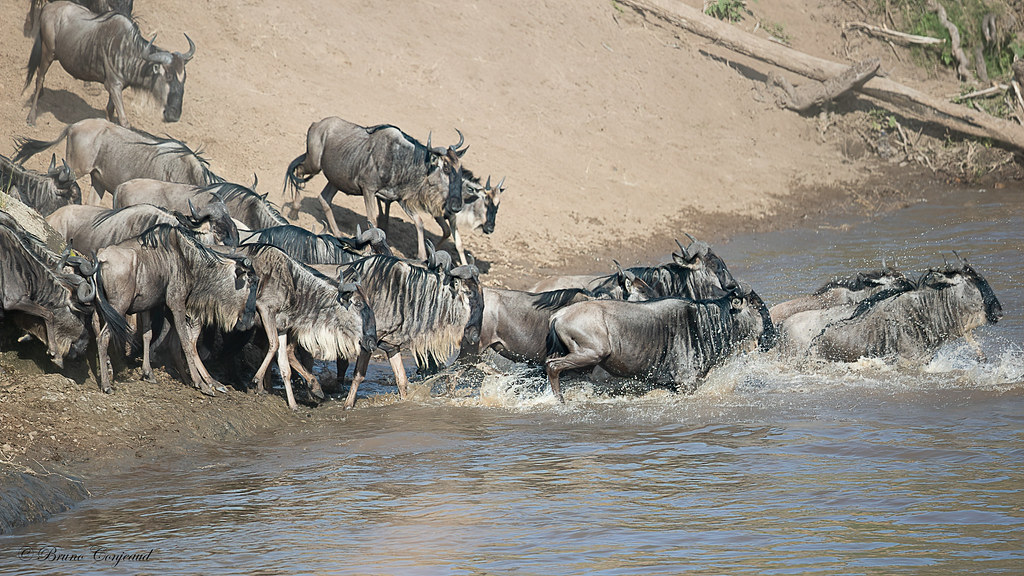
River crossings are among the most dramatic wildlife events in the world. Herds gather at riverbanks, hesitate, retreat, and surge forward in explosive bursts of movement. Crocodiles patrol the waters, and predators wait on the far banks. These moments are raw, chaotic, and unforgettable.
Experiencing the migration in the Maasai Mara requires timing, local knowledge, and flexibility. Crossings do not happen on schedule, and days of waiting may precede a few minutes of intense action. Those who understand this unpredictability often find the experience more rewarding, as anticipation becomes part of the story.
Why Experiencing Both Countries Matters
Seeing the Great Migration in only one location offers a glimpse. Experiencing it across both Kenya and Tanzania reveals its full narrative arc. Tanzania provides context, scale, and the beginning of the journey. Kenya delivers intensity, confrontation, and dramatic resolution before the cycle turns again.
Cross-border safaris allow travelers to appreciate how the same herds behave differently in response to terrain, water sources, and predator presence. The migration stops feeling like a highlight reel and becomes a living system shaped by environment and instinct.
This broader perspective also reduces pressure to see everything at once. Instead of hoping to be present for a single crossing, travelers experience multiple meaningful moments that together form a complete understanding.
Choosing the Right Time to Travel
Timing a Great Migration safari is less about choosing the “best” month and more about choosing the right experience. Different phases appeal to different interests. Some travelers are drawn to predator action and calving, others to vast moving herds, and others to river crossings.
Weather patterns can shift from year to year, influencing when and where herds move. For this reason, working with experienced safari planners and guides is essential. They monitor rainfall, grazing conditions, and herd movement, adjusting itineraries to maximize meaningful encounters rather than rigid expectations.
Flexibility is one of the greatest advantages a traveler can bring to a migration safari. Those who allow the experience to unfold naturally often come away with richer memories.
Safari Styles That Enhance the Migration Experience
How you experience the Great Migration matters as much as where you are. Staying in locations that align with herd movement reduces long drives and increases time spent observing wildlife. Mobile camps that relocate seasonally offer front-row access to migration routes, while permanent lodges in strategic areas provide comfort and stability.
Private or semi-private safaris allow for pacing that matches the rhythm of the migration. Guides can wait quietly for movement, follow herds over time, and adjust plans when conditions change. This flexibility transforms the experience from passive viewing to active participation in the unfolding story.
The Role of Skilled Guides
A skilled guide is the difference between seeing the migration and understanding it. Experienced guides read subtle signs in animal behavior, weather patterns, and landscape cues to anticipate movement. They know when to wait, when to reposition, and when to simply stop and observe.
Beyond logistics, guides provide context. They explain why herds hesitate at riverbanks, how predators choose targets, and how climate influences the entire cycle. Their insight turns dramatic scenes into meaningful narratives.
Conservation and Respectful Viewing
The Great Migration exists because the ecosystem that supports it remains largely intact. Responsible tourism plays a role in preserving this balance. Viewing wildlife with respect, maintaining appropriate distances, and supporting conservation-focused operators helps ensure the migration continues for generations to come.
Experiencing the migration is a privilege. Approaching it with patience and humility honors the animals and landscapes that make it possible.
The Emotional Impact of the Migration
Witnessing the Great Migration across Kenya and Tanzania is profoundly moving. The scale alone humbles even seasoned travelers, but it is the raw honesty of the experience that leaves the deepest impression. Life and death unfold openly. Success and failure happen side by side. Nature operates without compromise.
For many, the migration reshapes how they see the natural world. It reveals interconnectedness, resilience, and the delicate balance that sustains life on a massive scale.
Why the Great Migration Is Best Experienced as a Journey
The Great Migration is not a moment to be captured and left behind. It is a story that unfolds across borders, seasons, and landscapes. Experiencing it across both Kenya and Tanzania allows travelers to move with the herds, not just watch them pass.
By embracing the migration as a journey rather than a destination, travelers gain more than dramatic sightings. They gain understanding, perspective, and a lasting connection to one of the greatest natural phenomena on Earth.