

Soroi Larsens Camp
January 24, 2026
Lewa Walking Wild Camp
January 24, 2026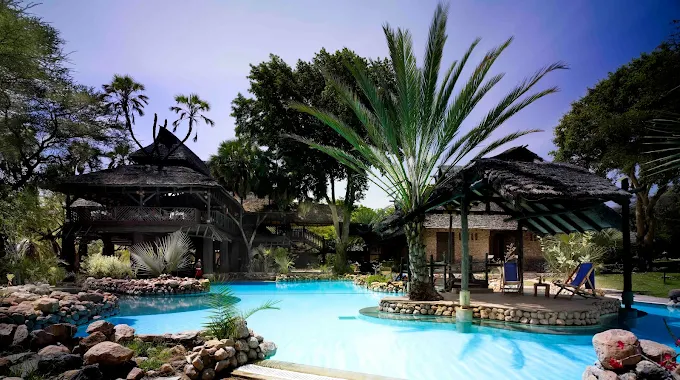
Sarova Shaba Game Lodge sits within Shaba National Reserve in northern Kenya, a landscape of doum palm groves, thorn scrub, and natural springs that stands in sharp visual contrast to the greener, more famous savanna of the Masai Mara further south. The reserve carries a specific claim to fame: it was here that naturalist and author Joy Adamson raised and later released the lioness Elsa, whose story became the book and film Born Free, and the reserve’s wilder, less-visited character today still echoes the setting that made that story possible.
Location & Access
Shaba lies in Kenya’s northern circuit, adjoining Samburu National Reserve and Buffalo Springs National Reserve as part of a connected trio of protected areas along the Ewaso Nyiro River system. It is typically reached by light aircraft from Nairobi to a nearby airstrip, or by road as part of a longer northern Kenya circuit that might also include Samburu and Buffalo Springs, given their shared ecosystem and proximity to one another.
Setting
The lodge is built around Shaba’s natural springs, permanent water sources in an otherwise semi-arid landscape that draw wildlife reliably even in the driest months of the year. Doum palm groves cluster around these springs, giving the immediate surroundings a distinctly different look from the acacia savanna typical of Kenya’s better-known southern reserves, while the wider reserve is characterized by volcanic rock outcrops, thorn scrub, and open grassland that together create one of the more visually striking landscapes on the northern safari circuit.
Wildlife & Game Viewing
Shaba and its neighboring reserves are known for a set of species adapted specifically to this drier, more rugged ecosystem and rarely seen in Kenya’s southern parks — Grevy’s zebra, with its narrower stripes and larger ears than the more common plains zebra; reticulated giraffe, with its distinctive sharp-edged coat pattern; gerenuk, a long-necked antelope often seen browsing while standing on its hind legs; and Beisa oryx, built for the region’s harsher, drier conditions. Alongside these specialists, the reserve holds healthy populations of elephant, lion, leopard, and cheetah, with the springs and river system drawing consistent wildlife activity even during dry-season months when game viewing elsewhere can thin out.
Activities
Game drives are the primary activity, typically run at dawn and late afternoon to align with when wildlife is most active, with drivers and guides trained specifically in the tracking and identification skills relevant to this drier northern ecosystem’s specialist species. Because Shaba, Samburu, and Buffalo Springs sit close together and are often visited as a combined circuit, some stays include drives across reserve boundaries to maximize the range of habitat and species covered during a visit. Birdwatching is also a strong draw in this part of Kenya, with the mix of riverine, palm grove, and arid scrub habitat supporting a wide range of species not typically found in the country’s southern parks.
Best Time to Visit
Shaba’s springs mean wildlife concentrates reliably around water sources even during the dry months from roughly June through October and again in the shorter dry spell from January through February, both of which tend to offer the most concentrated and reliable game viewing. The rainy seasons bring lush growth to the vegetation and strong birdlife, though wildlife can disperse more widely across the reserve when water is less scarce, making sightings somewhat less predictable.
Who It Suits
Sarova Shaba Game Lodge suits travelers who have already experienced Kenya’s more famous southern reserves and want to add a genuinely different ecosystem and species list to their trip, as well as those with a specific interest in the Elsa story and the history it represents. It works well as part of a combined northern circuit itinerary alongside Samburu and Buffalo Springs, given the ease of moving between the three reserves.
Practical Notes
Because the northern reserves see considerably less tourist traffic than the Mara or Amboseli, game drives here tend to be quieter and less crowded at sightings, which is worth factoring in for travelers who found busier southern parks less appealing on a previous trip. Daytime temperatures in this drier, lower-altitude region tend to run warmer than in the Mara or the central highlands, so lighter clothing alongside the standard early-morning and evening layers is worth packing. As with any Kenya safari destination, malaria prophylaxis and standard travel health precautions are worth discussing with a travel health provider ahead of the trip.
The Born Free Legacy
Joy Adamson’s work with Elsa in this landscape, and the wider Born Free story it produced, remains one of the more significant chapters in the popular history of African wildlife conservation, credited by many conservationists with shifting public perception of lions from simple trophy or threat toward individual animals worth understanding and protecting in their own right. For travelers with an interest in that history, a stay in Shaba carries a resonance beyond the wildlife on offer today — a chance to see the same springs, palm groves, and rock outcrops that shaped one of conservation writing’s most influential true stories.
Combining With a Wider Itinerary
Because Shaba, Samburu, and Buffalo Springs sit close together along the same river system, most itineraries that include one tend to include some combination of the three, giving access to a broader range of habitat and species than any single reserve offers alone. The northern circuit as a whole pairs naturally with Kenya’s central highlands and Laikipia conservancies to the south, or can be combined with a Mara or Amboseli stay for travelers building a longer, multi-region Kenya safari that spans both the classic southern circuit and the country’s less-visited north.
Practical Notes
Flights into the northern reserves generally route through Nairobi’s Wilson Airport, with the northern circuit’s reserves close enough together that moving between Shaba, Samburu, and Buffalo Springs during a single stay is straightforward, usually by road rather than requiring separate flights. The lower altitude and drier climate of this region mean it tends to run hotter than Kenya’s highland areas, so lighter safari clothing is generally more useful here than the heavier layers suited to higher-altitude parks, though early mornings can still be cool enough to warrant a light jacket for the first game drive of the day. As with the rest of Kenya, malaria risk is present throughout the northern reserves, and prophylaxis alongside standard travel health precautions is worth arranging ahead of the trip.
A Different Kind of Kenya Safari
For travelers who picture a Kenya safari primarily in terms of the Mara’s green plains and river crossings, Shaba and its neighboring reserves offer a useful corrective — a reminder that Kenya’s wildlife landscapes are considerably more varied than the postcard image suggests. The specialist species found here, the more rugged and arid terrain, and the lighter tourist presence together make for a safari experience that feels distinctly different from the southern circuit, even while remaining within the same country and a relatively short flight from Nairobi.
Conservation Context
The broader Ewaso Nyiro ecosystem that Shaba forms part of has been the focus of significant conservation research over recent decades, particularly around elephant behavior and movement patterns, with several long-running research projects based in the neighboring reserves. That research history means guiding in this area often draws on a deeper base of published, peer-reviewed wildlife science than is available for some other parts of Kenya, adding an extra layer of depth for guests with a serious interest in the ecology behind what they’re seeing on a game drive rather than sightings alone.
Getting the Most From a Stay
Travelers visiting Shaba specifically for its arid-country specialist species — Grevy’s zebra, gerenuk, and Beisa oryx among them — are generally better served by allowing at least two to three nights rather than a single overnight stop, since the more scattered distribution of wildlife in this drier ecosystem compared to the denser concentrations found around the Mara’s rivers means sightings can take more time and patience to build into a full picture of the reserve’s range of species. Guides based in the area can advise on which specific drainage lines and spring areas are currently most active, information that shifts through the season as water availability changes across the wider reserve.
It is also worth noting that the northern reserves, while quieter than the Mara in terms of vehicle traffic, still benefit from an early start each day — the doum palm groves and spring areas that concentrate wildlife also concentrate the handful of other vehicles operating in the reserve on a given morning, so arriving at a favored waterhole first thing rather than mid-morning tends to produce better, less-shared sightings.
Taken together, the combination of specialist wildlife, historical resonance, and a genuinely quieter game-viewing experience makes Shaba and its neighboring reserves one of the more rewarding additions to a Kenya itinerary for travelers willing to venture beyond the country’s most famous parks.
Food & Drink
Sarova Shaba Game Lodge, as part of the wider Sarova hotel group, generally offers a more structured dining operation than a small tented camp — typically a buffet-style restaurant covering breakfast, lunch, and dinner, supplemented by bush breakfasts or sundowner setups tied to game drives when arranged. Menus draw on both Kenyan and international dishes, with the scale of a group-run lodge generally allowing broader dietary accommodation than a very small independent camp. A full bar is typically available, and the lodge’s setting around the reserve’s natural springs often makes for a scenic spot for a sundowner without needing to leave the property.
Rooms & Cottages
As a lodge rather than a canvas tented camp, accommodation here is generally in built cottages or lodge rooms rather than tents, offering a more conventional hotel-style room experience — en-suite bathrooms, proper furnishings, and either garden or reserve views depending on room category. Exact room counts and categories are best confirmed directly with Sarova or a booking agent, since group-run lodges periodically renovate or reconfigure room inventory.
Budget & Positioning
As part of an established Kenyan hotel group with lodges and hotels across the country’s major safari and coastal destinations, Sarova Shaba typically sits in the mid-range segment of the northern circuit market — more accessible than the ultra-luxury tented camps found in some conservancies, while still offering full lodge amenities and a well-established service standard. It suits travelers looking for reliable, moderately priced lodge accommodation on the northern circuit rather than the top-tier luxury bracket. Current rates are best confirmed directly through Sarova’s own booking channels or a safari operator, as they vary by season.