

Hemingways Ol Seki Mara
January 24, 2026
NaiSabah Dhow
January 24, 2026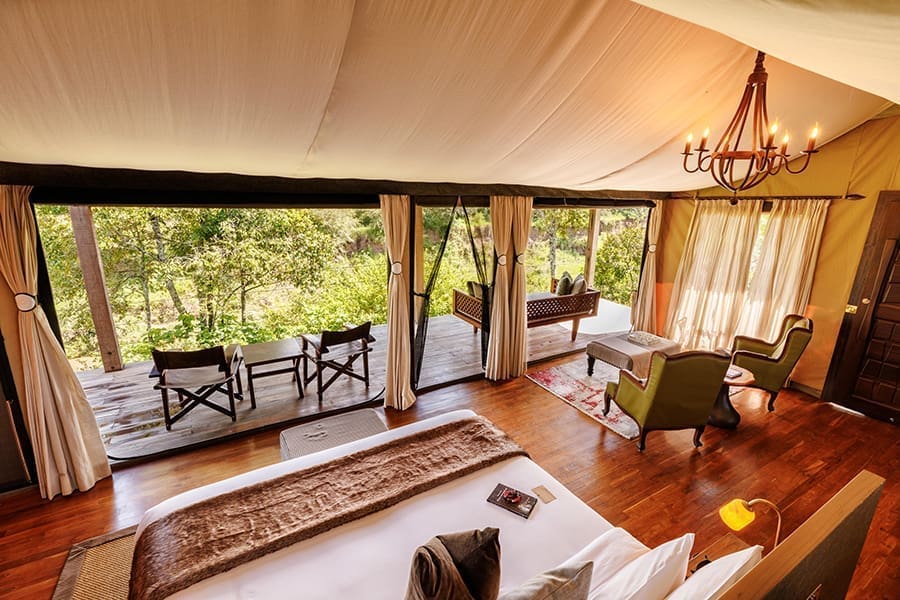
Ishara Mara is a boutique tented camp bordering the Masai Mara National Reserve, built deliberately small — a handful of tents rather than the room count of a larger lodge — with the scale itself functioning as the camp’s primary offering. Where bigger Mara properties can mean shared vehicles, set drive times, and a communal dining schedule built around dozens of guests, a boutique camp of this size is built around a single small group of guests at a time, with far more flexibility in how each day unfolds.
Location & Access
The camp sits close to the national reserve boundary, giving straightforward access to the Mara’s core game-viewing areas without a long transfer each morning. Arrival is typically by light aircraft to a nearby airstrip followed by a short road transfer, or by a longer overland drive from Nairobi for travelers who prefer to see the Rift Valley en route. Its position just outside the reserve, on land shared with a limited number of other small operators, keeps the immediate surroundings quieter than areas closer to the reserve’s busier entry gates.
What “Boutique” Means Here
The camp’s small scale changes the practical experience of a stay in ways that go beyond simply having fewer neighbors. Game drives are typically run privately for each group rather than combined with other guests, meaning departure times, route choices, and how long to linger at a sighting are set around one party’s preferences rather than negotiated among a larger group. Staff-to-guest ratios tend to run higher than at larger properties, translating into more individual attention from guides and camp staff over the course of a stay.
Accommodation & Design
Rooms are built in canvas-tent style, set on the savanna with views over the surrounding plains, and designed with the same light-footprint logic common to camps operating on leased land near the reserve — raised structures rather than permanent buildings, built to be removed or relocated with minimal lasting impact if the underlying land-use agreement ever changes. Communal spaces are similarly modest in scale, built around a single dining and lounge area rather than the multiple facilities found at larger resort-style lodges.
Wildlife & Game Viewing
Bordering the Masai Mara National Reserve gives access to the reserve’s full range of wildlife, including its well-known predator populations — lion prides that have been studied and followed for years by researchers and guides alike, along with leopard and, with some luck, cheetah hunting across the open plains. Plains game including zebra, wildebeest, topi, and Thomson’s gazelle are present year-round, with the July–October migration bringing vastly increased numbers of wildebeest and zebra moving through the wider ecosystem from the Serengeti to the south.
Activities
Private game drives are the core activity, typically run twice daily around dawn and late afternoon to match when wildlife is most active and the light is most favorable for photography. Because drives are private rather than shared, the pace and focus of each outing can be adjusted in real time — more time spent at a particularly good sighting, or a shift in route based on what a group is most interested in seeing. Sundowner drinks on the plains, timed to the sunset, are a common feature of an evening at camp, and depending on specific arrangements with neighboring conservancies, walking safaris or night drives may also be available as an add-on to the standard reserve-based game drives.
Best Time to Visit
As with the wider Mara ecosystem, the dry season from late June through October offers the most reliable wildlife viewing and the chance of migration herds moving through the area, while the shorter and longer rains bring green scenery, strong birdlife, and quieter conditions at the cost of somewhat harder game viewing as vegetation thickens.
Who It Suits
Ishara Mara suits travelers who want the classic Masai Mara safari experience delivered at a genuinely intimate scale — couples, small families, or friend groups who would rather have a private, flexible experience than share vehicles and schedules with a larger camp’s worth of other guests. It works well as a standalone Mara base or as part of a longer, multi-stop Kenya itinerary for travelers who want at least part of their trip built around this kind of small-scale, personalized stay.
Practical Notes
Given its small size, availability at a boutique camp like this can be limited relative to larger lodges, particularly during the July–October migration season when Mara-wide demand peaks, so earlier booking is generally advisable. As with any open tented camp in the Mara region, escorted movement between tents and communal areas after dark is standard practice, and packing for a wide daily temperature range — hot midday sun and notably cooler early mornings and evenings — is worth planning for. Malaria prophylaxis and general East Africa travel health precautions are worth discussing with a travel health provider before departure.
Dining & Service
At a camp built around a small number of tents, dining is typically a shared, communal affair rather than a large restaurant-style setup — meals are often taken together at a single table or in small groupings, giving guests a chance to talk through the day’s sightings with camp management and guiding staff over dinner. Menus tend to draw on a mix of regional Kenyan ingredients and more familiar international dishes, adjusted around dietary requirements with the kind of flexibility a small operation can offer more easily than a larger resort-style property working from a fixed menu for dozens of guests at once.
A Day at Camp
Days typically begin before sunrise with tea or coffee delivered to the tent ahead of an early game drive, timed to catch predators still active from their nighttime hunting before the heat of the day sets in. Depending on what the group wants, the morning drive can run long, with a bush breakfast set up in the field, or return to camp for breakfast on the property itself. The middle of the day is usually left unstructured, with wildlife activity naturally quieter through the heat, before a second drive in the late afternoon that typically ends with sundowner drinks watching the sun set over the plains, followed by dinner and, often, conversation around a fire pit before turning in.
Combining With a Wider Itinerary
A small boutique camp like Ishara Mara works naturally as one stop on a longer Kenya itinerary rather than the sole focus of a trip, particularly for travelers who want to contrast an intimate, private-drive experience here with a different pace elsewhere — a few days on a larger reserve-based property, a stint in Nairobi, or an extension to Amboseli or the coast. Its small scale also makes it a natural fit for special-occasion travel, from honeymoons to milestone celebrations, where the added privacy and flexibility of a boutique camp carry particular value beyond the standard wildlife-viewing case for choosing the Mara in the first place.
Service & Staffing
Small camps of this kind generally run with a staff-to-guest ratio well above what larger properties can offer, and that shows up less in any single dramatic gesture than in a string of small ones over the course of a stay — a guide who remembers a guest mentioned a specific bird species they hoped to see and makes a point of tracking it down, camp staff who adjust meal timing around a group’s preferences rather than a fixed schedule, a manager who spends time each evening talking through the next day’s plan rather than leaving it to a printed itinerary. That level of personal attention is one of the clearest practical differences a boutique camp offers over a larger, more standardized lodge operation.
Design Philosophy
Small camps built on leased conservancy or community land generally favor a lighter architectural approach than permanent lodges, both for practical reasons — construction access to remote savanna sites is limited — and for reasons tied to the underlying land agreements, which typically require structures that can be removed with minimal lasting impact if the lease terms ever change. Canvas-tent construction fits both requirements, and at a boutique property the design attention that might go into a larger lodge’s public spaces tends to go instead into the individual tents themselves, since there are simply fewer of them to furnish and finish to a high standard.
Practical Notes
Given the camp’s small tent count, it is worth booking well ahead of a planned travel date, particularly for stays during the July–October migration season or around major holiday periods when demand across the whole Mara ecosystem rises sharply. Flights typically route through Nairobi’s Wilson Airport to one of the airstrips serving the Mara region, with the short road transfer to camp arranged by the property itself. As with any tented camp on open savanna, guests should expect to be escorted between tents and communal areas after dark, and packing layers to handle the temperature swing between hot midday sun and notably cooler mornings and evenings is worth planning for regardless of the time of year chosen for the trip.
Food & Drink
Meals at a boutique camp of this scale are typically taken together, either at a single communal table or in small groupings, giving guests more direct interaction with camp management and guiding staff over meals than a larger property allows. The kitchen generally works from a set daily menu built around East African and international dishes, with the flexibility to adjust for dietary requirements more readily than a larger operation juggling many more guests at once. A house bar typically covers local beers, wines, and spirits, with sundowner drinks on the plains a standard close to the day’s second game drive.
Rooms & Cottages
Given the camp’s small scale, accommodation is in a limited number of canvas safari tents rather than a larger cottage or room block, each typically furnished with a proper bed, en-suite bathroom, and private veranda space. The small tent count is central to the camp’s boutique positioning, and exact configurations and current tent count are best confirmed directly with the property, since small camps sometimes adjust available inventory between seasons.
Budget & Positioning
As a boutique, small-scale camp with private game drives as standard, Ishara Mara generally sits toward the higher end of the Mara pricing spectrum relative to larger shared-vehicle lodges, reflecting the higher staff-to-guest ratio and exclusivity that come with a small tent count. For couples, honeymooners, or small groups prioritizing privacy and personalized service over sheer scale of facilities, that positioning is usually the trade-off being made deliberately. Current rates are best obtained directly from the property or a specialist safari operator, given seasonal variation.