

Lewa Walking Wild Camp
January 24, 2026
Ishara Mara
January 24, 2026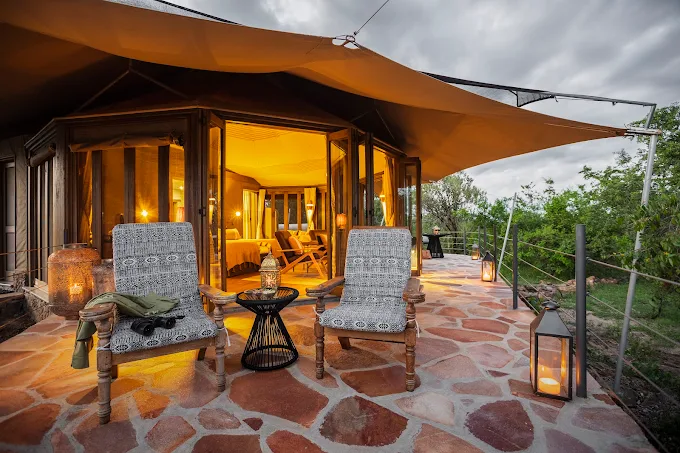
Hemingways Ol Seki Mara is a tented camp set within the Naboisho Conservancy, one of a handful of private conservancies bordering the Masai Mara National Reserve in southwestern Kenya. Naboisho is Maa for “coming together,” a name that reflects how the land was assembled: a group of individual Maasai landowners agreed to pool their plots into a single managed conservancy, leasing the land collectively to tourism operators in exchange for steady income, while retaining grazing rights for their livestock under a rotational system designed to keep the land healthy. That arrangement is the reason the conservancy exists at all, and it shapes almost everything about what a stay here is like — from how many vehicles are on the land at any one time to the range of activities on offer.
Location & Access
Naboisho sits along the northern boundary of the wider Masai Mara ecosystem, adjoining the national reserve itself as well as several other conservancies that together form a much larger protected area than the reserve alone. The camp is reached by light aircraft to one of the small airstrips serving the conservancies, followed by a game-drive transfer to camp, or by road from Nairobi for travelers with more time and an interest in seeing the Rift Valley escarpment en route. Because the camp sits inside conservancy land rather than the reserve itself, guests staying here can be tracking wildlife within minutes of landing, without the additional drive time needed to reach the reserve boundary from a lodge based outside it.
The Conservancy Model
What sets a conservancy stay apart from a stay inside the Masai Mara National Reserve itself comes down to numbers. Kenya’s conservancies operate under agreed vehicle-density limits, typically capping the number of vehicles allowed per sighting and per unit of land far below what is common in the busier parts of the main reserve, particularly during the July–October wildebeest migration season when the reserve can become crowded around major river crossings. Naboisho’s land is shared by only a small number of camps, Hemingways Ol Seki Mara among them, and access is restricted to their guests, which keeps the conservancy feeling genuinely quiet even in peak season. The lease payments that fund this system go directly to the Maasai landowners who set the land aside, making the conservancy a working example of tourism revenue funding both wildlife protection and the livelihoods of the community whose land it occupies.
This model also gives the camp latitude that lodges operating inside the national reserve don’t have. Reserve regulations generally restrict game drives to daylight hours and to established tracks, and prohibit both walking safaris and off-road driving. Conservancy land, negotiated separately between operators and landowners, typically allows night drives, guided walking safaris, and controlled off-road driving to approach sightings more closely — all of which are part of what a stay at Hemingways Ol Seki Mara can include.
Accommodation & Design
The camp is built in canvas-tent style, a format long associated with East African safari camps and chosen here in part because it keeps the physical footprint on the land light — tents can be raised without the permanent foundations a brick-and-mortar lodge would require, which matters on conservancy land where the underlying lease terms are built around minimizing long-term impact. Tents are raised on the conservancy’s open grassland and positioned to make the most of unobstructed views across the plains, with canvas walls and roofing designed to keep interiors cool during the heat of the day while still allowing the sounds of the surrounding bush — birdsong, distant calls, occasionally more — to filter through at night. Communal spaces typically include a dining area and lounge oriented toward the view, serving as a gathering point between game drives.
Wildlife & Game Viewing
Naboisho has built a reputation as one of the better conservancies for predator sightings in the wider Mara ecosystem, partly a function of prey density on its grasslands and partly a function of the lower vehicle pressure allowing resident lion prides and leopard to move and hunt with less disturbance than in more heavily visited areas. The conservancy holds a healthy population of lion, along with regular leopard sightings and, more occasionally, cheetah using the open plains for hunting. Beyond predators, Naboisho’s grassland supports large resident herds of zebra, wildebeest, topi, and Maasai giraffe year-round, independent of the seasonal migration that passes through the wider ecosystem further south and west.
During the July–October migration season, when over a million wildebeest and zebra move through the Mara ecosystem from Tanzania’s Serengeti in search of grazing, Naboisho’s position on the ecosystem’s northern edge means migration herds can move through conservancy land as well as the reserve itself, though the famous river crossings at the Mara and Talek rivers happen further south and are usually reached by a longer game drive from a Naboisho base. Outside migration season, the conservancy’s resident wildlife and quieter atmosphere make it a strong standalone destination in its own right, not simply an overflow option for migration season.
Activities
A typical stay is built around two game drives a day, usually timed around dawn and late afternoon when animals are most active and the light is best for photography, with the option to extend into a night drive using a spotlight to look for nocturnal species rarely seen during the day, including genet, civet, and hunting leopard. Guided walking safaris are also available on conservancy land, led by a Maasai guide with tracking knowledge built up over years on this specific stretch of land, offering a slower, more sensory way to engage with the bush — tracks, dung, insect life, and plant use are all part of a walking guide’s commentary in a way that doesn’t come across from a vehicle.
Cultural visits to a nearby Maasai village are commonly offered as well, giving guests a chance to see the community whose land leasing arrangement makes the conservancy possible, and to understand more directly how tourism revenue connects to daily life in the area. Sundowner drinks on the plains, timed to the sunset, are a near-universal feature of a conservancy stay and typically round out at least one evening during a visit.
Best Time to Visit
Because Naboisho holds strong resident wildlife populations independent of the migration, it is a viable destination throughout the year, though conditions shift by season. The dry months from late June through October offer the most reliable game viewing, with sparser vegetation making animals easier to spot and the possibility of migration herds moving through the conservancy’s northern grassland. The shorter rains in November and the longer rains from March through May bring lush green scenery and excellent birdlife, along with lower rates and fewer camps operating at full capacity, at some cost to game-viewing ease as vegetation thickens and some tracks become harder to pass.
Who It Suits & Combining With a Wider Itinerary
Hemingways Ol Seki Mara suits travelers who want the classic Masai Mara wildlife experience — predators, plains game, dramatic open scenery — without the vehicle congestion that can build up in the national reserve’s more heavily visited sections, particularly around river crossings during migration season. It works well as a standalone Mara stay for travelers prioritizing a quieter, conservancy-based experience, or as a complement to a day or two inside the national reserve itself for those who want both the wider reserve’s scale and the conservancy’s more exclusive pace within the same trip. Because it sits within Kenya’s broader Mara ecosystem, it also combines naturally with time elsewhere in the country — Nairobi at the start or end of a trip, or an extension to Amboseli, Laikipia, or the coast for travelers building a longer Kenya itinerary around their Mara stay.
Practical Notes
Conservancy stays like this one are typically priced to include activities and, in many cases, park or conservancy fees within the nightly rate, which is worth factoring in when comparing a conservancy camp against a lodge inside the national reserve, where park entry and activity costs are often billed separately. Because vehicle numbers on conservancy land are capped by agreement rather than simply by how busy the season is, booking ahead matters more here than at some larger reserve lodges, particularly for travel during the July–October migration window when demand across the whole Mara ecosystem peaks. Light-aircraft transfers in and out of the conservancy’s airstrips run on scheduled routes rather than on demand, so flight timing is generally set well before arrival and factored into the first and last day of a stay. Malaria prophylaxis and standard East African travel vaccinations are worth discussing with a travel health provider ahead of a Mara trip, as with any stay in this part of Kenya, and nights on the open plains can be cooler than daytime temperatures suggest, particularly during the June–August dry season, so packing layers for early-morning and after-dark game drives is worth planning for alongside the standard warm-weather safari wardrobe, along with a good pair of binoculars, a camera with reasonable zoom range, and a headtorch for moving around camp after dark, when staff typically escort guests between tents and communal areas as a standard safety precaution common to open, unfenced tented camps throughout the Mara ecosystem.
Food & Drink
Dining at a conservancy tented camp is typically built around a set daily rhythm rather than an a la carte restaurant format: tea or coffee before the early game drive, a full breakfast either back at camp or served as a bush breakfast out on the plains, a lighter lunch through the heat of the day, and a more substantial dinner in the evening, often preceded by sundowner drinks watching the light fade over the grassland. Menus generally combine East African ingredients with international dishes, and kitchens are accustomed to handling dietary requirements — vegetarian, vegan, gluten-free, and specific allergies — with advance notice, since a small camp’s kitchen can adjust more easily around individual guests than a large hotel working from a fixed buffet. House wines, local Kenyan beers, and a basic bar selection are typically included or available, with sundowners on the plains one of the more consistent rituals of a Mara stay.
Rooms & Cottages
Accommodation is in canvas safari tents rather than fixed cottages, raised on decking or platforms and furnished to a comfortable standard — a proper bed rather than camp bedding, an en-suite bathroom with running water, and a private veranda or seating area looking out over the conservancy. Tent categories generally scale from standard double or twin configurations up to larger family or multi-room tents for groups traveling together, though the exact room count and specific configurations are best confirmed directly with the property or a booking agent, since availability and exact layouts can change between seasons.
Budget & Positioning
Naboisho Conservancy camps, including this one, generally sit toward the upper-mid to luxury end of the Masai Mara market, reflecting both the conservancy’s exclusivity model — capped guest numbers mean each camp carries proportionally higher land-lease and conservation fees per guest than a lodge inside the busier national reserve — and the more personalized service that comes with a smaller tented camp. Nightly rates for conservancy camps of this type typically include game drives and, in many cases, conservancy fees within the room rate, which is worth factoring in when comparing cost against a reserve-based lodge that may bill activities and park fees separately. For current rates and availability, contacting the property or a specialist safari operator directly is the most reliable approach, since conservancy pricing shifts by season and can change from year to year.