Gorilla Habituation Experience in Bwindi
March 25, 2026
How Mountain Gorillas Are Tracked and Protected in Uganda
March 25, 2026
A Day in the Life of a Mountain Gorilla: Behavior and Social Structure
Mountain gorillas of Bwindi Impenetrable National Park and Mgahinga Gorilla National Park are among the most fascinating and socially complex animals on Earth. Observing their daily life offers a rare window into their behaviors, social structures, and interactions with their environment. A day in the life of a mountain gorilla is a careful balance of feeding, resting, grooming, social bonding, and territorial vigilance, all orchestrated within a family group or “troop” that can range from a few individuals to more than 20 members. Understanding these patterns provides valuable insight into their ecology, conservation needs, and the ways in which they maintain cohesion as a species.
Mountain gorillas are highly social primates with structured hierarchies. Each troop is typically led by a dominant silverback male, whose primary responsibilities include protecting the group, mediating conflicts, and leading movements across the forest in search of food. The silverback’s presence ensures stability and safety, allowing the rest of the group—including females and young gorillas—to carry out daily activities in a secure environment. The social bonds within the troop are reinforced through grooming, play, vocal communication, and physical closeness, all of which can be observed throughout a typical day.
Morning Activities: Foraging and Exploration
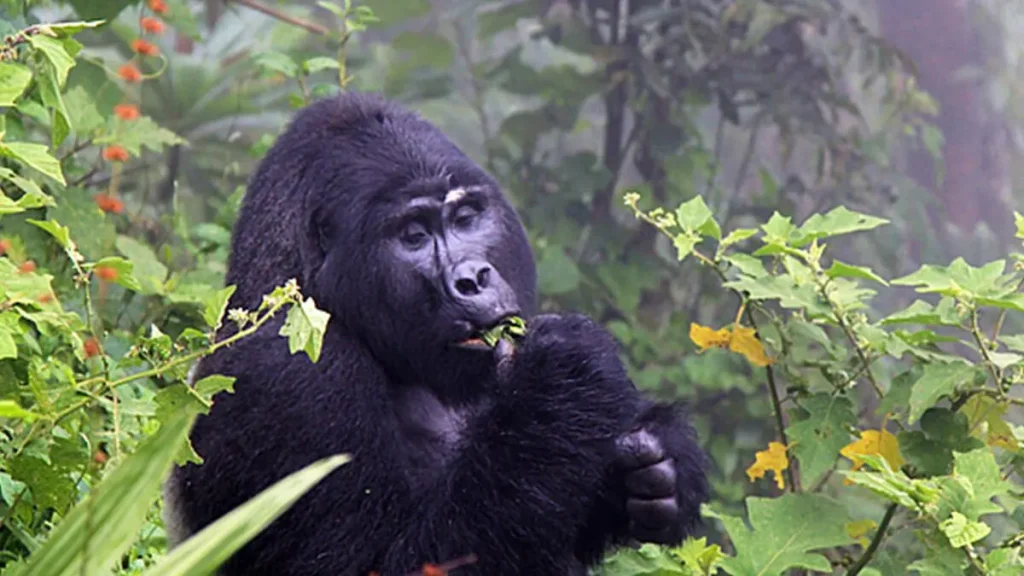
A gorilla’s day generally begins with foraging, shortly after dawn when the forest is calm and fresh. Troop members spread out slightly but remain within visual or auditory range of the silverback. Foraging is their primary activity and consumes the majority of daylight hours. Mountain gorillas are predominantly herbivorous, feeding on leaves, stems, roots, fruits, and occasionally bark. The choice of food depends on seasonal availability, forest location, and nutritional needs.
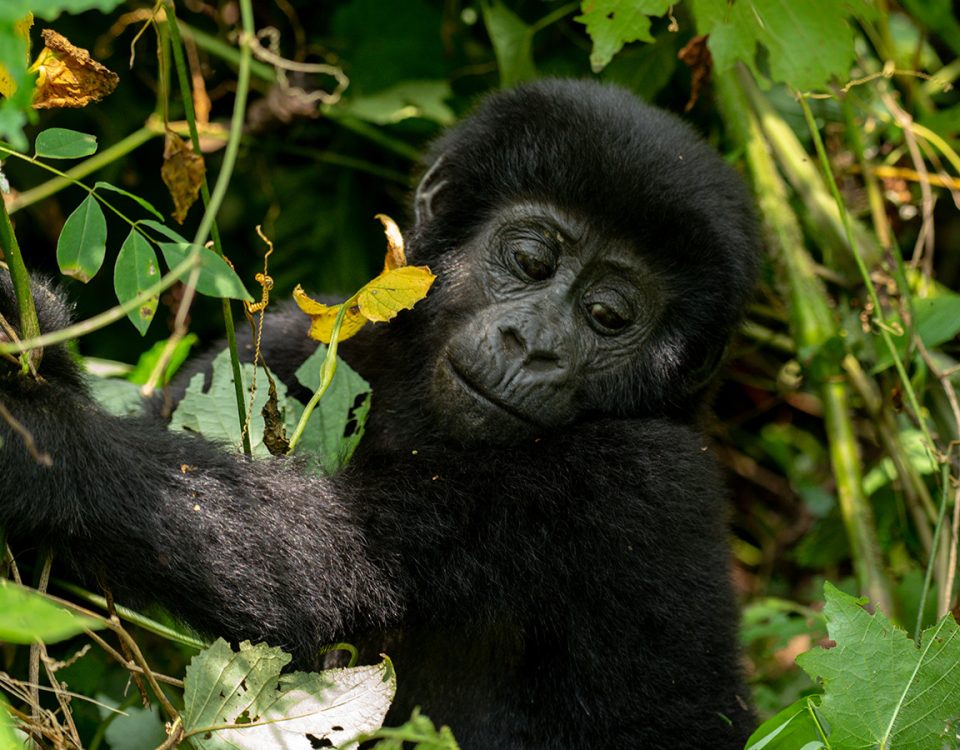
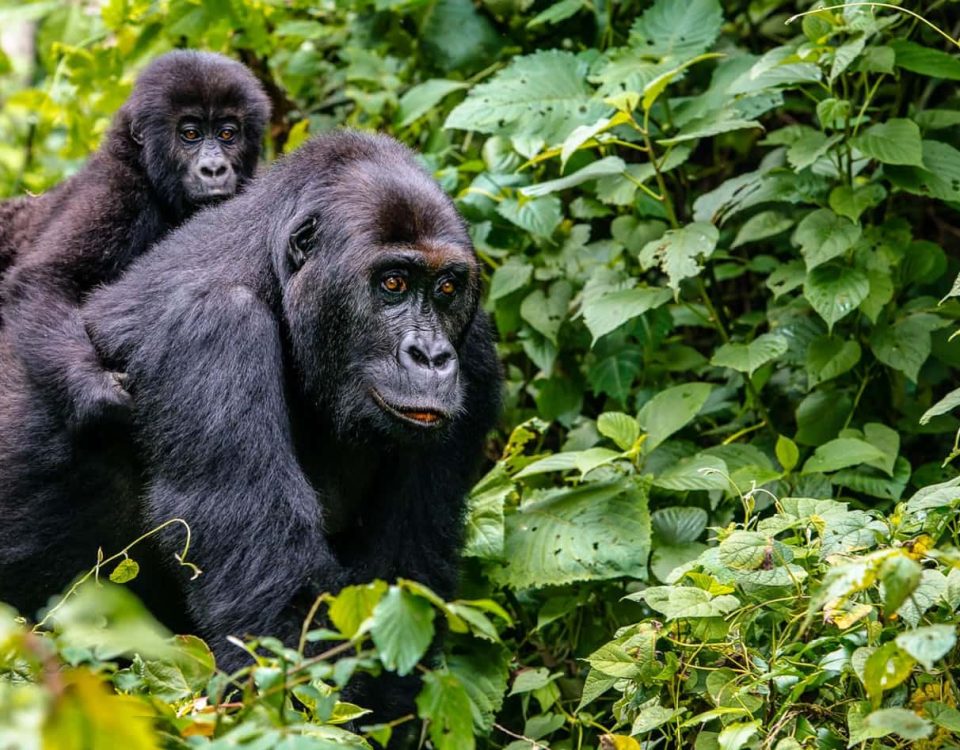
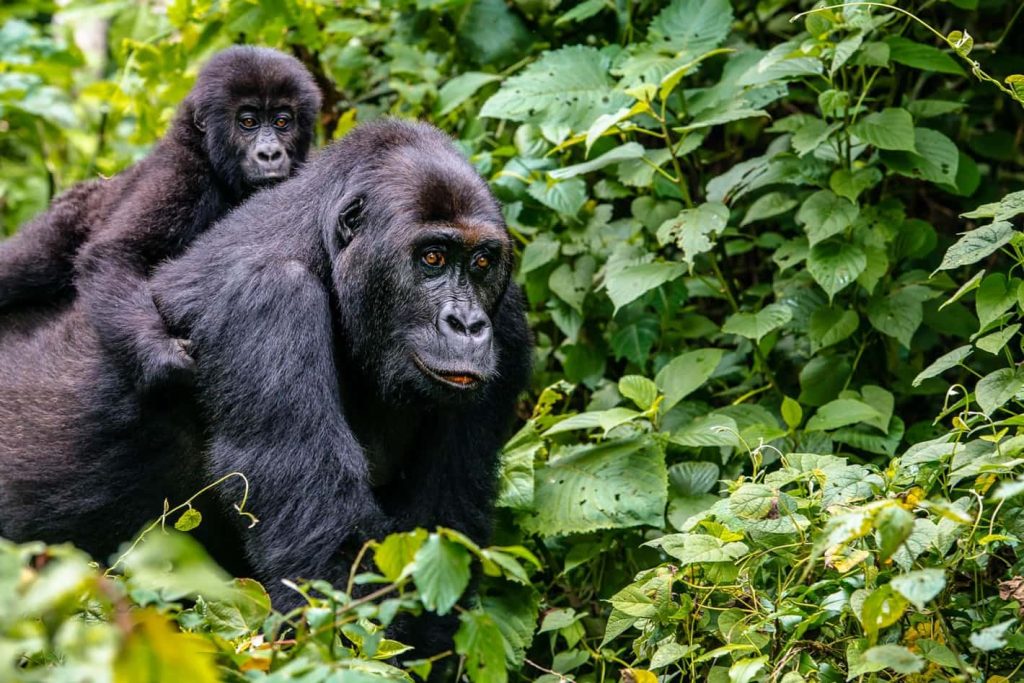
Young gorillas often accompany their mothers during these morning foraging sessions, learning which plants are safe and how to process food efficiently. Siblings may engage in playful interactions, chasing each other through the undergrowth or swinging from vines, which not only strengthens social bonds but also develops motor skills essential for survival. The silverback remains vigilant, scanning for potential threats such as leopards or poachers, ensuring the group can forage safely.
Midday: Resting, Grooming, and Social Interaction
After several hours of foraging, the troop typically takes a midday rest. Mountain gorillas select sheltered spots in the dense forest to conserve energy and avoid the hottest part of the day. During resting periods, grooming becomes a central activity. Grooming serves multiple functions: it reinforces social bonds, removes parasites, and establishes or maintains hierarchies within the group.
Silverbacks and dominant females often receive the most attention during grooming, reflecting their status in the troop. Juveniles groom each other frequently, learning appropriate social behaviors and building relationships that will be important in adulthood. Vocalizations such as grunts, roars, and hoots punctuate these periods, facilitating communication within the group and alerting members to nearby disturbances or food sources.
Resting is also a time for observation and learning. Young gorillas watch adults carefully, mimicking behaviors such as feeding techniques, vocal signals, and conflict resolution strategies. This period illustrates the subtle interplay of learning, social cohesion, and environmental awareness that defines gorilla life.
Afternoon: Continued Foraging and Territorial Movement
By mid-afternoon, the troop resumes foraging, often moving through different forest layers to access a variety of food sources. Gorillas may travel several kilometers in a day, guided by the silverback’s knowledge of seasonal food availability and safe pathways. This movement is deliberate and measured, balancing the need for nutrition with the conservation of energy and safety from predators.
During these movements, gorillas exhibit clear social structures. The silverback leads from the front or occasionally lags behind to monitor stragglers. Females often stay near infants, ensuring their safety, while subadult males—known as blackbacks—may patrol the periphery or engage in playful sparring to develop strength and social confidence. The troop’s cohesion is maintained through constant visual and vocal communication, ensuring no individual becomes isolated or vulnerable.
Evening: Nesting and Preparation for the Night
As daylight fades, gorillas prepare for the night by constructing nests. Both adults and juveniles build sleeping platforms on the ground or in low trees using branches and foliage. Nesting is a carefully ritualized process that ensures comfort, safety, and security. Silverbacks often choose the nesting location for the entire troop, factoring in proximity to water, food, and shelter from potential threats.
Nighttime is primarily a period of rest, but the silverback remains alert, listening and responding to unusual sounds. These periods of vigilance highlight the critical role of leadership in gorilla social dynamics. While most of the troop sleeps, the silverback’s watchful presence maintains safety and stability, ensuring that the troop can resume normal activities the next morning.
Understanding Social Hierarchies and Conflict Resolution
A day in the life of a mountain gorilla is not just about foraging and resting; it is also a study in social organization. Hierarchies are established and reinforced through displays, grooming, and occasional mild aggression. Conflicts are typically mediated by the silverback, who intervenes to maintain harmony and prevent escalation. Subordinate males and females recognize and respect the authority of dominant individuals, while juveniles learn the subtleties of group dynamics through observation and mimicry.
These social structures are essential for troop stability. Strong bonds between females and the silverback ensure protection of infants, while alliances among subadult males support future leadership development. The daily routines of feeding, resting, and movement are interwoven with these social rules, illustrating how survival and community are inseparable for mountain gorillas.
Communication and Behavioral Signals
Vocal and non-vocal communication is central to a gorilla’s daily life. Grunts, roars, chest beats, and body postures convey information about food, danger, mood, and status. For example, chest-beating by the silverback signals dominance and may deter rival males without the need for physical confrontation. Subtle gestures, such as grooming or physical proximity, communicate trust, reassurance, and social intent. Observing these interactions over the course of a day provides unparalleled insight into gorilla intelligence, emotional complexity, and social sophistication.
Conservation Insights Through Observation
Understanding the daily life of mountain gorillas is crucial for conservation. Observing their behavior allows researchers and conservationists to assess health, social stability, and ecological needs. Human presence through responsible tourism and habituation programs supports anti-poaching efforts and generates revenue for local communities. Each day in the forest, therefore, not only reveals the intricacies of gorilla life but also contributes to the ongoing protection and management of this critically endangered species.
A Window into Primate Society
A day in the life of a mountain gorilla offers a vivid illustration of survival, social complexity, and environmental adaptation. From dawn foraging to evening nesting, every activity is structured to maintain health, safety, and group cohesion. The interplay of social hierarchies, communication, and learned behaviors ensures that gorillas thrive in one of the world’s most challenging ecosystems. For visitors and researchers alike, spending time observing mountain gorillas provides a profound understanding of their intelligence, emotional depth, and the careful balance of their daily existence. Witnessing these daily routines is not only a unique wildlife experience but also a powerful reminder of the importance of conservation and the resilience of East Africa’s primate species.