

Serena Beach Resort And Spa
January 24, 2026
The Cliff Nakuru
January 24, 2026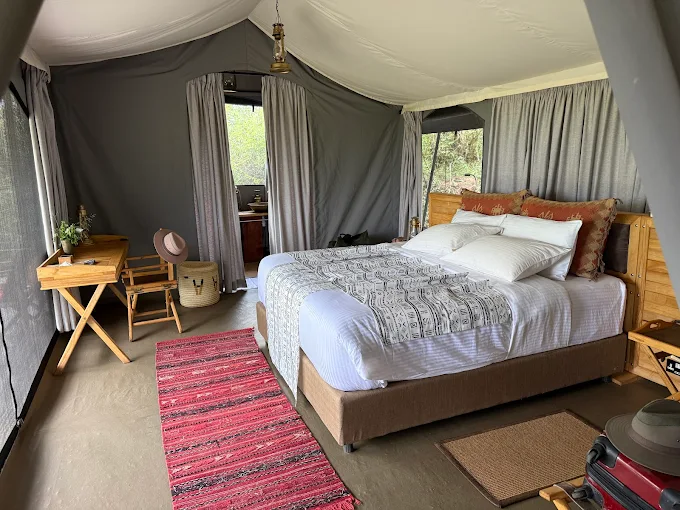
Basecamp Wilderness is an eco-certified tented camp bordering the Masai Mara National Reserve in southwestern Kenya, built from the ground up around two related ideas: that safari tourism should leave as light a footprint on the land as possible, and that it should channel a meaningful share of its revenue back into the Maasai community whose land borders the reserve. Both principles run through almost every part of how the camp operates, from its physical construction to its staffing and its relationship with the surrounding villages.
Location & Access
The camp sits just outside the national reserve’s boundary, close enough that game drives into the reserve itself begin within a short transfer rather than a lengthy morning drive. Guests typically arrive by light aircraft to one of the airstrips serving the Mara region, followed by a road transfer to camp, or overland from Nairobi for those with more time. Its position outside the reserve boundary, on community-leased land, is part of what allows it to operate under a different, more conservation-focused model than many of the lodges sited inside the reserve itself.
The Eco-Certification & What It Means
Eco-certification for a safari camp typically covers a specific set of operational commitments: solar power generation rather than diesel generators running around the clock, water recycling and careful management of a resource that is genuinely scarce on the savanna, waste management systems designed to avoid landfill dependency in a remote setting, and construction methods that minimize permanent disturbance to the land the camp sits on. Basecamp Wilderness has built its reputation specifically around meeting standards like these, positioning itself within a smaller group of camps across East Africa that treat environmental performance as core to the guest experience rather than a marketing addition to it.
Community Partnership
The camp’s relationship with the surrounding Maasai community goes beyond the standard land-lease arrangement common to camps bordering the Mara. A structured share of camp revenue is typically directed toward local initiatives — education support, healthcare access, or small business development in nearby villages — and a significant proportion of camp staff are drawn from the local community rather than brought in from further afield. For many guests, this translates into genuinely informed guiding: rangers and drivers who grew up on this land bring a depth of local knowledge, from animal behavior patterns to seasonal changes in the bush, that is difficult to replicate with imported expertise.
Accommodation & Design
Rooms are built in canvas-tent style, raised on the savanna and designed to minimize the permanent structures required, in keeping with the camp’s broader environmental approach. Tents are oriented to make the most of views across the surrounding plains, with the sounds of the bush — from birdsong to more distant calls after dark — part of the ambient experience rather than something screened out. Communal dining and lounge areas are typically built with the same lighter-footprint principles in mind, using local materials and design where possible rather than imported, resource-intensive construction.
Wildlife & Game Viewing
Bordering the Masai Mara National Reserve places the camp within reach of the reserve’s full range of wildlife — lion, leopard, elephant, buffalo, and, in the right season, the wildebeest and zebra migration that passes through the wider ecosystem between July and October. Game drives typically alternate between reserve access, when the classic Mara wildlife spectacle is the draw, and community or conservancy land closer to camp, where lower vehicle density and the option of activities not permitted inside the reserve — walking safaris in particular — give a different pace to the experience.
Activities
A typical stay combines standard game drives into the national reserve with guided walking safaris on the surrounding community land, led by Maasai guides whose tracking knowledge is drawn from a lifetime spent on this specific stretch of savanna rather than formal training alone. Cultural visits to nearby villages are usually available as well, giving guests direct exposure to the community that the camp’s revenue-sharing model is built to support, and a clearer sense of how tourism connects to daily life in the area beyond the boundaries of the reserve itself.
Best Time to Visit
The Mara ecosystem supports strong resident wildlife populations throughout the year, but the dry season from late June through October offers the most reliable game viewing, with thinner vegetation and the possibility of migration herds moving through the wider area. The shorter rains in November and longer rains from March through May bring green scenery, strong birdlife, and quieter camps, at some cost to ease of game viewing as grass grows taller and some tracks become harder to navigate.
Who It Suits
Basecamp Wilderness suits travelers for whom the environmental and community dimensions of a safari stay matter as much as the wildlife itself — those who want assurance that their camp choice is genuinely, verifiably reducing its impact and supporting the community whose land it operates on, not simply describing itself that way. It also suits travelers who want direct engagement with the Maasai community living around the reserve, rather than a purely wildlife-focused stay with limited cultural contact.
Practical Notes
Because the camp operates on community land rather than exclusively within the national reserve, activities can be more varied day to day than a reserve-only itinerary, and it’s worth discussing the specific mix of reserve game drives, community walks, and cultural visits when planning a stay to make sure it matches individual interests. As with any open, unfenced tented camp in the Mara region, guests are typically escorted between tents and communal areas after dark as a standard precaution, and packing for a range of temperatures — hot midday sun, cool early mornings and evenings — is worth planning for regardless of season. Malaria prophylaxis and standard travel health precautions for East Africa are worth discussing with a travel health provider ahead of any Mara-area stay.
Dining & Daily Rhythm
Meals at an eco-focused camp like this typically lean on regional and, where possible, locally sourced ingredients, both as a practical extension of the camp’s sustainability commitments and as a way of connecting guests more directly to the surrounding area rather than importing every ingredient from Nairobi. A typical day follows the rhythm common to most Mara camps: an early wake-up call ahead of a dawn game drive, breakfast either back at camp or as a bush breakfast set up in the field, a rest period through the heat of midday when wildlife activity naturally slows, and a second drive in the late afternoon running through to sundowners and dinner. At a camp this focused on community and conservation, evenings sometimes include informal talks from guides or camp management on the specific conservation projects and community partnerships the camp supports, giving guests a more detailed picture of where their stay’s revenue actually goes beyond the general commitment to sustainability.
Comparing to Reserve-Based Lodges
The clearest distinction between a community-land camp like Basecamp Wilderness and a lodge sited inside the national reserve itself comes down to flexibility and access. Reserve-based lodges offer guaranteed proximity to the reserve’s most concentrated wildlife areas but are bound by reserve rules on drive hours, off-road access, and permitted activities. A camp on community or conservancy land trades a small amount of that guaranteed proximity for a broader range of what a day can include — walking safaris, night drives, and closer, more flexible cultural engagement with the surrounding community — while still keeping the reserve itself within reach for guests who want the full spectrum of Mara wildlife on a given day.
Photography & Guiding
Because private and small-group game drives are more feasible on community land than inside the busier parts of the reserve itself, camps like this one tend to attract a fair number of dedicated wildlife photographers, who benefit from guides able to position vehicles for light and angle rather than working around a queue of other cars at a sighting. Guides drawn from the local Maasai community typically bring both the formal wildlife knowledge expected of any professional safari guide and a lifetime of informal, accumulated knowledge of this specific stretch of savanna — where prides tend to den in a given season, which trees leopards favor for dragging a kill, how the resident herds move in response to rainfall. That combination is often what distinguishes a strong small-camp guiding team from the more generalized knowledge a guide covering a much larger reserve territory might carry.
Seasonal Planning
Beyond the broad dry-season and wet-season split, travelers planning around the wildebeest migration specifically should note that the herds’ exact position within the wider Mara-Serengeti ecosystem varies year to year depending on rainfall patterns, so while July through October is the general window for migration activity in the Kenyan side of the ecosystem, the timing of specific river crossings can shift by several weeks either way. A camp positioned on community land bordering the reserve, rather than deep inside it, tends to offer more flexibility to chase the migration’s current position via a longer game drive than a lodge fixed at one spot deep inside the reserve, since community-land camps aren’t bound by the same fixed-track restrictions that apply within the national reserve boundary itself.
Food & Drink
As with most Mara-area tented camps, meals follow the rhythm of the game-drive schedule — an early hot drink before the dawn drive, breakfast either at camp or set up in the bush, a lighter midday meal, and dinner in the evening, often around a shared table that encourages conversation between guests and staff about the day’s sightings. In keeping with the camp’s community and sustainability focus, kitchens generally prioritize regional and, where possible, locally sourced ingredients over imported produce, and are typically well equipped to handle vegetarian, vegan, and allergy-specific requirements with advance notice. A basic bar selection, including local beers and house wines, is usually available, with sundowner drinks on the plains a standard part of the evening routine.
Rooms & Cottages
Accommodation is in canvas safari tents rather than permanent cottages, built and furnished with the camp’s lighter-footprint construction philosophy in mind while still offering proper beds, en-suite bathrooms, and private veranda space looking out over the surrounding bush. Tent configurations typically range from standard doubles or twins to family-friendly options for groups traveling together, though exact room counts and current layouts are best confirmed directly with the property given that eco-certified camps sometimes adjust capacity to manage their environmental footprint.
Budget & Positioning
Basecamp Wilderness generally positions itself in the mid-range to upper-mid segment of the Mara market — less expensive than some of the ultra-luxury conservancy camps nearby, reflecting a deliberate choice to keep the experience accessible while still funding its community and conservation commitments, but priced above budget-tier options given the quality of guiding and the camp’s certified environmental standards. As with other camps in the area, rates typically bundle game drives and community-land access fees into the nightly rate. Current pricing is best confirmed directly with the property or a safari specialist, since rates vary by season and travel dates.