Mountain Gorillas: Facts, Behavior, Habitat and Conservation Status
Mountain gorillas are one of the most intensively studied and carefully protected large mammals in the world. Found only in a small region of East-Central Africa, their survival depends on tightly managed conservation systems and a deep understanding of their behavior, ecology, and social structure. Most encounters with this species take place in Bwindi Impenetrable National Park and Volcanoes National Park, with a smaller population in Virunga National Park.
What makes mountain gorillas distinct is not just their rarity, but how their biology, social systems, and habitat requirements interact within a narrow ecological range. Understanding these elements transforms gorilla trekking from a simple wildlife encounter into a detailed observation of one of the most complex primate societies outside humans.
Taxonomy and Physical Characteristics
Species Classification
Mountain gorillas are a subspecies of the eastern gorilla, scientifically classified as Gorilla beringei beringei.
They are distinct from western gorillas in both genetics and physical adaptation, particularly in relation to altitude and climate tolerance.
Size and Structure
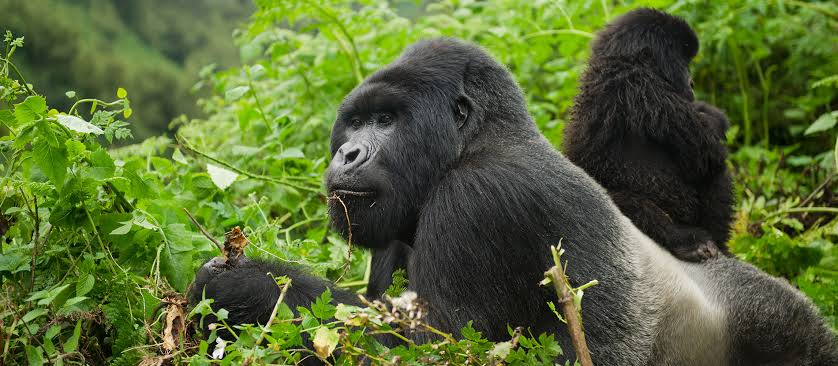
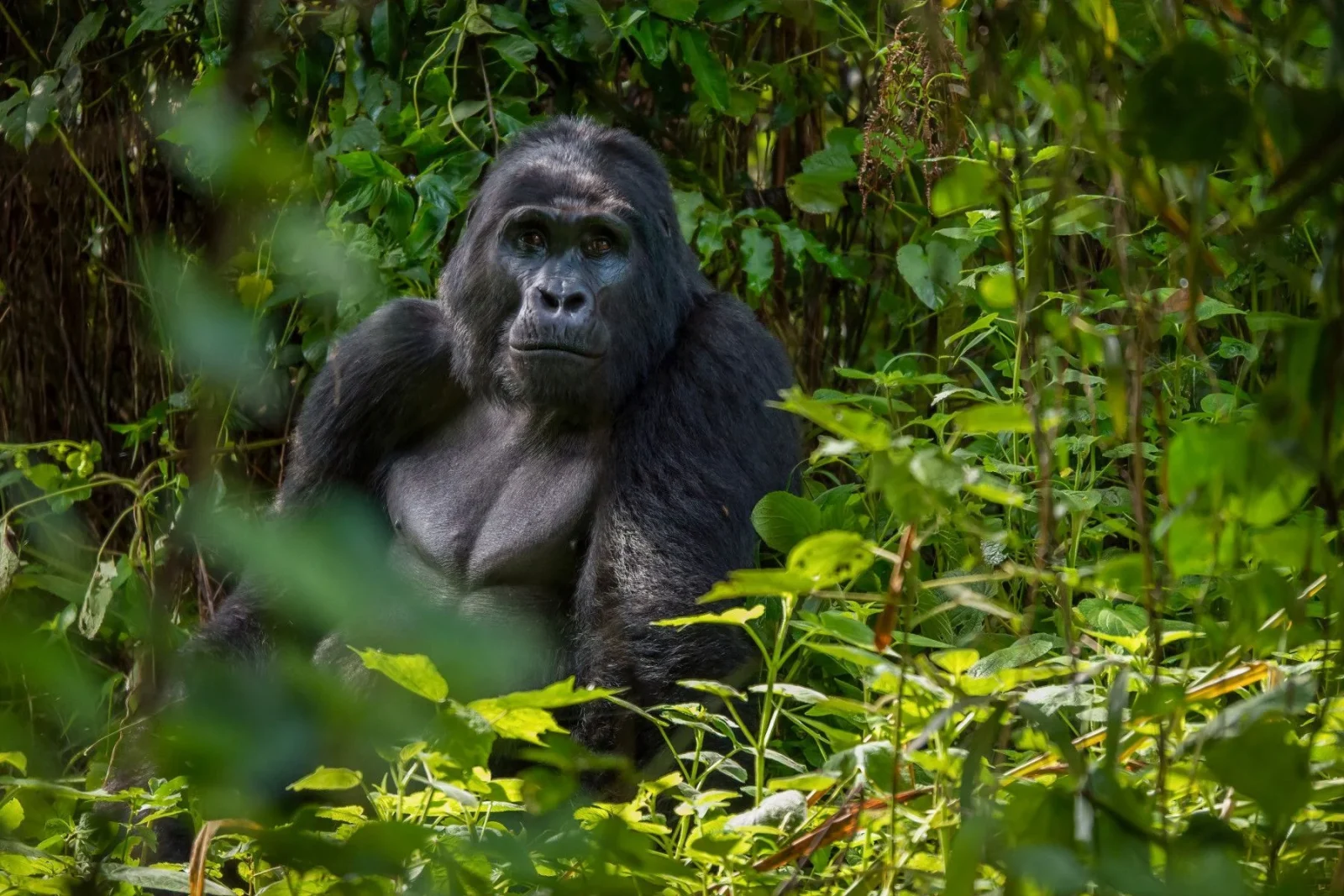
Adult male mountain gorillas, known as silverbacks, can weigh between 140 and 200 kilograms. Their name comes from the patch of silver hair that develops on their backs as they mature.
Females are significantly smaller, typically weighing around half the mass of adult males.
Their bodies are adapted for strength rather than speed, with long arms, powerful shoulders, and a barrel-shaped chest suited for knuckle-walking and climbing in dense forest.
Adaptation to High Altitude
Mountain gorillas live at elevations ranging from approximately 2,200 to over 4,000 meters.
They have thicker fur compared to other gorilla subspecies, allowing them to tolerate cooler temperatures in montane forest environments.
Habitat and Geographic Range
Restricted Distribution
Mountain gorillas exist in only two primary population zones:
The Bwindi forest block in Uganda
The Virunga mountain range spanning Uganda, Rwanda, and the Democratic Republic of the Congo
This limited range makes them highly vulnerable to environmental and human pressures.
Forest Ecosystems
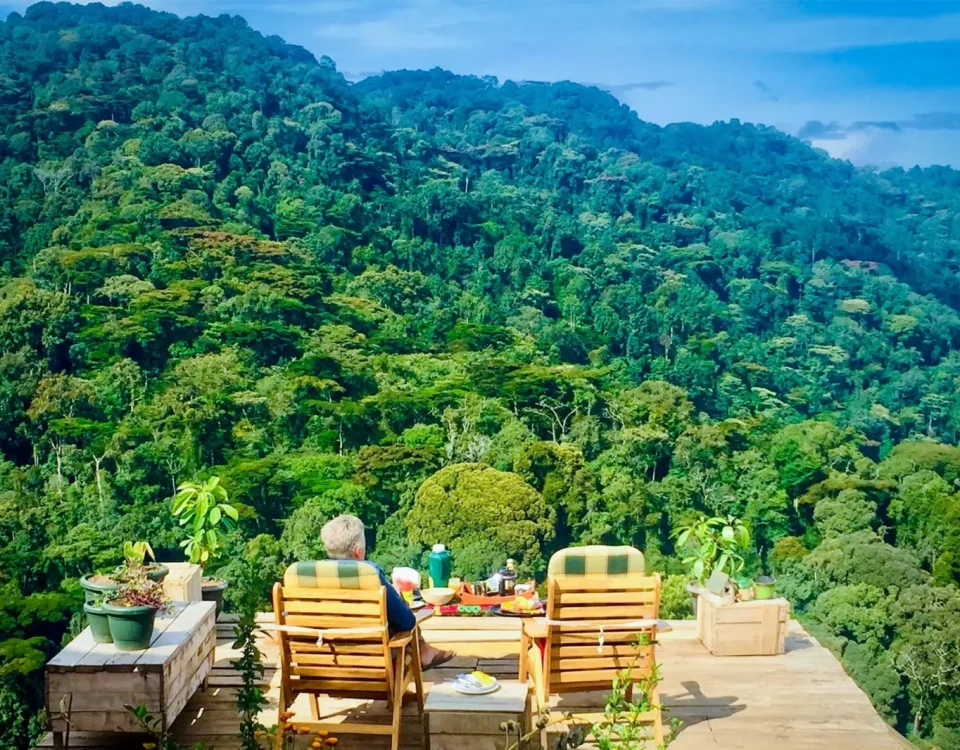
Their habitat consists of dense montane and submontane forests characterized by thick vegetation, bamboo zones, and high rainfall.
These forests provide both food and shelter, supporting a largely terrestrial but forest-dependent lifestyle.
Altitudinal Movement
Mountain gorillas may shift elevation slightly depending on food availability and seasonal conditions, but they do not undertake long-distance migrations.
Their movement is localized within established home ranges.
Social Structure and Group Dynamics
Gorilla Groups
Mountain gorillas live in cohesive family groups led by a dominant silverback.
A typical group may include multiple females, their offspring, and occasionally subordinate males.
Group size can vary from a few individuals to over 20 members.
Role of the Silverback
The silverback is responsible for:
Leading group movement
Resolving conflicts
Defending against external threats
Maintaining social cohesion
His leadership is central to group stability.
Female Movement Between Groups
Females may transfer between groups during their lifetime, which helps maintain genetic diversity.
This movement is one of the mechanisms that prevents inbreeding within isolated populations.
Behavior and Daily Life
Feeding Patterns
Mountain gorillas are primarily herbivorous, feeding on leaves, stems, shoots, and occasionally fruit.
Their diet varies depending on habitat, but they spend a significant portion of the day foraging.
Daily Activity Cycle
A typical day involves:
Morning feeding and movement
Midday rest and social interaction
Afternoon feeding
Evening nest building
Each individual builds a new nest each night, either on the ground or in low vegetation.
Communication
Gorillas communicate through a range of vocalizations, body postures, and facial expressions.
These signals regulate group interactions and help avoid conflict.
Reproduction and Life Cycle
Breeding Patterns
Mountain gorillas do not have a strict breeding season.
Females give birth approximately every four years, which is a relatively slow reproductive rate.
Mountain Gorillas
Infant Development
Infants are highly dependent on their mothers for the first few years of life.
They gradually become more independent but remain within the group structure.
Lifespan
In the wild, mountain gorillas can live into their 30s or 40s, depending on environmental conditions and health factors.
Threats to Mountain Gorillas
Habitat Loss
Although their habitat is now protected, historical deforestation significantly reduced available forest area.
Human population pressure around protected zones remains a concern.
Disease Transmission
Due to genetic similarity with humans, gorillas are highly susceptible to human diseases.
Respiratory infections are one of the most serious risks.
Poaching and Snares
While direct poaching for gorillas is rare, they are often affected by snares set for other animals.
These can cause injury or death if not removed.
Conservation Strategies and Success
Protected Area Management
National parks such as Bwindi Impenetrable National Park and Volcanoes National Park are central to gorilla conservation.
Strict protection limits human activity within these forests.
Anti-Poaching Efforts
Regular patrols by trained rangers reduce illegal activities and remove snares from the forest.
These efforts have significantly lowered mortality rates.
Veterinary Intervention
Specialized veterinary teams monitor gorilla health and intervene when necessary.
This has improved survival rates, particularly for injured individuals.
Tourism as a Conservation Tool
Gorilla trekking generates revenue that funds conservation operations and supports local communities.
This creates a financial incentive to protect gorillas and their habitat.
Conservation Status
Population Growth
Mountain gorilla numbers have increased from around 620 individuals in the late 20th century to over 1,000 today.
This is one of the few examples of a large mammal population recovering from near extinction.
Current Classification
Despite this success, mountain gorillas remain classified as endangered.
Their limited range means they are still vulnerable to environmental and human-related threats.
Why Mountain Gorillas Matter Ecologically
Role in Forest Ecosystems
Mountain gorillas contribute to seed dispersal and vegetation dynamics within their habitat.
Their feeding behavior helps maintain plant diversity and forest structure.
Indicator Species
Because they require intact forest ecosystems, gorillas act as indicators of environmental health.
Protecting them also protects a wide range of other species within the same habitat.
Observing Mountain Gorillas
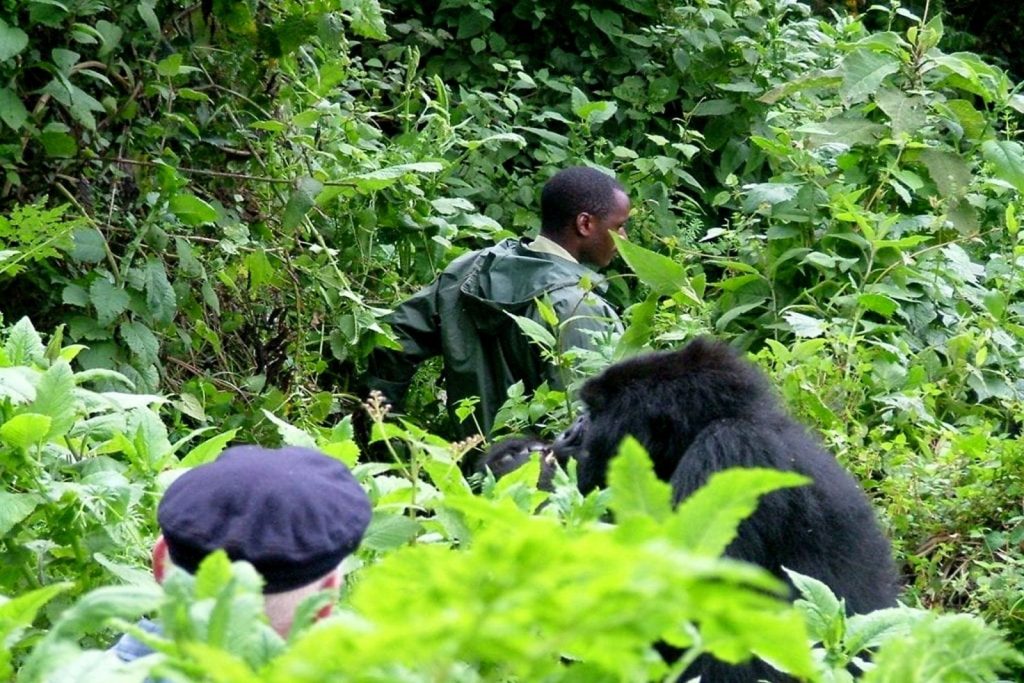
In practical terms, observing mountain gorillas is less about spectacle and more about proximity and behavior.
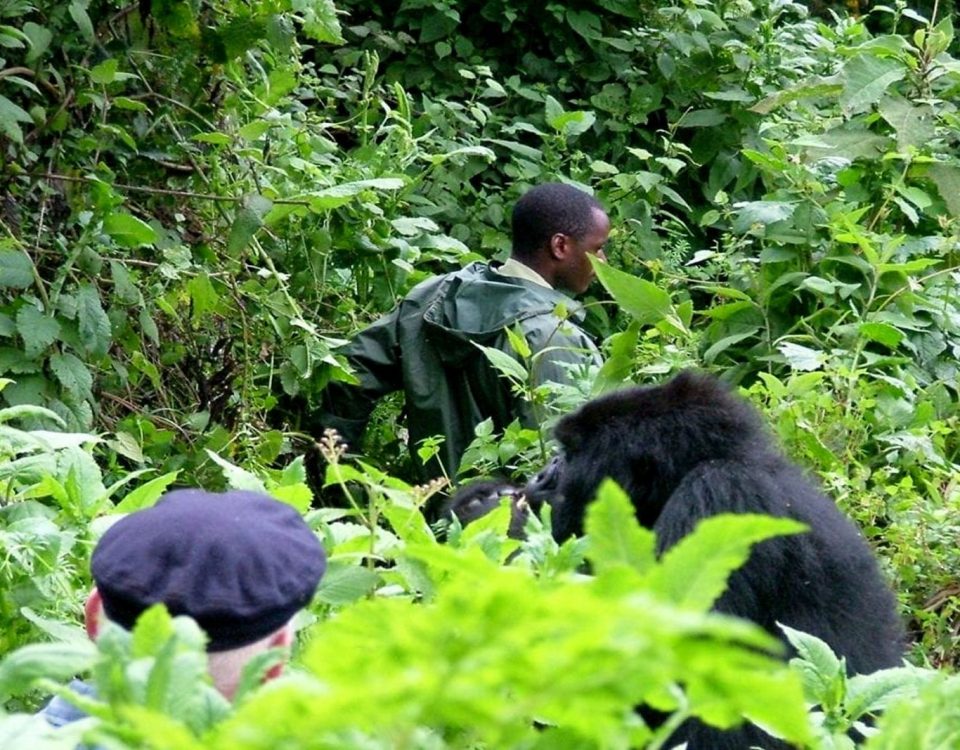
Encounters take place at close range within dense forest, often in quiet, controlled conditions.
The experience is defined by watching social interaction, feeding behavior, and group dynamics rather than dramatic movement or predation events.
This makes gorilla trekking fundamentally different from savannah safaris. It is slower, more focused, and centered on understanding a single species in depth rather than scanning for multiple animals across open landscapes.
Everything You Need to Know About Mountain Gorillas
The mountain gorilla (Gorilla beringei beringei) is one of the world’s most endangered great apes and one of its most magnificent wildlife spectacles. With fewer than 1,063 individuals remaining in the wild, every encounter with a habituated gorilla family is a rare and deeply moving privilege.
Mountain gorillas live in family groups of 5-30 individuals, led by a dominant silverback male. Gorillas are primarily herbivores, feeding on leaves, stems, bark, roots and fruits – a silverback can consume up to 34kg of vegetation per day. At dusk each individual builds a fresh sleeping nest from bent vegetation.
Where to See Mountain Gorillas
Mountain gorillas can only be seen in the wild – they do not survive in captivity. They exist in two populations:
- Bwindi Impenetrable Forest, Uganda: The largest gorilla population, home to over 400 individuals across 19 habituated families. Four trekking sectors: Buhoma, Ruhija, Rushaga, and Nkuringo.
- Virunga Massif: Shared between Uganda (Mgahinga), Rwanda (Volcanoes National Park), and the DRC (Virunga National Park). Home to around 600 gorillas across the six volcanic mountains.
Gorilla Trekking Permits – Uganda vs Rwanda
Both Uganda and Rwanda offer outstanding gorilla trekking experiences with important differences:
- Uganda (USD 800): More affordable permit. Greater number of habituated families and sectors. Bwindi terrain is more challenging but offers more choice. Also offers the Gorilla Habituation Experience (USD 1,500).
- Rwanda (USD 1,500): Higher permit cost but closer to Kigali airport (2.5 hours). More developed luxury lodge sector. Smaller park but highly managed experience with reliable gorilla sightings.
Recommended Tours: 4 Days Bwindi Gorilla Trekking Safari | 4 Days Rwanda Gorilla Trekking Safari