
Tanzanian Food Guide: From Zanzibar Spices to Savanna Stews (2026)
Tanzanian cuisine is one of the most diverse in East Africa because it reflects a powerful mix of mainland traditions, coastal Swahili culture, Indian Ocean trade influences, and island spice heritage from Zanzibar. The result is a food culture that ranges from simple rural stews in the savanna to richly spiced seafood dishes along the coast.
Whether you are eating street food in Dar es Salaam, sampling spices in Zanzibar, or enjoying safari lodge cuisine near the plains of Serengeti National Park, Tanzanian food tells a story of geography, history, and cultural exchange.
This guide explores the essential dishes, street food culture, regional specialties, and dining experiences that define Tanzania’s culinary identity.
Understanding Tanzanian Cuisine
Tanzanian food is built around starches, legumes, vegetables, seafood, and meat. The most common staples include rice, ugali (maize porridge), cassava, plantains, and sweet potatoes.
What makes Tanzanian cuisine unique is its layering of influences. The mainland tends to favor simple, hearty stews, while the coastal regions and islands incorporate coconut, cloves, cinnamon, cardamom, and other spices brought through centuries of trade across the Indian Ocean.
Meals are typically communal, with shared plates and a strong emphasis on freshness and balance.
Ugali: The Mainland Staple
Ugali is the foundation of Tanzanian food, especially in rural areas and savanna regions. It is made from maize flour and water, cooked into a thick, dough-like consistency that is eaten with hands.
Ugali is typically served with:
Meat stews
Fish
Beans
Vegetable sauces
In areas around Serengeti National Park, ugali is commonly served in safari lodges as part of traditional buffet meals, often paired with slow-cooked beef or game-style stews.
It is simple, filling, and deeply tied to everyday life.
Wali (Rice Dishes) and Coastal Influence
Rice is extremely important along Tanzania’s coast, especially in regions influenced by Swahili culture. It is often cooked with coconut milk or spices, creating fragrant dishes that differ significantly from mainland cuisine.
Popular rice dishes include:
Pilau rice (spiced rice with meat)
Biryani (influenced by Indian cuisine)
Coconut rice served with fish or curry
These dishes are especially common in coastal cities like Dar es Salaam, where Indian Ocean culinary traditions are strongest.
Zanzibar Cuisine: The Spice Island Experience
Zanzibar is the heart of Tanzania’s spice culture. Known historically as a major spice trading hub, the island produces cloves, nutmeg, cinnamon, and cardamom, which define its cuisine.
Dishes are highly aromatic and flavorful, often combining seafood with rich spice blends and coconut-based sauces.
One of the most famous experiences is exploring Stone Town’s food markets, where spices and street food reflect centuries of cultural exchange.
Zanzibar cuisine is not just food—it is a sensory experience shaped by history.
Nyama Choma: Grilled Meat Culture
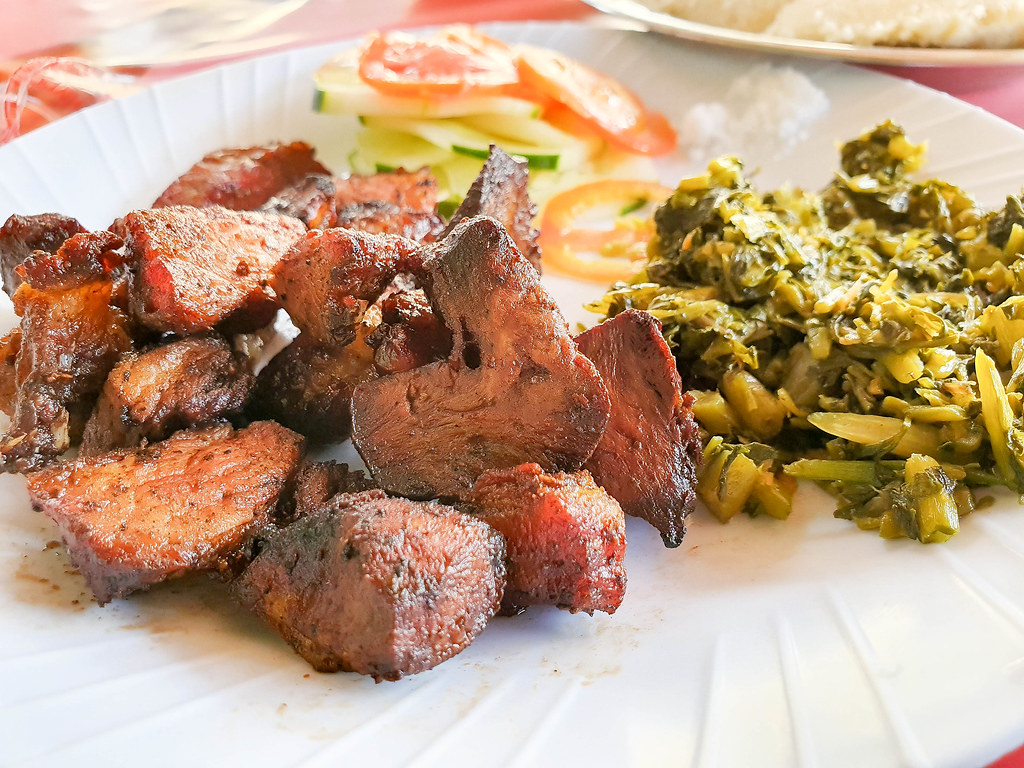
Across mainland Tanzania, grilled meat—known as nyama choma—is a popular social food. Goat, beef, and chicken are grilled over charcoal and served with chili, onions, and side dishes.
It is commonly eaten in informal restaurants, bars, and roadside stalls.
In cities like Dar es Salaam, nyama choma is an evening tradition where people gather to socialize over grilled meat and drinks.
The simplicity of the dish is part of its appeal: fresh meat, fire, and community.
Samaki (Fish) Along the Coast and Lakes
Fish is a major part of Tanzanian cuisine, especially along the coast and near lakes such as Lake Victoria.
Fish is typically:
Grilled with spices
Fried and served with rice or chips
Cooked in coconut-based curries
Coastal regions and islands serve some of the freshest seafood in East Africa, heavily influenced by Swahili culinary traditions.
In inland safari regions like Serengeti National Park, fish is less common but still available in lodge menus as part of international-Tanzanian fusion cuisine.
Street Food Culture in Tanzania
Street food is a major part of Tanzanian daily life, especially in urban areas. It is affordable, widely available, and deeply integrated into social culture.
Common street foods include:
Mishkaki (grilled meat skewers)
Samosas
Mandazi (fried dough)
Chips mayai (French fries omelette)
Roasted maize
In Dar es Salaam, street food stalls operate throughout the day and into the night, forming a vibrant food culture that reflects both local and coastal influences.
Chips mayai, in particular, is a uniquely Tanzanian invention—simple, filling, and extremely popular.
Tanzanian Food Guide
Zanzibar Pizza: A Unique Island Street Food
One of the most famous street foods in Zanzibar is “Zanzibar pizza,” which is not a traditional pizza but rather a stuffed dough crepe filled with meat, vegetables, egg, or seafood.
It is cooked fresh on hot griddles in Stone Town markets and customized to taste.
This dish reflects the island’s creative, multicultural food identity and is a must-try for visitors.
Ndizi (Plantains) and Banana Dishes
Plantains and bananas are widely eaten across Tanzania, especially in the northern and western regions.
They are prepared in many ways:
Boiled green bananas served with meat stew
Fried ripe plantains as a snack or side dish
Cooked banana stews with groundnuts or beans
These dishes are especially common in rural areas and safari regions, including near Serengeti National Park.
Beans, Stews, and Everyday Meals
Beans are a major protein source in Tanzanian cuisine. They are usually cooked in tomato-based sauces and served with rice, ugali, or plantains.
Meat stews are also common, often slow-cooked with onions, tomatoes, and spices.
These everyday meals are simple but deeply satisfying, forming the foundation of home cooking across the country.
Coffee Culture in Northern Tanzania
Northern Tanzania, especially areas near Mount Kilimanjaro and Arusha, is known for high-quality coffee production.
Coffee is typically locally grown and served strong, often in small cups. It is part of both daily life and hospitality culture.
Many safari routes passing through northern Tanzania offer opportunities to experience coffee farms and local roasting traditions.
Safari Lodge Dining Experience
In safari regions like Serengeti National Park, food is typically a blend of Tanzanian and international cuisine.
Lodges often serve:
Buffet-style meals with local and global dishes
Fresh grilled meats and vegetables
Rice, pasta, and stews
Fresh tropical fruits
While not strictly traditional, lodge dining often introduces visitors to Tanzanian flavors in a refined setting.
Food Safety and Travel Tips
Tanzania is generally safe for food travel, especially in established restaurants and lodges.
Basic precautions include:
Eating freshly cooked food
Drinking bottled or purified water
Choosing busy, reputable food stalls
Being cautious with raw salads in informal settings
In cities like Dar es Salaam, street food is widely consumed by locals and is generally safe when freshly prepared.
Regional Differences in Tanzanian Cuisine
Tanzania’s size and diversity create clear regional food variations:
Coastal regions emphasize spices, coconut, and seafood
Mainland savannas focus on ugali, meat stews, and beans
Northern regions include bananas, coffee, and vegetable-rich dishes
Zanzibar highlights spice-heavy, aromatic cooking
This diversity makes Tanzanian cuisine one of the most varied in East Africa.
Tanzanian food is a reflection of its landscapes and history. From the spice-filled kitchens of Zanzibar to the simple, hearty stews of the savanna, every dish tells a story of cultural blending and regional identity.
Whether you are eating grilled mishkaki in Dar es Salaam, enjoying coconut rice by the coast, or having a buffet meal in a lodge near Serengeti National Park, the experience is always grounded in freshness and tradition.
Tanzanian cuisine is not about complexity—it is about connection: to land, to history, and to the people who prepare it every day.
Top Things to Do in Zanzibar
Zanzibar offers far more than white-sand beaches and turquoise waters — though those alone would be reason enough to visit. The island is a rich tapestry of Swahili culture, colonial history, spice plantations, and extraordinary marine life.
- Explore Stone Town: A UNESCO World Heritage Site, Stone Town is a labyrinth of narrow streets, carved wooden doors, bustling markets, and centuries-old Arab, Indian, and European architecture. Don’t miss the House of Wonders, the Old Fort, and the Darajani Market.
- Visit a spice farm: Zanzibar earned its name as the “Spice Island” for good reason. A guided spice farm tour introduces you to cloves, vanilla, cinnamon, cardamom, black pepper, and turmeric growing in their natural environment.
- Snorkel or dive: The waters around Zanzibar are home to colourful coral reefs, sea turtles, dolphins, whale sharks, and over 500 fish species. Mnemba Atoll is one of East Africa’s premier dive sites.
- Watch dolphins in Kizimkazi: The shallow, sheltered waters of Kizimkazi on the south coast are home to pods of bottlenose and spinner dolphins. Early morning boat trips offer a good chance of seeing them.
- Relax on Nungwi or Kendwa Beach: The north coast beaches at Nungwi and Kendwa have calm, clear water (unaffected by tides) and a lively beach bar atmosphere. Perfect for swimming, sunset drinks, and beach volleyball.
- Visit Prison Island: A short boat ride from Stone Town, Prison Island (Changuu Island) was once used to quarantine yellow fever patients. Today it is home to a colony of giant Aldabra tortoises, some over 100 years old.
Recommended Tours: 6 Days Tanzania Wildlife Safari | 5 Days Ngorongoro & Serengeti Safari