
Hippopotamus in East Africa: Facts and Best Viewing Spots
The hippopotamus is one of the most physically imposing and behaviorally aggressive large mammals in East Africa, yet it is often underestimated by safari travellers because most of its activity happens in water. In reality, hippos are responsible for more human fatalities in Africa than many large carnivores, making them one of the most dangerous animals to encounter in the wild.
In ecosystems such as the Masai Mara National Reserve and the Serengeti National Park, hippos play a critical ecological role in shaping river systems while maintaining complex social groups within aquatic territories.
Understanding hippo behavior is essential for appreciating both their ecological importance and the risks they present in close-range encounters.
What makes hippos unique among African wildlife
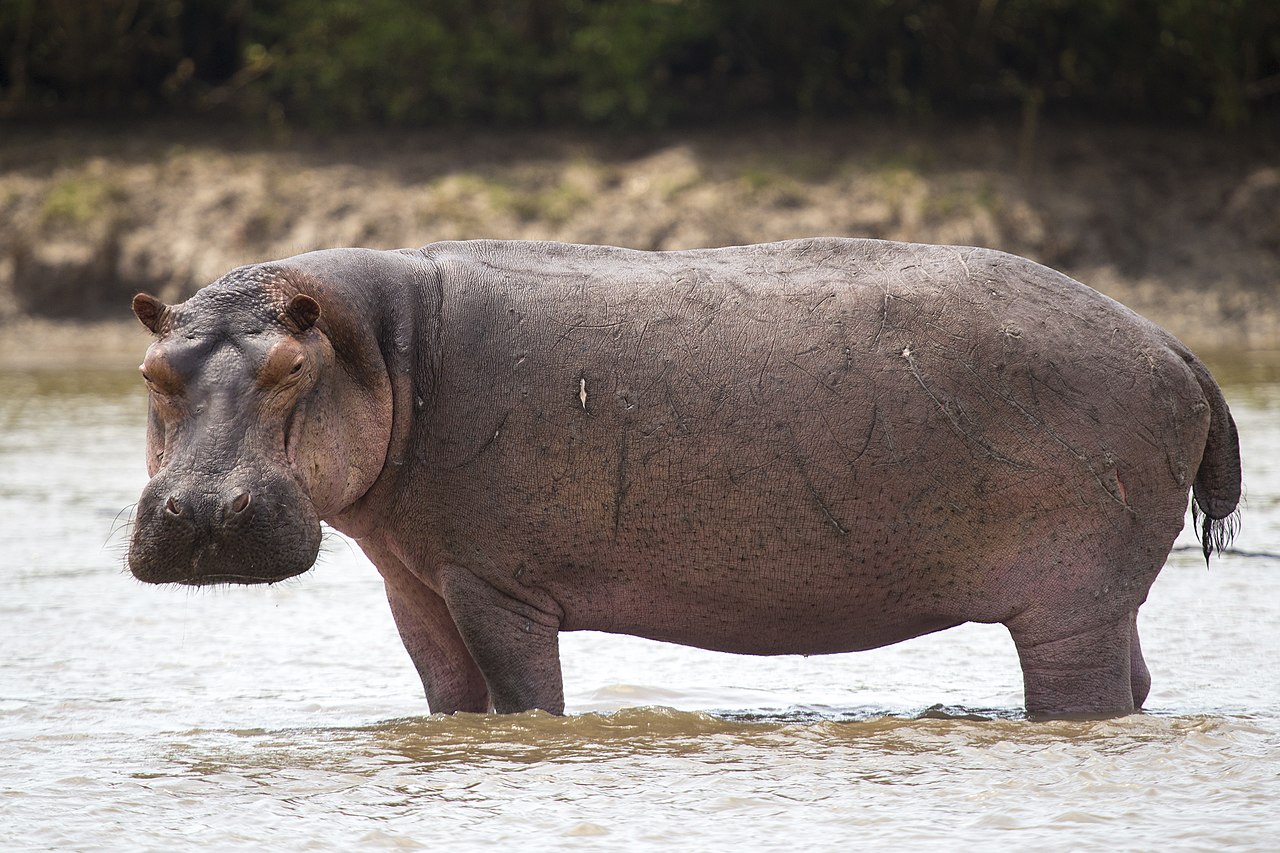
The hippopotamus (Hippopotamus amphibius) is semi-aquatic, spending most of its daytime submerged in rivers, lakes, or pools to regulate body temperature and protect its sensitive skin from sun exposure.
Despite their bulky appearance and slow movement on land, hippos can reach speeds of up to 30 km/h over short distances. This surprising agility is one of the reasons they are considered extremely dangerous.
Their large canine teeth are not used for feeding but for defense and dominance disputes. These teeth can cause severe injury during territorial confrontations.
Hippos are also highly territorial in water, where most aggressive encounters occur.
Hippo social structure and group behavior
Hippos live in groups called pods or bloats, which typically consist of 10 to 30 individuals but can be much larger in resource-rich areas.
These groups are structured around dominant males who control access to sections of river or water pools.
Females and juveniles form the core of the group, while subordinate males are often forced to the edges or expelled entirely.
Territorial boundaries in water are strictly maintained, and violations often lead to aggressive confrontations involving loud vocalizations, charging, and physical clashes.
Why hippos are dangerous despite their calm appearance
Hippos appear calm while submerged, often seen floating or resting in groups with only their eyes and nostrils visible above water.
However, this stillness is deceptive.
Hippos are highly reactive when they perceive threats, especially near their territory or calves.
Most dangerous encounters occur when:
A hippo is between water and land
A boat or vehicle approaches too closely
A human unknowingly blocks a hippo’s path to water
On land, hippos are particularly dangerous because they often move between feeding grounds and water at night, sometimes crossing paths with humans or safari vehicles.
Feeding behavior and land movement
Hippos are herbivores, but they spend most of their feeding activity on land during nighttime hours.
They can travel several kilometers from water sources in search of grass, often following established paths used repeatedly over time.
These nightly movements are critical to their survival but also increase the likelihood of human encounters in areas near rivers and wetlands.
After feeding, hippos return to water before sunrise to spend the day submerged.
Hippos and river ecosystems
Hippos are ecosystem engineers, playing a major role in shaping aquatic environments.
Their movement and waste contribute nutrients to river systems, influencing fish populations and plant growth.
At the same time, their territorial behavior can affect the distribution of other aquatic species.
In river systems such as those found in the Serengeti and Mara ecosystems, hippos help maintain ecological balance between land and water environments.
Best places to see hippos in East Africa
Hippos are widely distributed across East Africa, but certain locations offer particularly strong viewing opportunities.
One of the most reliable areas is the Masai Mara ecosystem, where large hippo pods are commonly found in river systems such as the Mara River.
Here, hippos are often seen submerged during the day in large groups, especially in deep pools that provide safety and thermal regulation.
The Serengeti ecosystem also supports significant hippo populations, particularly along river corridors where water remains permanent throughout the year.
Ngorongoro Crater hippos
The Ngorongoro Crater provides one of the most unique hippo viewing environments in Africa.
Within the crater, hippos are concentrated in permanent pools where they remain visible throughout the day.
Unlike river systems with long stretches, the enclosed nature of the crater allows for more predictable viewing conditions.
Hippos here are often seen clustered in mud pools surrounded by grassland and forest edges, creating a distinctive visual contrast.
Behavior at hippo pools
Hippo pools are highly structured environments.
Dominant males position themselves in deeper sections of water, while subordinate individuals remain closer to edges or shallower areas.
Fighting can occur when territorial boundaries are challenged, often involving loud vocalizations, open-mouth displays, and physical clashes.
Despite these aggressive interactions, most daily activity appears calm when observed from a safe distance.
Nighttime activity and feeding routes
Hippos are primarily nocturnal feeders.
After sunset, they leave water in groups or individually to graze on surrounding grasslands.
These movements follow established paths known as hippo trails, which can remain consistent over long periods.
At dawn, hippos return to water, often moving in predictable sequences based on social hierarchy and proximity to entry points.
Hippopotamus in East Africa
Communication and vocal behavior
Hippos are highly vocal animals, using grunts, bellows, and underwater vibrations to communicate.
These sounds serve multiple functions, including territorial signaling, group coordination, and warning displays.
Vocal communication is especially important in dense aquatic environments where visual cues are limited.
Human risk and safety considerations
Hippos are responsible for a significant number of human injuries and fatalities in rural Africa, particularly in areas where human settlements are close to water systems.
Most incidents occur during nighttime encounters on land or accidental proximity in boats.
Their defensive behavior is triggered quickly when they feel blocked or threatened, making distance management critical in all viewing situations.
Safari guides maintain strict positioning rules around hippo pools and river crossings to avoid risk.
Hippos and predator interactions
Despite their size, hippos are rarely targeted by predators due to their strength and aggressive defense behavior.
Lions may occasionally attempt to prey on young or isolated individuals, but such attempts carry high risk.
Crocodiles share river habitats with hippos, but interactions are generally limited to neutral coexistence rather than active conflict, except in rare territorial disputes.
Why hippos are essential to safari ecosystems
Hippos play a major ecological role in connecting aquatic and terrestrial ecosystems.
Their grazing patterns influence grassland structure, while their aquatic behavior affects nutrient flow in rivers and lakes.
They are a key species in maintaining ecological balance in East African water systems.
Without hippos, many river environments would function differently in terms of plant growth and aquatic biodiversity.
Safari viewing experience and photography
Hippo viewing is often most effective during midday hours when they are fully submerged and easier to locate in pools.
From a safari perspective, hippos are usually observed from vehicles near riverbanks or from designated viewpoints in protected areas.
Photography opportunities often focus on surface behavior such as yawning, social interactions, or partial submersion patterns.
Their predictable resting behavior makes them one of the more reliably visible large mammals on safari.
The reality of hippo encounters on safari
For most travellers, hippos are seen frequently but from a safe distance.
They are not elusive like leopards or rhinos, but they are not safely approachable due to their territorial nature.
The experience of observing hippos is defined by respect for distance and awareness of their behavioral unpredictability.
Even though they appear slow and passive in water, their land movement and defensive responses make them one of the most dangerous animals in Africa.