Hippo Facts & Where to See Them on the Nile and Kazinga Channel
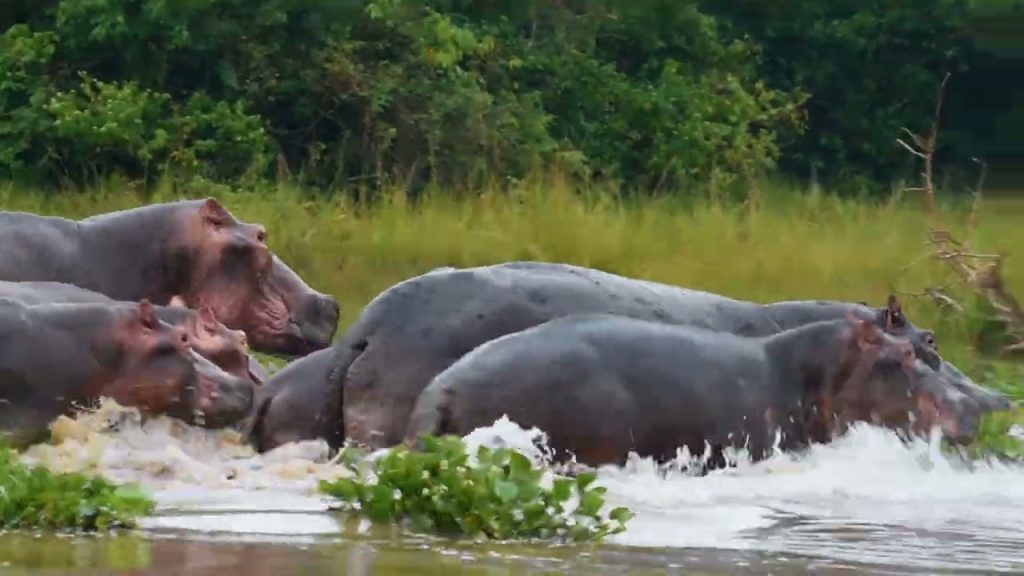
A hippo safari in Uganda often happens almost by accident, since these enormous, deceptively dangerous animals are so abundant along the country’s major waterways that spotting them barely requires effort. Despite their comical, slow-moving appearance on land, hippos are Africa’s deadliest large mammal by most measures, and understanding their real behavior adds genuine depth to what might otherwise be a quick photo stop. This guide covers the facts worth knowing and the best places in Uganda to see hippos up close, safely.
Why Hippos Are More Dangerous Than They Look
Hippos kill more people in Africa annually than lions, leopards, and elephants combined, a statistic that surprises many first-time visitors given the animal’s slow, almost comical movement on land. Their aggression stems largely from territorial instinct in water, where they spend most of the day submerged to protect their sensitive skin from sun exposure, and from sheer size and speed when they do move, capable of surprising bursts on land despite their bulk. Most hippo attacks on humans happen when boats or people inadvertently come between a hippo and open water, or between a mother and her calf, which is exactly why guided boat safaris maintain careful, practiced distances rather than approaching for a closer photo.
Hippo Behavior and Social Structure
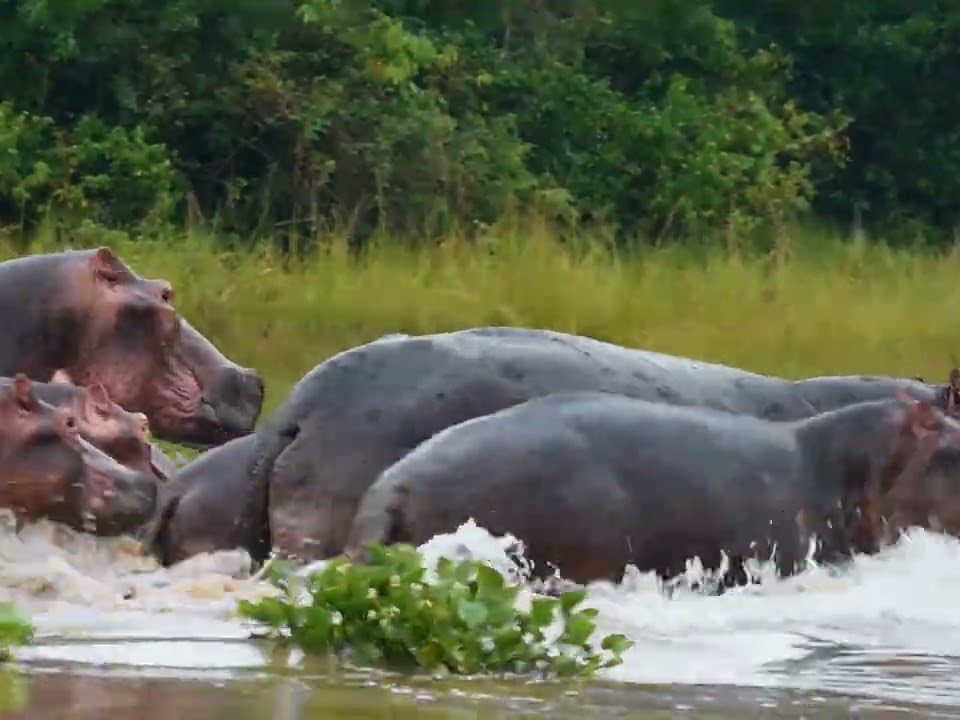
Hippos live in groups called pods, typically ranging from a handful to several dozen individuals, dominated by a territorial bull who defends a stretch of water against rival males, sometimes in genuinely violent confrontations involving their formidable canine teeth. Despite spending most daylight hours submerged or wallowing in shallow water, hippos are actually herbivores, emerging at night to graze on grasses along the shoreline, sometimes traveling considerable distances from water to feed before returning by dawn. This nocturnal grazing pattern explains why daytime sightings almost always show hippos resting in water rather than actively feeding.
The Kazinga Channel: Uganda’s Premier Hippo Destination
The Kazinga Channel, connecting Lake Edward and Lake George within Queen Elizabeth National Park, holds one of the highest hippo concentrations anywhere in Africa, with estimates regularly citing thousands of individuals along its roughly thirty-two kilometer length. A boat safari along the channel offers exceptional, close-range hippo viewing, alongside crocodiles, elephants coming to drink, and abundant waterbirds, making it one of the most consistently rewarding wildlife activities in the entire park. Boats maintain safe, guide-managed distances while still allowing genuinely close observation, a balance that vehicle-based game drives can rarely match for this particular species.
Murchison Falls and the Nile’s Hippo Population
The Nile within Murchison Falls National Park supports another substantial hippo population, particularly along the calmer stretches below the falls themselves, where boat safaris departing from the park’s main launch site offer excellent viewing alongside Nile crocodiles and a wide range of waterbirds. The contrast between the Nile’s dramatic, churning falls upstream and the calmer hippo-filled waters below makes this stretch of river doubly rewarding for visitors combining a boat safari with the falls viewpoint hike.
Other Places to See Hippos in Uganda
Beyond the Kazinga Channel and the Nile, Lake Mburo National Park offers reliable hippo sightings in a smaller, more intimate setting, and its status as one of the few Ugandan parks permitting walking safaris means visitors sometimes encounter hippo tracks and grazing evidence on land during guided walks, a different angle on the species than the standard boat-based viewing. Various other lakes and rivers across Uganda’s parks hold smaller hippo populations, though the Kazinga Channel and the Nile remain the two most reliable and rewarding destinations specifically for hippo viewing.
The Best Way to View Hippos Safely
Guided boat safaris represent the safest and most rewarding way to observe hippos at close range, since experienced boat operators know how to read hippo body language and maintain appropriate distances without disrupting the animals or provoking a defensive reaction. Viewing from a vehicle along the shoreline is also safe and reasonably effective, though it typically offers a more distant vantage point than a boat can provide. Approaching hippos on foot near water, outside of a guided walking safari with a trained ranger, is genuinely dangerous and should never be attempted independently, regardless of how docile a resting hippo might appear from a distance, since that apparent calm can shift to a defensive charge in a matter of seconds if a hippo feels its route back to water is threatened.
Best Time of Day and Season for Hippo Viewing
Hippos are visible in their water habitats throughout the day, making them one of the more reliably sighted large mammals on any Uganda itinerary regardless of timing, though early morning and late afternoon boat safaris often catch more activity, including territorial displays and vocalizations between individuals within a pod. Dry season months can concentrate hippos more visibly around shrinking water sources in some areas, while the Kazinga Channel and Nile’s larger, more permanent water bodies maintain consistent hippo populations regardless of season.
Hippo Facts Worth Knowing
Adult hippos can weigh well over a ton, making them Africa’s third-largest land mammal after elephants and white rhinos, despite their squat, low-slung appearance suggesting otherwise. Their skin secretes a natural reddish, oily substance sometimes called “blood sweat,” which acts as both a sunscreen and antimicrobial protection, not actual blood or sweat despite the misleading name. Hippos can hold their breath for several minutes underwater and even sleep partially submerged, surfacing periodically and instinctively to breathe without fully waking, one of several adaptations that let them spend the bulk of daylight hours in water.
Photographing Hippos on a Boat Safari
Boat safaris offer excellent hippo photography opportunities, particularly for capturing the wide, expressive yawns males display during territorial encounters, a behavior showcasing their massive canine teeth and one of the most sought-after hippo photographs on any Uganda safari. A telephoto lens helps isolate individuals within a crowded pod, while a wider lens captures the scale of larger groups along the Kazinga Channel’s banks. Shooting from a stable position on the boat, and following crew guidance about movement and noise levels, produces sharper images than trying to shoot while the boat is still maneuvering into position.
Hippos and the Wider Ecosystem
Hippos play an outsized ecological role relative to their herbivorous diet, since their nightly grazing and the sheer volume of dung they deposit in water bodies cycle nutrients that support fish populations and aquatic plant life along the Kazinga Channel and Nile. Their wallowing also helps maintain deeper channels and pools that other species rely on during drier periods, making them something of an ecosystem engineer despite their reputation being built mostly around their aggression and danger to humans rather than this quieter ecological contribution.
Combining Hippo Viewing With Your Wider Itinerary
A boat safari on the Kazinga Channel pairs naturally with the rest of a Queen Elizabeth National Park itinerary, typically scheduled alongside game drives and, for many travelers, a stop to see the park’s tree-climbing lions in the nearby Ishasha sector. Travelers building a broader Uganda wildlife circuit around gorilla trekking should treat a hippo-focused boat safari as one of the more reliable, low-effort wildlife highlights to build into an itinerary, given how consistently rewarding the sightings are compared to species that require more patience or luck to spot, making it one of the easiest wildlife wins to build into an already packed schedule.
Recommended Tours: 10 Days Ultimate Uganda Gorilla & Big Five Safari | 9 Days Uganda Gorilla Safaris & Jinja Nile Cultural Experience