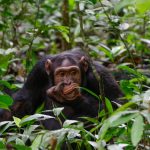

Bonobo vs Chimpanzee: Could You Ever See Both in East Africa?
Bonobo vs chimpanzee comparisons come up often among travelers researching East Africa primate trips, and the honest starting point is a genuinely important geographic fact: bonobos and chimpanzees, while closely related, don’t share the same range, and standard East Africa gorilla and chimpanzee safari circuits in Uganda, Rwanda, and Kenya don’t include bonobo territory at all. Understanding exactly why, and what it would actually take to see both species, helps set realistic expectations for any serious primate-focused itinerary. This guide explains the real differences and genuine logistics involved.
Where Bonobos Actually Live
Bonobos exist exclusively in the Democratic Republic of Congo, specifically in forest habitat south of the Congo River, a natural geographic barrier that has kept bonobo and chimpanzee populations entirely separate throughout their evolutionary history. This means no standard Uganda, Rwanda, or Kenya itinerary includes bonobo viewing, regardless of how comprehensive the primate focus.
Where Chimpanzees Live Across East Africa
Chimpanzees, by contrast, range across a considerably wider swath of Central and East Africa, including Uganda’s Kibale Forest, Budongo Forest, and Kyambura Gorge, alongside populations in Rwanda’s Nyungwe Forest and Tanzania’s Gombe and Mahale Mountains, making chimpanzee tracking a genuinely accessible, well-established activity across the standard East Africa circuit.
How Scientists First Distinguished the Two Species
Bonobos weren’t formally recognized as a distinct species from chimpanzees until the early twentieth century, a relatively recent scientific distinction given how long chimpanzees themselves had already been studied, reflecting both the bonobo’s restricted, hard-to-access range and the genuine subtlety of the physical differences separating the two closely related apes.
Key Physical Differences Between Bonobos and Chimpanzees
Bonobos are generally somewhat more slender and gracile than chimpanzees, with longer limbs relative to body size, a pinker face, and a distinctive hair part down the middle of the head that chimpanzees don’t share. These physical distinctions, while subtle to an untrained eye, are consistent enough that primatologists can readily distinguish the two species.
What Vocal and Communication Differences Reveal
Beyond physical and social distinctions, bonobos and chimpanzees also display different vocal communication patterns, with researchers noting bonobos tend toward higher-pitched calls and a somewhat different repertoire of gestures compared to chimpanzees, differences that reflect their distinct social structures and communication needs shaped by millions of years of separate evolution.
Behavioral Differences Worth Understanding
Perhaps the most genuinely significant distinction between the species lies in social behavior, bonobo society is generally considered more female-led and notably less prone to the kind of inter-group violence sometimes documented among chimpanzee communities, a difference that has made bonobos a subject of particular fascination among primatologists studying the evolutionary roots of cooperation and conflict.
What Makes Bonobos a Symbol of Peaceful Primate Society
Bonobos have become something of a cultural touchstone in discussions of primate behavior specifically because of their documented tendency toward conflict resolution through social bonding and reduced aggression compared to chimpanzees, a distinction that has fueled genuine scientific and public interest in what this difference reveals about the flexibility of primate, and by extension human, social behavior.
Why Bonobo Trekking Isn’t Part of Standard East Africa Itineraries
Seeing wild bonobos requires travel specifically to the Democratic Republic of Congo, a considerably more complex logistical and security undertaking than standard Uganda or Rwanda gorilla and chimpanzee trekking, given the DRC’s more limited tourism infrastructure and the specific security considerations that vary by region and require current, professional guidance before any travel planning begins.
What a Genuine Bonobo and Chimpanzee Combination Trip Would Involve
Travelers seriously interested in observing both species within a single broader trip would need to combine standard Uganda or Rwanda chimpanzee tracking with a separate, specifically arranged DRC bonobo viewing itinerary, a considerably more involved undertaking than a standard East Africa safari and one requiring specialized operators experienced in DRC logistics specifically.
Why This Distinction Matters for Trip Planning
Understanding this geographic reality upfront prevents disappointment or confusion during itinerary planning, and travelers specifically drawn to bonobos should research DRC-focused options separately rather than assuming any standard East Africa gorilla or chimpanzee package might include bonobo access.
The Genetic Closeness of Both Species to Humans
Both bonobos and chimpanzees share an almost identical, remarkably close genetic relationship to humans, roughly ninety-eight to ninety-nine percent shared DNA, making both species equally significant from a scientific and conservation perspective despite their geographic separation and behavioral differences.
What Chimpanzee Tracking Genuinely Delivers in Uganda
Uganda’s chimpanzee tracking, particularly in Kibale Forest, offers reliably high sighting success rates, well-developed guiding infrastructure, and genuinely close, unforgettable encounters with wild chimpanzee communities, a mature, well-established program that has developed over decades of research and tourism investment. Travelers shouldn’t view this as a lesser alternative to bonobo viewing but rather as a genuinely world-class wild ape experience in its own right.
How to Talk About This With Your Operator
If bonobo viewing genuinely interests you, being upfront with your operator about this specific interest early in the planning process helps them advise honestly on realistic options, whether that means focusing your trip entirely on East Africa’s excellent chimpanzee and gorilla offerings or exploring a separate, specialized DRC extension with a qualified partner operator.
Focusing on What East Africa Genuinely Offers
Rather than viewing the absence of bonobos as a limitation, travelers can appreciate that East Africa’s chimpanzee tracking, particularly in Kibale Forest, offers a genuinely world-class, well-established wild ape experience in its own right, complemented by mountain gorilla trekking unavailable anywhere near bonobo habitat.
How the Congo River Shaped Two Distinct Species
The Congo River’s formation millions of years ago effectively split an ancestral ape population, with the group isolated south of the river evolving into what we now recognize as bonobos, while the population north of the river continued along the evolutionary path leading to modern chimpanzees. This natural barrier remains so effective that the two species have never naturally interbred in the wild, despite their close genetic relationship and relatively recent common ancestry.
Conservation Status: A Shared Vulnerability
Both bonobos and chimpanzees face genuine conservation challenges across their respective ranges, habitat loss, poaching, and disease transmission risk threaten both species, though bonobos’ considerably more restricted range within a single country makes their overall population particularly vulnerable to any single significant threat compared to chimpanzees’ broader, more geographically distributed populations.
Why Some Researchers Study Both Species Together
Primatologists studying the evolutionary roots of human behavior often specifically compare bonobo and chimpanzee social structures side by side, since the two species’ behavioral differences, despite near-identical genetics, offer genuinely valuable insight into how environmental and social factors shape primate behavior independent of pure genetic determinism.
Common Questions About Seeing Both Species
Travelers frequently ask whether any zoo or sanctuary setting offers a realistic alternative to wild viewing for comparing both species directly, and while certain accredited sanctuaries do house both bonobos and chimpanzees, this differs considerably from the genuine wild trekking experience East Africa’s chimpanzee tracking offers. Visitors also ask whether bonobo trekking is likely to become more accessible in the future, and while DRC tourism infrastructure continues gradually developing, current travel to bonobo habitat remains a specialized undertaking requiring experienced, DRC-focused operators rather than a standard addition to an East Africa itinerary.
Why Bonobos Remain Less Studied Than Chimpanzees
Given the genuine logistical and security challenges of accessing bonobo habitat, far fewer long-term research sites exist for bonobos compared to the extensive, decades-long chimpanzee studies conducted across Uganda and Tanzania, meaning scientific understanding of bonobo behavior, while substantial, still lags behind the depth of chimpanzee research in certain respects.
Why Serious Primate Enthusiasts Still Pursue Bonobo Trips
Despite the genuine logistical complexity, dedicated primate enthusiasts who’ve already completed East Africa’s gorilla and chimpanzee circuit sometimes specifically pursue a separate DRC bonobo trip precisely because of the species’ genuine rarity and behavioral distinctiveness, treating it as a deliberate, specialized extension rather than an impulsive addition.
How This Comparison Fits a Broader Understanding of Great Apes
Learning about bonobos, even without visiting them, genuinely enriches a traveler’s appreciation of chimpanzee tracking in East Africa, since understanding what makes each species distinct highlights just how much behavioral diversity exists even among genetically near-identical relatives.
Why This Comparison Rewards Genuine Curiosity
Travelers who take the time to understand what actually separates bonobos from chimpanzees, beyond a superficial “they’re similar” assumption, come away with a considerably richer appreciation for great ape diversity than those who never think to ask the question at all.
How This Knowledge Shapes Future Travel Planning
Understanding the genuine logistics required for bonobo viewing helps travelers make informed decisions about whether a future dedicated DRC extension is worth pursuing, rather than vaguely assuming it might someday fit naturally into a standard East Africa itinerary.
Planning Your East Africa Primate Trip
Working with an experienced operator to build a genuinely comprehensive chimpanzee and gorilla itinerary across Uganda and Rwanda gives most travelers a remarkable, achievable primate experience without needing to pursue the considerably more complex logistics required for bonobo viewing in the DRC, one that delivers world-class wild ape encounters well within reach of a standard trip.
Recommended Tours: 4 Days Uganda Gorilla and Chimpanzee Tour | 10 Days Ultimate Uganda Gorilla & Big Five Safari