Kenya’s Top Hot Air Balloon Safari Routes
Watching the sun rise over the Maasai Mara from a hot air balloon, wildebeest herds reduced to slow-moving dark ribbons across a landscape stretching to the horizon in every direction, ranks among the more universally cited highlights of a Kenya safari, and it has become one of the country’s signature tourism experiences even for travelers who would never otherwise consider ballooning back home. Kenya’s balloon safari industry, concentrated mainly in the Maasai Mara but with smaller operations elsewhere, has matured into a well-organized, safety-conscious activity that consistently ranks among the most memorable single mornings of an entire trip for those who budget for it.
How a Balloon Safari Actually Works
Balloon flights launch before dawn, typically requiring a pickup from camp around 5am so passengers reach the launch site while it is still dark, watching the balloon inflate by the light of the burners as the sky begins to lighten. Flights generally last around an hour, drifting with whatever wind is present that morning rather than following a fixed route, which means the specific stretch of Mara covered varies flight to flight depending entirely on conditions, part of what makes each balloon safari a genuinely unrepeatable experience rather than a scripted tour. Pilots adjust altitude by controlling the burners, sometimes dropping low enough to skim just above the treetops or a herd of grazing buffalo, other times climbing higher for sweeping panoramic views across the Mara’s rolling plains toward the Oloololo Escarpment or the Tanzanian border.
Landings can be brisk, and passengers receive a safety briefing beforehand covering the landing position, essentially a braced crouch inside the basket, since a balloon has no engine and lands wherever the wind and the pilot’s judgment bring it down, sometimes with a bump rather than the gentle touchdown some passengers expect. A traditional champagne breakfast, set up in the bush at the landing site by a support crew that has tracked the balloon’s flight path by vehicle, follows most flights, turning the whole experience into a half-day outing rather than simply an hour in the air.
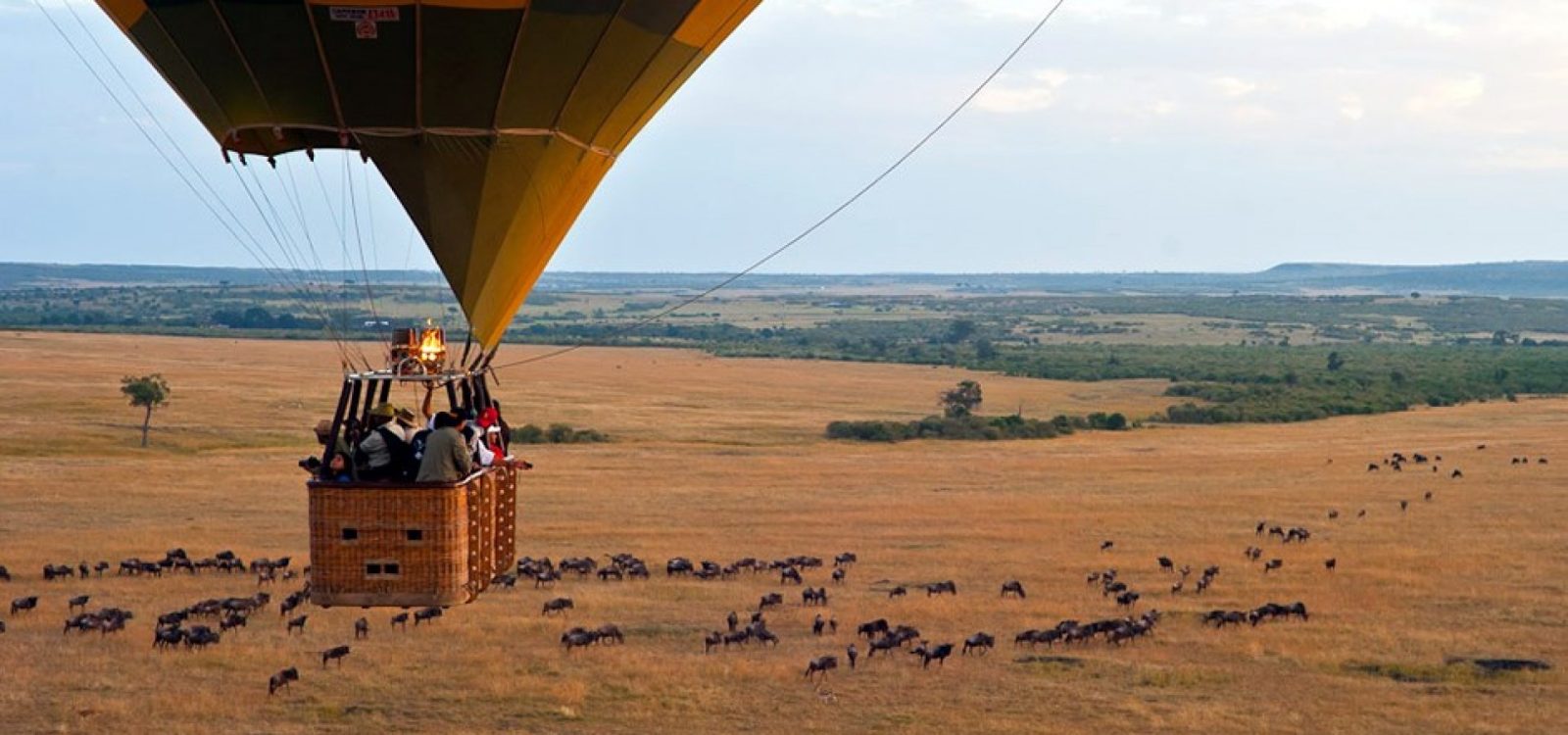
Kenya’s Top Hot Air Balloon Safari Routes for Scenic Wildlife Viewing Adventures
Weather, Wind, and Why Timing Matters
Balloon flights depend heavily on calm morning air, which is why they launch so early, before the sun’s heating of the ground generates the thermals and wind that make ballooning unsafe later in the day. Flights are occasionally canceled or postponed due to unfavorable wind conditions, a reality of the activity rather than a rare exception, and operators generally build enough flexibility into their scheduling to rebook a canceled flight for the following morning where itineraries allow. Travelers with only a single morning available in the Mara should understand this risk before committing a significant budget to a single scheduled flight.
The Origins of Ballooning Over the Mara
Kenya’s balloon safari industry traces back to a specific date and a specific pioneering figure: the naturalist and filmmaker Alan Root, who piloted the inaugural commercial flight on the 3rd of January 1976, launching from Keekorok Lodge in the heart of the Maasai Mara under a new company called Balloon Safaris Limited. Root, an Englishman who spent nearly his entire life in Kenya and built a reputation as one of Africa’s most accomplished wildlife documentarians alongside his first wife Joan, had a direct personal connection to ballooning that predated the commercial venture: he served as cameraman on an earlier expedition led by British gas balloonist Anthony Smith, who flew from Zanzibar across Tanzania and on over the Serengeti and the Rift Valley in an ambitious, Jules Verne-inspired undertaking that Root later documented in the 1975 film Safari by Balloon, a production widely credited with helping inspire the commercial Mara operation that followed the very next year.
Balloon Safaris Limited has continued operating in the Mara in some form for close to fifty years since that first 1976 flight, and the broader industry that grew up around it has become one of the more enduring and distinctive tourism traditions anywhere on the African continent, a rare case of a specific, dateable origin story behind an activity now so thoroughly woven into the standard Mara safari experience that many travelers assume it has always existed in more or less its current form. Understanding this history adds a small but genuine layer of appreciation to what might otherwise feel like a purely modern tourism add-on, since today’s dawn flight over the plains descends directly from a genuinely adventurous piece of African aviation and filmmaking history rather than a recent commercial invention.
Where to Fly in the Maasai Mara
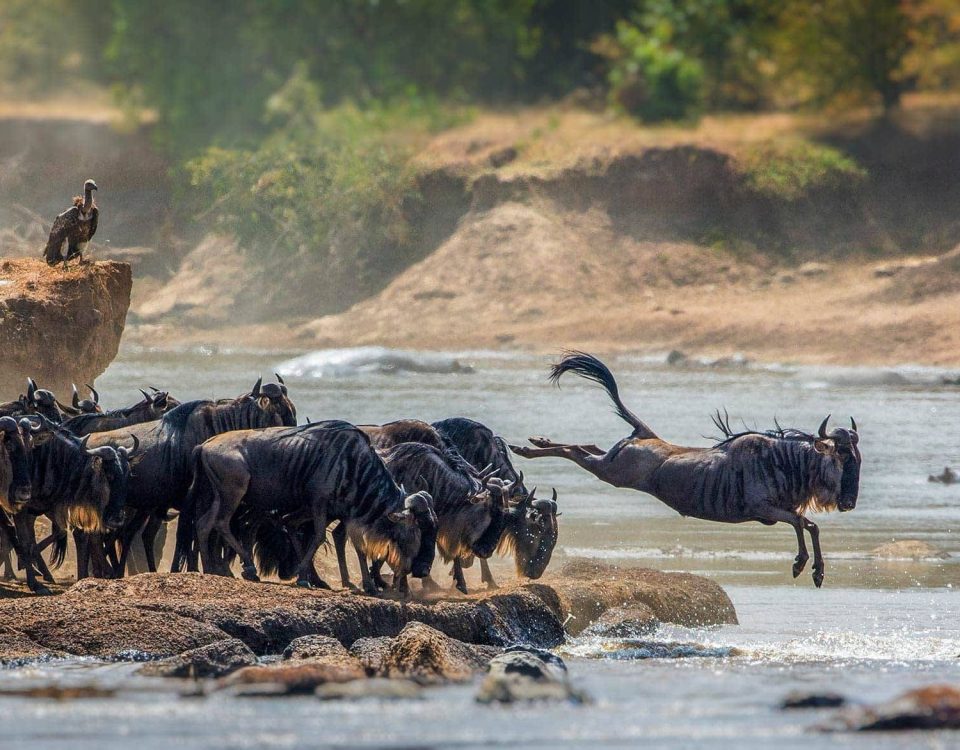
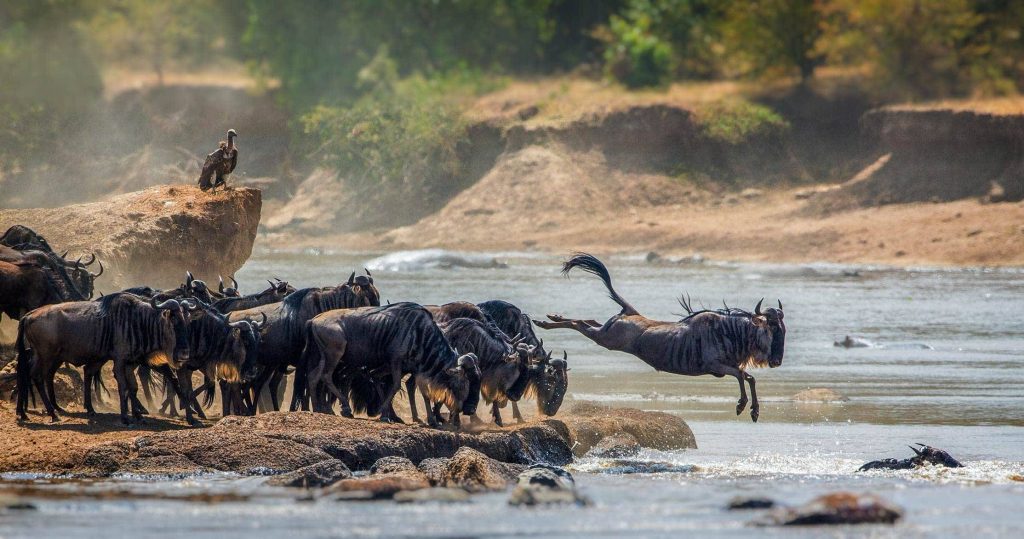
Several balloon operators run flights from different sections of the Mara ecosystem, launching from sites within the national reserve itself or from partner conservancies bordering it, and the specific launch location affects both the landscape covered during the flight and the logistics of getting to the launch site from a given camp. Flights over the Mara River crossing points during peak migration season, roughly July through October, offer the chance of spotting wildebeest herds queuing at the river’s edge or, with considerable luck, an actual crossing in progress viewed from above, an angle on the migration spectacle unavailable from any ground-based vehicle.
Outside migration season, the Mara’s resident wildlife, elephant, giraffe, and its consistently strong lion and cheetah populations, still make for compelling aerial viewing, and many repeat visitors argue the landscape itself, rather than any single species sighting, is the real draw of a Mara balloon flight regardless of season.
Beyond the Mara: Other Kenyan Balloon Destinations
While the Maasai Mara dominates Kenya’s balloon safari industry by a considerable margin, smaller operations have run periodically in other parts of the country, including over the plains around Amboseli with Kilimanjaro as a backdrop and, at various points, in Tsavo, though availability and operator continuity in these secondary locations tends to be less consistent than the well-established, year-round Mara operations. Travelers specifically drawn to ballooning as a priority activity should generally plan around the Mara rather than assuming equivalent options will be reliably available elsewhere in Kenya at the time of booking.
How Many People Actually Fly Together
Modern Mara balloons typically carry considerably more passengers than first-time flyers often expect, with the basket divided into several individual compartments, each holding a small group of passengers standing shoulder to shoulder, arranged around a central section housing the pilot and the burner controls. A single balloon commonly carries somewhere between eight and sixteen passengers depending on the specific operator and balloon size, meaning a flight is generally a shared experience with other travelers from various camps rather than a private outing, an important detail for travelers picturing a small, intimate basket carrying only their own party. Operators offering smaller, more exclusive flights for private groups do exist, generally at a meaningfully higher price point than the standard shared flight, and travelers with a specific preference for a more private experience, whether for a special occasion or simply a preference for a smaller group, should ask directly about this option when booking rather than assuming every operator offers the same shared-basket format as the industry standard.
Safety Standards in Kenyan Ballooning
Kenya’s commercial balloon operators work under aviation authority oversight, with pilots holding specific commercial balloon licenses and aircraft subject to regular maintenance and inspection requirements similar in principle to any commercial aviation operation, though the industry’s safety record has not been entirely without incident over the decades it has operated in the Mara, and travelers with specific safety concerns should feel comfortable asking an operator directly about pilot experience and maintenance practices before booking, a reasonable question any established operator should answer readily and transparently. The overwhelming majority of flights proceed without any safety issue whatsoever, and ballooning over the Mara remains, statistically, a well-regulated and generally very safe activity, but as with any aviation experience, an informed traveler is a comfortable traveler, and choosing a well-established operator with a long, transparent operating history is a sensible precaution.
Cost, Booking, and What’s Included
Balloon safaris represent a genuine splurge on most Kenya safari budgets, priced considerably higher than a standard game drive given the specialized equipment, fuel, and highly trained pilots required, and rates are generally quoted per person in US dollars, most commonly including the bush breakfast and transfer back to camp afterward. Advance booking is strongly advised, ideally arranged before arrival in Kenya through your camp or tour operator, since availability on any given morning is limited by the number of balloons an operator can run and demand during peak travel season regularly exceeds capacity at short notice. Booking through your camp rather than independently is often the smoother route logistically, since the camp coordinates the early pickup directly with the balloon operator’s ground crew.
Weight restrictions apply for safety reasons tied to the balloon’s carrying capacity, and operators typically ask for passenger weight in advance during booking, a detail some travelers find unusual but which is standard practice across the ballooning industry worldwide rather than specific to Kenya.
Photography From the Basket
Balloon flights present a distinct photographic challenge compared to a ground-based game drive: the movement of the basket, the changing altitude, and the wide, sweeping perspective all reward a different approach than the long-lens close-up work typical of vehicle photography. Wide-angle lenses tend to perform better than long telephotos for capturing the landscape-scale drama of shadows stretching across the plains at sunrise, herds forming patterns visible only from height, and the balloon’s own shadow occasionally visible racing across the grassland below as the sun climbs. A lens with reasonable image stabilization helps given the basket’s gentle but constant motion, and photographers should expect somewhat more unpredictable shooting conditions than the relatively stable platform a safari vehicle provides.
Light during a dawn balloon flight is often spectacular by any photographic standard, the low sun angle producing long shadows and a warm, golden quality across the grassland that many photographers rank among the best light conditions available anywhere on a Kenya safari, balloon flight or otherwise, making even a flight with modest wildlife sightings worthwhile purely for the landscape photography opportunity it presents.
Is It Worth the Cost
Opinions among safari veterans on whether a balloon flight justifies its considerable added expense vary, with some arguing the view, while beautiful, doesn’t reveal wildlife detail the way a ground-level game drive does, since animals appear as distant shapes rather than close, textured sightings, while others consider the sheer scale and silence of drifting over the plains at dawn, engine-free apart from occasional bursts from the burner, to be worth the cost regardless of wildlife density on a given flight. Most first-time visitors who can comfortably afford the addition tend to come away describing it as a highlight of their trip specifically because it offers a perspective and a mood, unhurried, quiet, expansive, that no vehicle-based activity can replicate.
For travelers weighing a balloon flight against other splurge activities during a Mara stay, pairing it with the migration season for the chance of an aerial river-crossing view, or scheduling it for the final morning of a stay as a memorable send-off, are both common and generally well-regarded approaches to getting the most out of the experience.
What to Wear and Bring
Pre-dawn temperatures on the Mara plains can be surprisingly cold, particularly during the June to September dry season, so a warm layer that can be shed once the sun rises and the bush breakfast gets underway is worth packing alongside the usual sun protection needed once the flight and post-landing breakfast stretch into full daylight. Loose, comfortable clothing suits the basket’s cramped standing arrangement better than restrictive layers, and a secure strap or pouch for phones and cameras is sensible given the basket’s occasional jostle on landing.