
Kenya Coffee Tours: From Nyeri Farms to Your Cup
Kenya’s coffee reputation among roasters and specialty coffee drinkers worldwide rests on a distinctive flavor profile, bright acidity, a winey or blackcurrant-like fruitiness, and a full body that has made Kenyan AA-grade beans a benchmark reference point in the industry, comparable to how certain wine regions define a style rather than simply a place of origin, and one regularly cited on menus and bags by specialty roasters from Tokyo to London as shorthand for quality East African coffee. Behind that reputation sits a farming landscape centered on the fertile volcanic highlands around Mount Kenya and the Aberdare range, where smallholder farmers, cooperative societies, and a handful of larger estates have grown coffee since it was first introduced to the country in the late nineteenth century by European missionaries and settlers.
How Kenyan Coffee Farming Works
Unlike some coffee-producing countries dominated by a small number of large plantations, Kenyan coffee production is unusually fragmented, with the majority of the country’s coffee grown by smallholder farmers cultivating anywhere from a few dozen to a few hundred trees on plots often smaller than a hectare, organized into cooperative societies that pool their members’ harvests for processing and sale. This cooperative structure, centered heavily around Nyeri, Kirinyaga, Murang’a, and Embu counties on the slopes around Mount Kenya, along with parts of the Kiambu highlands closer to Nairobi, means a typical bag of high-grade Kenyan coffee likely represents the combined harvest of dozens or even hundreds of individual small farming families rather than a single estate’s output.
Kenya’s grading system, ranking beans by size and density from AA, the largest and most prized grade, down through AB, PB for peaberry beans, and further categories, has become internationally recognized shorthand for quality even among coffee drinkers who know little else about the country’s farming systems, and this grading transparency has helped Kenyan coffee command consistently strong prices at international auction relative to many competing origins.
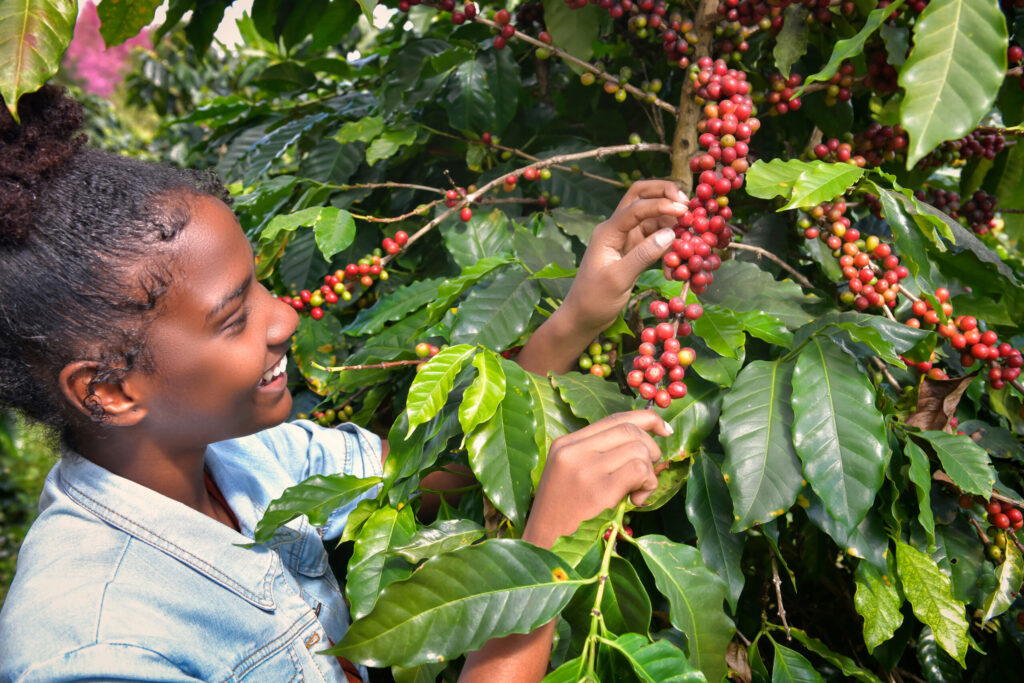
Kenya Coffee Tours from Nyeri Farms to Your Cup and tasting experiences
The Central Kenya Coffee Belt
Nyeri County, sitting on the fertile, well-watered slopes between Mount Kenya and the Aberdare range at elevations generally between 1,500 and 2,100 meters, produces some of Kenya’s most celebrated coffee, the altitude, rich volcanic soil, and distinct wet and dry seasons combining to produce the acidity and complexity the country’s beans are known for. Farms and cooperative wet mills, known locally as factories despite the term’s industrial connotation, dot the landscape here, and several have opened their processing operations to visitors interested in seeing the journey from ripe red cherry to washed, sun-dried green bean before export.
How Coffee Actually Arrived in Kenya
The often-repeated claim that European missionaries introduced coffee to Kenya in the late nineteenth century has a genuinely specific origin point worth knowing in detail. French Holy Ghost Fathers, also known as Spiritans, established a mission in 1893 at Bura in the Taita Hills, planting Bourbon coffee seeds brought directly from Reunion Island off Madagascar’s east coast, the first documented coffee cultivation anywhere in the territory that would become Kenya. Seedlings from this original Bura planting were transferred in 1899 to another French mission at St. Austin, near what was then a small railway settlement and is now central Nairobi, and it was from St. Austin that seeds and planting material spread outward to the European settlers establishing farms across the central highlands in the years that followed, effectively seeding the entire coffee industry that would eventually make Nyeri and the surrounding counties world-famous among specialty coffee buyers. The mission origin of Kenyan coffee, easy to overlook amid the modern focus on smallholder cooperatives and auction pricing, is a detail worth sharing with a guide during a farm visit, since it connects the industry’s present-day economic importance back to a specific, dateable historical moment barely a century and a third ago.
The Varieties Behind the Flavor
Much of what gives Kenyan coffee its distinctive bright acidity and fruit-forward character comes down to specific plant varieties developed and selected within the country itself rather than simply the growing conditions alone. SL28 and SL34, still the two most widely planted varieties across Kenya’s coffee belt today, were developed by Scott Agricultural Laboratories during the 1920s and 1930s, with SL34 traced back to a single exceptional tree selected on the Loresho Estate in Kabete, near Nairobi, in the late 1930s. Both varieties earned their lasting reputation for producing cups with the complex acidity and depth that define classic Kenyan coffee, and despite their age, growers have continued favoring them over many newer alternatives specifically because of the cup quality they consistently deliver. More recent varieties, including Ruiru 11 and Batian, were developed by Kenyan agricultural researchers specifically to address coffee berry disease and leaf rust, two significant fungal threats that can devastate a harvest, offering farmers greater disease resistance and, in Batian’s case, a notably faster maturation time than the older SL varieties, though many specialty buyers and farmers alike still consider SL28 and SL34 the gold standard for flavor even as these newer, hardier varieties gain ground for their practical growing advantages.
What a Coffee Tour Actually Involves
A typical coffee tour in the Nyeri or wider central Kenya region walks visitors through the full production chain: picking ripe cherries alongside farm workers during harvest season, which generally runs October through December for the main crop with a smaller fly crop harvested around April to June, followed by a visit to a wet mill to see cherries pulped, fermented to remove the sticky mucilage layer, washed, and laid out on raised drying beds where parchment coffee dries slowly over one to two weeks under careful monitoring for consistent moisture content. Visitors typically finish with a cupping session, tasting coffee prepared using the same evaluation methods professional buyers use to grade lots before export, an experience that gives genuine insight into why a particular farm’s coffee commands the price it does at auction.
Several coffee estates and cooperative-linked lodges near Nyeri and around Thika have built dedicated tourism infrastructure around this experience, ranging from short half-day farm visits bundled into a broader Mount Kenya or Aberdare itinerary to overnight stays at working coffee farms where guests can follow the full harvest-to-cup process across a longer, less rushed visit.
Tea’s Close Cousin in the Highlands
Travelers touring Kenya’s central highlands will notice tea plantations frequently growing in close proximity to coffee farms, particularly at slightly higher, cooler elevations where tea’s growing requirements diverge from coffee’s, and the two crops together form the backbone of Kenya’s agricultural export economy. Some tour operators combine a coffee farm visit with a tea plantation stop within the same day, particularly around the Nyeri and Kericho areas, giving visitors a broader picture of the highland cash-crop economy rather than a single-crop focus, and the visual contrast between neat rows of glossy tea bushes and the taller, more irregular coffee trees makes for an interesting side-by-side comparison of two crops that dominate this stretch of Kenyan agriculture.
From Cooperative to Auction to Export
After drying, parchment coffee moves to a licensed miller for hulling, grading, and bagging before being sold, historically almost exclusively through the Nairobi Coffee Exchange auction system, where licensed buyers bid on lots based on grade, cupping quality, and origin reputation, a transparent price-discovery process that has long been credited with helping Kenyan coffee achieve strong, quality-linked pricing compared to countries relying more heavily on opaque, negotiated sales. In recent years, direct trade relationships between individual cooperatives and international roasters have grown alongside the traditional auction system, offering some farmers an alternative route that can, in favorable cases, return a larger and more predictable share of the final retail price back to the growers themselves.
Beyond Nyeri: Other Coffee Regions
While Nyeri holds the strongest reputation among specialty buyers, coffee grows across a wider band of Kenya’s central and western highlands, including Kirinyaga and Murang’a counties closer to Mount Kenya’s southern slopes, Kiambu nearer Nairobi, and parts of the Rift Valley highlands around Nakuru and further west toward Kisii, each contributing distinct flavor characteristics shaped by local elevation, soil, and rainfall patterns, though Nyeri and the immediate Mount Kenya region remain the names most consistently associated with Kenya’s top-tier lots at international auction and among specialty roasters abroad.
The Farmers Behind the Cup
Smallholder coffee farming in Kenya’s central highlands is often a multi-generational family enterprise, with trees planted by grandparents still producing under the care of grandchildren, and cooperative membership functioning as much as a social institution as an economic one, since cooperative societies frequently provide members with agricultural extension advice, input credit for fertilizer and disease control, and a collective voice in negotiating with millers and buyers that an individual smallholder farming a fraction of a hectare would struggle to achieve alone. Coffee farming here competes directly for land and labor with food crops and, increasingly, with more immediately profitable options like horticulture for export, and cooperative leaders and government agricultural officers have spent recent years working to improve returns to growers specifically to keep coffee competitive as a land-use choice against these alternatives.
Climate change has added a further layer of pressure to this balance, with shifting rainfall patterns and rising average temperatures affecting flowering and cherry development in ways researchers and farmers alike are still working to fully understand and adapt to, from adjusted planting elevations to renewed interest in shade-grown techniques that buffer coffee trees against temperature extremes.
Combining a Coffee Tour With the Rest of a Kenya Trip
Coffee tours pair naturally with a broader Mount Kenya or Aberdare-focused itinerary, since the coffee-growing highlands sit directly along common routes between Nairobi and destinations like Aberdare National Park, Mount Kenya itself, or the road north toward Samburu, making a half-day or overnight coffee farm stop a logical addition rather than a significant detour for travelers already passing through the region. The experience also offers a grounded, working-landscape counterpoint to the wildlife-focused activities that dominate most Kenya itineraries, an opportunity to meet farming families and understand an agricultural economy that remains, alongside tea, one of the country’s most significant export industries and a major source of rural livelihood across the central highlands.
Travelers with a serious interest in specialty coffee should ask operators specifically about visiting cooperative wet mills during active harvest season, since the sensory experience of a mill in full operation, the smell of fermenting cherries, the sound of pulping machinery, the sight of drying beds covered in parchment coffee at various stages, is considerably more vivid than a visit during the off-season, when the same facilities sit largely quiet between harvests.
Buying Beans to Take Home
Most coffee tours end with an opportunity to buy roasted beans directly from the farm or cooperative, often at a fraction of what the same beans would cost once exported, roasted abroad, and sold under a specialty retailer’s own branding. Buying directly this way also tends to put a larger share of the purchase price back into the hands of the growing community than a supermarket purchase made months later on another continent, making it one of the more tangible ways a visitor can directly support the farming families behind Kenya’s coffee reputation.