Safari travel has historically been built around couples and small groups, and solo travelers researching a Tanzania trip often run into a genuine practical question early in the planning process: whether traveling alone means paying a steep single supplement, settling for a group tour’s fixed schedule, or missing out on the flexibility that makes independent travel appealing in the first place. Tanzania, as it turns out, handles solo travelers considerably better than many destinations, though some parks and trip structures suit independent travel more naturally than others.
Understanding the Single Supplement Reality
Most Tanzania safari pricing is built around double-occupancy accommodation, and solo travelers booking a private safari should expect a single supplement charge covering the difference between a shared and single room rate, typically adding a meaningful percentage to the overall trip cost rather than a token fee. This reality surprises some first-time solo travelers researching safari costs, but understanding it upfront, and specifically asking operators about single supplement policies during initial quote requests, avoids unpleasant surprises later in the planning process. Some camps and operators offer reduced or waived single supplements during shoulder or low season as a way to fill otherwise empty rooms, making solo travel considerably more affordable for those with flexible scheduling around these less competitive booking periods.
Joining Scheduled Group Departures
Beyond private safaris, many Tanzania operators run scheduled group departures on fixed dates, allowing solo travelers to join a shared vehicle and split costs with other travelers rather than absorbing a full private vehicle and single supplement cost alone. This structure suits solo travelers specifically prioritizing budget efficiency and the social dimension of traveling alongside other independent travelers, though it does require accepting a fixed itinerary and schedule rather than the fully customized pacing a private safari allows. Reputable operators running these group departures generally cap group size at a reasonable number, typically no more than six to eight travelers per vehicle, keeping the experience considerably more intimate than a large bus-tour format while still delivering meaningful cost savings over a fully private alternative.
Ngorongoro Crater: Compact and Reassuring for First-Time Solo Travelers
Ngorongoro Crater’s relatively compact, enclosed ecosystem and its established, well-regulated tourism infrastructure make it a particularly reassuring destination for solo travelers, particularly those newer to independent African travel, given the concentration of wildlife within a manageable area and the crater’s status as one of Tanzania’s most heavily visited and well-monitored parks. The crater’s reliable year-round game viewing also means solo travelers on a tighter timeline can experience a genuinely rewarding safari within a relatively short stay, without needing to build in the additional buffer time a more remote, less predictable destination might require to guarantee strong wildlife encounters.
Rim Lodges and Solo-Friendly Common Spaces
Several Ngorongoro rim lodges maintain welcoming communal dining and lounge areas that naturally facilitate conversation among solo travelers and small groups, an underrated practical advantage for independent travelers seeking some social interaction during evenings at camp without requiring formal organized activities.
The Serengeti’s Seronera Area for Accessible Solo Safaris
The Serengeti’s central Seronera area, given its dense concentration of camps and lodges across a wide range of price points, offers solo travelers considerably more flexibility in matching accommodation to budget than the park’s more remote sectors, where limited camp inventory can make solo bookings both pricier and less available on short notice. Seronera’s established infrastructure also supports easier last-minute itinerary adjustments, a practical advantage for solo travelers without a companion to help troubleshoot logistics if plans need to shift mid-trip due to weather, availability, or simple changes of mind about how to allocate remaining travel time.
Zanzibar as a Solo-Friendly Beach Extension
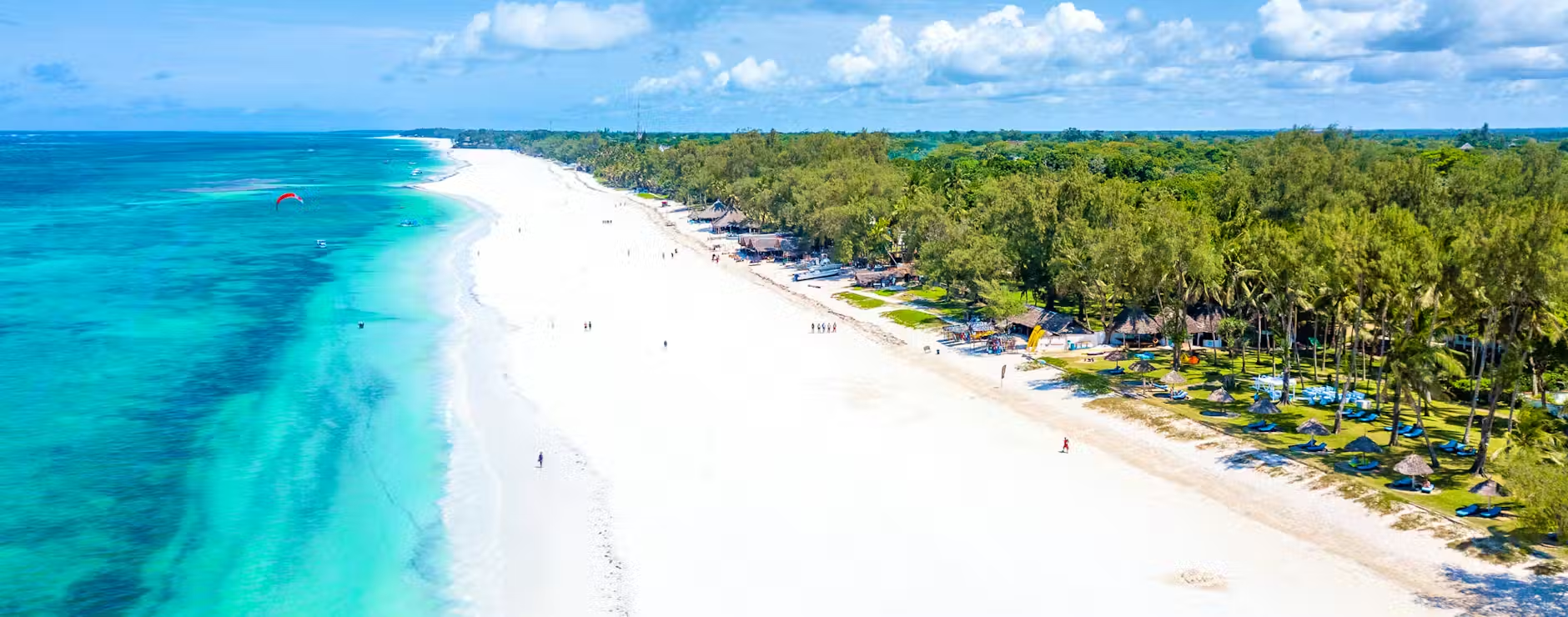
Beyond the mainland safari circuit, Zanzibar offers solo travelers a genuinely welcoming beach extension option, with a well-established backpacker and independent traveler scene, particularly around Stone Town and Paje on the island’s southeastern coast, where hostels, guesthouses, and social activities like kitesurfing lessons naturally connect solo travelers with each other. This social infrastructure, considerably more developed than what most mainland safari destinations offer given the inherently more private, vehicle-based nature of game drives, makes Zanzibar a popular choice for solo travelers looking to balance a wildlife-focused mainland safari with a more socially engaging beach component.
Safety Considerations for Solo Travelers in Tanzania
Tanzania generally ranks among the safer East African destinations for solo travel, including solo female travel specifically, though standard precautions around nighttime movement in unfamiliar areas, transportation choices, and general situational awareness remain sensible regardless of destination. Solo female travelers in particular often report positive experiences traveling independently through Tanzania’s safari circuit specifically, given that safari travel inherently involves guided, structured activities with a driver-guide rather than the more exposed independent navigation solo travelers might face in a large, unfamiliar city, though Stone Town and other urban areas warrant the same general awareness any solo traveler would apply in an unfamiliar city setting anywhere in the world.
Southern Circuit Considerations for Solo Travelers
Tanzania’s southern circuit parks, Ruaha and Nyerere, present a somewhat different calculation for solo travelers given their greater remoteness, higher reliance on private fly-in transport, and generally smaller camp inventory compared with the northern circuit’s more developed infrastructure. Solo travelers can absolutely visit the southern circuit, but should expect a higher relative cost given the more limited group-joining options available and the generally higher baseline camp rates in this less-developed but increasingly popular part of the country, a trade-off some solo travelers happily accept in exchange for the south’s greater solitude and wilder overall atmosphere.
Tarangire as an Efficient Solo Add-On
Tarangire National Park’s proximity to Arusha and its reliably strong dry-season elephant viewing make it a practical, efficient addition for solo travelers looking to add meaningful wildlife variety to a Ngorongoro or Serengeti-centered itinerary without a major additional logistical commitment. The park’s relatively short drive from Arusha compared with the more remote Serengeti sectors also makes it easier to fold into a group departure itinerary, since operators running scheduled multi-park circuits frequently include Tarangire as an efficient early stop before heading further into the northern circuit’s more extensive parks.
Meeting Fellow Travelers Along the Way
Solo travelers on group-joining safaris naturally build social connections through shared vehicles and communal camp dining, but even those opting for fully private itineraries often find opportunities to meet other travelers at shared lodge dining areas, sundowner stops, and communal lounge spaces common at many mid-range and luxury camps across Tanzania’s circuit. Camps specifically positioned around high-traffic areas like Seronera or the Ngorongoro rim tend to offer more of these casual social opportunities than smaller, more exclusive private camps in remote sectors, a factor worth considering for solo travelers who value some social interaction alongside their independent wildlife-viewing experience.
Planning a Solo Tanzania Trip
Solo travelers planning a Tanzania trip benefit from being upfront with operators about budget priorities and social preferences from the outset, whether that means seeking out scheduled group departures to control costs and meet fellow travelers, or opting for a fully private, flexible itinerary despite the single supplement cost. Ngorongoro Crater and the Serengeti’s Seronera area offer the most straightforward, well-supported entry points for solo travelers newer to independent African safari travel, while more experienced solo travelers seeking greater remoteness and solitude may find the southern circuit’s Ruaha and Nyerere National Park genuinely rewarding once they have already built confidence through a more established northern circuit trip. Pairing a solo mainland safari through the Serengeti with a Zanzibar beach extension remains one of the most consistently popular and well-supported structures for independent travelers exploring Tanzania on their own terms.
Ultimately, solo travel in Tanzania requires somewhat more upfront research and budget planning than a couples or group trip, primarily around navigating single supplement costs and choosing between private and group-joining formats, but the underlying safari experience itself, guided game drives, structured camp logistics, and knowledgeable local guides, translates remarkably well to independent travelers. Many solo visitors describe their Tanzania safari as one of the more approachable solo trips they have taken specifically because so much of the day-to-day logistics, transport, meals, and activity planning are already handled by the guiding team, leaving a solo traveler free to focus on the wildlife and scenery rather than the kind of constant independent logistics management that solo travel elsewhere sometimes demands.
Booking through an operator experienced specifically in accommodating solo travelers, one who can speak clearly about single supplement policies, available group departure dates, and which camps tend to offer the most naturally social atmosphere, makes the entire planning process considerably smoother than approaching it as an afterthought to a standard couples-oriented itinerary template. With the right preparation, Tanzania rewards solo travelers with exactly the same dramatic wildlife encounters, sweeping landscapes, and memorable evenings around camp that any traveler comes for, single supplement notwithstanding, and most who take the leap of booking a solo African safari come home describing it as one of the more confidence-building trips of their independent travel history, one that quietly reshapes how they think about traveling alone everywhere else afterward.