Along Stone Town’s seafront, wedged between the House of Wonders and the harbour, a squat coral-stone fortress has spent three centuries shifting roles: military stronghold, prison, barracks, and now, somewhat improbably, one of the island’s liveliest cultural venues. The Old Fort’s transformation from a symbol of Omani military power into the centrepiece of Zanzibar’s festival calendar says a great deal about how the island has repurposed its colonial-era architecture for genuinely contemporary use rather than simply preserving it behind glass.
Ngome Kongwe: Three Centuries of Shifting Purpose
Known locally as Ngome Kongwe, meaning simply “old fort” in Swahili, the structure was built between 1698 and 1701 by Busaidi Omani Arabs, constructed directly on the site of an earlier Portuguese chapel, fragments of which are still visible built into the walls surrounding the fort’s main courtyard. Its construction followed the Omani expulsion of Portuguese forces from the East African coast, and the fort served for a period afterward as a genuine military stronghold, part of the broader network of fortifications the Omani Sultanate built to secure its hold over Zanzibar and the surrounding trade routes. That defensive purpose shaped every element of the fort’s original design, from the thickness of its walls to the positioning of its gun emplacements facing out toward the harbour approach.
Military use gave way over the following centuries to considerably less glamorous purposes. The fort spent time functioning as a prison and later as barracks, a far cry from its current role as a cultural venue, and much of its original defensive architecture, thick coral-stone walls, a crenellated parapet, and a design built to withstand siege rather than welcome visitors, remains clearly visible today despite the shift in function.
From Fortress to Cultural Centre
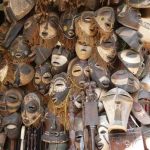
Today the Old Fort’s central courtyard operates as a genuine cultural hub, housing curio shops selling local crafts and Tingatinga paintings, a restaurant, and a tourist information point, all arranged around an open-air amphitheatre that hosts live music and dance performances most evenings of the year. That amphitheatre is the fort’s real drawing card for visitors interested in more than architecture alone, offering a regular, easily accessible taste of Zanzibari performance culture within a genuinely historic setting rather than a purpose-built modern venue.
Evening performances at the amphitheatre typically feature traditional dance troupes and musicians, giving visitors a reliable, near-nightly opportunity to see Swahili performance traditions without needing to time a visit around a specific festival date. For travellers whose schedule doesn’t align with one of the island’s bigger annual events, this nightly programming offers a dependable substitute, delivered inside walls that have stood on this spot for well over three hundred years.
Visiting the Fort
The Old Fort sits directly on Stone Town’s waterfront, an easy stop within the same stretch that includes the House of Wonders and the Old Fort’s neighbouring landmarks, making it simple to combine with a broader walk through the old town’s historic core. Entry to the courtyard itself is generally low-cost or free, with performances and specific exhibitions sometimes carrying a separate charge, and the fort’s proximity to Forodhani Gardens makes it easy to pair an early evening at the amphitheatre with dinner at the night market a short walk away afterward.
Sauti za Busara: Africa’s Music Festival on Zanzibar’s Doorstep
Once a year, the Old Fort becomes the centre of one of East Africa’s most significant music events. Sauti za Busara, which translates to “sounds of wisdom” in Swahili, is held annually in February, drawing musicians from across the African continent for several days of performances centred in the fort’s amphitheatre, with additional fringe events taking place throughout Stone Town during the same period. The festival has built a considerable reputation over the years as a genuine showcase for African music broadly, rather than a narrowly Zanzibari or Tanzanian event, drawing performers and audiences from well beyond the island’s usual visitor base.
For travellers able to time a Zanzibar trip around the festival, Sauti za Busara offers a concentrated, multi-day dose of live African music unlike anything else available on the island during the rest of the year, held within the same historic walls that once housed Omani soldiers and, later, prisoners.
The Zanzibar International Film Festival
The Old Fort’s amphitheatre also hosts the Zanzibar International Film Festival, known widely as ZIFF, another major fixture on the island’s cultural calendar that has grown into one of the more prominent film events in the region. Screenings, panel discussions, and related cultural programming draw filmmakers and audiences from across East Africa and beyond, adding a further layer to the fort’s role as Stone Town’s primary venue for events that bring the island’s cultural life into direct contact with the wider African continent.
Mwaka Kogwa: A Very Different Kind of Celebration
While the Old Fort anchors Zanzibar’s more formal cultural festivals, one of the island’s most distinctive celebrations happens well outside Stone Town, in the southern village of Makunduchi. Mwaka Kogwa, held each year around the twenty-third or twenty-fourth of July, marks the traditional Shirazi, or Persian, new year, a celebration whose roots trace back to Zoroastrian tradition and have been thoroughly absorbed into local Zanzibari custom over the centuries.
The festival’s centrepiece is a ritual mock battle in which the village’s men strike each other with banana stalks, a symbolic purification meant to release grudges and settle disputes accumulated over the previous year before the new one begins. Where real weapons were reportedly used in earlier eras, banana stalks have long since replaced them, turning what was once a genuinely dangerous practice into a comparatively safe, if still vigorous, communal ritual. Alongside the mock fighting, women dressed in traditional Swahili clothing perform songs addressing themes of love, fertility, and peace, and the celebration traditionally concludes with the ceremonial burning of a small hut, with the direction its smoke takes read as a kind of informal prediction for the year ahead.
Visiting Mwaka Kogwa as a Traveller
Mwaka Kogwa takes place well away from Zanzibar’s main tourist circuit, and reaching Makunduchi generally requires arranging transport specifically for the occasion, whether through a tour operator or independently by taxi from Stone Town or one of the nearby east coast beach towns. Visitors are generally welcome to observe the festival respectfully, though it remains first and foremost a genuine community celebration rather than a tourist performance, and approaching it with the same courtesy owed to any deeply local cultural event, rather than as a staged spectacle, makes for a considerably better experience for everyone involved.
Other Cultural Events Worth Knowing About
Beyond Sauti za Busara, ZIFF, and Mwaka Kogwa, Zanzibar’s calendar includes a handful of smaller religious and cultural observances that shape daily life at different points in the year. As a predominantly Muslim island, Zanzibar observes Ramadan with noticeably quieter daytime streets and a shift toward evening activity once the daily fast breaks, followed by the celebrations of Eid al-Fitr, which bring a burst of communal feasting, new clothes, and family visits across Stone Town and the surrounding villages. Travellers visiting during Ramadan should expect reduced restaurant hours during daylight and a general slowdown in the pace of public life, balanced by a particularly vibrant atmosphere each evening once the fast ends.
Smaller local celebrations tied to specific villages or historical anniversaries also occur throughout the year, often without much promotion beyond word of mouth in the surrounding community. Asking a local guide or hotel host about any events coinciding with a planned trip is generally the most reliable way to catch one of these lesser-known celebrations, since many don’t appear on standard tourist event calendars despite offering some of the most genuinely local cultural experiences available on the island.
Building a Festival-Focused Zanzibar Trip
Travellers with flexible dates can build a genuinely rewarding Zanzibar itinerary around this cultural calendar, timing a visit for February to catch Sauti za Busara at the Old Fort, or for late July to experience Mwaka Kogwa’s very different, community-rooted celebration in Makunduchi. Outside of these specific windows, the Old Fort’s near-nightly performances still offer a reliable, low-commitment way to experience a taste of Zanzibari music and dance without needing to plan an entire trip around a festival date.
Together, the Old Fort’s centuries of shifting purpose and the island’s calendar of festivals, from an internationally recognised music event to a deeply local new year ritual involving banana stalks and burning huts, capture something that beaches and spice tours alone don’t quite reach: a sense of Zanzibar as a place with a living, evolving cultural life that long predates its current identity as a tourist destination, and shows no sign of slowing down.
Whether the visit happens to align with a major event or simply takes in an evening performance at the Old Fort’s amphitheatre, engaging with this side of Zanzibar rewards travellers with a far richer sense of the island than beaches and history alone can provide, connecting centuries-old walls to a cultural calendar that remains genuinely, vibrantly alive today, in a way that few historic sites anywhere manage to sustain across so many generations.