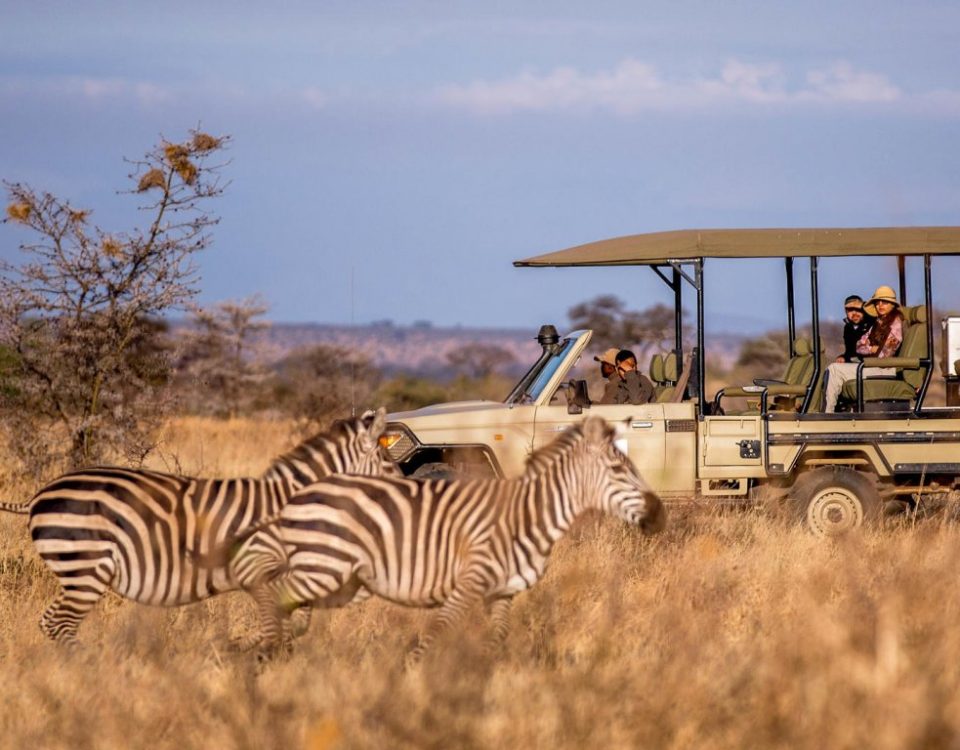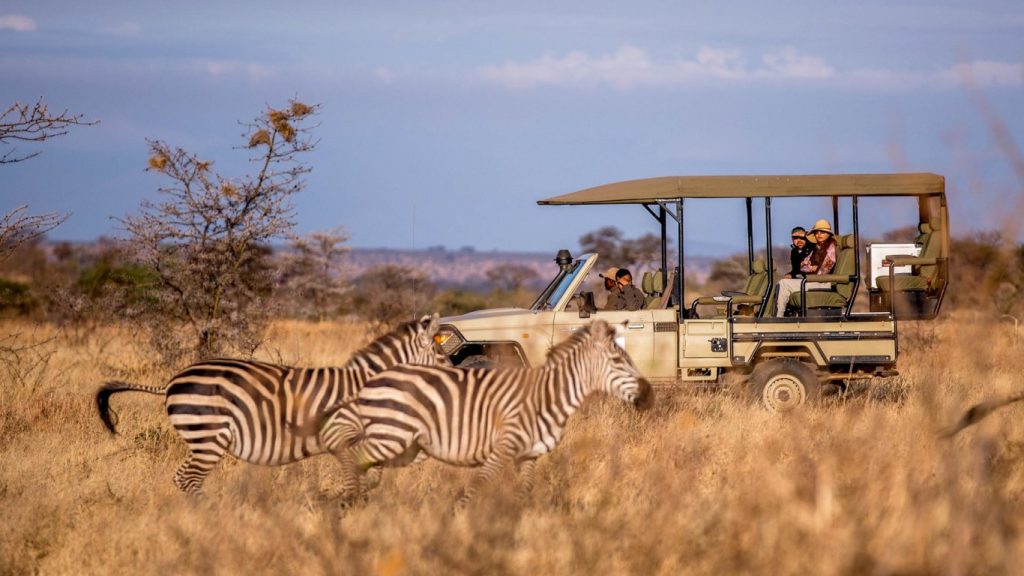
Running a marathon is hard enough on a closed city street with medical tents every few kilometres and a predictable, flat surface underfoot. Running one across open savanna, sharing the route with grazing zebra and the very real possibility of an elephant crossing ahead, is a different proposition entirely, and it’s exactly what draws a growing number of international runners to East Africa each year. The region’s best marathon and running events combine genuine athletic challenge with settings no conventional city marathon can match, while also tapping directly into East Africa’s status as the undisputed global capital of distance running itself.
The Lewa Safari Marathon: Running Among Rhino
The Lewa Safari Marathon, held annually at Lewa Wildlife Conservancy roughly 230 kilometres north of Nairobi, is the region’s signature running event and one of the most unusual marathons anywhere in the world. Runners cover a full marathon, half marathon, or 10k distance across the conservancy’s open plains, accompanied by armed rangers and spotter vehicles monitoring wildlife movement along the route in real time, with the course adjusted on the day if elephant or other potentially dangerous animals stray too close. The event exists specifically as a conservation fundraiser, co-sponsored by major corporate partners, with proceeds supporting Lewa’s rhino conservation work and community development programmes across the wider conservancy landscape, giving the run a purpose well beyond the personal achievement of finishing.
What Makes the Course So Demanding
Beyond the obvious novelty of wildlife proximity, Lewa’s course punishes runners with genuine physical challenges rarely found in city marathons: altitude around 1,700 metres that leaves visiting runners from sea-level cities gasping earlier than expected, uneven dirt and grass terrain that demands far more ankle stability than pavement, and typically warm, exposed conditions with limited shade across most of the route. Serious runners treat Lewa as a genuine athletic test rather than a scenic novelty, and course times generally run slower across the field than equivalent-distance road marathons elsewhere.
Kilimanjaro Marathon: Running in the Mountain’s Shadow
Tanzania’s Kilimanjaro Marathon, held each year in the town of Moshi at the mountain’s base, takes a different approach, an amateur-only event that deliberately excludes professional runners, keeping the field firmly recreational and community-focused rather than competitive at an elite level. The course winds through Moshi’s streets and surrounding countryside with Kilimanjaro’s snow-capped summit visible for much of the route on a clear day, a genuinely striking backdrop that has made the event one of the more popular running-tourism draws in East Africa despite its comparatively modest international profile next to Lewa.
Kigali International Peace Marathon
Rwanda’s capital hosts its own major running event, the Kigali International Peace Marathon, held annually since 2005 and scheduled around May or June each year. The course runs through Kigali’s notably clean, hilly streets, giving runners a genuine sense of the city’s steep topography and its reputation as one of Africa’s best-organised urban centres. As the event’s name suggests, it carries a deliberate message around peace and reconciliation, resonating particularly given Rwanda’s history, and has grown into a significant date on the regional road-running calendar, attracting both serious competitive runners and a large contingent of recreational participants running for the cause as much as the distance.
Why East Africa Produces the World’s Best Distance Runners
No discussion of running events in this region can avoid the obvious context: Kenya and Ethiopia have dominated global distance running for decades, producing a disproportionate share of the world’s fastest marathoners, and Kenya’s own running culture runs through towns like Iten and Eldoret in the Rift Valley highlands, where high altitude, a strong running tradition, and sheer density of talented athletes have created something close to a running ecosystem unmatched anywhere else on earth. Visiting runners taking part in Kenya’s own events sometimes find themselves training or racing alongside genuinely elite local athletes using the same event as part of a broader competitive season, an experience that adds a layer of context and humility that’s hard to replicate at a typical Western city marathon, since the pace that feels like a personal best for a visiting amateur might barely register as a tempo run for a local athlete training for the Olympics or a major world marathon.
Smaller Regional Races Worth Knowing About
Beyond the three headline events, a growing number of smaller races have appeared across the region in recent years, including charity runs tied to individual conservancies and national parks, city races in Kampala and Nairobi aimed primarily at local participation, and occasional themed runs organised around specific conservation or community causes. These smaller events rarely draw the same international running-tourism crowd as Lewa or Kilimanjaro, but they offer a more low-key way to combine a running trip with a broader East Africa visit, particularly for travellers whose primary itinerary is built around wildlife viewing or gorilla trekking rather than around the race itself.
Training and Preparing for an East Africa Race
Altitude is the single biggest factor visiting runners underestimate. Nairobi sits around 1,700 metres, Iten and much of Kenya’s highland running country considerably higher still, and runners arriving from sea level should build in several days of acclimatisation before race day rather than assuming normal training paces will hold at altitude. Terrain matters almost as much: events like Lewa run substantially off-road, and runners who’ve trained exclusively on pavement should incorporate trail or uneven-surface training in the weeks before travelling, both to build the relevant muscle strength and to avoid the ankle injuries that catch out road-only runners on their first exposure to African savanna terrain.
Registration, Costs, and Booking a Slot
Lewa’s marathon in particular has grown popular enough internationally that entry slots, especially those bundled with accommodation at the conservancy’s own camps for race weekend, sell out well ahead of the event, and prospective runners should plan to register several months in advance rather than treating it as a last-minute addition to a Kenya itinerary. Entry fees tend to run higher than a typical city marathon given the conservation fundraising element built into the event’s structure, and runners should view the cost as much as a contribution to Lewa’s rhino and community programmes as a simple race entry fee. Kilimanjaro Marathon and Kigali’s Peace Marathon both run more conventional, lower-cost registration processes closer to what international runners are used to from city marathons elsewhere, without the same conservation premium built into the price.
Travel logistics deserve early attention too, particularly for Lewa, which sits well outside Nairobi and requires either a long road transfer or a short domestic flight into an airstrip near the conservancy, arranged either independently or, more commonly, as part of a packaged race-weekend booking that also covers accommodation and, in many cases, a post-race game drive.
What to Pack for a Savanna Race Weekend
Runners preparing for Lewa or any of the region’s savanna-based events should pack considerably more sun protection than they’d bring to a typical road marathon, given the combination of altitude, equatorial sun, and often limited shade along open-country courses. Trail-capable running shoes with good grip and ankle support matter more here than road racing flats, given the genuinely uneven surfaces involved. A hydration plan that accounts for both the physical demands of the distance and the drying effect of altitude and sun is worth thinking through carefully in advance, and runners should expect aid stations spaced differently, and in some cases more sparsely, than they’re used to from urban marathons with dense, well-funded support infrastructure along every kilometre.
Combining a Race With a Wider Safari Itinerary
Most international participants build these races into a longer trip rather than travelling specifically and only for race day, and organisers of events like Lewa actively encourage this, often packaging race entry with accommodation and safari add-ons through the conservancy’s own lodges. Runners doing Lewa, for instance, commonly extend their stay by a few days afterward for a proper game drive safari across the same conservancy they raced through, seeing at a slower, vehicle-based pace the wildlife and landscape they experienced at a dead run just days before, a genuinely satisfying way to bookend the physical challenge with the region’s more conventional highlight, and one that also gives sore legs a welcome few days of rest before the return flight home.
For runners tackling Kilimanjaro Marathon, the natural extension is obvious: many participants use the race as a warm-up event before attempting the mountain itself in the days that follow, treating the marathon partly as a fitness test and partly as an excuse to spend extra time acclimatising in Moshi before a multi-day climb. Kigali’s race weekend pairs naturally with gorilla trekking in Volcanoes National Park a few hours north, letting runners combine a fast-paced urban event with the considerably slower, quieter rhythm of a day spent tracking mountain gorillas through Rwanda’s volcanic forest. In each case, the running event becomes less a standalone athletic goal and more a distinctive opening or closing chapter to a broader East Africa story, one most runners say they wouldn’t trade for a flatter, easier, and far more forgettable course back home.