

At the very top of East Africa’s safari market sits a small tier of camps charging two thousand dollars a night and considerably more, figures that can seem difficult to justify from the outside looking in. The honest answer to whether that spending makes sense depends entirely on what a traveler is actually paying for, and at the true ultra-luxury level, the answer usually involves far more than thread count and champagne on arrival. It involves exclusive access to land that ordinary safari-goers simply cannot book into, a staff-to-guest ratio that changes the entire texture of a stay, and a level of guiding expertise that meaningfully changes what a game drive can show you. Understanding those distinctions is the difference between overpaying for marketing and genuinely getting what the price tag promises.
Private Conservancies Versus Public National Parks
The single biggest driver of cost, and arguably the single biggest driver of actual experiential value, at ultra-luxury properties is land access. Singita’s Grumeti Reserve, a 350,000-acre private concession bordering the western Serengeti, illustrates this clearly. Because Singita controls exclusive traversing rights across the reserve, its three lodges, the colonial-inspired manor house at Sasakwa, the 1920s-style tented camp at Sabora, and the more contemporary Faru Faru, all offer game drives across land where no other operator’s vehicles are present. That exclusivity means no queuing at a sighting, no other vehicles in the frame of a photograph, and drives that can go off-road when wildlife behavior calls for it, something strictly prohibited inside the public Serengeti National Park itself. Rates at Singita’s Grumeti properties run from roughly two thousand two hundred dollars per person per night, and that figure buys land access that simply cannot be purchased any other way, regardless of budget, inside the neighboring public park.
Why Off-Road Driving and Low Vehicle Density Matter So Much
It is easy to underestimate how much a crowded sighting changes a safari experience until you have seen the alternative. A leopard sighting inside a busy section of a public reserve during peak season might draw eight or ten vehicles jockeying for position. The same sighting on a private concession, with a hard cap on vehicle numbers and roads or off-road access reserved exclusively for guests of one or two lodges, might involve a single vehicle parked at a respectful, unhurried distance for as long as guests want to stay. That difference in intimacy and quality of encounter is arguably the single most tangible thing an ultra-luxury nightly rate is actually purchasing.
Staff Ratios and the Texture of Personalized Service
Beyond land access, the ratio of staff to guests shapes daily life at these properties in ways that are easy to underestimate before experiencing them firsthand. Segera Retreat, set within a 50,000-acre conservancy in Kenya’s Laikipia region, exemplifies a model built around low guest numbers and correspondingly high staff attention, with a small handful of villas supported by a large dedicated team spanning guiding, hospitality, conservation, and culinary roles. At this level, a personal butler assigned specifically to a villa for the length of a stay is common, along with a guide who works exclusively with one or two vehicles’ worth of guests rather than being shared across a much larger lodge population. The cumulative effect is a stay where staff genuinely remember preferences from the first day forward, where a request made once at breakfast is simply handled without needing to be repeated, and where the pacing of each day can be built entirely around what a specific guest wants rather than a fixed group schedule.
What a Dedicated Guide Actually Changes About a Safari
A guide working with a small, consistent group over several days, rather than rotating through different guests daily, develops a working sense of what that specific traveler wants from a game drive, whether that is patient, extended wildlife observation, serious photography support, or a broader interest in ecology and conservation. That continuity allows a guide to plan each day’s route around cumulative goals rather than starting from scratch every morning, and it is one of the more subtle but genuinely valuable aspects of an ultra-luxury stay that rarely shows up clearly in marketing photography.
Architecture and Design as Part of the Product
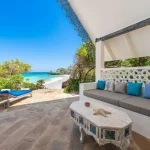
At the highest tier, a property’s physical design is not incidental to the experience but very much part of what guests are paying for. Singita Sasakwa’s Edwardian manor house styling, complete with antique furnishings and parquet floors, or Segera Retreat’s blend of contemporary design with African art and craft displayed throughout the property, both reflect substantial investment in creating a sense of place that goes well beyond a comfortable room. Ngorongoro Crater Lodge, andBeyond’s dramatic crater-rim property built to resemble a Maasai manyatta reimagined through a luxury design lens, has historically occupied a similar tier, though travelers should note the property is currently closed for an extensive rebuild with reopening planned for 2027, so it is worth confirming current status directly before including it in near-term planning. Our companion guide to Tanzania’s best crater lodges around Ngorongoro covers the wider set of properties in that specific area in more detail.
Design Investment Versus Simple Extravagance
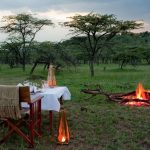
There is a meaningful difference between a property that is simply expensive and one where the design itself contributes to the experience. The strongest ultra-luxury camps use architecture to frame the surrounding landscape, incorporate local materials and craft traditions authentically rather than decoratively, and build public spaces, dining areas, lounges, and decks, specifically to encourage the kind of unhurried, communal evenings that define a great safari stay. Travelers evaluating whether a property’s price reflects genuine design investment or simply high margins should look at how thoughtfully the built environment relates to its specific setting, rather than judging purely on luxury signifiers like marble or chandeliers.
All-Inclusive Pricing and What It Actually Covers
Ultra-luxury nightly rates typically bundle far more than a standard hotel rate would, and understanding what is included changes how the sticker price should be judged. Most properties at this level fold in all meals, a substantial wine and spirits list, twice-daily game drives with a private or near-private vehicle, laundry service, and often a spa treatment or two into the quoted nightly rate. Comparing that all-inclusive figure against a mid-range lodge’s advertised room rate plus separately charged drives, drinks, and activities often narrows the apparent price gap considerably, even though the sticker shock of the ultra-luxury number looks far more dramatic at first glance.
Conservation Fees Built Into the Rate
A meaningful portion of what guests pay at private conservancy properties funds conservation and community work directly, covering anti-poaching patrols, habitat management, and revenue-sharing arrangements with surrounding communities that would otherwise have limited economic incentive to preserve wildlife habitat over agricultural or development use. This is not simply a marketing narrative; conservancies like Grumeti and Laikipia’s conservancy network depend substantially on lodge revenue to fund the rangers and land management that keep the ecosystem intact, meaning a portion of an ultra-luxury nightly rate functions as a direct conservation contribution rather than pure hospitality spending.
Is the Premium Worth It for Every Traveler
None of this means ultra-luxury pricing makes sense for every trip or every traveler. A first-time visitor to East Africa still building a sense of what a safari actually involves may get equally strong wildlife viewing at a well-run mid-range camp inside a busier public park, at a fraction of the cost, since the core wildlife encounters themselves do not necessarily differ dramatically between tiers on any given day. The premium at the ultra-luxury level buys consistency, exclusivity, and a depth of personalized service rather than guaranteeing objectively better animals or more dramatic sightings, which remain governed by chance and season regardless of budget. Travelers celebrating a significant milestone, a honeymoon, a major anniversary, or simply a once-in-a-lifetime trip where budget is less of a constraint, tend to get the most genuine value from that premium, since the exclusivity and personalization compound specifically well with an occasion built around romance and celebration rather than pure wildlife-checklist travel.
How to Vet a Property Before Paying an Ultra-Luxury Rate
Because the top of the market is where marketing language and genuine substance are hardest to tell apart, it helps to ask a few pointed questions before booking. How many total guests does the property host at full capacity, and does that number actually deliver the low-density experience the rate implies? Does the surrounding land grant exclusive traversing rights, or is the property simply an expensive lodge inside a public park still shared with other operators’ vehicles? Is the guide assigned exclusively to a vehicle or a small handful of guests for the length of the stay, or shared more broadly across the property? A reputable travel consultant or the lodge’s own reservations team should be able to answer each of these directly, and any hesitation or vagueness in the response is itself useful information about how much of the price is substance versus branding.
Reading Between the Lines of Marketing Photography
Professional photography can make almost any property look exclusive and pristine, so it is worth looking past the images themselves toward harder details: total room count, the specific conservancy or reserve the property sits within, and whether recent independent reviews mention crowding at sightings or long waits for guides. Properties confident in their exclusivity model tend to publish these specifics openly, while those relying more heavily on atmosphere and styling in their marketing sometimes leave guest capacity and land-access details harder to find.
Bringing the Value Question Into Focus
Ultra-luxury safari camps justify their pricing through a specific combination of private land access, low guest density, dedicated and continuous staff attention, genuine architectural investment, and all-inclusive structuring that bundles far more into the nightly rate than it first appears. None of that guarantees a better lion sighting on any single afternoon, but it does guarantee a fundamentally different, more private, and more personally tailored version of the same East African landscape that every safari traveler comes to see. For travelers who value that texture of experience as much as the wildlife itself, the premium tends to feel entirely earned rather than simply extravagant.













