Rwanda’s Savanna Wilderness
Akagera National Park occupies Rwanda’s eastern edge along the Tanzanian border, and it stands apart from every other park in the country as the one place where the classic savanna safari experience, open grassland, acacia woodland, papyrus swamp, and wide lakes dotted with hippos, plays out much as it does in Kenya or Tanzania. Covering roughly 1,122 square kilometers, Akagera protects a mosaic of low mountains, savanna plains, and a chain of lakes fed by the Akagera River, which also lends the park its name and forms part of the border with Tanzania. Once reduced to a fraction of its former size and stripped of much of its wildlife during decades of conflict and unregulated settlement, Akagera has become one of Africa’s most celebrated conservation turnaround stories, and today it is Rwanda’s only Big Five destination.
A Conservation Comeback Story
Following the 1994 genocide, Akagera lost roughly two-thirds of its original protected area to returning refugees who settled and grazed cattle within its former boundaries, and poaching decimated its wildlife populations, with lions disappearing entirely by the early 2000s and black rhinos following soon after. A 2010 partnership between the Rwanda Development Board and African Parks, a nonprofit conservation organization, transformed the park’s fortunes through fencing, anti-poaching investment, and a series of careful reintroductions. Seven lions were brought back from South Africa in 2015, and eastern black rhinos followed in 2017, restoring the Big Five to Rwanda for the first time in decades. Wildlife numbers across the park have since surged past 12,000 individuals, and Akagera now generates enough tourism revenue to be financially self-sustaining, a rare achievement among African protected areas.
Getting to Akagera National Park
Akagera sits roughly two to three hours by road from Kigali, making it an easily accessible add-on to a Rwanda itinerary built primarily around gorilla or chimpanzee trekking. The drive itself passes through rural farmland and small trading towns before reaching the park’s Kiyonza main gate in the south. Because Akagera is compact by regional standards, many visitors combine it with Kigali as a two-to-three-day extension either before or after the more demanding forest parks further west, and its proximity to the capital makes even a single overnight visit worthwhile for travelers with limited time.
Game Drives and the Big Five
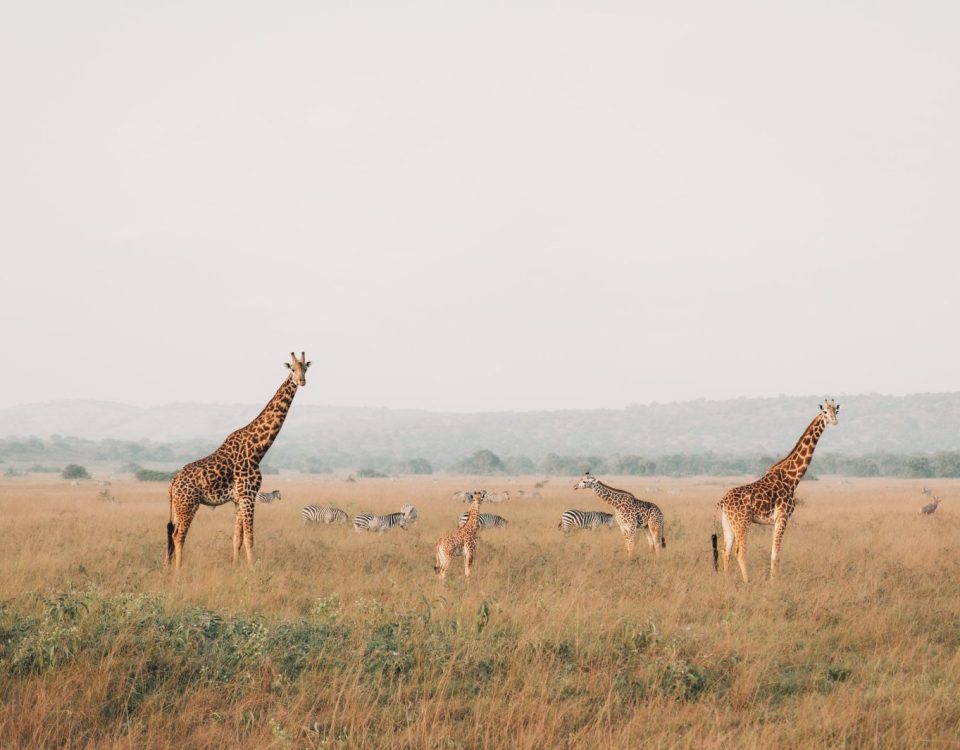
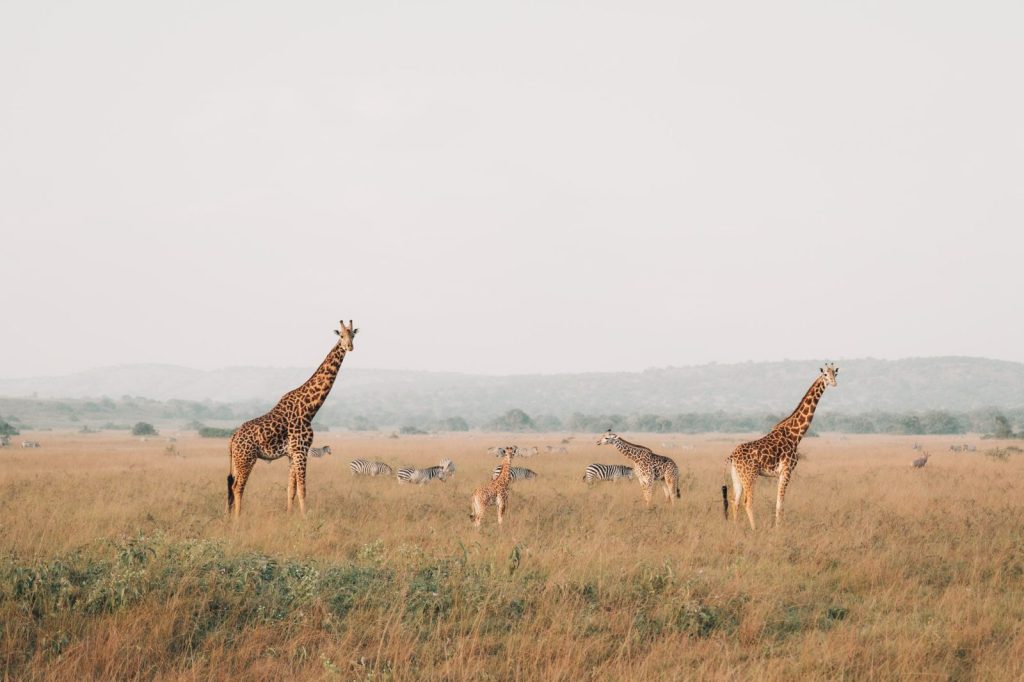
Game drives form the core of an Akagera visit, with half-day drives running either from 6:30 to 11:30 in the morning or from noon to 5 in the afternoon, and full-day drives covering the entire span from early morning to late afternoon for visitors wanting to maximize their chances of a complete Big Five sighting. Lions, reintroduced in 2015, have since established multiple prides across the park and are now regularly encountered on game drives, particularly in the northern and central savanna sections. Eastern black rhinos, critically endangered and notoriously elusive, are harder to spot but do inhabit the park’s remoter areas, tracked closely by dedicated ranger teams. Elephants, leopards, and Cape buffalo round out the Big Five, alongside substantial populations of giraffe, zebra, and various antelope species including topi, roan antelope, and Rwanda’s largest population of eland.
Night Drives
Akagera is one of the few parks in the region offering official night drives, running from around 5:30 in the evening until roughly 8 or 8:30, using spotlights to search for nocturnal species rarely seen during the day, including side-striped jackals, genets, civets, and, with considerable luck, leopards or spotted hyenas moving under cover of darkness. The shift in atmosphere after sunset, with the savanna’s daytime sounds giving way to a completely different set of calls and movements, makes the night drive a worthwhile addition for visitors staying more than a single day.
Boat Cruises on Lake Ihema
Lake Ihema, Akagera’s second-largest lake, hosts one of the park’s most popular activities: a boat cruise that brings visitors remarkably close to hippo pods, basking Nile crocodiles, and a rich variety of waterbirds, including the prehistoric-looking shoebill stork, one of Africa’s most sought-after bird species among dedicated birders. Cruises run several times daily, typically lasting about an hour, and offer a completely different pace and perspective from the game drives, with the boat gliding quietly past papyrus beds where herons, kingfishers, and fish eagles perch within easy photographing distance.
Birdlife in Akagera
Beyond its mammal population, Akagera National Park ranks among the best birding destinations in East Africa, with over 500 recorded species drawn by the park’s mix of savanna, woodland, and extensive wetlands. The shoebill stork, an enormous, prehistoric-looking bird found in only a handful of African wetlands, remains the top target for visiting birders and is most reliably seen during a Lake Ihema boat cruise or a walk through the papyrus swamps near the lake’s edges. Fish eagles, herons, kingfishers, and a wide range of raptors round out a bird list that keeps dedicated birdwatchers occupied for days, while even casual visitors on a standard game drive tend to come away impressed by the sheer volume and variety of birdlife visible from the vehicle.
Walking Safaris and Fishing
Akagera also offers activities rarely available elsewhere in Rwanda, including guided walking safaris in designated areas away from dangerous game concentrations, giving visitors a completely different sensory experience of the savanna, closer to the ground and attuned to smaller details like tracks, dung, and insect life that a vehicle-based game drive tends to move past too quickly to notice. Catch-and-release fishing on Lake Shakani is available for visitors wanting a slower, more contemplative activity between game drives, a niche offering that reflects the park’s broader push to diversify its activity list beyond the standard morning and afternoon drive format.
Where to Stay in Akagera National Park
Accommodation ranges from the luxury tented Magashi Camp on the park’s eastern shore, prized for its lion sightings and lakeside setting, to the mid-range Akagera Game Lodge overlooking Lake Ihema, and budget-friendly campsites for self-drive visitors and overlanders. Because the park allows overnight stays inside its boundaries, waking up to the sound of hippos grunting nearby or watching the sunrise over the lakes from a lodge veranda adds a dimension to the visit that a single day trip from Kigali simply cannot match.
Best Areas for Big Five Sightings
The northern sector of the park, around Lake Rwanyakizinga and the surrounding open plains, tends to produce the most consistent lion and elephant sightings, while the black rhino population favors denser, more remote woodland areas that require an experienced guide familiar with recent tracking data to locate reliably. Leopards, notoriously elusive across their entire range, are occasionally spotted along the park’s rocky outcrops and riverine thickets, particularly during early morning or late afternoon drives when temperatures are cooler and the cats are more likely to be moving rather than resting in deep cover.
Practical Tips for Visiting Akagera
Park entry costs approximately 100 US dollars per person per day for international visitors, which includes access for a self-drive game drive, and this daily rate is reduced for visitors staying multiple nights inside the park. Self-driving is permitted and popular given the park’s well-maintained road network, though hiring a guide or joining an organized game drive tends to produce better wildlife sightings given local knowledge of current animal movements. Visitors should pack neutral-colored clothing, sun protection, and binoculars, and should expect a warmer, drier climate than Rwanda’s mountainous west, since Akagera sits at considerably lower elevation.
Many travelers pair Akagera with the primate-focused parks further west, and reading this guide to Volcanoes National Park alongside Akagera planning helps build a complete Rwanda itinerary balancing savanna game viewing with gorilla trekking. The broader first-timer’s guide to planning a safari in Rwanda also covers how to sequence these very different park experiences within a single trip.
Why Akagera Belongs on a Rwanda Itinerary
For travelers who assume Rwanda is exclusively a gorilla and rainforest destination, Akagera National Park offers a genuine surprise: open horizons, big-sky sunsets over the lakes, and the unmistakable thrill of watching lions and rhinos on a classic game drive, all within a few hours of the capital. Combined with the park’s remarkable recovery story, restored from a wildlife-depleted, unfenced landscape to a thriving Big Five destination within little more than a decade, a visit to Akagera adds both ecological richness and a genuinely inspiring conservation narrative to any Rwanda safari. Current entry fees and activity bookings are managed through the Rwanda Development Board, which publishes up-to-date pricing ahead of any visit.
Visitors planning several days in the park should also consider the varied landscape Akagera compresses into a relatively small area: rolling savanna hills in the north give way to swamp-fringed lakes in the center and drier acacia woodland toward the south, meaning the scenery and wildlife encountered can shift noticeably even within a single day’s drive. This variety, combined with the park’s dramatic recovery story and its status as Rwanda’s only true savanna and Big Five destination, makes Akagera a rewarding stop even for travelers who have visited larger, more famous parks elsewhere in East Africa and assume they have already seen everything a savanna safari has to offer.