Nile Crocodiles: Where to See Them and How to Stay Safe on Boat Trips
Nile crocodiles are among Africa’s largest and most powerful reptiles, making them fascinating animals to observe during an East African safari. These impressive predators inhabit rivers, lakes, wetlands and freshwater channels across Uganda, Kenya, Tanzania and Rwanda. Their enormous jaws, muscular tails and remarkable hunting abilities make them important members of aquatic wildlife communities.
Seeing Nile crocodiles during a boat safari offers opportunities to observe their natural behaviour. Visitors may encounter crocodiles resting on riverbanks, swimming quietly through water or waiting near areas where animals gather to drink.
However, Nile crocodiles are potentially dangerous predators. Their ability to remain almost completely submerged makes them difficult to detect, while their powerful jaws can cause severe injuries. Understanding their behaviour and following appropriate safety precautions are essential for anyone exploring crocodile habitats.
Understanding Nile Crocodiles in East Africa
The Nile crocodile (Crocodylus niloticus) is one of Africa’s largest living reptiles.
Large adult males commonly reach lengths of approximately four to five metres, although exceptionally large individuals may grow longer.
Their heavily armoured bodies, powerful tails and strong jaws make them highly effective aquatic predators.
Nile crocodiles occupy various freshwater habitats, including rivers, lakes, marshes and seasonal wetlands.
Key Facts About Nile Crocodiles
| Feature | Description |
|---|---|
| Scientific name | Crocodylus niloticus |
| Animal group | Reptile |
| Typical adult length | Approximately 3–5 metres |
| Diet | Fish, birds, mammals and other animals |
| Main habitats | Rivers, lakes and wetlands |
| Hunting method | Ambush predation |
| Reproduction | Egg-laying |
| Activity | Active during day and night |
Crocodiles can remain motionless for extended periods, making them particularly difficult to notice in muddy or vegetation-covered water.
1. Nile Crocodile Behaviour and Hunting Techniques
Nile crocodiles are ambush predators that depend on patience, camouflage and sudden movements when capturing prey.
They frequently position themselves near riverbanks, shallow crossings and other locations where animals approach water.
How Nile Crocodiles Hunt
A crocodile may remain almost completely submerged while monitoring nearby movements.
When suitable prey approaches, it can launch a rapid attack using its powerful jaws.
Its strong tail helps propel the body through water.
Crocodiles may capture fish underwater or attack mammals approaching the shoreline.
What Do Nile Crocodiles Eat?
Their diet changes according to age, size and available prey.
Young crocodiles commonly feed on insects, small fish and other aquatic animals.
Larger individuals consume a wider variety of prey.
Common food sources include:
-
Fish and aquatic animals.
-
Waterbirds.
-
Small mammals.
-
Antelopes approaching water.
-
Animal carcasses.
-
Occasionally larger mammals.
Although crocodiles can capture substantial prey, many meals consist of fish and smaller animals.
2. Why Do Crocodiles Rest on Riverbanks?
One of the most common crocodile behaviours observed during boat safaris is basking.
Crocodiles depend on external temperatures to regulate their body heat.
They frequently emerge onto exposed banks, rocks or sandbars to absorb warmth from sunlight.
Understanding Crocodile Basking
You may observe several crocodiles resting together near a river.
Some keep their mouths open while remaining almost motionless.
An open mouth can help regulate temperature and does not automatically indicate aggression.
However, basking crocodiles remain capable of reacting quickly when disturbed.
Can Crocodiles Move Quickly on Land?
Yes. Although crocodiles often appear slow, they can make rapid movements over short distances.
Visitors should never approach resting crocodiles for photographs.
Maintain a safe distance and observe them from authorised viewing areas or professionally operated boats.
3. Are Nile Crocodiles Dangerous to Humans?
Nile crocodiles are potentially dangerous because they can attack large animals, including humans.
Their hunting behaviour makes encounters near shorelines particularly risky.
Crocodiles may remain hidden beneath water, making it difficult to recognise their presence.
Situations That Increase Risk
Dangerous encounters can occur when people:
-
Swim in crocodile-inhabited water.
-
Approach riverbanks carelessly.
-
Wash clothes near crocodile habitats.
-
Fish from exposed shorelines.
-
Enter water near nesting areas.
-
Attempt to feed crocodiles.
-
Approach crocodiles resting on land.
Crocodiles may also become accustomed to human activity where people regularly provide food.
Feeding wild crocodiles is dangerous and should never be encouraged.
4. How to Stay Safe During Boat Trips
A professionally organised boat safari is one of the most practical ways to observe Nile crocodiles.
However, passengers must follow safety instructions throughout the journey.
Choose an Authorised Boat Operator
Book excursions through recognised operators using suitable boats and experienced guides.
Before departure, check that the boat has appropriate safety equipment.
Passengers should follow instructions about seating, movement and life jackets.
Keep Your Hands Inside the Boat
Never place your hands or feet into the water.
Avoid leaning excessively over the sides when photographing crocodiles.
Even when animals appear motionless, they can react unexpectedly.
Never Feed Crocodiles
Feeding crocodiles encourages dangerous associations between humans and food.
It can also alter their natural hunting behaviour.
Responsible safari operators should never attract crocodiles using food.
Follow Your Guide’s Instructions
Boat guides understand local waterways, wildlife movements and potential hazards.
Remain seated when instructed and avoid sudden movements that could destabilise the boat.
Never request an unsafe approach simply to obtain a closer photograph.
5. Best Places to See Nile Crocodiles in East Africa
Several East African national parks and waterways support Nile crocodile populations.
| Destination | Country | Main Viewing Experience |
|---|---|---|
| Murchison Falls National Park | Uganda | Nile River boat cruises |
| Queen Elizabeth National Park | Uganda | Kazinga Channel boat safaris |
| Lake Victoria | Uganda, Kenya, Tanzania | Crocodile habitats in certain areas |
| Serengeti National Park | Tanzania | Grumeti and Mara river systems |
| Maasai Mara National Reserve | Kenya | Mara River wildlife viewing |
| Lake Baringo | Kenya | Guided lake excursions |
| Akagera National Park | Rwanda | Lake Ihema boat safaris |
Each destination offers different opportunities depending on water levels, weather and crocodile movements.
6. Murchison Falls National Park, Uganda
Murchison Falls National Park is one of Uganda’s leading destinations for observing Nile crocodiles.
The Victoria Nile passes through the park, providing extensive aquatic habitats.
Large crocodiles can sometimes be observed resting along riverbanks during guided boat excursions.
Best Crocodile Viewing Experiences
Boat cruises towards Murchison Falls offer opportunities to see crocodiles, hippos and numerous waterbirds.
Some crocodiles rest on sandy banks, while others remain partly submerged near the shoreline.
The park also supports elephants, giraffes, buffaloes and lions.
Visitors can combine a Nile boat cruise with morning game drives and visits to the waterfall viewpoints.
Recommended Safari Duration
A three-day Murchison Falls safari provides time for a boat cruise, game drives and other wildlife activities.
Longer visits allow travellers to explore additional sections of the park.
7. Kazinga Channel, Queen Elizabeth National Park, Uganda
The Kazinga Channel connects Lake Edward and Lake George in western Uganda.
It is one of the country’s most rewarding waterways for observing aquatic wildlife.
Nile crocodiles occur alongside large groups of hippos, waterbirds and other animals.
What Can You See During a Boat Safari?
Visitors may observe crocodiles basking on banks or swimming near shallow sections.
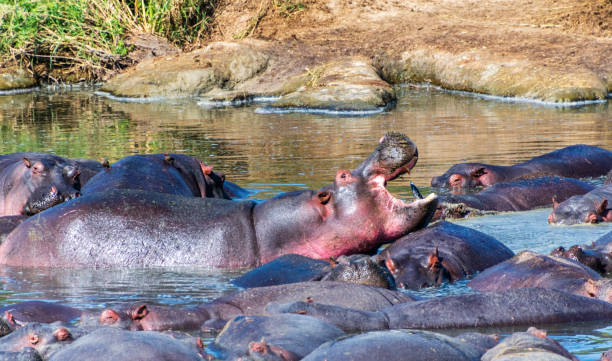
Hippos frequently gather in groups along the channel.
Elephants, buffaloes and antelopes sometimes approach the water to drink.
The channel also supports numerous bird species, including fish eagles, kingfishers and herons.
Guided boat trips provide opportunities to observe these animals while maintaining appropriate distances.
8. Serengeti National Park, Tanzania
Serengeti National Park contains several river systems that support Nile crocodiles.
The Grumeti and Mara rivers are particularly well known for their crocodile populations.
These waterways also play important roles during the annual wildebeest migration.
Crocodiles and the Great Migration
When migrating wildebeest and zebras cross major rivers, crocodiles may attempt to capture vulnerable animals.
However, successful attacks are unpredictable.
Many crossings occur without visitors witnessing crocodile predation.
Best Time to Visit
The timing of migration-related river crossings varies annually according to rainfall and animal movements.
The western corridor is often associated with migration activity around May to July.
Northern Serengeti crossings are commonly associated with July to October.
Crocodiles remain in suitable river habitats throughout the year.
9. Maasai Mara National Reserve, Kenya
The Maasai Mara is another excellent destination for observing Nile crocodiles.
The Mara River supports large crocodiles that can be seen resting along suitable banks.
During migration periods, the river attracts substantial numbers of wildebeest and zebras.
What Makes the Mara River Special?
The river provides opportunities to observe crocodiles within a landscape containing numerous grazing mammals and predators.
Visitors may witness crocodiles basking, swimming or responding to passing animals.
However, wildlife encounters depend on natural conditions and cannot be guaranteed.
Always remain inside safari vehicles where required and follow designated viewing regulations.
10. Lake Baringo, Kenya
Lake Baringo is a freshwater lake in Kenya’s Rift Valley.
It supports Nile crocodiles, hippos and numerous bird species.
Guided boat excursions offer opportunities to observe aquatic wildlife.
Important Safety Considerations
Water levels can change significantly, affecting shorelines and wildlife movements.
Crocodiles may occupy areas close to human settlements and fishing locations.
Visitors should use experienced local operators and avoid entering unfamiliar water.
The lake is particularly attractive to birdwatchers interested in combining crocodile viewing with waterbird photography.
11. Akagera National Park, Rwanda
Akagera National Park contains lakes, wetlands and savannah habitats in eastern Rwanda.
Lake Ihema is one of its most important aquatic wildlife areas.
The lake supports Nile crocodiles, hippos and numerous waterbirds.
Crocodile Viewing on Lake Ihema
Organised boat excursions provide opportunities to observe crocodiles resting near shorelines.
Visitors may also see African fish eagles, herons, kingfishers and other aquatic birds.
Akagera is particularly suitable for travellers combining Rwanda’s savannah wildlife experiences with mountain gorilla trekking.
A two-day visit allows time for game drives and a guided boat excursion.
12. Nile Crocodile Breeding and Nesting Behaviour
Nile crocodiles reproduce by laying eggs.
Females usually select suitable nesting locations along sandy riverbanks or other protected areas near water.
They dig nests and deposit eggs before covering them with surrounding material.
Do Mother Crocodiles Protect Their Young?
Yes. Female Nile crocodiles may guard nesting areas and protect newly hatched young.
Mothers sometimes assist hatchlings as they emerge and move towards water.
This behaviour demonstrates a level of parental care that surprises many safari visitors.
However, nesting females may become particularly defensive.
Never approach crocodile nests or young animals.
Best Time to See Nile Crocodiles on Safari
Nile crocodiles can be observed throughout the year in suitable habitats.
However, temperature and water conditions influence their visibility.
| Time or Season | Common Behaviour | Viewing Advice |
|---|---|---|
| Early morning | Basking and warming | Search exposed riverbanks |
| Midday | Resting or remaining submerged | Observe shaded banks and water |
| Late afternoon | Basking or moving | Watch shoreline activity |
| Dry season | Concentration around permanent water | Explore major rivers and lakes |
| Rainy season | Dispersal into suitable habitats | Allow flexible viewing time |
Warm, sunny periods can provide opportunities to see crocodiles basking.
However, they may also retreat into water when temperatures become excessive.
Practical Tips for Crocodile Photography
Photographing Nile crocodiles requires patience and appropriate equipment.
A telephoto lens allows you to capture details without approaching dangerous animals.
A lens covering approximately 200–400 mm can be useful, depending on viewing distance.
Keep your camera strap secure and avoid leaning outside the boat.
Look for interesting behaviours such as basking, swimming and interactions between individuals.
Never request that guides disturb resting crocodiles to encourage movement.
Frequently Asked Questions About Nile Crocodiles
Are Nile crocodiles dangerous?
Yes. Nile crocodiles are powerful predators capable of seriously injuring or killing humans. Maintaining safe distances and following professional guidance is essential.
Can Nile crocodiles attack boats?
Yes. Crocodiles may react aggressively when threatened or disturbed. Professionally operated boats should avoid close approaches.
Where can you see crocodiles in Uganda?
Murchison Falls National Park and the Kazinga Channel in Queen Elizabeth National Park are among the country’s leading crocodile-viewing destinations.
What do Nile crocodiles eat?
They primarily consume fish and other animals, including birds and mammals. Their diet changes with age, size and prey availability.
Can crocodiles survive outside water?
Yes. Nile crocodiles can spend considerable periods on land, particularly when basking, nesting or moving between aquatic habitats.
Are crocodiles active at night?
Yes. Nile crocodiles may hunt and move during both daylight and darkness.
Is a crocodile boat safari safe?
A guided excursion can be conducted safely when operators follow regulations, maintain suitable distances and use appropriate equipment. No wildlife activity is entirely risk-free.
Nile crocodiles are among East Africa’s most fascinating aquatic predators.
Their powerful jaws, patient hunting techniques, basking behaviour and unusual parental care make them rewarding animals to observe.
Murchison Falls, the Kazinga Channel, Serengeti, Maasai Mara, Lake Baringo and Akagera offer worthwhile crocodile-viewing opportunities.
However, responsible observation is essential.
Choose experienced guides, follow boat safety instructions, keep your hands inside the vessel and never approach crocodiles unnecessarily.
With careful planning and respect for wildlife, visitors can enjoy memorable crocodile encounters while remaining safe on East Africa’s rivers and lakes.