Safari Lodge vs Tented Camp: What Is the Real Difference?
The main difference is the room you sleep in. A safari lodge typically has solid-walled rooms or cottages, while a tented camp typically has canvas or canvas-sided guest rooms. The names can overlap. A property called a tented lodge may have permanent guest tents on raised decks, private bathrooms and a central dining area. At the other end of the scale, a simple lodge may offer fixed rooms with few extras.
When comparing a safari lodge vs tented camp, look beyond the name. Ask how long it takes to reach the wildlife area, what the bathroom and power supply are like, and how much the whole stay costs once you add drives and fees. A well-positioned tented camp with a proper bed and hot shower may suit you better than a lodge that puts you an hour farther from the places you want to explore.
Safari Lodge vs Tented Camp at a Glance
| What to compare | Safari lodge | Tented camp |
|---|---|---|
| Guest room | Usually a solid-walled room, cottage or suite | Usually a furnished canvas or canvas-sided room |
| Bathroom | Often a private bathroom with a plumbed shower | Can have a private plumbed bathroom, a bush shower or shared facilities |
| Power | Varies by property and room type | May use solar power or a generator, with charging in the tent or a shared area |
| Night sounds | Solid walls can soften some outside noise | Canvas usually lets you hear more wind, rain and wildlife |
| Location | Fixed. It may be inside or outside the park. | May be permanent or move between sites seasonally. |
| Price | Ranges from simple accommodation to luxury stays | Also ranges from simple to luxury. Canvas doesn’t tell you the price. |
What Is a Safari Lodge?
A safari lodge usually has permanent buildings for guest rooms, meals and reception. You may sleep in a room in the main building or in a separate cottage. Some lodges have a pool, a lounge, laundry service and several room categories. Others offer little more than a room, meals and a good location. If you’re choosing a lodge because you want a particular feature, confirm it for the room you’re booking.
A lodge can be a good choice if part of your group wants to stay behind between activities. For instance, one person might spend the afternoon by the pool while the rest go on a game drive. Check whether the property allows guests to skip a drive without changing the rest of the group’s plans, particularly if you’re sharing a vehicle.
Don’t assume solid walls mean short walks or easy access. Some lodges spread their cottages along a hillside. Ask about the route from your room to the dining area, including steps, slopes and lighting after dark. If a traveller needs step-free access, ask about the whole route rather than relying on an accessible-room label.
What Is a Tented Safari Camp?
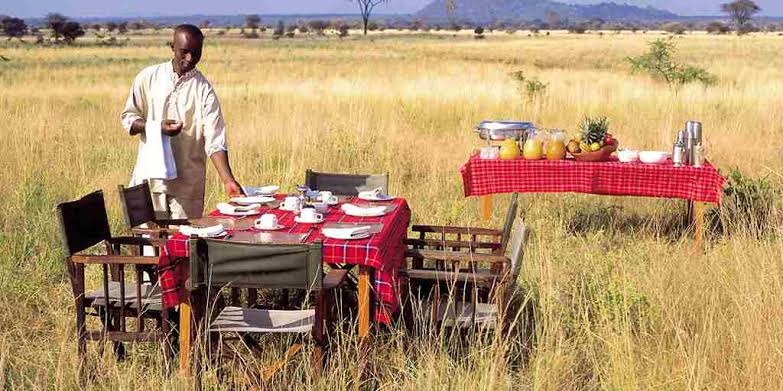
A tented camp generally provides a guest tent that’s already set up when you arrive. In a furnished, walk-in safari tent, you may find a full-size bed, a desk, a veranda and an en-suite bathroom. You don’t need to bring a sleeping bag unless the operator tells you the setup is more basic.
Ruzizi Tented Lodge in Rwanda’s Akagera National Park is a useful example of how the terms overlap. It has tented accommodation beside Lake Ihema and uses solar power. In Kenya, some Porini camp tents have private bathrooms with flushing toilets and safari showers. These examples describe particular properties. They don’t tell you what the next camp will offer.
A permanent tented camp stays in one place, even though its rooms are made partly or largely of canvas. A seasonal camp may move between sites at different times of year but stay put throughout your visit. Fly camping is a different experience again. It usually means a short overnight at a simpler temporary camp, often as part of a guided walk. Ask which type you’re booking if the itinerary only says camp.
Comfort: Check the Details You’ll Notice Every Day
Ask how the bathroom and power work
“Private bathroom” tells you who uses it, but not how it works. A plumbed shower may be available whenever you need it, while a bucket shower may require staff to fill it at an agreed time. If you want to wash as soon as you return from a dusty drive, ask when hot water is available. Also find out whether the bathroom is directly attached to the room or reached by stepping outside.
Ask where you can charge devices and whether power runs overnight. A property can use solar energy and still offer in-room sockets. Another may ask guests to charge devices in the main lounge. If you use a device that needs continuous power, tell the property what it requires and get a clear answer before you pay. Don’t infer overnight power from a photo showing a bedside lamp.
Think about sleep, privacy and movement after dark
Canvas lets in more outside sound than solid walls usually do. That can be part of the appeal if you enjoy listening to the bush. If wind, rain or unfamiliar noises tend to keep you awake, a solid-walled room may be the better choice. Ask how close the room is to the dining area, a service path or a generator. A well-placed tent can be quieter than a lodge room next to a busy communal area.
If the property isn’t fenced or staff require escorts after dark, ask how you get from your room to dinner and back. The same question applies to lodges and camps. For a family, check whether children can sleep in the same unit as their parents. Two tents described as neighbouring may still be separated by a path you’re not permitted to use alone at night.
Location and Price: Compare the Whole Stay
Measure your time to the wildlife area
A lodge inside a park can give you better access to a game-drive route than a tented camp outside it. A seasonal camp may be better placed for a particular stretch of the Serengeti during your travel dates. Ask for the exact location for your stay, the first area your guide expects to explore and how long it usually takes to get there.
Suppose two properties advertise morning and afternoon drives. One is 20 minutes from the area you want to explore, and the other is 50 minutes away. That’s an illustrative difference of one hour on a return outing. If the longer route passes through good wildlife habitat, you may enjoy the extra time in the vehicle. If most of it is a transfer to the gate, it may take time away from the drive you came for.
Ask for the same inclusions in both quotes
Compare prices for the same dates and number of guests. A tented camp package might include meals, shared game drives and airstrip transfers. A lower-priced lodge room might leave you to pay for those items separately. The opposite can also be true. Ask each property to show what you’ll pay for accommodation, activities, transfers and applicable park or conservancy fees.
If the quotes are close, decide what you’re paying for. A family might value an adjoining room more than a better view from the veranda. A couple who plans to spend most of the day out with a guide may prefer a simple room closer to the game-drive area. There’s little value in paying extra for a feature you won’t use.
Which Should You Book?
Choose a lodge if you prefer solid walls or need facilities that the property can confirm, such as a step-free route, a family room or reliable in-room power. Choose a tented camp if you’re happy sleeping under canvas and it has the location and facilities you want. Neither label is a reliable shortcut for comfort.
If you’re undecided, ask for recent photos of the specific room or tent, including the bathroom and the approach to the entrance. Then compare the travel time to your first game-drive area and the total price. Those details are more useful than deciding by category alone.
Frequently Asked Questions
Do you need camping gear for a tented safari camp?
Usually not at a furnished safari camp. The operator generally provides the tent, bed and bedding. Confirm what’s included if you’re booking a basic campsite, a mobile expedition or a fly-camping overnight.
Are tented camps cheaper than lodges?
Not necessarily. A luxury tented camp in a sought-after location can cost more than a simple lodge. Compare the full stay, including activities, meals, transfers and fees, rather than looking only at the nightly room price.
Which is better for a first safari?
Choose the property that makes the trip easier for you. If both offer similar wildlife access, favour the one where you expect to sleep well, move around comfortably and enjoy the time between drives. A furnished tented camp can be as suitable for a first safari as a lodge.