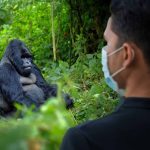
Gorilla Habituation Experience Permit: Four Hours With the Gorillas
The gorilla habituation experience permit gives you an opportunity to spend up to four hours observing mountain gorillas in Uganda’s Bwindi Impenetrable National Park. Unlike standard gorilla trekking, where visitors spend a maximum of one hour with a habituated family, the habituation experience allows a longer period with gorillas that are still becoming accustomed to the controlled presence of humans.
For wildlife enthusiasts, photographers and travellers interested in gorilla behaviour, this is one of Uganda’s most specialised primate experiences.
The activity takes place in the Rushaga sector of southern Bwindi, where visitors accompany experienced trackers, ranger guides and habituation personnel into the forest.
A maximum of four tourists can participate in a visit to one gorilla family during the habituation experience, compared with eight tourists on a standard gorilla trek.
This smaller group and the longer observation period create opportunities to watch gorillas feeding, resting, grooming and interacting in their natural environment.
However, gorilla habituation is more expensive than standard trekking. Under the Uganda Wildlife Authority’s January 2027 to June 2028 conservation tariff, a foreign non-resident permit costs US$1,800 per person.
Before booking, you should understand what the permit includes, how the experience differs from normal gorilla trekking, the physical demands and whether spending four hours with gorillas is worth the additional expense.
What Is the Gorilla Habituation Experience?
Gorilla habituation is the gradual process of helping wild gorillas become accustomed to the controlled presence of researchers, trackers and conservation personnel.
Mountain gorillas naturally respond cautiously to unfamiliar human activity. Conservation teams therefore introduce a carefully managed human presence over an extended period.
The purpose is to allow researchers and authorised visitors to observe gorillas without causing unnecessary disturbance.
The process can take several years and requires patience, monitoring and a detailed understanding of gorilla behaviour.
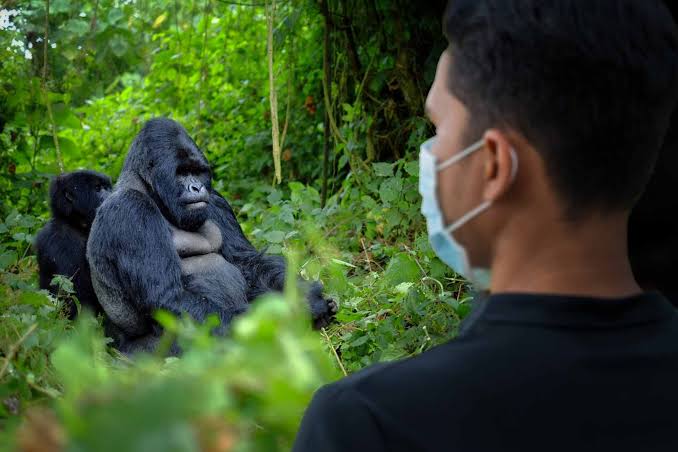
During a gorilla habituation experience, visitors accompany authorised personnel who are involved in monitoring or habituating a gorilla family.
You may observe gorillas that are more cautious or less accustomed to visitors than the fully habituated groups used for standard trekking.
What Makes Gorilla Habituation Different?
The main differences are the observation time, group size and the stage of habituation.
Standard gorilla trekking involves visiting an established habituated gorilla family for up to one hour.
The habituation experience involves spending up to four hours with a family undergoing the habituation process.
Visitors may observe a wider range of behaviour during this extended period, although the gorillas remain free to move naturally.
The experience is conducted under the supervision of trained conservation personnel.
Gorilla Habituation Experience Permit Prices for 2027
Uganda Wildlife Authority has published revised gorilla habituation permit rates for January 2027 through June 2028.
The amount you pay depends on your nationality and residency category.
Uganda Gorilla Habituation Permit Price Table
| Visitor category | Permit price per person |
|---|---|
| Foreign non-resident | US$1,800 |
| Foreign resident | US$1,500 |
| Rest of Africa | US$1,000 |
| East African citizen | UGX 750,000 |
These are the published rates for the 2027–2028 tariff period. Fees remain subject to revision by Uganda Wildlife Authority.
The permit includes the official guiding fee, park entrance for the activity day and a contribution to community development.
However, accommodation, meals, transport and personal porter services are generally additional expenses.
Is There a Low-Season Gorilla Habituation Discount?
Uganda publishes discounted standard gorilla trekking permits for April, May and November.
For example, eligible foreign non-residents can pay US$600 for standard gorilla trekking during those months.
However, the published low-season discount does not include a separate reduced rate for gorilla habituation.
Therefore, travellers planning the four-hour experience in 2027 should budget according to the standard habituation tariff unless an official promotion is announced.
Where Does Gorilla Habituation Take Place in Uganda?
The gorilla habituation experience is offered in the Rushaga sector of Bwindi Impenetrable National Park, in south-western Uganda.
Bwindi is a UNESCO World Heritage Site known for its mountain gorillas, ancient rainforest, rich birdlife and diverse vegetation.
The park contains several trekking sectors, including Buhoma, Ruhija, Rushaga and Nkuringo.
However, standard gorilla trekking and gorilla habituation are different activities, and you should not assume that a habituation permit is available in every sector.
Why Rushaga Is Important
Rushaga is located in southern Bwindi, within the wider Kisoro region.
The area contains mountainous forest, steep slopes and dense vegetation.
Its gorilla tourism operations include standard trekking and the specialised habituation experience.
Visitors should arrange accommodation within a practical driving distance of the Rushaga briefing point.
Staying in Buhoma or another distant sector may create unnecessary transport difficulties.
Before reserving your lodge, confirm the exact starting point of your habituation activity.
Getting to Rushaga From Entebbe
Travellers arriving at Entebbe International Airport can reach southern Bwindi by road or a combination of domestic flight and road transfer.
The road journey commonly takes approximately nine to eleven hours, although actual travel times depend on road conditions, traffic and stops.
Alternatively, you can arrange a domestic flight from Entebbe to Kisoro Airstrip, followed by a road transfer towards Rushaga.
Flight schedules, baggage allowances and transfer times should be checked before booking.
If you are travelling from Kigali in Rwanda, the road journey to southern Bwindi may be shorter than travelling from Entebbe.
However, you must account for immigration procedures, border crossing requirements and the final drive to your lodge.
Gorilla Habituation vs Standard Gorilla Trekking
One of the most common questions is whether the four-hour gorilla habituation experience is better than ordinary gorilla trekking.
The answer depends on how much time you want to spend observing gorillas and how comfortable you are with the additional cost and physical demands.
Gorilla Habituation and Trekking Compared
| Feature | Gorilla habituation | Standard gorilla trekking |
|---|---|---|
| Observation time | Up to 4 hours | Up to 1 hour |
| Maximum visitors per gorilla family | 4 | 8 |
| Gorilla group | Undergoing habituation | Habituated |
| Foreign non-resident permit in 2027 | US$1,800 | US$800 |
| Main location | Rushaga, Bwindi | Bwindi or Mgahinga |
| Minimum age | 15 years | 15 years |
| Physical demands | Potentially strenuous | Varies by route |
| Best suited for | Keen wildlife observers and photographers | Most first-time visitors |
The four-hour option provides more observation time, but it does not guarantee closer gorilla encounters or better photographs.
For many first-time travellers, standard trekking provides a satisfying experience at a considerably lower price.
However, visitors with a particular interest in primate behaviour may appreciate the additional time available during habituation.
What Happens During the Four-Hour Gorilla Habituation Experience?
Your day normally begins earlier than a standard gorilla trek.
Uganda Wildlife Authority’s published guidelines identify 6:30 am as the starting time for the gorilla habituation activity.
You should therefore arrange an early breakfast and transport from your lodge.
Step 1: Early Morning Briefing
The first stage involves reporting to the designated briefing point.
Park officials check your booking details and explain the day’s procedures.
You receive information about safety, gorilla behaviour, conservation rules and what to expect during the forest walk.
The ranger guides also explain how visitors should respond if gorillas move towards the group.
Step 2: Entering Bwindi Forest
After the briefing, you begin walking into the forest with authorised personnel.
The trekking route depends on where the gorilla family is located.
Some days may involve relatively manageable walks, while others require longer hikes through steep or muddy terrain.
You may cross narrow forest paths, climb hills or move through thick vegetation.
The guides determine the appropriate route according to tracking information and prevailing conditions.
Step 3: Locating the Gorilla Family
Trackers use their knowledge of gorilla movements, feeding areas and previous nesting locations to help locate the family.
You may notice broken vegetation, footprints or signs of recent feeding along the way.
The team may also discuss the gorilla family’s movements and behaviour.
However, visitors should not expect a formal research lesson throughout the entire walk.
The priority remains safe wildlife observation and minimal disturbance.
Step 4: Spending Up to Four Hours With the Gorillas
Once the gorilla family has been located and the ranger permits observation, the viewing period begins.
You may spend up to four hours observing the group.
This extended period gives you opportunities to watch different behaviours.
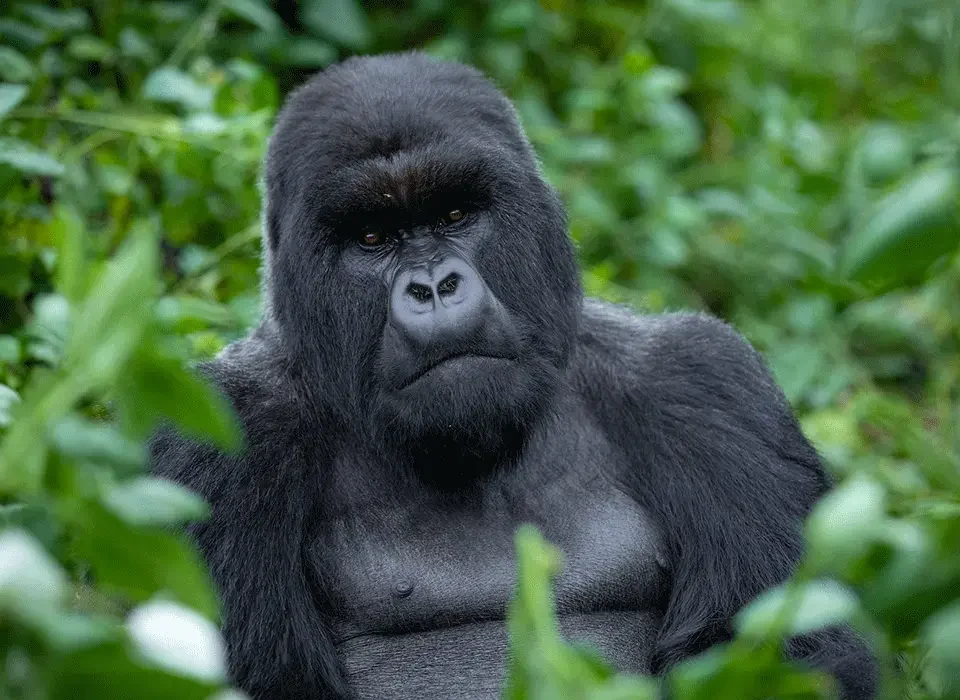
A silverback may rest while younger gorillas play nearby.
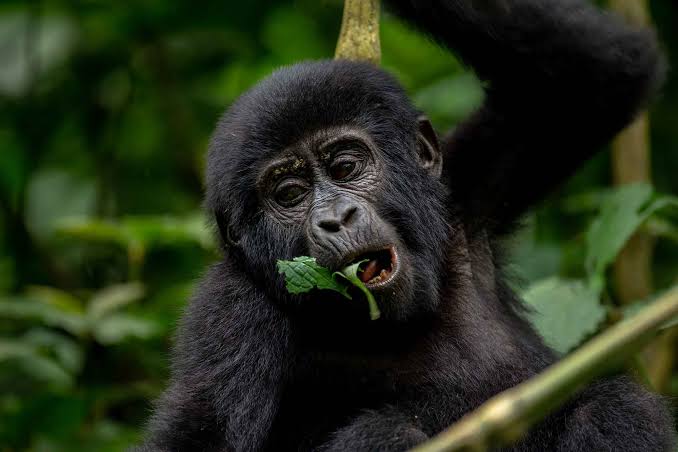
Adult females may feed, groom themselves or care for infants.
Juveniles may climb trees, interact with one another or explore the surrounding vegetation.
The gorillas may also move through the forest, requiring the visitors to follow instructions from the guides.
Remember that four hours is the maximum authorised viewing period. The length and quality of your actual encounter depend on the conditions, animal behaviour and decisions made by park personnel.
Step 5: Returning to the Starting Point
After the authorised observation period, you begin the walk back.
The return journey may take additional time depending on the terrain and your location.
Because the entire activity can occupy much of the day, avoid arranging another demanding excursion immediately afterwards.
Plan a relaxed evening at your lodge.
What Can You See During Four Hours With Mountain Gorillas?
Four hours creates more opportunities to observe natural gorilla behaviour.
However, there is no fixed programme of activities.
The gorillas decide when to feed, rest or move.
Feeding Behaviour
Mountain gorillas spend considerable time feeding on vegetation.
You may observe them selecting leaves, pulling stems or moving between feeding areas.
Watching these activities can help you understand how gorillas interact with their forest environment.
Social Relationships
Gorilla families usually contain a dominant silverback, females, younger gorillas and sometimes additional adult males.
The social structure varies between families.
During a longer visit, you may notice how adults communicate through body movements, facial expressions and vocalisations.
Young Gorillas Playing
Young gorillas can be particularly interesting to observe.
They may chase each other, climb vegetation or play near adult family members.
However, their movements are unpredictable.
Visitors must never encourage play, attempt contact or move closer for photographs.
Resting and Grooming
Gorillas often spend time resting.
You may see individuals sitting quietly, cleaning themselves or interacting gently with other group members.
These quieter moments are valuable for understanding their normal daily behaviour.
How Difficult Is Gorilla Habituation?
Gorilla habituation can be physically demanding.
The experience takes place in a mountainous rainforest environment where trails may be steep, muddy and uneven.
Because you may spend several hours in the forest, reasonable fitness and stamina are important.
However, the exact difficulty varies from day to day.
The gorilla family’s location determines how far you need to walk.
How to Prepare Physically
Begin preparing several weeks before your trip.
Regular walking can improve your endurance.
Include hills or stair climbing where possible.
Practising on uneven ground may also help you become more comfortable with forest conditions.
Wear sturdy hiking boots with suitable grip.
You should also carry enough drinking water and a packed meal.
If you have mobility limitations or medical concerns, discuss them with your safari operator before purchasing a permit.
A porter may provide assistance, but the park cannot guarantee an easy route.
What to Pack for Gorilla Habituation
The four-hour experience requires suitable clothing and basic trekking equipment.
Gorilla habituation packing checklist
0/10 packed
Avoid carrying unnecessary heavy equipment because you may walk for several hours.
Photographers should consider a lightweight camera setup rather than multiple heavy lenses.
Flash photography is not permitted during gorilla encounters.
Gorilla Habituation Rules and Regulations
Uganda Wildlife Authority enforces regulations to protect mountain gorillas and visitors.
The minimum age for participation is 15 years.
Visitors must follow the instructions of ranger guides throughout the activity.
You should maintain the required distance from gorillas, avoid sudden movements and never attempt physical contact.
Eating, drinking and smoking are prohibited during close observation.
Visitors should avoid loud conversations and unnecessary noise.
If a gorilla approaches, remain calm and follow the ranger’s instructions.
You must also report symptoms of illness before trekking.
Mountain gorillas can contract infections from humans, making health precautions essential.
Is Gorilla Habituation Worth US$1,800?
For many travellers, US$1,800 is a significant amount to spend on one wildlife activity.
The habituation permit costs US$1,000 more than Uganda’s standard foreign non-resident gorilla trekking permit.
Whether the additional expense is worthwhile depends on your interests.
When Gorilla Habituation Is Worth Considering
The experience may be particularly suitable if you are passionate about primates, wildlife photography or conservation.
Spending longer with a gorilla family gives you more time to observe behaviour without concentrating entirely on taking photographs.
The smaller visitor group may also appeal to travellers who prefer fewer people during the encounter.
When Standard Gorilla Trekking Is Better
Standard trekking may offer better value if you simply want to see mountain gorillas during your first Uganda safari.
The one-hour observation period is often enough for a memorable encounter.
You can use the US$1,000 permit saving towards other activities, including chimpanzee tracking, game drives or additional accommodation.
The best choice depends on your budget and personal interests rather than the assumption that longer observation automatically means a better encounter.
How to Book a Gorilla Habituation Permit
Gorilla habituation permits are limited, and advance booking is strongly recommended.
Foreign non-resident visitors should arrange their permits through a tour operator licensed by the Uganda Tourism Board, following Uganda Wildlife Authority’s booking procedures.
Step 1: Choose Your Travel Date
Select the date you want to participate in the experience.
Provide alternative dates if your travel schedule is flexible.
Step 2: Check Permit Availability
Ask your operator to confirm habituation permit availability in Rushaga.
Do not assume that a standard gorilla trekking permit can be used for habituation.
These are separate products with different prices and viewing limits.
Step 3: Provide Personal Details
Submit the required passport or identification information.
Make sure your name and visitor category match your documents.
Step 4: Make Payment
Follow the authorised payment procedure and obtain written confirmation.
The permit should be confirmed before you pay for non-refundable accommodation or flights.
Step 5: Arrange Accommodation
Book a lodge near the Rushaga sector.
Confirm the journey time to your briefing point.
Arrive the day before your habituation experience.
Step 6: Prepare for Trekking
Pack appropriate clothing, drinking water and camera equipment.
Plan to start early and keep the remainder of the day free.
Best Time for Gorilla Habituation in Uganda
Gorilla habituation is available throughout the year, subject to permit availability and operational conditions.
The relatively drier months of June to September and December to February are popular because forest paths may be less muddy.
However, rainfall can occur at any time in Bwindi.
April, May and November are often wetter, with fewer visitors in some periods.
The forest remains green throughout the year, and mountain gorillas continue their normal activities regardless of tourist seasons.
When choosing your date, consider weather, accommodation availability and your comfort with muddy hiking conditions.
If you want a specific date, book early because habituation spaces are particularly limited.
Frequently Asked Questions About Gorilla Habituation
1. How much is a gorilla habituation permit in Uganda in 2027?
The published 2027 price is US$1,800 for foreign non-residents, US$1,500 for foreign residents, US$1,000 for the Rest of Africa category and UGX 750,000 for eligible East African citizens.
2. How long can you stay with gorillas during habituation?
You may spend up to four hours observing the gorilla family after the encounter begins, subject to ranger instructions and operational conditions.
3. Where is gorilla habituation conducted?
The experience is offered in the Rushaga sector of Bwindi Impenetrable National Park in southern Uganda.
4. How many tourists participate in gorilla habituation?
A maximum of four tourists may visit one gorilla family during a habituation experience.
5. Is gorilla habituation available in Rwanda?
Rwanda offers standard gorilla trekking in Volcanoes National Park, but the Ugandan four-hour gorilla habituation tourism product is not a standard Rwanda permit option.
6. Is gorilla habituation suitable for beginners?
It can be suitable for first-time visitors who are physically prepared and comfortable with a longer forest experience.
However, standard gorilla trekking may be more practical for travellers who prefer a shorter encounter.
7. Can children participate in gorilla habituation?
Participants must be at least 15 years old.
Families with younger children should arrange appropriate supervised activities.
8. Can you take photographs during gorilla habituation?
Yes, visitors may take photographs while following park regulations.
Flash photography is prohibited, and you must respect the required distance from the gorillas.
9. Does the habituation permit include accommodation?
No. Accommodation, meals, transport and personal porter services are normally paid separately unless included in a safari package.
10. Is four hours with gorillas guaranteed?
Four hours is the maximum permitted observation period, not a guarantee of uninterrupted close viewing. Actual conditions depend on the gorilla family, the terrain and ranger decisions.
The gorilla habituation experience permit offers one of the longest regulated mountain gorilla observation opportunities available to tourists in Uganda.
With up to four hours observing a family undergoing habituation, visitors have more time to appreciate gorilla behaviour, social relationships and the work involved in protecting these endangered primates.
The experience is particularly appealing to wildlife photographers, researchers at heart and travellers who want more observation time than standard gorilla trekking provides.
However, the US$1,800 foreign non-resident permit price for 2027 is substantial.
Standard trekking costs US$800 and still provides an opportunity to spend up to one hour observing mountain gorillas.
If your main goal is simply to see mountain gorillas in the wild, standard trekking may offer better financial value.
If you have the budget, sufficient fitness and a strong interest in gorilla behaviour, the four-hour habituation experience can be a worthwhile addition to your Uganda safari.
Book your permit early, stay near Rushaga and prepare for a full day in the forest. This will help you enjoy the experience without unnecessary transport or scheduling pressure.