Ethiopian Food Guide: Injera, Wat and the Coffee Ceremony
Ethiopian cuisine is one of the most distinctive and historically rich food cultures in Africa. Unlike many cuisines that rely on individual plated dishes, Ethiopian food is built around shared platters, communal eating, and deeply rooted traditions that connect food, spirituality, and social life.
At the center of it all are three defining elements: injera (the sour flatbread that replaces utensils), wat (spiced stews that form the core of meals), and the coffee ceremony (a cultural ritual that goes far beyond drinking coffee).
Together, these elements create a food culture that is not just about eating, but about gathering, conversation, and identity.
The Foundation of Ethiopian Cuisine: Injera
Injera is the most important staple in Ethiopian food culture. It is a large, spongy, sour flatbread made from teff flour, a tiny ancient grain native to the Ethiopian highlands.
The fermentation process gives injera its signature slightly sour taste and soft, porous texture. Once cooked on a large circular griddle, it becomes both the base of the meal and the utensil used to eat it.
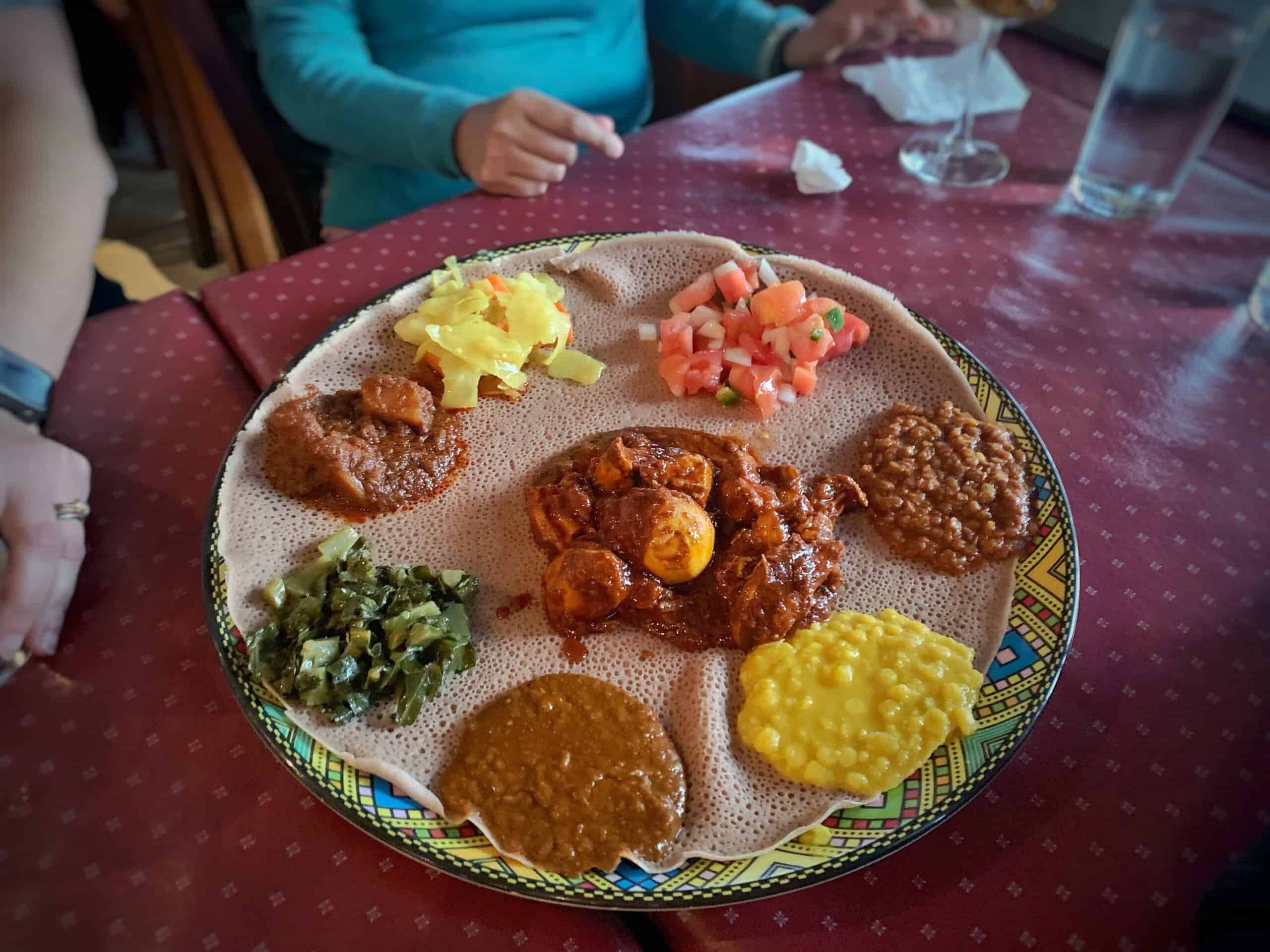
In Ethiopian dining, injera is laid flat on a large tray, and various stews and vegetables are placed on top. Diners then tear pieces of injera with their hands and use it to scoop up the food.
This method of eating reinforces the communal nature of Ethiopian meals. Everyone shares from the same plate, and food is often fed to others as a sign of respect and friendship, a practice known as gursha.
Wat: The Heart of Ethiopian Cooking
Wat refers to a wide category of Ethiopian stews that form the main component of most meals. These dishes are slow-cooked and heavily spiced, often using a unique spice blend called berbere.
Berbere typically includes chili peppers, garlic, ginger, basil, fenugreek, and other aromatic spices. It gives Ethiopian food its deep red color and rich, layered flavor profile.
There are several types of wat depending on ingredients and preparation style. Doro wat, made with chicken and hard-boiled eggs, is one of the most famous dishes in Ethiopian cuisine and is often served during celebrations and religious holidays.
Other common wats include beef-based key wat, lentil-based misir wat, and vegetable-based shiro wat made from chickpea flour. These dishes are usually served together on a large injera platter, allowing diners to mix flavors in each bite.
Wat is not just food; it is a culinary expression of patience and depth, as most dishes are slow-cooked to develop rich flavors.
Vegetarian Tradition: Ethiopian Fasting Food
Ethiopian cuisine has a strong vegetarian tradition rooted in Orthodox Christian fasting practices. During fasting periods, many Ethiopians avoid meat and dairy products, leading to a wide variety of plant-based dishes.
This has resulted in an impressive range of vegetarian stews and lentil dishes, including misir wat (spiced lentils), atkilt wat (cabbage, potatoes, and carrots), and gomen (collard greens cooked with garlic and spices).
These dishes are flavorful, protein-rich, and widely enjoyed even outside fasting periods. As a result, Ethiopian cuisine is one of the most vegetarian-friendly food cultures in Africa.
Ethiopian Coffee Ceremony: A Cultural Ritual
Coffee is believed to have originated in Ethiopia, and nowhere else is it treated with more cultural importance. The Ethiopian coffee ceremony is not just about drinking coffee; it is a social and spiritual ritual.
The process begins with roasting green coffee beans over an open flame. The aroma fills the room as the beans are carefully stirred until they reach the perfect roast. The roasted beans are then ground and brewed in a traditional pot called a jebena.
The coffee is served in three rounds, each with its own meaning. The first round is strong and symbolic of blessing, the second represents friendship, and the third is considered a final gesture of respect and community bonding.
Incense is often burned during the ceremony, and coffee is served with snacks such as popcorn or roasted barley.
The entire process can take an hour or more, emphasizing conversation, reflection, and connection rather than speed.
Ethiopian Food Guide
Eating Culture in Ethiopia
Ethiopian dining is highly communal. Meals are usually shared from a single large platter, and eating with hands is standard practice. There is a strong cultural emphasis on togetherness, and refusing to share food is considered unusual.
Meals are often eaten in groups, whether at home, in restaurants, or during celebrations. The act of feeding someone else directly from your hand (gursha) is a sign of affection and respect.
Tables are typically set with injera covering the surface, and different stews are arranged in circular patterns to ensure everyone has access to all dishes.
Regional Food Differences in Ethiopia
Ethiopian cuisine varies by region, although injera and wat remain central nationwide.
In the northern highlands, particularly in Tigray and Amhara regions, food tends to be more spice-heavy and includes more meat-based dishes.
In southern regions, there is a greater use of vegetables, tubers, and mild flavors. Dairy products are also more common in pastoral communities.
The eastern regions show some influence from Somali and Arab cuisines, including rice-based dishes and spiced meats.
Despite these differences, the shared foundation of injera and communal eating remains consistent across the country.
Street Food and Everyday Snacks
While Ethiopian cuisine is often associated with formal shared meals, street food culture is also growing in urban areas like Addis Ababa.
Common snacks include sambusas (fried pastries filled with lentils or meat), roasted chickpeas, and traditional breads sold in small shops and roadside stalls.
Fresh juice stands are also common, offering mango, avocado, papaya, and mixed fruit juices.
Tea is widely consumed alongside snacks, often spiced with cinnamon or cardamom.
Modern Ethiopian Food Trends
In urban centers, Ethiopian cuisine is evolving with modern restaurant concepts that blend traditional flavors with contemporary presentation.
Restaurants now serve deconstructed injera platters, fusion dishes with international influences, and refined versions of classic wats.
Despite modernization, traditional food culture remains dominant, especially during family gatherings and cultural celebrations.
Final Thoughts
Ethiopian cuisine is deeply rooted in tradition, community, and ritual. Injera provides the foundation, wat brings the flavor, and the coffee ceremony completes the cultural experience.
Unlike many global food cultures focused on individual consumption, Ethiopian food emphasizes sharing, patience, and connection.
Every meal is a social event, every coffee ceremony a moment of reflection, and every dish part of a long historical tradition that continues to shape daily life.
Understanding Ethiopian food is not just about learning recipes-it is about understanding a culture where food is inseparable from identity, hospitality, and human connection.
East Africa Safari – Essential Travel Information
East Africa encompasses some of the world’s most iconic wildlife destinations. Uganda, Rwanda, Kenya, and Tanzania form the heart of the safari region, each offering distinct landscapes, wildlife, and travel experiences. Whether you’re seeking mountain gorillas in misty rainforests, the spectacular wildebeest migration across the Serengeti, or the intimate Big Five encounters of the Masai Mara, East Africa delivers an unparalleled variety of wildlife experiences within a relatively compact geographic region.
The region’s safari infrastructure is mature and well-developed, with a wide range of accommodation from budget campsites to ultra-luxury tented lodges. International air connections serve multiple gateway airports including Nairobi’s JKIA, Entebbe (Uganda), Kigali (Rwanda), Kilimanjaro International (Tanzania), and Julius Nyerere International (Dar es Salaam), giving visitors flexibility in designing multi-country itineraries.
East Africa Safari Planning Tips
- Best time to visit: The dry seasons – June to October and December to February – offer the best wildlife viewing across most of East Africa. The Masai Mara migration peaks in July-October. Gorilla trekking is year-round but June-September is most popular.
- Book early: Gorilla permits (Uganda and Rwanda), popular migration camps in the Serengeti and Masai Mara, and Kilimanjaro climb slots all have limited capacity. Book 6-12 months ahead for peak season.
- Combine countries: East Africa’s geography makes multi-country itineraries practical and rewarding. A classic 10-day circuit might combine Uganda gorillas + Queen Elizabeth wildlife + Rwanda gorillas. A 14-day trip adds the Serengeti and Masai Mara.
- Health preparation: Yellow fever vaccination is required for Uganda and Rwanda and recommended elsewhere in the region. Malaria prophylaxis is essential below 2,500m. Comprehensive travel insurance including medical evacuation coverage is non-negotiable.
- Currency: The US dollar is the de facto currency in most safari operations. Carry clean, undamaged USD bills printed after 2009 – older notes are routinely refused. Each country has its own local currency for smaller purchases.
Recommended Tours: 4 Days Bwindi Gorilla Trekking Safari | 8 Days Kenya Wildlife Safari