Murchison Falls: The Most Powerful Waterfall in Africa
In the vast and ancient landscapes of northwestern Uganda, where the White Nile begins its long journey toward the Mediterranean Sea, there exists a natural spectacle so raw and so powerful that it defies easy description. Murchison Falls is the point where the entire force of the Nile is compressed through a gap in the rock just seven meters wide, creating an explosion of water and mist that can be felt and heard long before it is seen. This is not merely a waterfall. It is one of the defining natural wonders of the African continent, and visiting it is among the most memorable experiences that any safari traveler can have.

Murchison Falls National Park, Uganda’s largest protected area, takes its name from this extraordinary feature. Gazetted in 1952 and covering over 3,800 square kilometers of savannah, riverine forest, and woodland, the park stretches across a landscape shaped over millions of years by the forces of tectonic activity, volcanic upheaval, and the relentless sculpting power of the Nile. Within its boundaries, the natural world plays out with an intensity and a grandeur that makes every visit feel like a privilege.
The Falls Themselves: A Geological Marvel
The geology that created Murchison Falls is as fascinating as the spectacle itself. As the Victoria Nile descends from Lake Victoria and Lake Kyoga toward Lake Albert, it encounters the Albertine Rift, a dramatic geological feature that forms part of the East African Rift System. At Murchison Falls, the river is forced through a narrow gorge carved into ancient metamorphic rock, and the entire volume of the Nile, which can reach over 300 cubic meters per second during high water, is compressed into that seven-meter gap. The result is a vertical drop of approximately 43 meters that generates a permanent rainbow in the mist and a roaring sound that carries for miles across the surrounding savannah.
The Top of the Falls
Most visitors approach Murchison Falls from above, taking a short walk from the park road to the viewpoint at the very top of the gorge. Standing at the edge and looking down into the churning cauldron below, you feel the spray on your face and hear the thunder of the water reverberating through the rock beneath your feet. It is a visceral, humbling experience that no photograph can fully capture. The vegetation around the top of the falls is permanently lush due to the constant moisture, creating a micro-habitat of ferns, mosses, and flowering plants that contrasts vividly with the drier savannah just a short distance away.
The Devil’s Cauldron
Below the main falls, the river churns through what is known as the Devil’s Cauldron, a turbulent stretch of white water where the compressed Nile gradually regains its composure before flowing more calmly toward Lake Albert. The walls of the gorge here are draped in vegetation, and the constant spray supports a remarkable diversity of plant life. Colorful kingfishers dart through the mist, and African fish eagles cry overhead, their haunting calls mixing with the roar of the water to create a soundscape that stays with you long after you leave.
Wildlife in Murchison Falls National Park
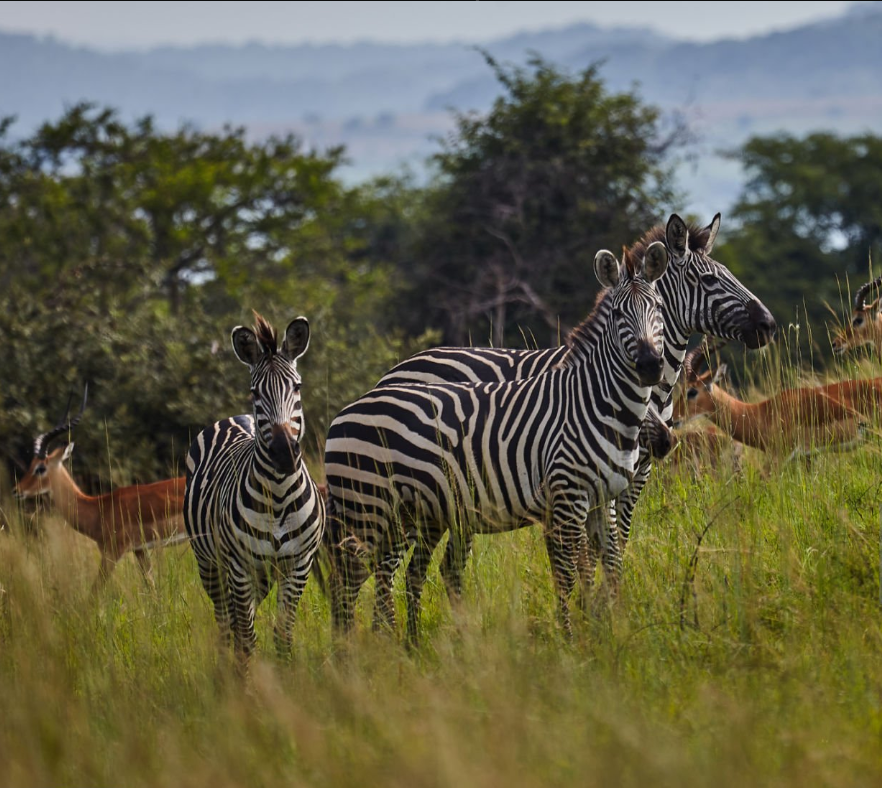
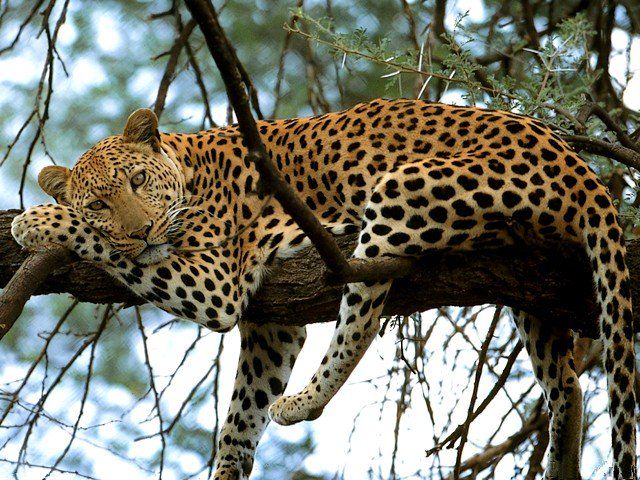
The falls are just the beginning of what Murchison offers. The park supports one of the most diverse wildlife communities in East Africa, including large populations of elephants, buffaloes, Rothschild’s giraffes, Uganda kob, waterbucks, oribi, and hartebeest. Lions and leopards are present throughout the park, and the northern sector around Budongo Forest is home to habituated chimpanzee communities. The Nile itself teems with hippos and Nile crocodiles, some of the largest in the world, and the riverbanks support an extraordinary diversity of birdlife.
The Rothschild’s Giraffe
One of the most significant wildlife conservation stories in Murchison is the recovery of the Rothschild’s giraffe, one of the most endangered giraffe subspecies in the world. Through dedicated conservation efforts and the protection of the national park, the Rothschild’s giraffe population in Uganda has grown from near extinction to several hundred individuals. Seeing these magnificent animals moving through the acacia savannah north of the Nile, their long necks silhouetted against the blue sky, is one of the most beautiful sights in East African wildlife viewing. A game drive through the northern sector almost always yields excellent giraffe sightings.
Elephant Encounters
Murchison Falls National Park is home to Uganda’s largest elephant population, and encounters with these magnificent animals on game drives are frequent and often close. The elephants of Murchison were heavily poached during the 1970s and 1980s when Uganda’s national parks suffered devastating losses during the country’s period of political instability. The recovery of the elephant population since then is one of conservation’s great success stories in East Africa, and today herds of 50 or more animals can often be seen moving through the park’s northern savannahs.
The Nile Launch Trip
The boat launch trip from Paraa, the park’s main hub on the south bank of the Nile, upstream to the base of the falls is considered one of Uganda’s finest wildlife experiences and ranks among the best game-viewing boat trips anywhere in Africa. The journey takes approximately two hours each way, traveling through a landscape of extraordinary richness. The banks of the Nile are lined with hundreds of hippos that grunt and splash in the shallows, enormous Nile crocodiles that bask motionless on every available sandbank, and a staggering diversity of waterbirds that crowd the vegetation along the shore.
Birdwatching on the Nile
For birdwatchers, the Nile launch trip is nothing short of paradise. The riverbanks support an astonishing variety of species, from the iconic African fish eagle and the elegant goliath heron to the prehistoric-looking shoebill stork, which hunts in the papyrus swamps along certain sections of the river. The shoebill is considered one of Africa’s most sought-after bird species, and Murchison Falls is one of the most reliable places in the world to see it. Other notable species on the river include the Nile monitor lizard, various kingfisher species, saddle-billed storks, and the beautiful malachite kingfisher whose iridescent blue plumage flashes like a jewel as it darts over the water.
Budongo Forest and Chimpanzee Trekking
On the western edge of Murchison Falls National Park lies Budongo Forest Reserve, one of Uganda’s most significant chimpanzee habitats and a destination in its own right. The habituated chimpanzee communities of Budongo offer excellent chimpanzee trekking experiences, and combining a visit to Budongo with the Murchison Falls experience creates one of Uganda’s most comprehensive safari itineraries. The forest is also home to a remarkable diversity of other primate species, including olive baboons, red-tailed monkeys, and black and white colobus.
Getting to Murchison Falls
Murchison Falls National Park is located approximately 305 kilometers from Kampala, Uganda’s capital, and can be reached by road in around five to six hours depending on the route taken. The Masindi route is the most commonly used approach, passing through the attractive town of Masindi and entering the park via the Kichumbanyobo Gate. Alternatively, charter flights operate from Entebbe International Airport to the airstrips within the park, making it possible to reach Murchison in under an hour and saving the long road journey for those with limited time.
Accommodation at Murchison Falls
The park offers a wide range of accommodation options to suit different budgets and preferences, from the iconic Paraa Safari Lodge, which has stood on the north bank of the Nile for decades and offers spectacular views of the river and the surrounding wilderness, to more affordable tented camps and budget guesthouses. Many lodges offer guided game drives, launch trips, and walks to the falls as part of their packages, making it easy to experience the full range of what the park has to offer.
Planning Your Visit
The best time to visit Murchison Falls is during the dry seasons, from December to February and from June to September, when the roads are more passable, the vegetation thins out to make wildlife easier to spot, and the weather is generally pleasant. However, the park is worth visiting year-round, and the wet season brings lush green landscapes and excellent birdwatching as migratory species arrive. For those planning a comprehensive Uganda safari, Murchison Falls combines beautifully with gorilla trekking in Bwindi or chimpanzee trekking in Kibale, creating an itinerary that spans the full breadth of Uganda’s extraordinary natural heritage. You can browse Uganda safari tours or contact us to book your Murchison Falls adventure today.