Bungee Jumping at the Source of the Nile: What to Expect
Jinja bungee jumping ranks among the most talked-about adventure activities in East Africa, and for good reason: there are very few places on earth where you can free-fall toward one of the world’s most famous rivers with the source of the Nile itself as your backdrop. For travelers who’ve spent days moving quietly through forests on gorilla treks or scanning the savannah on game drives, a jump at Jinja offers a completely different kind of adrenaline, and one that regularly gets added onto Uganda safari itineraries as a final adventure before flying home.
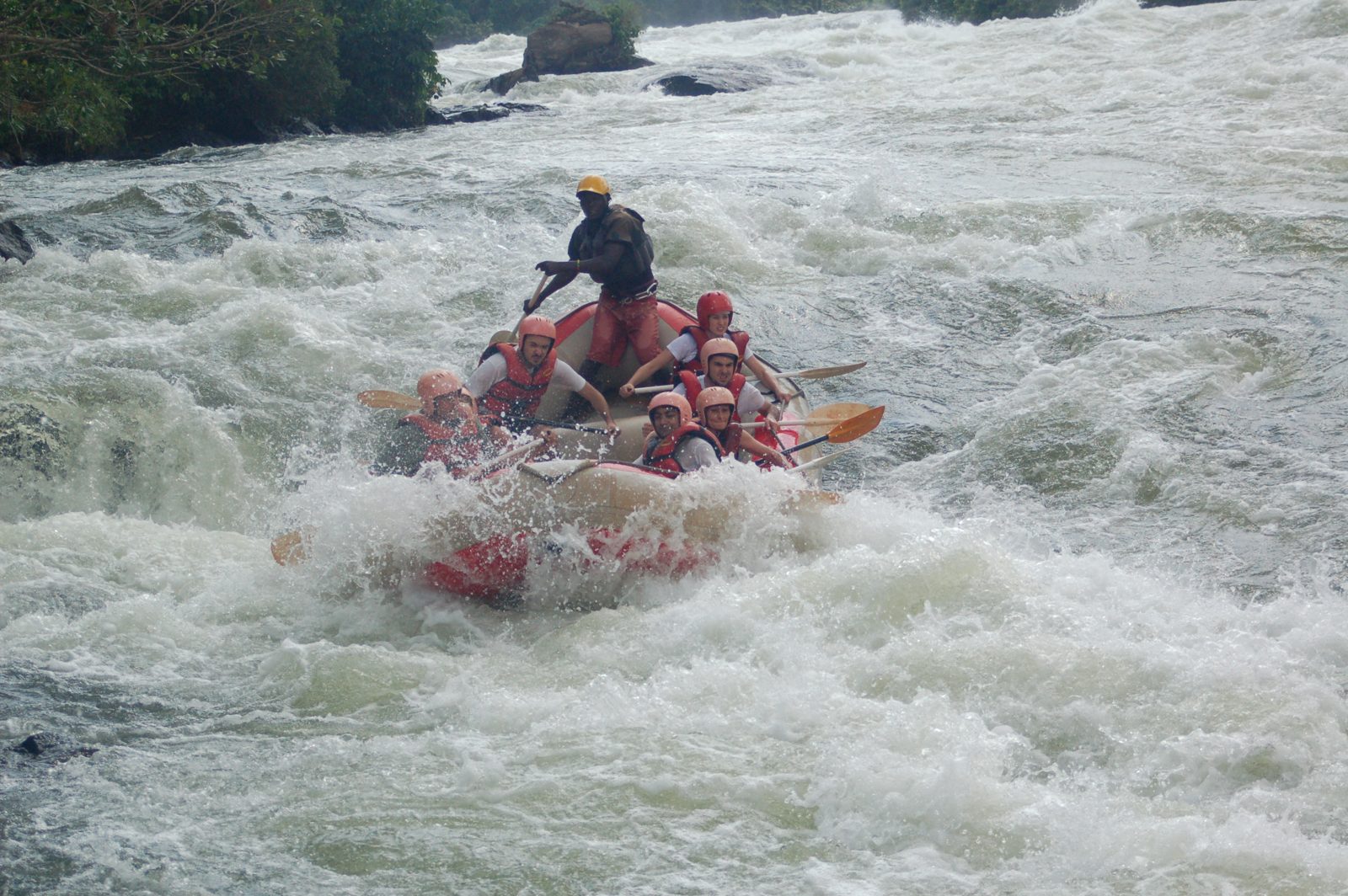
Rafting the Nile rapids at Bujagali Falls near Jinja — the same stretch of river where Jinja’s bungee jumping operators are based. Photo: Michell Zappa, CC BY-SA 2.0, via Wikimedia Commons.
Where the Jump Happens
Jinja, often called the adventure capital of East Africa, sits on the shore of Lake Victoria at the point where the Nile River begins its long journey north to the Mediterranean. The bungee platform is built on a tower on the riverbank, positioned to send jumpers out over the Nile’s waters below. It’s a short drive from central Jinja town and typically combined with other river-based activities during the same day trip, since operators in the area run rafting, kayaking, and bungee jumping from facilities close to one another.
How High Is the Jump?
The jump platform sits roughly forty to forty-five meters above the Nile, translating to somewhere around four to five seconds of genuine free-fall before the cord engages. That’s enough height to give first-timers a real jolt of vertigo standing on the platform edge, but well within the range that professional bungee operators worldwide consider standard and safe. Jumpers can choose a dry jump, where the cord stops you well clear of the water, or opt to have the operator lower you so you skim or briefly dip into the Nile at the bottom of the fall, a popular choice for anyone wanting the full sensory experience of touching the river mid-jump.
Safety Standards and Equipment
Reputable Jinja bungee operators follow international bungee safety standards, with certified equipment, regular cord replacement schedules, and staff trained specifically in bungee operations rather than general adventure-tourism guiding. Before any jump, staff run through a full harness check, weigh each jumper to calibrate the cord correctly, and give a clear safety briefing covering body position and what to expect during the fall. As with any adventure activity, it’s worth choosing an established, well-reviewed operator with a visible safety record rather than the cheapest option available, since equipment quality and staff experience are exactly the things you don’t want to compromise on for an activity like this.
What the Jump Actually Feels Like
Most first-time jumpers describe the walk out onto the platform as the hardest part, worse than the jump itself. Your legs get bound together, you shuffle to the edge, and then you’re asked to simply lean forward and fall. The free-fall itself happens fast, a rush of wind and adrenaline before the cord catches and you rebound upward, often multiple times, before settling into a gentle bounce above the water. Jumpers who choose the water-touch option get an extra jolt of cold Nile water on the way back up, which tends to be the moment people remember most vividly afterward. The whole experience, from platform to being lowered back down by the recovery boat or cable, takes only a few minutes, but it’s a few minutes most jumpers don’t forget.
Who Should (and Shouldn’t) Jump
Most healthy adults can bungee jump at Jinja, and operators typically set a minimum weight requirement along with standard exclusions for pregnant travelers and anyone with serious heart conditions, recent surgeries, or spinal issues. There’s usually no strict age cap beyond a minimum, though nervous first-timers of any age should know that staff are used to talking hesitant jumpers through the final moments on the platform, and it’s entirely normal to need a bit of encouragement before that first step. If you’re unsure whether a health condition might disqualify you, checking with the operator directly before you arrive saves any disappointment on the day.
Cost and Booking
Jinja bungee jumping typically costs somewhere in the range of eighty to a hundred and twenty US dollars per jump, depending on the operator and whether you add extras like a second jump, photos, or video packages. Photo and video packages are worth considering, since very few people manage to keep a phone or camera on themselves during the jump, and having proof of the moment is part of the appeal for most jumpers. Walk-in bookings are usually possible, but travelers visiting during busy periods, particularly weekends and the peak dry-season safari months, are better off booking a slot in advance through their tour operator or directly with the bungee company to avoid a long wait.
Pairing Bungee Jumping With Other Jinja Activities
Few visitors make the trip to Jinja purely for the bungee jump. The same stretch of the Nile hosts grade three to five white-water rafting, and our guide to white-water rafting in Uganda covers what that experience involves in detail for anyone considering both in a single day. Calmer options exist too, including gentle river cruises and kayaking, for travelers who want to experience the source of the Nile without quite the same intensity as bungee jumping or rafting. Many operators offer combination packages covering two or three activities in a single day, which tends to work out better value than booking each separately.
Best Time of Year to Visit Jinja
Jinja’s bungee operation runs year-round, since the jump itself isn’t especially weather-dependent the way trekking or game drives are, but the dry season months, June through September and December through February, still make for the most pleasant conditions overall, with less chance of a rained-out day and easier road travel to and from Kampala. The Nile’s water levels do shift somewhat with the rains, which affects rafting conditions more than the bungee jump itself, so travelers planning to combine both activities in one trip may want to check current river conditions with their operator, particularly if visiting during the heavier rains of March through May.
What to Bring for a Day of Jinja Activities
Quick-drying clothes and a swimsuit worn under your outfit make sense for anyone opting for the water-touch jump or planning to combine bungee jumping with rafting or kayaking the same day. Closed-toe water shoes or sandals with a secure strap are worth packing, since riverside platforms and boat launches can be slippery. A dry bag or waterproof phone case protects electronics if you’re spending the day around the river more broadly, and a change of clothes for the drive back to your lodge or onward destination is a small comfort most first-timers wish they’d thought of in advance. Operators generally provide all the actual jumping equipment, so travelers don’t need anything specialized beyond sensible clothing and a sense of adventure.
Fitting Jinja Into a Wider Uganda Itinerary
Jinja sits within a reasonable drive of Kampala and Entebbe, which makes it a natural stop either at the start or end of a wider Uganda trip, particularly for travelers who’ve spent the bulk of their time on gorilla trekking or wildlife safaris and want a final adrenaline-filled day before flying home. Because the activity itself only takes a morning or afternoon, it pairs easily with a night or two in Jinja to also take in the town’s relaxed riverside atmosphere, restaurants, and craft markets. Travelers building their own itinerary should confirm with their operator whether Jinja activities are included in a package price or need to be booked and paid for separately on arrival, since practices vary between companies.
Overcoming the Nerves
It’s completely normal to feel a wave of hesitation once you’re standing on the platform looking down at the Nile forty meters below, and staff at established Jinja operators see this reaction from the majority of first-time jumpers, not just the occasional nervous traveler. Most people find the countdown itself is what pushes them past the hesitation, and operators are experienced at reading when someone needs a moment versus when a gentle nudge toward the edge is the more helpful approach. Watching a friend or fellow traveler jump first, if you’re visiting as part of a group, can also take some of the edge off, since seeing the cord catch safely and the jumper bounce back up unharmed does more to settle nerves than any amount of verbal reassurance beforehand.
Is It Worth Doing?
For travelers who enjoy a genuine adrenaline rush and don’t mind a few seconds of stomach-dropping free-fall, Jinja bungee jumping delivers an experience that’s hard to replicate anywhere else in East Africa, not just for the height and setting, but for the novelty of jumping toward one of the world’s most storied rivers at the exact point it begins its journey to the sea. It’s not for everyone, and there’s no shame in watching from the platform instead, but for those who do take the leap, it tends to become one of the most-talked-about moments of an entire Uganda trip, gorillas included.
Recommended Tours: 9 Days Uganda Gorilla Safaris & Jinja Nile Cultural Experience | 7 Days Uganda Gorilla Trekking and Cultural Experience