A Guide to Uganda’s Community Homestays
A lodge, however well designed and thoughtfully staffed, still mediates almost every single interaction between a traveller and the actual country they’re visiting. A homestay removes that mediation entirely: you sleep in a family’s spare room or a purpose-built cottage on their land, eat what they cook rather than a hotel buffet, and spend evenings in actual conversation rather than watching local culture performed at a scheduled time for a paying audience. Uganda has quietly built a genuine, growing network of these community-run homestays across several of its most visited regions, and stringing even one or two together turns a standard safari itinerary into something considerably more personal than a checklist of parks and permits.
What Makes a Homestay Different From a Cultural Village Visit
It’s worth distinguishing homestays from the shorter cultural village tours that appear on many standard safari itineraries. A village visit is typically a scheduled few hours, a performance and a walk-through arranged specifically for visiting groups. A homestay is an overnight stay inside an actual functioning household or a small guesthouse run directly by community members, with income flowing straight to the family or cooperative hosting you rather than through a tour company’s broader margin.
That distinction matters both for the depth of the experience and for how directly your money actually supports the people you’re meeting. A homestay also runs on the household’s own schedule rather than a tour itinerary’s, which means meals happen when the family actually eats, conversation unfolds at whatever pace it naturally takes, and a guest genuinely curious enough to ask questions tends to get considerably further into local life than one who simply waits to be shown things on a fixed timetable.
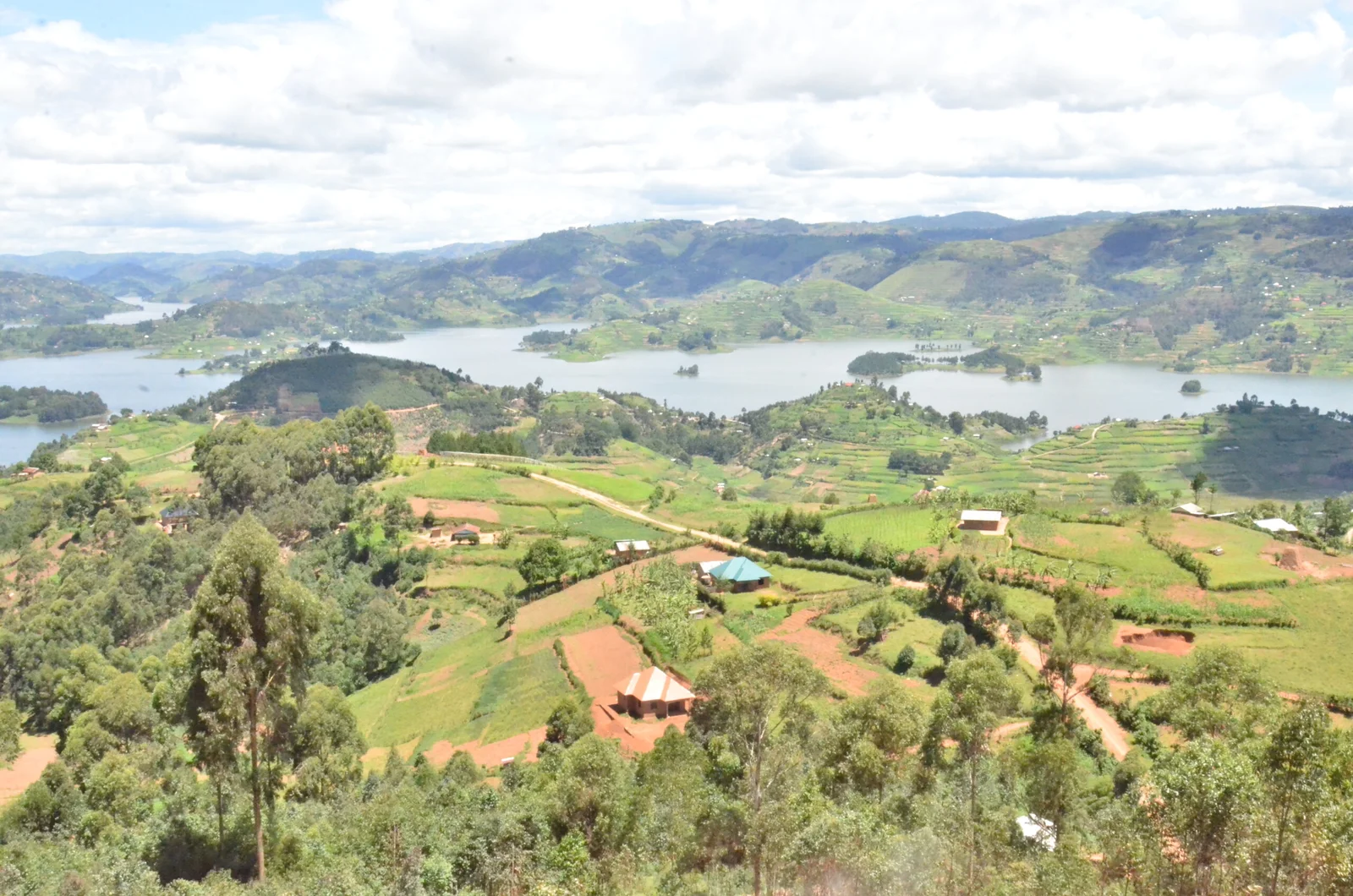
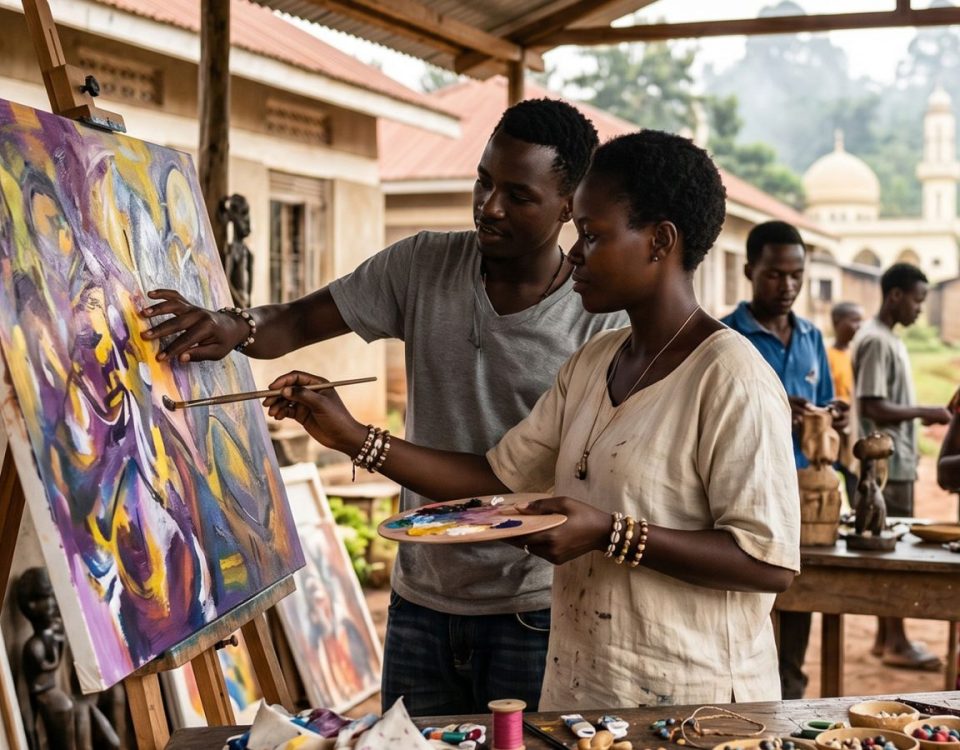
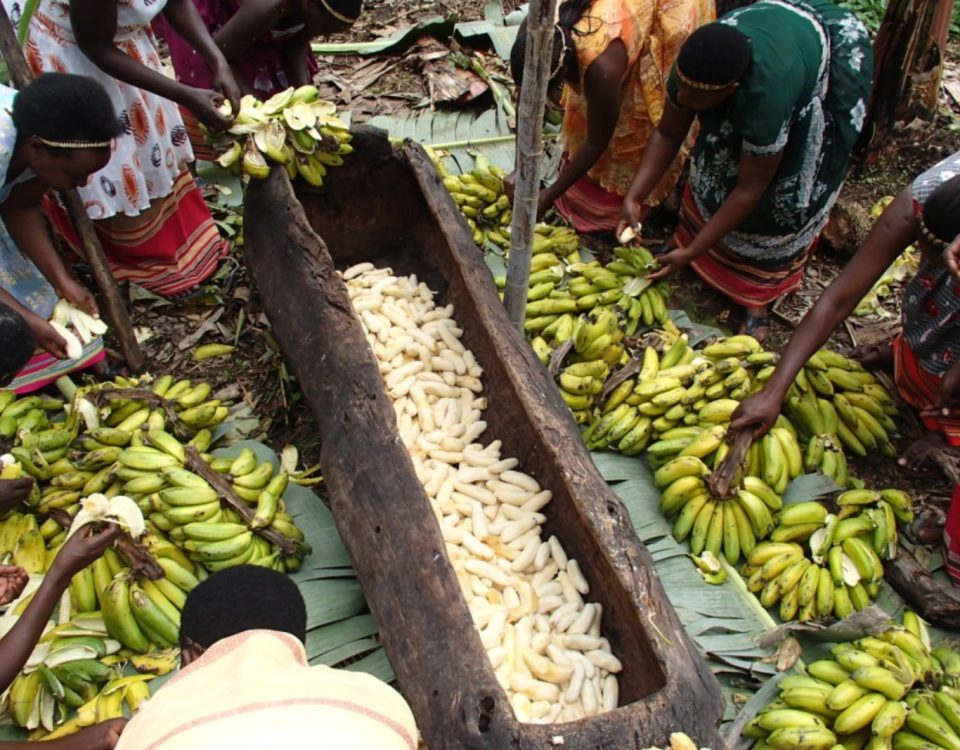
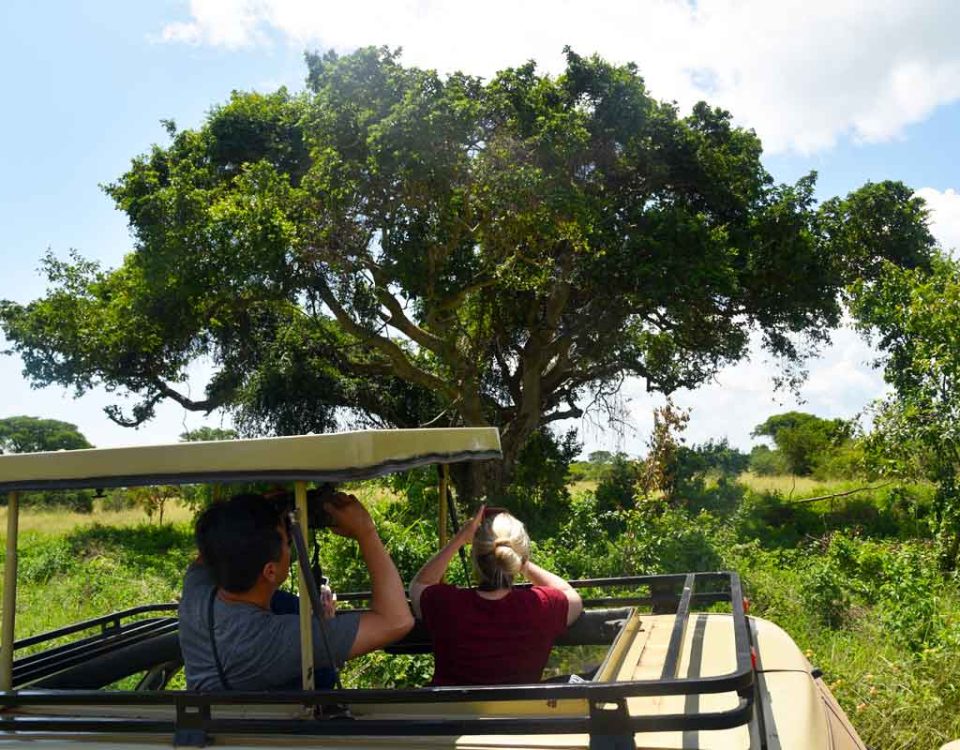
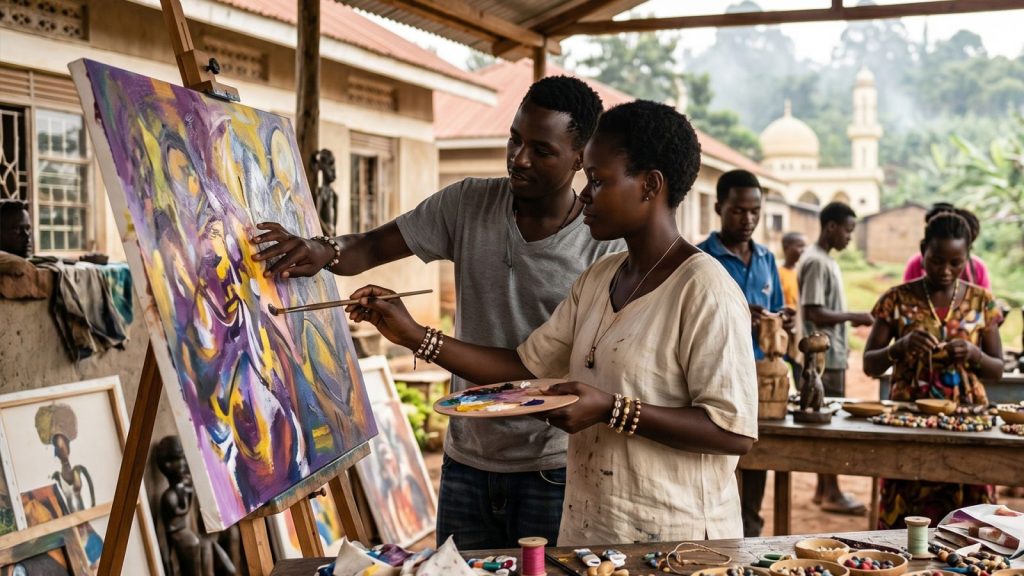
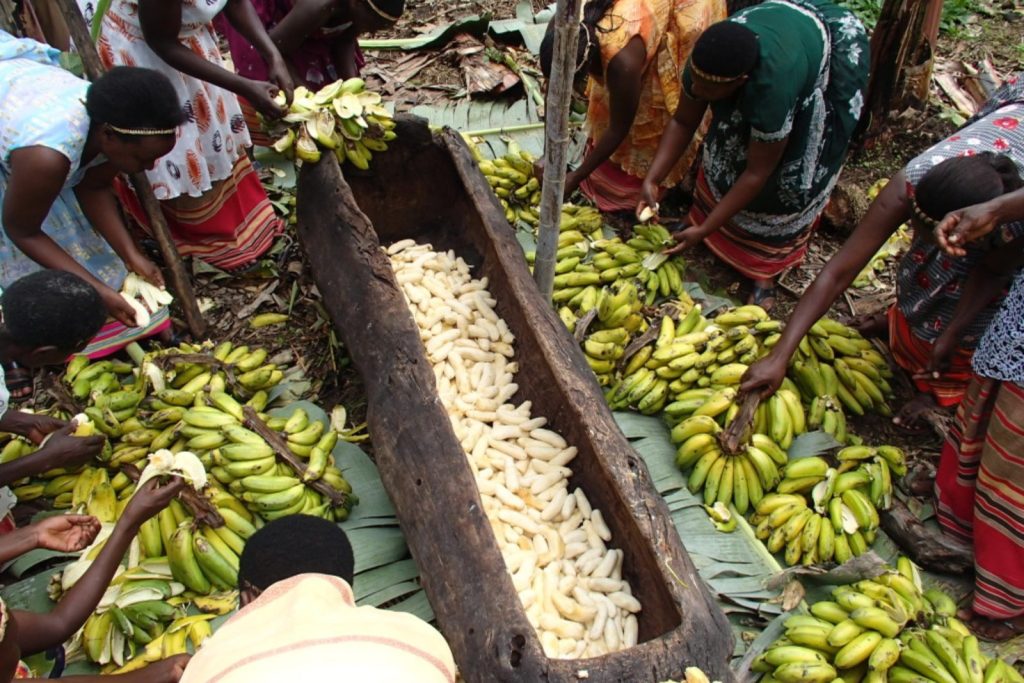
A Guide to Uganda’s Community Homestays offering authentic culture and local experiences
Lake Bunyonyi: Uganda’s Homestay Heartland
Of all Uganda’s homestay regions, Lake Bunyonyi has developed the most established network, a natural fit given the lake’s already-relaxed, island-dotted setting covered in more detail in our guide to a trip to Lake Bunyonyi. Amasiko Homestay offers a structured, comfortable version of the experience, with cottages and lodge-style rooms designed around genuine cultural immersion rather than simply borrowed decor, while Tom’s Homestay on Habukomi Island takes a considerably more rustic approach, putting guests up in tents on a family compound for an evening built around shared dinner, a bonfire, and traditional music rather than curated programming. Both sit within easy reach of canoe trips between the lake’s islands and visits to nearby Batwa communities, giving a Bunyonyi homestay stay a natural built-in itinerary beyond simply the accommodation itself. Terraced hillsides surrounding the lake, farmed by generations of the same Bakiga families now hosting travellers, add a visible agricultural backdrop to the stay, and many hosts are happy to walk guests through the same slopes explaining what’s growing and why the terracing itself became necessary on hills this steep in the first place.
The Sabiny Homestays Around Sipi and Kapchorwa
In the east, the homestay network around Sipi Falls and Kapchorwa, covered more broadly in our guide to Sipi Falls, gives visitors direct contact with Sabiny culture rather than the Bagisu communities more commonly associated with the waterfalls and coffee tours themselves. Operations like Fredson’s Homestay put guests up directly in local houses, while Home of Friends Guesthouse runs a specific programme built around what locals call the Kapchorwa Mamas, a group of women who earn income by teaching visitors traditional cooking directly, turning a meal into a genuine cultural exchange rather than a service transaction. Because this region already draws travellers for the falls, coffee, and Mount Elgon hiking, adding a homestay night here rarely requires much extra routing. Evenings typically end around a shared meal cooked together rather than served, with hosts talking openly about farming schedules, the Imbalu circumcision tradition central to Bagisu and Sabiny identity, and the practical realities of raising a family on a hillside coffee smallholding, giving guests a considerably fuller picture of the region than the coffee tour and waterfall walk most visitors experience during daylight hours alone.
Karamoja: Uganda’s Newest Homestay Frontier
Uganda’s remote northeastern Karamoja region represents the newest and least developed corner of this homestay network, only recently opening up to responsible tourism through initiatives like Kara-Tunga and Visit Karamoja. Here, visitors stay inside traditional manyattas, the distinctive circular homesteads built by Karamojong pastoralist communities, learning firsthand about a cattle-herding culture that has changed comparatively little despite decades of pressure from the surrounding modern economy. Money from these stays flows directly toward community-run education and health initiatives, making Karamoja homestays as much a development project as a tourism product, and a genuinely different experience from the more established, polished operations further south and west. Guests typically join a manyatta family for cattle-related chores that structure much of daily Karamojong life, from morning milking to evening kraal maintenance, alongside evening storytelling sessions that reveal how central livestock remains to the region’s identity, wealth system, and social structure in ways that a passing safari drive-by could never convey. The relative novelty of tourism here also means visitor numbers remain genuinely low, giving Karamoja homestays a genuine rawness and lack of performative polish that some travellers find considerably more rewarding overall than the more rehearsed, well-worn cultural encounters available in longer-established tourism regions elsewhere in the country.
Booking a Homestay Responsibly
Going Direct Versus Through an Operator
Some homestays, particularly the more established ones around Bunyonyi and Sipi, can be booked directly through their own websites or by phone, while others, especially the newer Karamoja initiatives, are more easily arranged through the responsible-tourism organisations that helped set them up in the first place. Either route works, but booking through an established intermediary organisation is often the safer choice for a first Karamoja homestay specifically, since that organisation can vouch for which manyattas are genuinely ready to host visitors and which are still building the basic infrastructure and community consent needed to do so respectfully.
Understanding Where the Money Goes
Not every property marketed as a “homestay” actually channels the bulk of its revenue to the host family or community; some are homestays in name and aesthetic only, run by an outside operator who leases the land or pays a fixed, modest rate to the nominal host family regardless of occupancy. Asking directly how a booking’s revenue is split, and favouring operations transparent about that split, such as the community-fund model used by several Karamoja initiatives, helps ensure a homestay booking actually delivers the direct, meaningful economic benefit that makes the entire model genuinely worthwhile in the first place, rather than merely dressed-up marketing language.
Why the Model Works
Community-run homestays succeed in Uganda for a fairly straightforward reason: they let travellers pay directly for something lodges structurally can’t offer regardless of quality, unscripted time inside a real household. Hosts generally earn considerably more per guest-night from a homestay than from providing labour to a larger tourism operation, and the relationship being direct rather than mediated through a corporate structure tends to produce more genuine, less performative interactions on both sides. For host communities, the income diversification away from purely agricultural or pastoral livelihoods offers a buffer against bad harvest years or livestock losses that would otherwise hit household finances hard.
What to Expect and How to Prepare
Homestay accommodation standards vary considerably, from Amasiko’s relatively polished cottages down to a simple mattress on a family compound floor at the more rustic end of the spectrum, so it’s worth clarifying exactly what a given host offers before arrival rather than assuming hotel-level amenities. Electricity, running water, and private bathrooms are not guaranteed at every single property, particularly in Karamoja’s more remote manyattas, and travellers should pack accordingly, bringing along a headlamp, basic personal toiletries, and realistic expectations about mobile signal and internet connectivity throughout the stay. Bringing a genuine willingness to participate, helping prepare a meal, joining in evening conversation, and asking genuine questions rather than simply passively observing from the sidelines, tends to determine how rewarding a homestay actually feels far more than the physical comfort level of the room itself does.
Building Homestays Into a Wider Itinerary
None of these regions require abandoning a standard Uganda safari route to include a homestay night. Bunyonyi sits naturally along the route between Bwindi gorilla trekking and Kigali or Kabale, Sipi fits into an eastern circuit already built around Mount Elgon and coffee tourism, and even Karamoja, remote as it is, pairs increasingly often with Kidepo Valley National Park itineraries for travellers already committed to Uganda’s far northeast. Layering even one homestay night into an otherwise conventional lodge-based itinerary tends to leave a stronger impression on most travellers than any single game drive or waterfall, precisely because it’s the one part of the trip built around people rather than scenery.
Travellers who try one homestay on a first Uganda trip frequently come back specifically requesting more of them on a second visit, a pattern tour operators across all three regions describe consistently once someone has experienced the difference for themselves rather than simply reading about it beforehand.