Kenya’s Kakamega Rainforest Butterfly Walks
Kakamega Forest, in western Kenya near the town of the same name, preserves the country’s only remaining fragment of genuine tropical rainforest, a easternmost outlier of the vast Guineo-Congolian forest system that once stretched unbroken across much of Central Africa. Isolated from its parent forest system for thousands of years by the retreat of forest cover across the intervening landscape, Kakamega has developed its own distinct ecological character, including one of the richest butterfly populations found anywhere in East Africa, making guided butterfly walks one of the forest’s signature visitor experiences.
A Forest Unlike Anywhere Else in Kenya
Kakamega’s rainforest ecology sets it apart dramatically from the acacia savanna, highland moorland, and dry scrubland that define most of Kenya’s other protected areas, its dense, multi-layered canopy and humid, genuinely tropical climate supporting plant and animal communities with closer affinities to the forests of Uganda, the Democratic Republic of Congo, and West Africa than to anything else found within Kenya’s borders. This isolation, believed to have occurred as Kenya’s climate dried and grassland expanded across the land separating Kakamega from the main body of Central African rainforest, has allowed the forest to function as something of an evolutionary island, preserving species and ecological relationships that vanished from the broader region as the surrounding landscape transformed into savanna over thousands of years.
The forest’s isolation and the biodiversity it has preserved have made it a significant site for ecological research, and its relatively small remaining size, a fraction of its historical extent following decades of logging and agricultural encroachment before stronger protection measures took hold, has made ongoing conservation and forest restoration efforts a priority for Kenyan conservation authorities and international research partners alike.
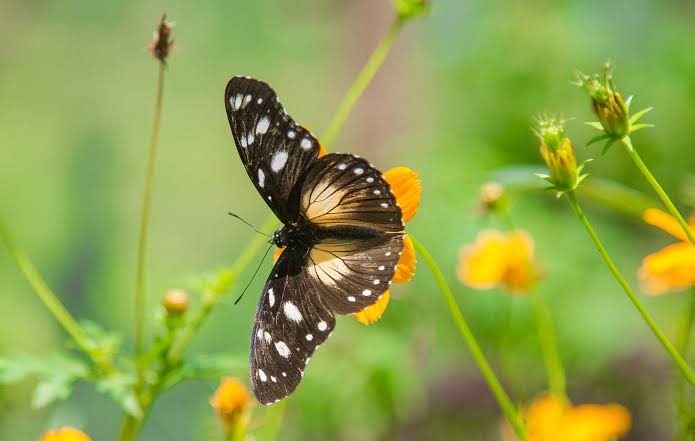
Kenya’s Kakamega Rainforest Butterfly Walks through lush forest trails and diverse wildlife
Primates and Other Forest Mammals
Kakamega supports several primate species found nowhere else in Kenya, including the de Brazza’s monkey and blue monkey, alongside more widely distributed species like the black-and-white colobus, and its resident population of the endangered potto, a slow-moving, nocturnal primate related to the lorises of Asia, ranks among the forest’s more elusive but genuinely significant wildlife residents for visitors with a specific interest in primatology. Flying squirrels, an unusual sighting anywhere in East Africa given their genuinely nocturnal, arboreal habits, and a range of forest-adapted rodent and small mammal species round out a wildlife community considerably different in composition from the large mammal-focused checklists most Kenya safari destinations emphasize.
The Butterfly Diversity That Defines a Kakamega Visit
Kakamega’s butterfly population, estimated at several hundred species, ranks among the richest anywhere in East Africa, a direct consequence of the forest’s tropical, multi-layered habitat structure offering the range of microhabitats and host plant diversity that supports such a wide variety of species within a relatively compact area. Guided butterfly walks, typically following established forest trails during the warmer, sunnier parts of the day when butterfly activity peaks, offer visitors the chance to observe this diversity firsthand, with knowledgeable local guides able to identify dozens of species by sight and explain the specific host plants and ecological relationships underpinning the forest’s exceptional butterfly community.
Certain sections of the forest, particularly clearings and forest edges where sunlight penetrates more fully than beneath the dense main canopy, tend to concentrate butterfly activity most visibly, and guides typically time walks to pass through these higher-activity zones during the mid-morning hours when butterflies are most actively feeding and displaying, offering the best combination of light and activity for both observation and photography.
Community-Based Tourism and Forest Protection
Kakamega’s guiding services are largely run through community-based associations drawing on local knowledge built up over generations of families living alongside the forest, and tourism revenue channeled through these associations has become an increasingly important part of the broader strategy for keeping the forest protected against the logging and agricultural encroachment pressures that shrank it so significantly during the twentieth century. Supporting these community-run guiding services directly, rather than relying solely on independent exploration, both improves the quality of a visit through genuine local expertise and reinforces the economic case for continued forest protection among the communities whose daily lives remain most closely tied to Kakamega’s fate.
Birdwatching Alongside the Butterflies
Kakamega’s bird list, running to several hundred species, includes numerous forest specialists found nowhere else in Kenya, drawing serious birders specifically to this western corner of the country in pursuit of species unavailable anywhere else on a typical Kenya itinerary. The forest’s distinct blend of Central African forest species alongside more widely distributed East African birds makes it a genuinely significant addition to any birding-focused Kenya trip, and many visitors combine dedicated butterfly walks with early morning birding outings to maximize the forest’s considerable combined wildlife interest within a single visit.
Where to Stay Near the Forest
Accommodation choices near Kakamega range from a genuinely distinctive colonial-era retreat to simple, budget-friendly guesthouses right at the forest edge, and where a traveler chooses to base themselves shapes both comfort levels and how early a butterfly or bird walk can realistically start each morning.
Rondo Retreat’s Colonial-Era Cottages
Rondo Retreat Centre, set within the forest roughly two and a half kilometers from the main forest station, offers the most comfortable accommodation option in the immediate area, a collection of cottages built in a distinctly colonial style and set within landscaped gardens that themselves attract a steady stream of birds and butterflies without visitors needing to venture onto the forest trails at all. Originally established with strong missionary and conservation ties to the surrounding forest, Rondo has long served as a base for researchers and serious birders as much as general travelers, and its full-board arrangement, along with direct access to guides familiar with the immediately surrounding trail network, makes it a practical choice for visitors prioritizing comfort without sacrificing easy forest access.
Isecheno’s Simpler Forest-Edge Options
The Isecheno area, in the forest’s southern section, offers a considerably simpler alternative, with a basic guesthouse and a camping site sitting right at the forest station gate, putting visitors within a few minutes’ walk of the trailhead for some of the forest’s most productive butterfly and birding routes. This proximity matters more than it might initially seem, since the very earliest morning hours often produce the best birding of the day, and staying immediately at the forest edge rather than commuting in from further away lets visitors start walking at first light rather than losing the most productive part of the morning to travel time.
Signature Trails Beyond the Butterfly Circuit
Beyond the general network of paths used for guided butterfly walks, a handful of named trails and landmarks give a Kakamega visit some clearer structure and specific destinations worth building a day around.
The Isiukhu Falls Trail
The trail connecting Isecheno to Isiukhu Falls, a modest but attractive waterfall within the forest, ranks among Kakamega’s most popular half-day routes, typically taking a minimum of half a day round trip and passing through a good cross-section of the forest’s habitat variety along the way, from denser canopy sections to lighter, more open patches where butterfly activity tends to concentrate. Combining this route with a butterfly-focused pace, stopping frequently rather than walking straight through to the falls, generally produces a more rewarding outing than treating the waterfall itself as the sole objective.
Lirhanda Hill and Buyangu Hill Viewpoints
Lirhanda Hill, the forest’s highest point at roughly 1,700 meters, offers a considerably more demanding hike, generally four to six hours round trip, rewarding the added effort with genuine panoramic views across the forest canopy rare anywhere else within Kakamega’s dense tree cover. Buyangu Hill, in the northern section of the reserve managed by Kenya Wildlife Service, offers an easier alternative with its own worthwhile payoff, a clear eastward view across to the distant Nandi Escarpment, and its relatively short access route makes it a practical add-on to a broader day of butterfly and bird walks in the surrounding Buyangu section rather than a full separate outing in its own right.
Visiting Kakamega Forest
Kakamega Forest is managed partly as a national reserve under Kenya Wildlife Service and partly through Kenya Forest Service reserves covering adjacent sections, and several entry points around the forest’s perimeter offer access to different trail networks and guiding services, with the Kenya Wildlife Service-managed Buyangu section and the Isecheno area, managed under forest service arrangements, representing the two most commonly visited access points. Local guides, generally arranged directly at the forest entrance or through community-based guiding associations, provide both the specific species knowledge that makes a butterfly or bird walk genuinely rewarding and important safety and navigation support given the forest’s dense, easily disorienting trail network for visitors unfamiliar with the terrain.
The forest’s location in western Kenya, considerably further from Nairobi than most of the country’s headline safari destinations, means most visitors combine a Kakamega visit with other attractions in the region, including Lake Victoria and Kisumu, covered in our guide to Lake Victoria’s fishing safaris, rather than treating Kakamega as a standalone destination given the considerable travel distance involved from Kenya’s main safari circuit further south and east.
Reptiles, Amphibians, and the Forest’s Lesser-Known Residents
Beyond its celebrated butterflies, birds, and primates, Kakamega supports a genuinely rich reptile and amphibian community shaped by the same humid, tropical conditions that drive the forest’s broader biodiversity, including numerous frog species that become particularly vocal and active during the wetter months, filling the forest with a chorus of calls after evening rain that visitors staying overnight near the forest edge often cite as one of the more memorable sensory aspects of a Kakamega visit. Several snake species inhabit the forest as well, generally shy and rarely encountered by visitors given their preference for avoiding contact with the guided trail network, though guides remain alert to their presence as a standard part of forest safety practice.
Best Time for a Butterfly Walk
Butterfly activity peaks during warmer, sunnier weather, generally making the drier months and the sunnier hours of any given day, roughly mid-morning through early afternoon, the most productive window for a dedicated butterfly walk, though Kakamega’s genuinely tropical climate means rain and humidity remain a factor across much of the year regardless of the broader seasonal pattern affecting the rest of Kenya. Visitors should pack accordingly for a humid forest environment, including rain protection even during the notionally drier months, along with sturdy, closed footwear suited to the forest’s often damp, uneven trail surfaces.