Ernest Hemingway once called it “the loveliest lake in Africa,” and anyone who has watched the sun drop behind the Rift Valley escarpment at Lake Manyara understands why the line has stuck for nearly a century. Yet the park built around that shimmering soda lake is often treated as a warm-up act, a single night’s stop between Arusha and the Serengeti rather than a destination that rewards its own dedicated attention. That reputation undersells a park where the habitats change every few kilometers, where lions climb trees for reasons scientists still argue about, and where tens of thousands of flamingos can turn the water pink almost overnight.
A Park Defined by the Rift Valley Wall
Lake Manyara National Park sits at the base of the Great Rift Valley’s western escarpment in northern Tanzania, roughly two hours’ drive from Arusha along the road that eventually leads to Ngorongoro and the Serengeti. The park covers around 330 square kilometers, but in years of heavy rain the lake itself can swell to fill nearly two-thirds of that area, squeezing the game-viewing circuit into a narrow strip of groundwater forest, acacia woodland, and open grassland pressed between the cliff and the shoreline. That compression is part of what makes Manyara so productive for wildlife viewing relative to its size: animals concentrate in a corridor that a vehicle can traverse in a single morning.
The lake itself is alkaline, fed by underground springs seeping out of the escarpment as well as several seasonal rivers draining off the Rift wall. Because it has no outlet, evaporation concentrates the dissolved minerals, creating the soda-rich water that supports the algae blooms flamingos feed on but which few fish can tolerate. This single hydrological quirk shapes almost everything visitors come to see here, from the birdlife to the elephant herds that dig for fresh water in the dry riverbeds nearby.
The Tree-Climbing Lions of Manyara
Manyara’s lions have puzzled naturalists since the 1960s, when researcher George Schaller first documented their habit of draping themselves along the low, wide branches of sausage trees and acacias, sometimes ten feet above the ground. Tree-climbing is not typical lion behavior across Africa; the only other population known for it with any regularity lives in Uganda’s Ishasha sector of Queen Elizabeth National Park, and even there the habit is inconsistent. In Manyara, guides say the lions take to the branches most often during the hot months and during outbreaks of biting flies and tsetse flies near the lake edge, when a breeze in the canopy offers relief that the grass below cannot. Others argue it is simply a comfortable vantage point for watching the plains for prey, or a habit passed down through a few resident prides rather than a universal Manyara trait.
Whatever the explanation, sightings are never guaranteed. The lion population here is smaller than in the Serengeti or Ngorongoro, and the wooded terrain that makes the climbing behavior possible also makes the cats harder to spot than they would be on open plains. Morning and late-afternoon game drives along the forest edge, particularly near the swampier sections closer to the lake, tend to produce the best odds. Guides who work the park regularly develop a feel for which sausage trees a given pride favors in a given season, which is one good argument for booking a driver-guide who spends real time in Manyara rather than treating it purely as a transit stop.
Why the Behavior Still Divides Researchers
No single study has definitively settled the question, and that ambiguity is part of the park’s appeal for visitors with a scientific bent. Comparing notes with guides who have watched the same prides across years often turns up more nuance than any guidebook summary, including observations about which individual lions climb regularly and which almost never bother.
Flamingos and the Rhythms of a Soda Lake
The other signature image of Lake Manyara is a shoreline turned pink by thousands of lesser and greater flamingos wading through the shallows. Flamingo numbers here are notoriously unpredictable because the birds follow the algae, and the algae follow water levels and salinity, both of which shift with the rains. In a good year, especially during the drier months when the lake contracts and mineral concentrations rise, the birds can gather in the tens of thousands, feeding with the characteristic sideways sweep of their bills through the algae-rich mud. In wetter years, when the lake dilutes and expands, flamingo numbers can drop sharply as the birds disperse to other Rift Valley soda lakes such as Natron, further north, which remains the region’s most important flamingo breeding site.
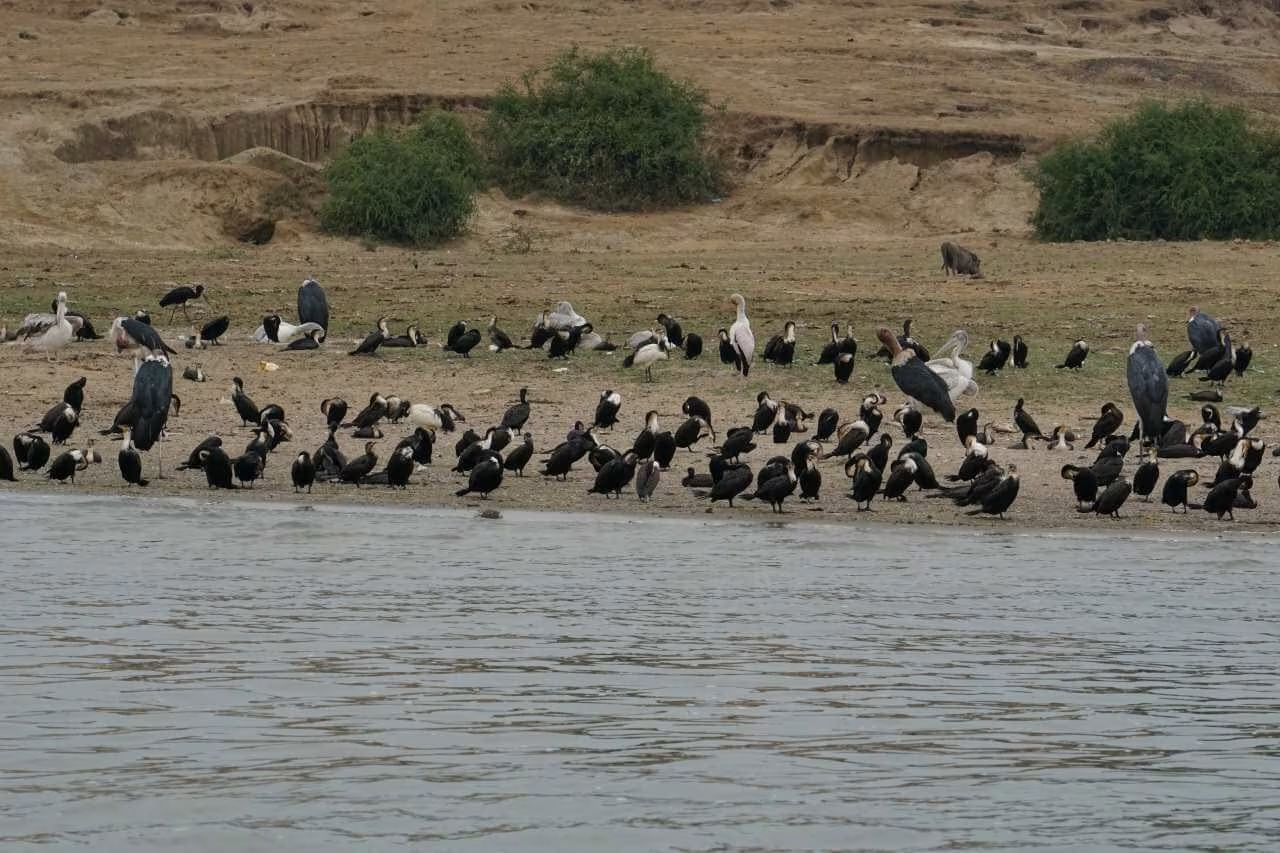
Beyond flamingos, Manyara’s bird list runs past 400 species, an extraordinary tally for a park of its size, reflecting the collision of forest, savanna, marsh, and open water habitats within a single boundary. Pelicans, storks, herons, and kingfishers work the lake edge, while the groundwater forest near the park entrance hosts turacos, hornbills, and trumpeter hornbills moving through the canopy. Birders who linger for a full day rather than a fast pass-through tend to leave with species counts that rival far larger parks.
The Groundwater Forest and Its Elephants
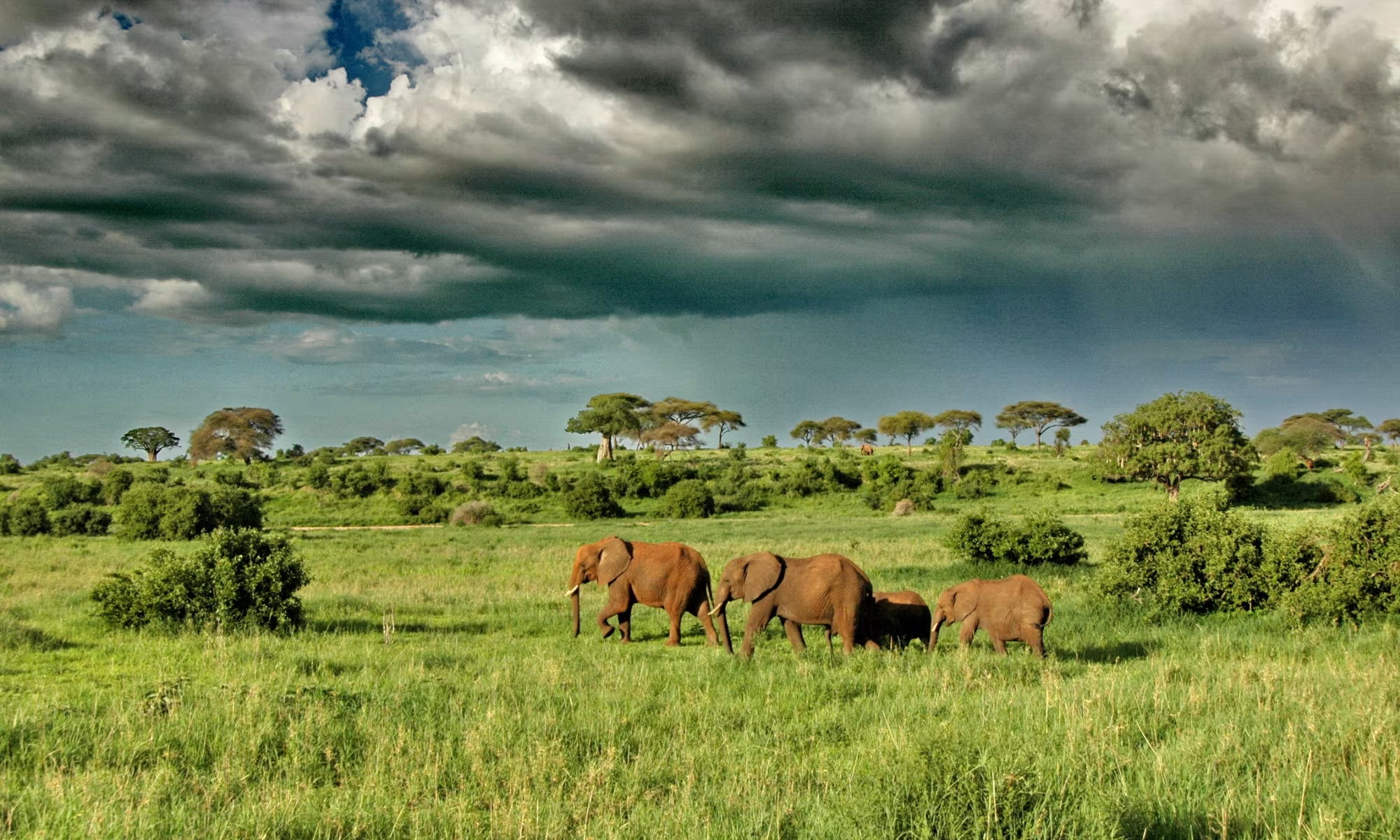
The drive into Lake Manyara begins in a dense, almost jungle-like groundwater forest, fed by underground springs rather than rainfall, which stays green through the dry season when the surrounding bush turns brown and brittle. Troops of blue monkeys and olive baboons move through the canopy, and it is here, in the dappled light beneath mahogany and fig trees, that many visitors get their first close encounter with Manyara’s elephants. The park’s elephant population survived a difficult period of poaching pressure in the 1970s and 1980s, and researchers have since studied Manyara’s elephants extensively for their social structure and matriarchal herds, some of which are remarkably habituated to vehicles after decades of low-key tourism.
Beyond the forest, the terrain opens into acacia woodland and then grassland running down to the lakeshore, creating a habitat gradient that supports giraffe, buffalo, zebra, wildebeest, and impala alongside the elephants and lions. Hippos pool in the shallows near the lake’s edge, and dry-season visits often reward patient watchers with sightings of leopard moving along the forest fringe at dawn.
The Maji Moto Hot Springs
Toward the southern end of the park, past the main game-viewing circuit, natural hot springs known locally as Maji Moto bubble up along the lakeshore, reaching temperatures uncomfortable to the touch. Few visitors make it this far south in a single day, which keeps the springs quieter than almost anywhere else accessible within the park boundary, and the drive down offers some of Manyara’s most open lake-view scenery.
Seasons, Light, and When the Lake Performs Best
Timing shapes a Manyara visit more than most travelers expect before they arrive. The dry months from June through October tend to concentrate wildlife more predictably along the remaining water sources, and the receding shoreline is usually when soda concentrations climb high enough to draw the larger flamingo gatherings. The short rains around November and the long rains from March through May bring a different, greener version of the park, with newborn impala and wildebeest calves scattered through the grassland and the groundwater forest at its most lush, though the lake’s expansion during these months can push some of the game-viewing tracks closer to the escarpment and reduce the open shoreline available for walking or photography. Neither season is objectively better; they simply produce different pictures, and travelers chasing a specific image, whether that is a pink-fringed lake or a misty forest full of elephants, should plan around it deliberately rather than by accident.
Early morning remains the strongest window for the tree-climbing lions in particular, since the heat that seems to drive them into the branches builds through the late morning, and guides who reach the wooded circuit at first light report noticeably better luck than those arriving after the day has warmed. Photographers focused on birdlife tend to favor the late afternoon instead, when low sun angles catch the wingbeats of pelicans and storks lifting off the water, and when the light along the Rift wall turns a deep gold that has made Manyara a favorite backdrop for landscape photography as much as wildlife images.
Conservation Pressures Along a Narrow Park
Lake Manyara’s compact size and its position hemmed between the escarpment and the lake create genuine conservation challenges that larger parks rarely face in the same way. Human settlement and agriculture press close against much of the park’s boundary, and the narrow wildlife corridor connecting Manyara to Tarangire to the south has come under increasing strain from expanding farmland, complicating the seasonal elephant movements between the two ecosystems that once flowed more freely. Tanzania National Parks Authority and conservation partners have worked on corridor protection efforts in recent years, though the long-term outcome depends heavily on continued cooperation with communities living along the boundary. Visitors contribute directly to that effort through park fees, which fund both ranger patrols and community conservation programs, making a Manyara visit more than a scenic stop on the way to somewhere else.
Planning a Visit
Most itineraries treat Lake Manyara as a half-day or full-day stop en route between Arusha and the Ngorongoro Crater or Serengeti, and that pattern makes practical sense given the geography. But travelers who can spare a full day, or better yet an overnight at one of the lodges perched along the Rift escarpment above the park, tend to see considerably more of what makes Manyara distinct, including the tree-climbing lions, which favor the quieter, less-trafficked hours. Entrance fees, like those at all Tanzania national parks, are set and periodically revised by the Tanzania National Parks Authority (TANAPA), so it is worth confirming current rates before travel rather than relying on older published figures.
A canopy walkway built through the groundwater forest, one of relatively few of its kind in East Africa, adds a different perspective on the treetop ecosystem for visitors who want to get out of the vehicle, and night game drives are permitted in the section of the park bordering the Kilimamoja conservation area, offering a rare chance to look for genets, bushbabies, and other nocturnal residents that daytime drives never reveal.
For travelers building a broader northern circuit itinerary, Lake Manyara pairs naturally with time in Tarangire National Park and the plains of the Serengeti, and many operators build all three into a single multi-day Tanzania safari. Those planning a cultural detour nearby will also find the village of Mto wa Mbu, just outside the park gate, a worthwhile stop for its markets and guided walks through a community drawing on more than a dozen ethnic groups. Further details on park regulations and conservation status are available directly through TANAPA’s official website.
Lake Manyara rewards travelers who resist the urge to rush through it. The lions in the branches may or may not appear on any given drive, and the flamingos may number in the tens of thousands or scatter elsewhere depending on the season, but the layered habitats compressed into that narrow strip beneath the Rift wall consistently deliver one of northern Tanzania’s more underrated half-days, or, for those who allow it, one of its most rewarding full ones.