From Wild and Wary to Calm in Human Presence
Every gorilla family a trekker visits today was once as wary of humans as any wild animal in the forest. Gorilla habituation programs are the reason that has changed, a patient, years-long process that gradually accustoms a wild gorilla group to the presence of researchers and, eventually, tourists, without altering the family’s natural behavior in any other way. Understanding how gorilla habituation programs actually work explains why trekking is possible at all, why it takes so long to open a new sector to visitors, and why the habituated families you encounter on a standard trek behave so differently from the truly wild groups that remain off-limits deep in the forest interior.
Choosing a Family to Habituate
The process begins long before any human makes deliberate contact with a target gorilla group. Rangers and trackers first identify a family through indirect signs, following trails of flattened vegetation, dung, and night nests to establish a group’s approximate range and composition. Wildlife authorities then assess whether habituating that particular family makes practical sense, weighing factors like the group’s location relative to park boundaries, the presence of a stable silverback, and whether habituating the family would meaningfully expand trekking capacity without placing excessive pressure on a single area of forest. Only after this groundwork is a family formally selected for habituation, a decision made jointly by park authorities and, in many cases, longstanding conservation partners such as the Dian Fossey Gorilla Fund or the International Gorilla Conservation Programme.
The Daily Process of Habituation
Once a family is selected, the actual work of habituation begins with a small, consistent team of trackers and researchers visiting the same group every single day, rain or shine, for years at a stretch. In the earliest stages, this simply means locating the family and observing from a considerable distance, retreating the moment the gorillas show signs of stress or aggression. Over time, the team gradually shortens that distance, always moving at a pace the gorillas themselves dictate rather than one convenient for the humans involved.
Building Tolerance Without Force
Habituation teams rely on predictable, non-threatening behavior to build trust: moving slowly, avoiding direct eye contact with dominant males, mimicking submissive gorilla postures, and making soft vocal sounds similar to the gorillas’ own contentment grunts. Silverbacks in an unhabituated group will typically respond to human presence with warning behavior, including barks, mock charges, and chest-beating displays intended to drive the intruders away. A skilled habituation team does not retreat from every warning but also never pushes forward aggressively, instead holding steady ground calmly until the silverback’s alarm subsides, a process that teaches the family, encounter by encounter, that these particular humans pose no real threat.
How Long Habituation Actually Takes
There is no shortcut through this process. Most gorilla families in Uganda and Rwanda take between two and three years of near-daily contact before they are considered reliably habituated enough for regular tourist visits, and some particularly wary groups have taken longer. Even after a family reaches this threshold, habituation is never treated as fully complete. Trackers continue visiting daily, both to monitor the group’s health and location for trekking purposes and to maintain the tolerance that took years to build, since a long gap in contact can cause a family’s guardedness to return.
Research Habituation Versus Tourism Habituation
Not every habituated gorilla family is opened to regular tourist trekking. Some groups are habituated specifically for long-term scientific research, allowing primatologists to study behavior, health, and genetics at close range without the family ever being exposed to daily tourist visits. These research groups, including several of the original families studied from Karisoke Research Center, form the backbone of much of what we know about gorilla behavior, feeding into decades of published findings covered in more depth in our article on how long-term research has changed what we know about gorilla behaviour. Only once a family has demonstrated stable, reliable tolerance is it typically considered for the transition to tourism, and even then only a portion of newly habituated families are opened to daily visitor traffic, with others remaining reserved for ongoing research or held back to manage overall trekking pressure on the park.
The Gorilla Habituation Experience for Tourists
Uganda offers a distinct permit category, the gorilla habituation experience, that allows visitors to join a research and tracking team observing a family still partway through the habituation process, available exclusively in Bwindi’s Rushaga sector. Unlike a standard one-hour trek, this experience runs up to four hours with the gorillas, priced significantly higher than a standard permit precisely because it offers a rarer, more research-oriented encounter. Visitors on a habituation experience often witness a family that is calm around a small, familiar team but still noticeably more alert and unpredictable than a fully habituated group accustomed to daily tourist visits, offering a genuinely different perspective on what habituation looks like mid-process.
What Changes and What Doesn’t
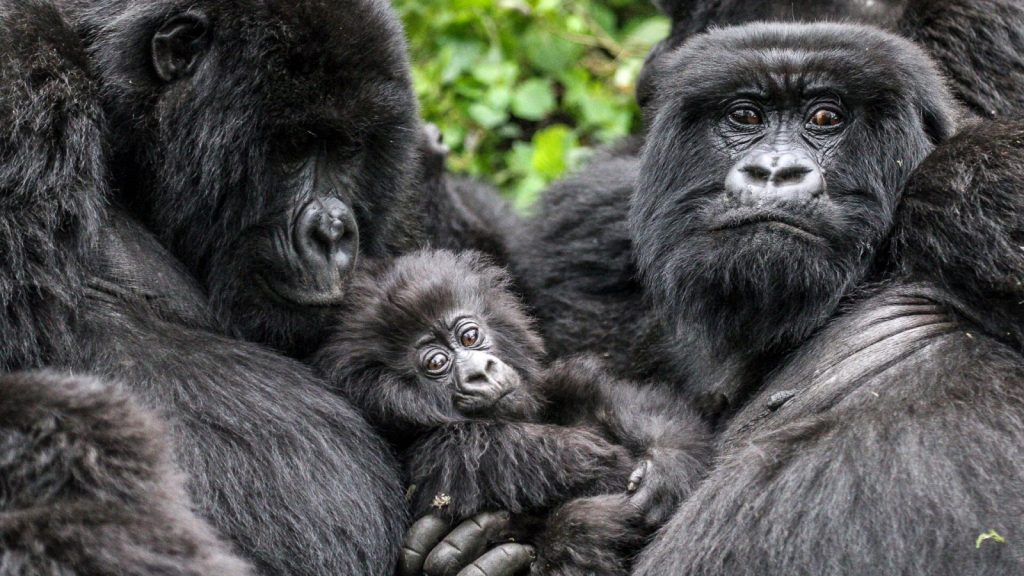
A crucial point that habituation teams emphasize repeatedly is that the process changes only the family’s tolerance of a calm, predictable human presence. It does not tame the gorillas in any broader sense, alter their diet or ranging behavior, or make them dependent on humans in any way. Habituated gorillas continue foraging, resting, raising infants, and defending territory exactly as they would in a completely unvisited part of the forest. The clearest evidence of this is how quickly a habituated family’s demeanor can shift if visitors behave unpredictably, underscoring that the trust built through habituation is conditional and specific rather than a permanent change in temperament. This is also why the current, well-documented difference between habituated and wild gorilla groups matters so much for how trekking rules are enforced; our companion piece on what’s the real difference between habituated and wild gorilla groups explores this distinction in more detail.
The Hidden Risks of Habituation
Habituation carries a real conservation trade-off that rarely gets discussed outside conservation circles. A family that has learned not to fear humans is, by definition, more vulnerable to people with harmful intentions, including poachers who exploit exactly the calm tolerance built through years of careful work. This is a major reason armed rangers accompany every trekking group and why habituated families receive daily ranger protection even outside trekking hours, patrols that guard against snares, illegal encroachment, and direct threats to the group. The economic value a habituated family generates through permit revenue also creates a strong practical incentive for continued protection, tying conservation funding directly to the wellbeing of the very animals it protects, a relationship covered further in our guide to where your gorilla permit money actually goes.
Who Pays for Habituation, and Why It Costs So Much
Habituation is expensive in ways that rarely show up in a simple permit price. Funding a dedicated team of trackers and researchers for two to three years of daily forest visits, alongside the ranger patrols needed to protect a newly vulnerable family, represents a substantial and sustained financial commitment. Much of this cost is absorbed by park authorities and long-term conservation partners rather than recovered directly from the habituation process itself, since a family generates no permit revenue until it is actually opened for trekking. This is one reason wildlife authorities habituate new families cautiously and only when there is a clear long-term case for doing so, rather than rushing the process to expand trekking capacity quickly. Once a family does become trek-ready, the resulting permit income helps offset years of prior investment while funding the ongoing protection every habituated group continues to need.
Habituation Beyond Mountain Gorillas
While mountain gorilla habituation in Uganda, Rwanda, and DR Congo is the most widely known example, similar principles apply to habituating other great ape populations, including Grauer’s gorillas in eastern DR Congo and western lowland gorillas in Central African countries such as Gabon and the Republic of Congo. Western lowland gorilla habituation tends to progress more slowly than the mountain gorilla process, partly because lowland forest habitat makes daily tracking more difficult and partly because these gorillas historically experienced heavier hunting pressure, leaving them warier of human contact even before formal habituation efforts begin. Chimpanzee habituation follows a broadly comparable process but tends to unfold somewhat faster and differently in practice, owing to differences in social structure and group cohesion; we cover those distinctions specifically in our guide to how chimpanzee habituation differs from gorilla habituation. In every case, though, the underlying principle remains the same: patient, consistent, non-threatening daily contact, sustained over years rather than months, is what ultimately builds the trust that makes a respectful wildlife encounter possible.
Why This Process Matters to Every Trekker
Every calm, close-range gorilla encounter a modern trekker experiences rests on this foundation of patient, years-long work by trackers and researchers who rarely receive public recognition for it. Understanding how gorilla habituation programs actually work adds real depth to a trek through Bwindi Impenetrable National Park or Rwanda’s Volcanoes National Park, transforming what might otherwise look like a simple wildlife encounter into the visible result of a genuinely remarkable, ongoing conservation partnership between people and gorillas built one cautious, respectful visit at a time.
It is also worth remembering, on the walk back down from a successful trek, that the family you just spent an hour with is only a small fraction of the mountain gorillas alive today, and an even smaller fraction of gorillas across Africa as a whole. Most gorillas, including the vast majority of western lowland gorillas, will never be habituated at all, remaining entirely wild and largely unseen by human eyes throughout their lives. The habituated families available for trekking represent a deliberate, carefully managed exception to that rule, one built specifically to generate the funding, political support, and public awareness needed to protect the wider, unhabituated population living beyond the trekking trails.