Two Great Apes, Two Very Different Habituation Challenges
Travelers who trek both gorillas and chimpanzees on the same East Africa itinerary often assume the process behind each encounter works roughly the same way. In practice, how chimpanzee habituation differs from gorilla habituation reflects deep differences in the biology and social structure of the two species, differences significant enough that habituation teams approach each animal with distinct strategies, timelines, and challenges. Understanding these differences explains why a chimpanzee trek in Kibale Forest feels so different in pace and unpredictability from a gorilla trek in Bwindi, even though both ultimately rest on the same basic principle of patient, non-threatening daily human contact.
Why Social Structure Changes Everything
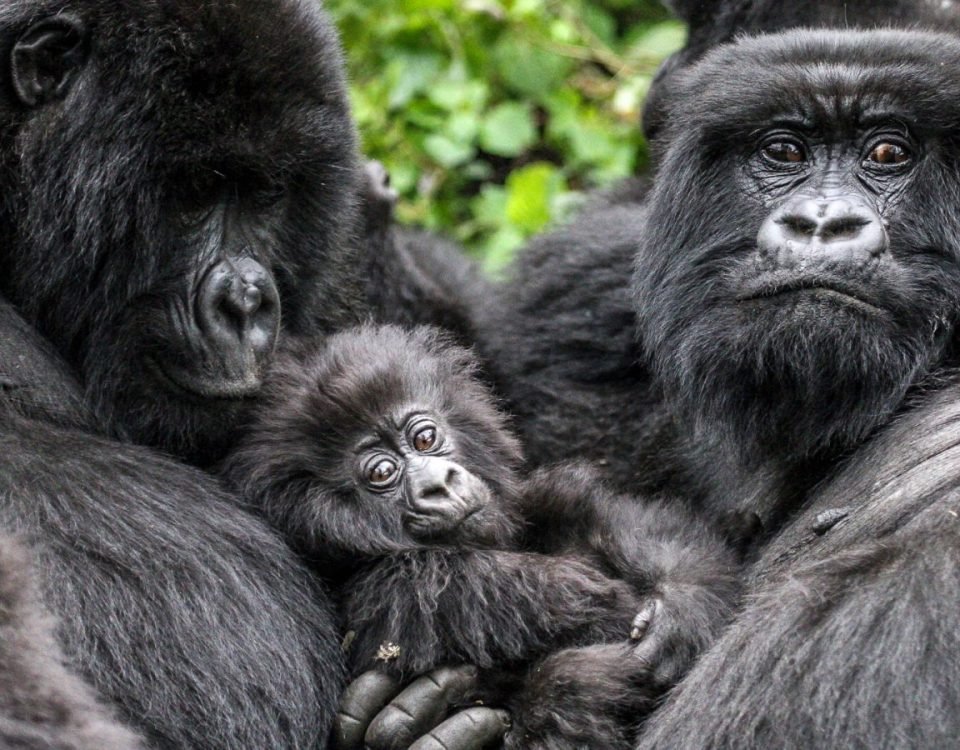
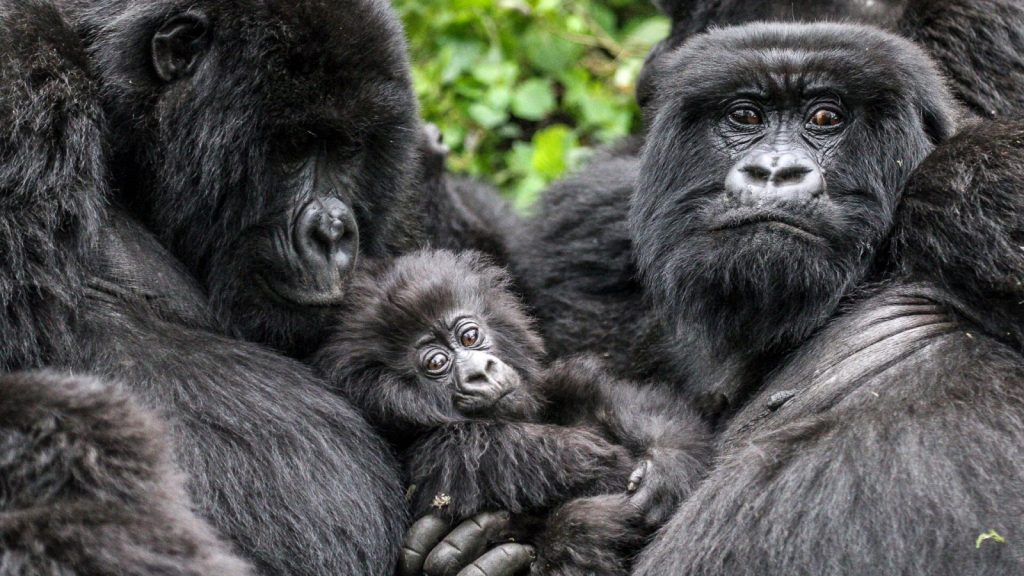
The single biggest factor separating the two habituation processes is social structure. Gorilla families are small, stable units, typically five to thirty individuals led by one or two silverbacks, that stay together consistently day after day, making it possible for a habituation team to build trust with the entire group more or less simultaneously. Chimpanzee communities work completely differently, often numbering anywhere from 40 to over 150 individuals who rarely travel together as one cohesive group, instead splitting into small, temporary parties that scatter across the community’s territory and reunite unpredictably throughout the day, a pattern researchers call fission-fusion grouping. This means chimpanzee habituation teams cannot simply habituate one stable group; they must gradually build tolerance across dozens of individuals who may not all be present, or even nearby, on any given day, a considerably more complex undertaking than habituating a single gorilla family.
Speed, Terrain, and Physical Challenges
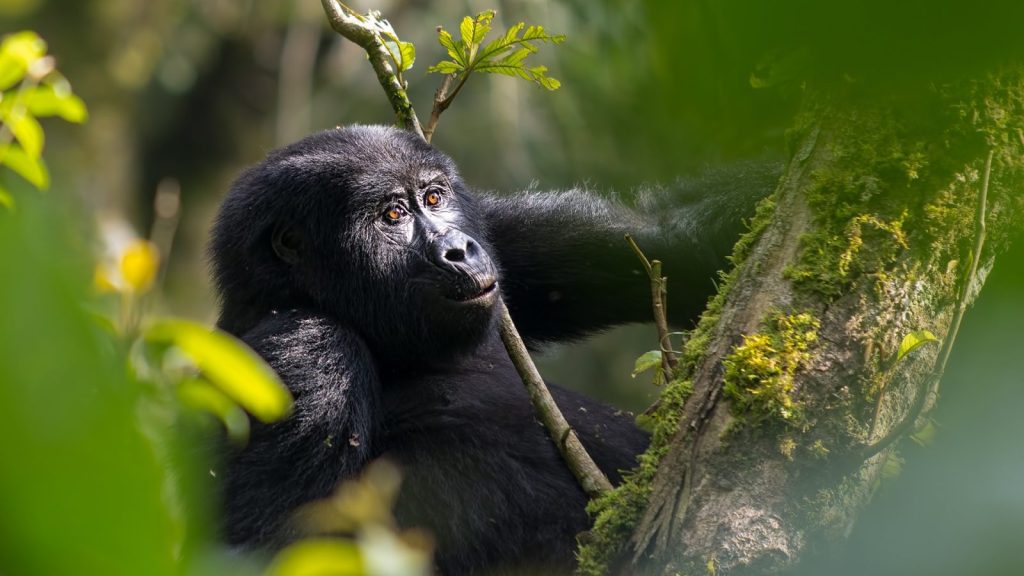
Chimpanzees are also simply harder to keep up with physically. They move faster than gorillas, travel greater daily distances in search of fruiting trees, and spend far more time in the forest canopy, sometimes forty meters or higher above the ground, compared to gorillas, who are largely terrestrial and move at a much more measured pace. Habituation teams tracking chimpanzees must contend with a moving target that can disappear into dense canopy or scatter in multiple directions the moment they sense unfamiliar human presence, making early-stage habituation considerably more physically demanding and logistically unpredictable than following a comparatively slow-moving, ground-based gorilla family.
Unpredictable Temperament and Caution
Chimpanzee behavior also tends to be less predictable than gorilla behavior, a factor habituation teams must account for carefully. Where gorilla aggression usually follows a recognizable, ritualized escalation of barks, chest-beats, and mock charges before any physical contact occurs, chimpanzees can shift mood more abruptly, and documented cases of aggressive behavior toward humans, while still rare, occur somewhat more frequently in the historical record than comparable incidents involving gorillas. Habituation teams working with chimpanzees maintain a heightened level of caution as a result, moving more conservatively during the early stages of contact and paying close attention to shifts in vocalization and body language that might signal rising tension within the community.
How Long Each Process Takes
Timelines for the two processes overlap considerably but diverge in the details. Mountain gorilla habituation typically takes two to three years of near-daily contact before a family is considered reliably tourist-ready, a process covered in full in our guide to how gorilla habituation programs actually work. Chimpanzee habituation can take a comparable amount of time, often two to four years, but the fission-fusion social structure means the process rarely feels linear. A team might achieve strong tolerance with one subgroup of the community while individuals from another subgroup, encountered less frequently, remain considerably warier, extending the overall timeline before the wider community can be considered dependably habituated for regular tourist visits.
The Habituation Experience for Visitors
Both Uganda’s gorilla and chimpanzee programs offer a dedicated habituation experience permit, allowing visitors to accompany a research and tracking team observing a group still partway through the process rather than a fully habituated one. Kibale Forest’s chimpanzee habituation experience runs several hours and offers a noticeably rawer, more unpredictable encounter than standard chimpanzee tracking, much as Bwindi’s gorilla habituation experience in the Rushaga sector does for mountain gorillas. Visitors choosing either option should expect a longer, more physically demanding outing, with no guarantee of the same close, settled viewing typical of a fully habituated group, in exchange for a genuinely rare window into the habituation process itself.
Differences in Viewing Rules Once Habituated
Once habituation is complete, the resulting trekking rules also differ somewhat between the two species, a direct consequence of their different temperaments and social structures. Gorilla trekking regulations across Uganda, Rwanda, and DR Congo cap group size at eight visitors per family and enforce a strict one-hour viewing window with a minimum distance of roughly seven meters. Chimpanzee trekking regulations in Uganda allow slightly larger viewing groups in some parks and generally permit a somewhat closer minimum distance, reflecting both the chimpanzee’s smaller individual size and the more mobile, spread-out nature of a community that rarely presents itself as a single, contained gathering the way a gorilla family does. Guides also brief chimpanzee trekkers on the real possibility of an encounter unfolding at a considerable distance or with individuals moving quickly overhead, a scenario far less common during gorilla treks.
Different Pioneers, Different Research Traditions
The two habituation traditions also trace back to different research origins, which shaped how each process developed over time. Jane Goodall’s pioneering work with chimpanzees at Gombe Stream, beginning in 1960, established many of the foundational techniques still used in chimpanzee habituation today, including the patient, food-supported early approach she used before researchers later shifted toward the non-provisioning methods considered best practice now. Dian Fossey’s work with mountain gorillas at Karisoke, starting in 1967, developed largely independently and relied from the outset on a non-provisioning approach built around mimicking gorilla behavior and vocalizations rather than any use of food to draw animals closer. These distinct research traditions, developed roughly a decade apart on different continents by researchers working with genuinely different animals, help explain why the two habituation methodologies still diverge in emphasis today even as both ultimately converged on patient, consistent, non-threatening daily contact as the core principle.
Cost, Investment, and Why Permits Differ
The practical differences between the two habituation processes also show up in permit pricing, since both reflect years of sustained financial investment before a single tourist dollar is earned back. A standard Uganda gorilla trekking permit costs considerably more than a standard Uganda chimpanzee trekking permit, a gap that reflects several factors beyond habituation alone, including the mountain gorilla’s smaller global population, higher conservation stakes, and the additional ranger protection required for a species more historically targeted by poachers. Chimpanzee permits, while less expensive, still fund a genuinely resource-intensive habituation and monitoring effort, particularly given the larger number of individuals within a single community that must be tracked, protected, and kept healthy across a far wider daily range than a typical gorilla family occupies. Both fee structures ultimately fund the same basic categories of work, tracking, veterinary monitoring, and anti-poaching patrols, scaled to the particular demands each species presents.
Why the Distinction Matters for Trekkers
Understanding how chimpanzee habituation differs from gorilla habituation helps set realistic expectations before a trek, and it also explains why booking logistics differ slightly between the two. Because chimpanzee communities are larger and more widely dispersed, some parks issue more daily permits for chimpanzee tracking than for gorilla trekking in a comparable area, while still capping the size of any single viewing group to limit disturbance. Trekkers hoping to combine both experiences on one trip should budget a full day for each activity separately rather than assuming a shorter combined itinerary will work, since the different pace and unpredictability of each species means neither encounter benefits from being rushed. Visitors arriving at Kibale National Park expecting the same calm, settled encounter typical of a Bwindi gorilla trek are often surprised by how much more energetic, mobile, and occasionally chaotic a chimpanzee sighting feels, a direct reflection of the different social structure and habituation process behind it. Neither encounter is superior to the other; they simply reward different expectations, with gorilla trekking offering close-range, contemplative viewing of a stable family unit and chimpanzee trekking offering a livelier, more unpredictable glimpse into one of the animal kingdom’s most socially complex communities.
Guides who have spent years working with both species often describe the contrast in terms of rhythm rather than quality: a gorilla trek builds slowly toward a quiet, sustained encounter, while a chimpanzee trek can shift within minutes from silent forest to a burst of calls, movement, and social drama overhead before settling again just as quickly. Both rhythms trace directly back to the different habituation journeys that made each encounter possible in the first place, journeys built by trackers and researchers who spent years learning to read two very different primates on their own terms rather than forcing either species into a shared template. Many travelers combine both experiences specifically because of this contrast, pairing a Bwindi gorilla trek with Kibale chimpanzee tracking to experience firsthand just how differently these two closely related great apes were brought, through very different habituation processes, into calm coexistence with human visitors.