Lake Victoria supports one of the largest freshwater fisheries on the planet, and the communities ringing its shores across Kenya, Uganda, and Tanzania have built genuinely distinct fish market cultures, cuisines, and daily economies around its waters. East Africa’s fish markets and Lake Victoria cuisine reveal a food and trade system considerably more layered than a passing glance at a lakeside grill stand might suggest, shaped by a still-recovering ecological history, a genuinely global export trade, and daily rhythms that have organized life in lakeside towns for generations.
A Lake Transformed by a Single Introduced Species
Lake Victoria’s modern fishing economy owes much of its current shape to the Nile perch, a large predatory fish deliberately introduced to the lake in the mid-twentieth century that dramatically restructured the ecosystem, driving numerous native cichlid species toward extinction while simultaneously creating an enormous new commercial fishery built around the introduced predator itself. This ecological transformation carries a genuinely complicated legacy, credited with generating substantial export revenue and employment across the lake’s fishing communities while also drawing lasting criticism for the biodiversity loss and shifting local food security patterns that accompanied the species’ rapid spread through the lake’s waters.
Omena, Dagaa, and Mukene: The Small Fish Sustaining Millions
Alongside Nile perch, a small silver fish known as omena in Kenya, dagaa in Tanzania, and mukene in Uganda accounts for a substantial share of the lake’s total catch and plays a genuinely central role in regional food security, providing an affordable, widely accessible protein source considerably cheaper than the larger, mostly export-oriented Nile perch. These small fish are traditionally sun-dried directly on rocks, sand, or raised racks along the shoreline, a preservation method that extends shelf life without refrigeration and allows the dried product to be transported well inland to markets across East Africa and beyond, reaching communities with no direct access to the lake itself.
Major Fish Markets Around the Lake
Mwanza, Tanzania’s principal lake port, and Kisumu, Kenya’s largest lakeside city, both host major wholesale fish markets where dried dagaa and fresh catch move in significant volume each day, functioning as critical distribution hubs feeding both domestic consumption and broader regional trade networks extending well beyond the immediate lakeshore. Our dedicated guide to Kisumu’s top attractions touches on the city’s lakeside character more broadly, while the smaller landing sites and markets scattered along Lake Victoria’s Tanzanian shoreline offer a quieter, less commercially developed alternative to Mwanza’s larger wholesale operations for travelers wanting a more intimate view of daily fishing life. On the Ugandan side, landing sites near Entebbe and Jinja similarly channel fresh catch toward Kampala’s markets and restaurants, with Jinja’s position at the Nile’s source giving the city its own distinct relationship to the lake’s fishing economy alongside its better-known adventure tourism identity.
The Women Who Run the Market
Fish trading and processing across Lake Victoria’s shoreline communities has historically been dominated by women, who manage much of the drying, smoking, and market-selling side of the fish trade even though the actual boat-based fishing itself remains predominantly a male occupation, creating a gendered division of labor running through nearly every stage of the fish’s journey from lake to plate. This economic role has given many lakeside women genuine independent income and market influence, though the trade has also historically involved documented exploitative practices in some areas, where women traders faced pressure to exchange sexual favors for reliable fish supply from boat crews, a serious problem that local advocacy groups and cooperative fish-trading initiatives have worked to address through fairer, more transparent supply arrangements in recent years.
Cooking Lake Victoria’s Fish
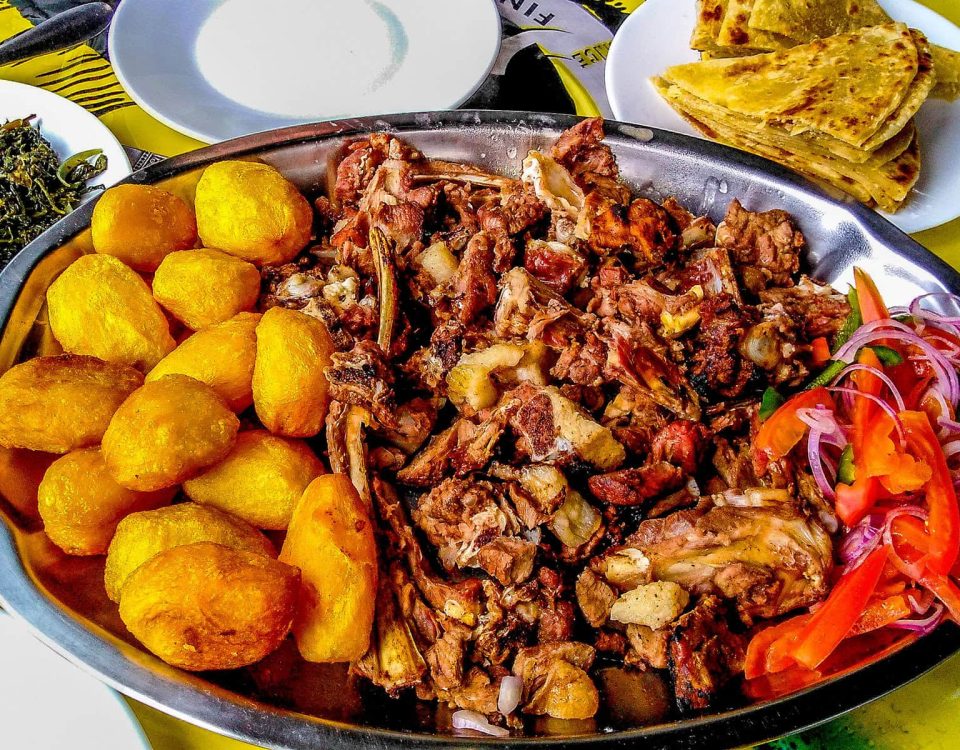
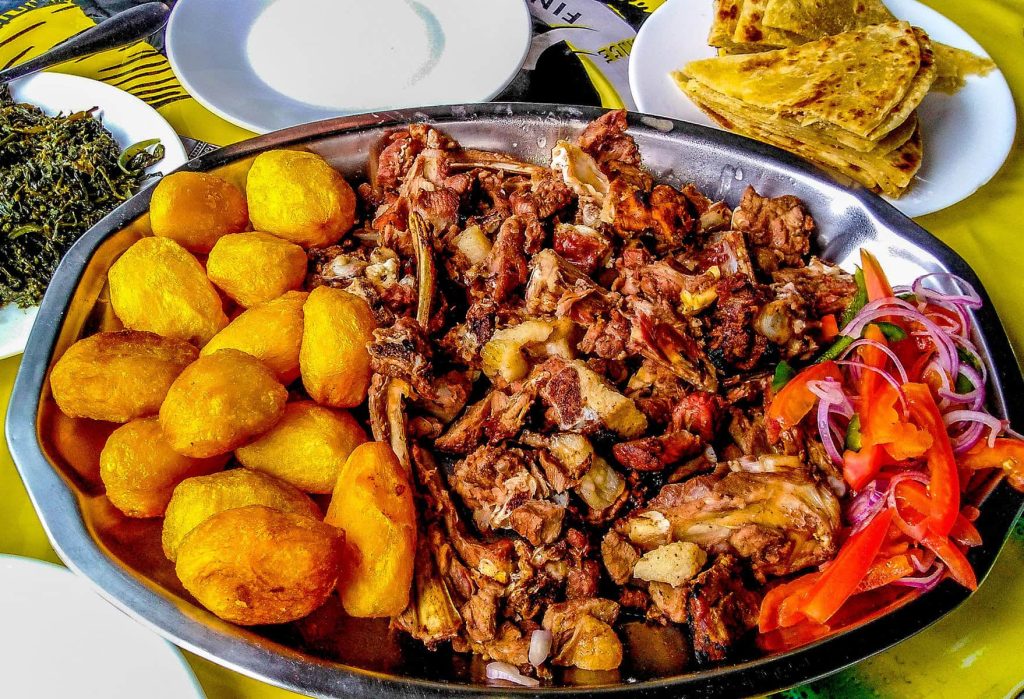
Whole grilled or fried tilapia, seasoned simply with salt and sometimes a light coating of flour before frying, ranks among the most popular ways lakeside restaurants and market stalls prepare fresh catch, typically served with ugali and a side of kachumbari for a genuinely satisfying, affordable meal found throughout lakeside towns on both the Kenyan and Tanzanian shores. Nile perch, considerably larger and meatier than tilapia, more commonly appears filleted rather than whole, pan-fried or stewed in tomato-based sauce, while dried omena and dagaa are typically rehydrated and cooked into a rich, savory stew, sometimes combined with tomatoes, onions, and groundnut paste, that stretches a small amount of protein into a filling, flavorful meal for a larger household.
Preservation Beyond Sun-Drying
Smoking as an Alternative Preservation Method
Beyond simple sun-drying, several lakeside communities preserve fish through smoking over slow-burning wood fires, a technique that produces a distinct flavor alongside extended shelf life and remains particularly common for medium-sized fish too large for the quick rack-drying method typically used for omena and dagaa but too small to justify the fileting process applied to larger Nile perch destined for export markets. Smoked fish holds genuine market value distinct from either fresh or simply sun-dried product, commanding its own specific price point and finding its way into different dishes than either alternative preservation method typically produces.
The Export Chain for Nile Perch Fillets
Nile perch destined for international export follows a considerably more industrialized preservation and processing chain than the small-scale drying and smoking methods used for local consumption, filleted and frozen at processing plants located in major lakeside cities before shipment to European and other international markets that have, for decades, formed a significant share of the region’s total fish export revenue. This export-oriented processing chain operates largely separately from the informal local market economy described elsewhere in this piece, illustrating how Lake Victoria’s fishery genuinely serves two quite distinct economic systems simultaneously, one feeding local and regional consumption through traditional market channels, the other feeding a considerably more industrialized global supply chain.
Recreational Fishing Versus the Working Fishery
Travelers should distinguish between Lake Victoria’s working commercial fishery, the daily grind of boats, drying racks, and wholesale markets described here, and the separate recreational sport fishing industry that has developed around the lake’s trophy-sized Nile perch, particularly popular among visiting anglers. Our dedicated guide to Kenya’s best fishing safaris on Lake Victoria covers this specific recreational angling experience in considerably more depth, a genuinely different activity from visiting a working fish market, though the two experiences pair naturally for a traveler interested in seeing both the lake’s sporting appeal and its everyday working economy within a single visit.
Overfishing, Regulation, and an Uncertain Future
Lake Victoria’s fishery faces genuine, well-documented sustainability pressure, with overfishing, declining Nile perch stocks in several areas, and ongoing pollution concerns prompting increased regulatory attention from the three riparian nations sharing the lake’s waters. Community-based fisheries management initiatives and cross-border cooperation efforts have worked to address these pressures with mixed success, reflecting the genuine difficulty of managing a shared resource spanning three separate national jurisdictions, each with its own regulatory framework, enforcement capacity, and competing economic pressures on local fishing communities dependent on the lake for daily survival.
Visiting a Fish Market as a Traveler
Travelers visiting a working fish market or landing site should expect a genuinely busy, sensory-intensive environment, strong fish odors, crowded stalls, and constant activity, quite different from a curated tourist market experience, and should approach the visit with appropriate footwear and a willingness to navigate a working commercial space rather than a purpose-built visitor attraction. Arriving in the early morning, when boats typically return with the day’s catch and market activity peaks, offers the most authentic view of the trade in action, and asking permission before photographing individual traders or their stalls reflects basic courtesy toward people conducting genuine daily business rather than performing for visiting cameras.
Fish Markets as a Window Into Lakeside Life
A working fish market reveals considerably more about a lakeside community’s daily rhythm and economic reality than a curated cultural tour typically manages, since the market operates according to the lake’s own schedule of boat departures and returns rather than any timetable designed around visitor convenience. Watching the full sequence, boats arriving with the morning catch, buyers and processors negotiating prices, fish moving toward drying racks, smoking fires, or waiting transport trucks, offers a genuinely unfiltered view of an economy that has sustained millions of people across three countries for generations, adapting continuously to ecological change, market pressure, and shifting regulation along the way.
Pairing a Fish Market Visit With the Wider Lake
Lake Victoria’s fish markets pair naturally with broader visits to its shoreline towns and cities, whether combined with Kisumu’s wider city attractions, a stop along Tanzania’s quieter Lake Victoria shoreline, or Jinja’s position at the Nile’s source on the Ugandan side, giving travelers multiple entry points into the lake’s economy and culture depending on which country’s shoreline their broader itinerary already includes. Each entry point offers a genuinely distinct flavor of lakeside life, from Mwanza’s large-scale wholesale trading to smaller, quieter landing sites where the pace of daily fishing life feels considerably less commercially intense, and comparing more than one location across a single trip gives a noticeably fuller picture of how deeply this single body of water continues shaping life across three separate nations sharing its waters.