Away from any significant town, with no streetlights for a hundred kilometres in any direction and altitude thinning the air overhead, East Africa’s safari camps sit under some of the darkest skies left on the continent. Most guests spend their nights focused on the day’s game drive recap and an early bedtime ahead of a dawn departure, but a growing number of camps across the region have started building the sky itself into the experience, with open-air decks, resident guides trained in basic astronomy, and dining setups positioned specifically for uninterrupted views overhead. East Africa’s best stargazing safari camps turn what used to be incidental, the simple fact of being far from artificial light, into a deliberate, well-designed part of the stay.
Why East Africa’s Skies Are Unusually Dark
Light pollution maps of Africa show enormous stretches of near-total darkness across the continent’s interior, and East Africa’s major conservation areas sit squarely within them. National parks and private conservancies enforce strict limits on artificial lighting almost by necessity, both to protect nocturnal wildlife behaviour and because most camps run on generators or solar power that make bright, constant lighting impractical anyway. The region’s equatorial position adds a further advantage over stargazing destinations further from the equator: both northern and southern hemisphere constellations are visible across the year, including the full sweep of the Milky Way’s galactic core, which rises high overhead during the dry season months rather than skimming the horizon as it does from more temperate latitudes.
Rwanda’s Volcanic Highlands After Dark
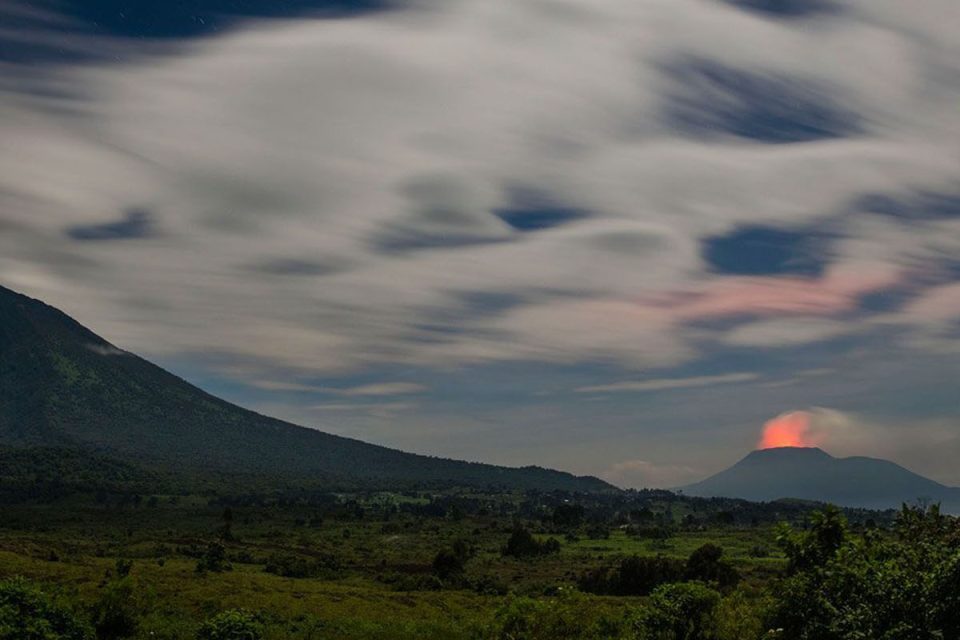
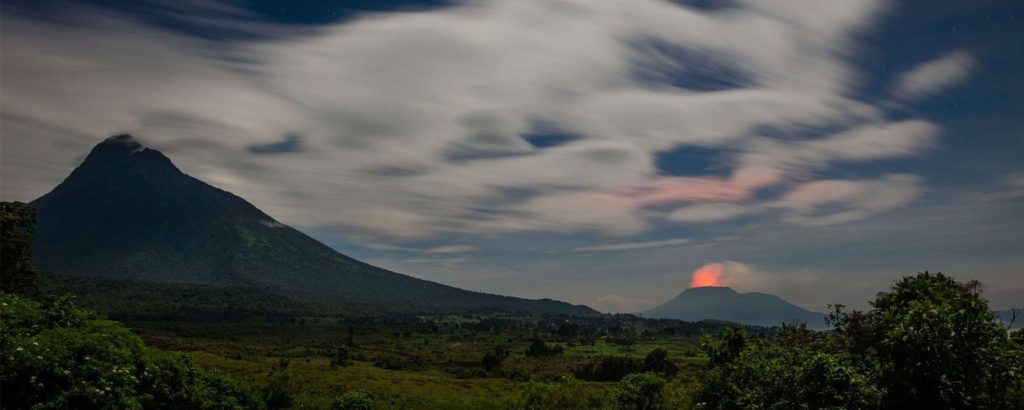
Camps around Volcanoes National Park, perched at altitude on the slopes of the Virunga range, offer a particular kind of stargazing shaped by their setting: cold, thin mountain air that keeps the sky exceptionally clear, with the silhouettes of volcanic peaks visible against the stars even without moonlight. Several of the park’s upscale lodges have built stargazing into their evening programming deliberately, setting up telescopes on open decks and pairing the activity with the same fireside routine that follows a day of gorilla trekking, giving guests a natural, unhurried transition from wildlife encounter to night sky without needing to seek the activity out separately.
Tanzania’s Serengeti and Ngorongoro Highlands
Tanzania’s northern circuit offers some of the most celebrated stargazing in the region, partly because of the sheer scale of open, unlit plains across the Serengeti and partly because several camps have made bush dinners under the stars something close to a signature experience. Sitting at a table lit only by lanterns and firelight, with the plains stretching dark and silent beyond the circle of light and the Milky Way arcing directly overhead, has become one of the more photographed moments of a Tanzania safari, even though the experience itself has almost nothing to do with photography and everything to do with simply being present under an unusually complete sky. The Ngorongoro Highlands add altitude to the equation, with rim camps perched above the crater offering clear views that benefit from both elevation and the crater’s own restrictions on artificial lighting.
Kenya’s Conservancies and the Original Stargazing Camps
Kenya’s private conservancies, particularly across Laikipia and the wider Maasai Mara ecosystem, were arguably the first in the region to formalise stargazing as a guest activity rather than a happy accident of remote location, and the country’s best individual camps for star gazing deserve a dedicated look of their own given how far some properties have taken the concept, from dedicated observatory decks to guides trained specifically in constellation identification and basic celestial navigation. What Kenya’s conservancy camps generally offer that’s harder to replicate elsewhere is consistency: low guest density, minimal light pollution enforced across large private landholdings, and a long-established culture of evening programming built specifically around the night sky.
Uganda’s Forest Clearings and Crater Lakes
Uganda presents a slightly different stargazing profile, shaped by its forest cover and more variable cloud patterns compared with the drier plains of Kenya and Tanzania. Camps around the crater lakes of western Uganda, near Fort Portal and Bwindi’s forest fringes, offer clear stretches particularly during the two dry seasons, with the added atmosphere of forest sounds, insects, hyrax calls, distant primate activity, filling in around the visual experience of the sky itself. It’s a less polished, more improvised version of stargazing than the dedicated decks found in parts of Kenya and Tanzania, but for travellers already drawn to Uganda’s quieter, less commercialised safari circuit, that rougher edge tends to suit the overall character of the trip.
Moon Phases and Planning Around Them
A bright full moon washes out all but the brightest stars and planets, turning what might otherwise be a spectacular Milky Way view into a comparatively ordinary night sky, so travellers planning a trip specifically around stargazing should check the lunar calendar for their travel dates rather than relying on dry-season timing alone. Ironically, a full moon isn’t necessarily wasted on a safari itinerary, since strong moonlight can improve night game drive visibility and occasionally influences predator activity patterns that guides watch for, so the ideal stargazing camp stay often means splitting a longer trip across both a bright-moon phase for game viewing and a new-moon window for the clearest possible night sky.
What Makes a Camp Genuinely Good for Stargazing
Site Selection and Light Discipline
The single biggest factor separating a camp that’s merely dark from one genuinely built for stargazing is light discipline: how carefully a property manages its own artificial lighting, using low, warm, shielded fixtures rather than bright white light that ruins night vision and washes out fainter stars. Camps serious about the activity typically dim or extinguish non-essential lighting after dinner and brief guests on basic etiquette, no phone flashlights pointed skyward, no camera flash near the viewing area, that preserves the experience for everyone present rather than just the person taking a photo.
Guides, Telescopes, and Programming
A genuinely strong stargazing camp pairs its dark sky with a guide capable of more than pointing out the Southern Cross, walking guests through visible planets, seasonal constellations, and the mechanics of why the equatorial sky shows both hemispheres at once. Telescopes aren’t universal even among camps that market stargazing heavily, and travellers with a serious interest in the activity should ask specifically what equipment a property maintains rather than assuming a dark sky alone guarantees a well-run programme.
Photographing the Night Sky From Camp
A number of stargazing safari camps have started catering to guests who want to photograph the sky rather than simply look at it, offering tripods, guidance on camera settings for long-exposure astrophotography, and occasionally a resident photographer who can help set up a shot combining a distinctive foreground, an acacia tree silhouette, a thatched tent, a volcano’s outline, with the stars overhead. Getting a usable shot generally requires a camera capable of manual exposure control, a stable tripod, and a fair amount of patience with trial and error, since equatorial darkness away from any camp lighting can catch photographers off guard with just how black the foreground goes without any artificial illumination at all. Camps that take this seriously tend to schedule a specific window after dinner for it, coordinating with the kitchen and any campfire lighting so that photographers get a genuinely dark stretch of sky rather than competing with ambient light from the dining area.
Combining Stargazing With Astro-Tourism Destinations Beyond the Camps
Camp-based stargazing suits travellers who want the activity woven into an otherwise conventional safari, but it’s worth noting this is a distinct experience from dedicated dark-sky destinations elsewhere in the region, remote deserts and highland plains chosen specifically for their exceptionally low light pollution rather than for wildlife viewing. Travellers with a deeper interest in astro-tourism specifically, rather than stargazing as an evening add-on to a wildlife-focused trip, may want to look beyond camp programming toward destinations built around darkness as the primary attraction, where longer, more technical observation sessions are possible without the fixed schedule of a typical game-drive itinerary.
Best Time of Year for Clear Skies
Dry season months, roughly June through September and December through February across most of the region, offer the clearest, most reliably cloud-free nights, since the long and short rains bring cloud cover that can obscure the sky for days at a stretch. New moon periods within those windows produce the darkest possible skies and the best conditions for viewing the Milky Way in full, which is worth checking against a lunar calendar when booking a stay specifically for stargazing rather than treating it as a secondary activity alongside game drives.
Building Stargazing Into a Wider Safari Itinerary
Very few travellers build an entire trip around stargazing alone, and camps across the region generally treat it as an evening complement to daytime wildlife viewing rather than a standalone draw. It’s an activity that costs a camp very little to offer well, largely a matter of lighting discipline and a knowledgeable guide, yet it consistently ranks among the experiences guests mention most warmly after a trip, precisely because it asks so little of them beyond looking up at the right moment. That said, choosing accommodation with genuine stargazing infrastructure, rather than simply trusting that any remote camp will deliver a good night sky, makes a meaningful difference to the experience, particularly for travellers with even a casual interest in astronomy who want more from the night than an early dinner and a dark walk back to their tent.