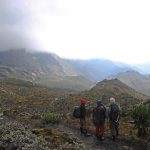

Kenya’s Rift Valley wasn’t shaped for paragliding, but it might as well have been. Tens of millions of years of tectonic movement left behind exactly what a pilot needs: a long, steep escarpment wall facing directly into a reliable prevailing wind, with a valley floor far enough below to allow hours of soaring flight rather than a brief glide to the ground. Paragliding over the Rift Valley has quietly built an international reputation among pilots over the past decade and a half, even as most travellers to Kenya remain entirely unaware the sport exists here at all.
Iten and the Kerio Valley: Kenya’s World-Class Flying Site
The serious paragliding destination in Kenya isn’t near Nairobi at all, but far to the northwest, above the Kerio Valley in Elgeyo-Marakwet County. The Elgeyo Escarpment forms part of the Rift Valley’s western wall here, rising roughly 1,300 metres above the Kerio Valley floor and facing almost directly into the northeasterly trade winds that dominate the region from around December through March. That combination, a tall, steep face meeting a strong, consistent wind, creates near-perfect soaring conditions from early morning until well into the afternoon, and has turned the small highland town of Iten into an unlikely paragliding hub.
How Iten Became a Pilgrimage Site for Cross-Country Pilots
Iten is already internationally known among distance runners as the training base that has produced a disproportionate share of the world’s elite marathoners, thanks to its altitude and running culture. Paragliding pilots discovered its potential separately: in 2011, a group of German pilots arrived and set five tandem world records in quick succession, and word spread through the small, tightly connected international paragliding community from there. Since then, a steady stream of cross-country pilots have travelled to Iten each flying season chasing long out-and-return routes and flat triangle courses that rank highly on international XC leaderboards. Kenya’s national distance record, 275 kilometres, was set from Iten in January 2017, a genuinely serious result by any global paragliding standard and proof that the Kerio Valley’s conditions rival established flying destinations in Europe and South America.
What a Flight Over the Escarpment Looks Like
Launching from the Elgeyo Escarpment puts a pilot immediately above one of Kenya’s most dramatic landscapes, the Kerio Valley’s patchwork of farmland and dry bushland stretching out more than a kilometre below, with the escarpment wall itself running for tens of kilometres in either direction. Thermals rising off the valley floor combine with the ridge lift generated by the wind hitting the escarpment face, giving experienced pilots the lift needed to stay airborne for hours and cover serious cross-country distance rather than a short sled ride back to the ground. Below, the valley floor supports a mix of subsistence farming and dry acacia bushland, and pilots flying long cross-country routes often report spotting troops of baboons and the occasional herd of livestock from altitudes that put the entire patchwork of shambas and grazing land into a single sweeping view rarely available from the ground.
For visiting pilots without their own gear or local site knowledge, connecting with Kenya’s small paragliding community before arrival is essential, since launch and landing zones here require local familiarity that isn’t obvious from a map alone.
Tandem Flights Closer to Nairobi
Travellers without paragliding experience or their own equipment, and without the time to make the trip north to Iten, still have options closer to Kenya’s capital. Escarpment sites near Kijabe and above the floor of the Rift Valley around Mai Mahiu and Longonot occasionally host tandem flights run by Nairobi-based pilots, offering shorter flights that still deliver genuine Rift Valley views, Mount Longonot’s crater, Lake Naivasha in the distance, without the logistics of travelling to Elgeyo-Marakwet. These sites depend heavily on specific wind and weather conditions lining up on a given day, so availability is far less predictable than at Iten, and visitors interested in a tandem flight should treat it as an opportunistic add-on to a Rift Valley itinerary rather than something to build fixed travel plans around.
Best Time of Year to Fly
December through March offers the most reliable conditions at Iten, when the northeast monsoon wind sets up consistently against the Elgeyo Escarpment and produces the long, dependable flying days that draw international pilots in the first place. Flying is possible outside this window, but conditions become considerably more variable, with weaker or less consistent winds making both duration and distance harder to predict. Visitors planning a dedicated flying trip rather than an opportunistic tandem flight should build their travel dates around this window specifically rather than assuming Kenya’s general dry season logic, which runs on a somewhat different calendar, will apply equally well to paragliding conditions.
Getting to Iten and What to Expect on the Ground
Iten sits roughly 35 kilometres from Eldoret, itself connected to Nairobi by regular domestic flights and a long but manageable road journey, and the town has developed a modest tourism infrastructure around its dual identity as running mecca and paragliding destination, with guesthouses and a handful of restaurants catering to the international athletes and pilots who base themselves there for weeks or months at a time. Pilots bringing their own equipment should expect genuinely rural launch and landing conditions rather than a manicured European flying site: rough tracks to reach launch points, farmland below that requires care and courtesy toward landowners, and a local flying community that, while welcoming, operates on considerably more informal terms than pilots may be used to elsewhere.
A Town Built Around Two Unrelated Obsessions
Part of what makes Iten such an interesting base for a paragliding trip is the town’s other identity, cemented decades before any pilot arrived. Its altitude, cool climate, and a training culture built up over generations have made it one of the most productive distance-running towns on earth, home to camps that have produced Olympic champions and world record holders across marathon and track distances. Visiting pilots often find themselves sharing guesthouses and dinner tables with elite athletes mid-training block, an unusual overlap between two communities that arrived at the same small highland town for entirely different reasons, one drawn by the wind on the escarpment, the other by the thin air and dirt roads ideal for high-mileage training. Travellers with an interest in either sport can genuinely combine both in a single visit, watching a dawn training run from a guesthouse balcony before heading to launch a few hours later once the day’s thermal activity builds.
Licensing, Equipment, and Booking a Tandem Flight
Kenya doesn’t operate a large formal paragliding school infrastructure in the way established European or South American destinations do, so pilots wanting to fly solo generally need an internationally recognised paragliding licence from their home country along with their own wing, harness, and reserve parachute, since rental gear is scarce outside the small community of resident and regularly visiting pilots. Tandem flights, by contrast, require nothing from the passenger beyond a reasonable level of fitness and a willingness to run a few steps at launch, with all equipment and piloting handled by an experienced local or visiting tandem pilot. Because Kenya’s paragliding scene remains small and largely word-of-mouth, arranging a tandem flight or connecting with the local flying community works best through direct outreach well before arrival rather than expecting to find options readily advertised on the ground in Iten itself.
Safety Considerations Specific to the Rift Valley
The same strong, consistent winds that make Iten world-class also demand real experience to handle safely; this isn’t a beginner’s learn-to-fly destination in the way some coastal or lake-adjacent sites elsewhere in the world are, and pilots without solid ridge-soaring and thermal experience should fly with local guidance or stick to tandem flights with an experienced local pilot rather than attempting solo flights. Altitude adds a further factor: Iten itself sits at roughly 2,400 metres, and both pilots and any support crew should allow a day or two to acclimatise before strenuous activity, since the physical demands of carrying gear to launch points at this elevation catch some visitors off guard. Landing zones in the Kerio Valley below can also be genuinely remote, and pilots flying cross-country routes should carry basic navigation and communication equipment appropriate for landing well away from any road.
Why Paragliding Belongs on a Broader Kenya Itinerary
For travellers building a Kenya trip around the Maasai Mara, Amboseli, or the northern conservancies, a paragliding detour to Iten sits well outside the conventional safari circuit, which is exactly its appeal. The journey north from Nairobi through the Rift Valley towns of Nakuru and Eldoret also passes some of Kenya’s other Rift Valley highlights, the soda lakes of Bogoria and Nakuru among them, so a paragliding trip can realistically be folded into a wider loop rather than treated as an isolated detour requiring a separate journey entirely. It offers a genuinely different vantage point on the same Rift Valley landscape that shapes so much of Kenya’s wildlife geography, seen not from a vehicle or even a hot air balloon but from a wing riding the same ridge lift that has drawn a small but dedicated international pilot community to this stretch of escarpment for well over a decade now.