Bwindi impenetrable forest gorilla trekking: Permits, costs and what to expect
Bwindi Impenetrable National Park in southwestern Uganda is one of the world’s most important destinations for mountain gorilla trekking. Its ancient rainforest shelters a significant proportion of the remaining mountain gorilla population, offering visitors an opportunity to encounter these endangered primates in their natural habitat.
A gorilla trekking experience in Bwindi involves walking through thick vegetation, climbing forested hills and following experienced rangers and trackers in search of a habituated gorilla family. Once you find the gorillas, you can spend one hour observing them as they feed, groom, rest and interact with one another.
For 2027, Bwindi remains an excellent choice for travellers who want a memorable wildlife experience at a lower permit price than Rwanda. However, the total cost of your trip depends on your permit category, trekking sector, accommodation, transport and the number of days you spend in southwestern Uganda.
This guide explains the permit prices, booking process, trekking sectors, travel arrangements, accommodation options and what you should expect on the day of your trek.
Where is Bwindi impenetrable national park?
Bwindi Impenetrable National Park lies in southwestern Uganda, close to the borders with Rwanda and the Democratic Republic of Congo. It covers approximately 321 square kilometres of mountainous rainforest, steep valleys and dense vegetation.
The park is recognised as a UNESCO World Heritage Site and is famous for its mountain gorillas. It also supports chimpanzees, forest elephants, several monkey species, forest antelopes, butterflies and an exceptional variety of birds.
The forest is divided into four main gorilla trekking sectors: Buhoma, Ruhija, Rushaga and Nkuringo. Each sector has its own access roads, ranger station, habituated gorilla families and nearby accommodation.
Bwindi is not a traditional savannah safari destination. You will not spend the day driving through open plains looking for animals. Instead, you explore the forest on foot, following a ranger team that communicates with trackers who monitor the gorilla families.
The terrain can be steep, slippery and physically demanding. However, the opportunity to observe a wild mountain gorilla family at close range makes the effort worthwhile for many visitors.
How much does a Bwindi gorilla trekking permit cost in 2027?
A gorilla trekking permit is compulsory for anyone who wants to visit a habituated mountain gorilla family in Bwindi. Uganda Wildlife Authority issues and manages these permits, and each permit is valid for one person on a specific trekking date.
For 2027, the standard gorilla trekking permit rates are:
- Foreign non-residents: US$800 per person.
- Foreign residents: US$700 per person.
- Rest of Africa citizens: US$500 per person.
- East African Community citizens: UGX 300,000 per person.
These rates apply to standard gorilla trekking in Bwindi and Mgahinga. Your visitor category depends on your citizenship and recognised residency status. Foreign residents should confirm the required documentation before booking.
Uganda also introduced discounted low-season permits for April, May and November. The reported discounted rates are US$600 for foreign non-residents and US$500 for foreign residents. These permits have special conditions, including restrictions on changing the trekking date, so confirm the applicable terms before making payment. Do not assume that every visitor category qualifies for the same discount.
The standard permit gives you one hour with a habituated gorilla family after you locate it. It also covers the ranger-guided tracking activity and park entry for the day of your trek.
The permit does not cover your accommodation, meals, transport to Bwindi, porter services, travel insurance or personal expenses. You should therefore budget for these items separately.
Because tourism tariffs can change, confirm the applicable 2027 rate directly with Uganda Wildlife Authority or through a licensed tour operator before paying.
Gorilla habituation experience permit in 2027
Bwindi also offers a Gorilla Habituation Experience for visitors who want to spend more time with a gorilla family that is still undergoing the habituation process.
Unlike standard trekking, which provides one hour with a fully habituated family, the habituation experience can allow up to four hours with the gorillas under the supervision of researchers, trackers and rangers.
The experience takes place in the Rushaga sector of southern Bwindi. It is suitable for visitors who have a strong interest in gorilla behaviour, conservation and the process of preparing wild gorilla groups for regular tourism.
For 2027, the reported foreign non-resident habituation permit price is US$1,800 per person. The revised rates also include US$1,600 for foreign residents, US$1,000 for citizens from the rest of Africa and UGX 750,000 for East African Community citizens.
These are separate rates from standard gorilla trekking. Confirm the applicable category and price with Uganda Wildlife Authority before making a booking.
The habituation experience requires more time in the forest and can involve longer walking distances. It is best suited to travellers who want an extended educational experience rather than a conventional one-hour gorilla encounter.
The four gorilla trekking sectors in Bwindi
Choosing the correct sector is one of the most important parts of planning your Bwindi gorilla safari. Your permit is issued for a particular sector, and you must report to the corresponding briefing point on the morning of your trek.
The distance between sectors can be significant because Bwindi has mountainous terrain and winding access roads. You should select your accommodation and transport arrangements according to the sector printed on your permit.
Buhoma sector
Buhoma is located in the northern part of Bwindi and is the park’s original gorilla trekking sector. It has a well-established tourism infrastructure, several accommodation options and access to community activities.
The sector is suitable for travellers who want to combine gorilla trekking with nature walks, birdwatching and cultural experiences. It also works well for visitors travelling from Queen Elizabeth National Park, particularly the Ishasha area.
Buhoma offers a range of accommodation, including budget guesthouses, comfortable mid-range lodges and luxury forest properties.
Although some treks from Buhoma can be manageable, the difficulty depends on where the assigned gorilla family is located. You should not assume that every trek in this sector is easy.
Ruhija sector
Ruhija lies in the eastern part of Bwindi at a relatively high altitude. It is known for its cooler temperatures, forest scenery and excellent birdwatching opportunities.
The terrain can be steep, and the altitude may make walking more demanding for some visitors. Ruhija is particularly attractive to travellers who want a quieter forest experience and opportunities to explore the wider biodiversity of Bwindi.
Birdwatchers often appreciate this sector because the surrounding forest supports several Albertine Rift bird species.
Accommodation is available around the sector, although the choice is generally more limited than in Buhoma. You can also plan a stay around Kabale or Lake Bunyonyi, provided your transport arrangements allow you to reach the briefing point on time.
Rushaga sector
Rushaga is located in southern Bwindi and is known for its relatively high number of habituated gorilla families. It is also the main starting point for the Gorilla Habituation Experience.
The number of available families makes Rushaga an important option when planning permits, particularly during busy travel periods. However, permit availability changes according to the official allocation and trekking dates.
The sector has a range of accommodation options, including budget, mid-range and luxury lodges. It is also convenient for visitors combining Bwindi with Lake Mutanda, Kisoro or Mgahinga Gorilla National Park.
Rushaga is a good choice for travellers interested in standard gorilla trekking or the longer habituation experience.
Nkuringo sector
Nkuringo lies in the southwestern part of Bwindi and is known for dramatic mountain scenery and challenging trekking terrain. The sector sits above deep forest valleys, offering beautiful views of the surrounding landscape.
Some treks involve steep descents into the forest followed by demanding climbs on the return journey. This makes Nkuringo particularly suitable for visitors who are comfortable with hiking and uneven ground.
Accommodation includes properties overlooking the forest and surrounding hills. The area is also suitable for visitors interested in community walks and cultural experiences.
Nkuringo can be combined with Lake Mutanda and Kisoro, making it a good option for travellers exploring southwestern Uganda.
How to choose the best Bwindi trekking sector
The best sector depends on your permit availability, fitness, accommodation preference and wider itinerary.
Buhoma is a practical choice for travellers who want established tourism facilities and a northern route connecting with Queen Elizabeth National Park. Ruhija is attractive to birdwatchers and visitors who enjoy cooler highland environments.
Rushaga is worth considering if you want a wider choice of habituated families or the Gorilla Habituation Experience. Nkuringo suits travellers who enjoy challenging hikes and dramatic scenery.
You cannot select a particular gorilla family simply by choosing a sector. The ranger team allocates visitors to available families during the morning briefing, taking account of the family’s location and the trekking group’s circumstances.
The most important rule is to secure your permit for the sector where you intend to stay. Booking accommodation in Buhoma when your permit is for Rushaga, for example, can create unnecessary driving and logistical problems.
How to book a Bwindi gorilla trekking permit
Gorilla permits are limited because each habituated gorilla family receives a restricted number of visitors per day. A maximum of eight tourists can visit one habituated family during a standard trekking session.
You should book your permit before making non-refundable accommodation and flight arrangements. This is particularly important if you plan to travel during June, July, August, September, December, January or February, when demand is often high.
Uganda Wildlife Authority manages the permit system. Foreign non-residents must purchase their permits through a tour operator licensed by the Uganda Tourism Board under UWA’s booking procedures. Other visitor categories should confirm the applicable direct-booking arrangements.
The booking process generally involves selecting your travel date, confirming the trekking sector, checking availability and providing the necessary visitor details. You then make payment according to the official booking instructions.
Before paying, confirm that the permit is for the correct date, sector and visitor category. Ask for written confirmation and retain your payment records.
If you are booking through a safari company, request an itemised quotation showing the permit separately from transport, accommodation, meals and other services. This makes it easier to understand the total cost of your trip.
Do not purchase a permit from an unauthorised individual or pay someone who cannot provide official booking confirmation.
How much does a complete Bwindi gorilla trekking safari cost?
The permit is usually the largest single activity cost, but it is only one part of your total safari budget. You also need to consider transport, accommodation, meals, guiding services and the number of nights you spend in the region.
The total cost depends on whether you travel privately, share transport with other visitors, use a domestic flight or drive from Entebbe or Kampala.
A one-day trek from a distant city is possible in some circumstances, but it is generally not the most comfortable arrangement. Bwindi is far from Uganda’s main international airport, and long road journeys can make the experience tiring.
A two-day gorilla safari is a practical option for visitors with limited time. It normally involves travelling to the park, staying overnight near the assigned sector and trekking the following morning. Depending on your starting point and accommodation, this can involve substantial driving.
A three-day safari provides more flexibility. You can travel to Bwindi on the first day, trek on the second day and return on the third day. It also gives you more time to enjoy the surrounding countryside.
For a more extended holiday, you can combine Bwindi with Queen Elizabeth National Park, Lake Bunyonyi, Lake Mutanda, Mgahinga or Kibale Forest.
When comparing safari quotations, check whether the following items are included:
- Gorilla trekking permit.
- Private or shared safari vehicle.
- Professional driver-guide.
- Fuel and road transfers.
- Accommodation before and after trekking.
- Meals and drinking water.
- Park-related fees not covered by the permit.
- Porter services, tips and personal expenses.
A budget safari generally uses simpler accommodation and may involve shared transport. Mid-range packages provide more comfortable lodges and private transport, while luxury safaris include higher-end properties, additional services and sometimes domestic flights.
Do not compare packages based on price alone. Check the lodge location, vehicle type, meals, permit status and services included in the quotation.
Travelling to Bwindi from Kampala or Entebbe
Bwindi is approximately 460 to 550 kilometres from Kampala or Entebbe, depending on the sector and route. The journey usually takes a full day by road, although driving time varies with traffic, road conditions and stops.
A typical road journey passes through towns and landscapes in central and southwestern Uganda before reaching the highlands around Kabale, Kisoro or Kanungu.
A 4×4 safari vehicle is recommended, especially during the rainy season when some access roads become muddy and difficult to navigate.
If you are trekking in Buhoma, your route will usually approach the northern side of the park. For Ruhija, you travel towards the eastern sector through the Kabale area. Rushaga and Nkuringo are reached through the southern part of Bwindi, with Kisoro and the surrounding highlands serving as useful access points.
Travellers who want to reduce road travel can consider domestic flights from Entebbe or Kajjansi to airstrips serving the Bwindi region. Flights are generally arranged to suitable airstrips such as Kihihi or Kisoro, depending on the trekking sector and flight schedule.
You will still need a road transfer from the airstrip to your lodge and the park headquarters. Confirm the complete transfer arrangement before booking your flight.
Some visitors also reach southern Bwindi through Kigali in Rwanda. This can shorten the road journey to sectors such as Rushaga and Nkuringo, depending on the route and border formalities. You must check visa requirements, border procedures and vehicle arrangements before choosing this option.
What to expect on the day of gorilla trekking
Gorilla trekking begins early in the morning. You should have breakfast at your lodge and arrive at the correct park headquarters for registration and briefing.
The briefing normally explains the trekking rules, safety procedures and behaviour expected when visiting the gorillas. Rangers also organise visitors into groups and allocate them to available gorilla families.
The trek usually begins after the briefing. You follow experienced rangers and guides into the forest, using established paths where possible and navigating thick vegetation when necessary.
The length of the trek depends on where the gorillas have moved. Some groups may be found after a relatively short walk, while others require several hours of hiking.
The Uganda Wildlife Authority indicates that gorilla tracking can take approximately two to seven hours, although some treks may be shorter or longer depending on the circumstances.
The forest terrain is uneven. You may encounter steep slopes, muddy paths, exposed roots, thick vegetation and streams. Your walking pace should be steady, and you should follow the ranger’s instructions throughout the activity.
Trackers often move ahead of the trekking group to locate the gorillas. They communicate with the ranger team so that visitors can follow the safest practical route.
When the gorillas are located, the ranger will explain how to approach and observe them. You then spend a maximum of one hour with the family.
What happens when you meet the mountain gorillas?
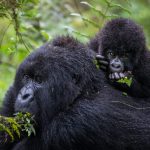
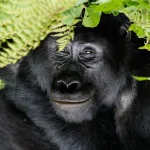
Seeing mountain gorillas in their natural environment is the main attraction of the trek. You may find a family feeding on leaves, resting in the vegetation, grooming one another or moving through the forest.
The silverback is usually the largest adult male in the group. He often plays an important role in protecting and leading the family, although group behaviour varies.
You may also see females carrying infants, young gorillas playing and other members feeding or resting nearby.
The one-hour observation period allows you to watch their natural behaviour without keeping them in one place. You should remain with your ranger group and follow every instruction.
Maintain the required distance from the gorillas and avoid sudden movements, shouting or direct attempts to attract their attention. Do not touch them, even if a young gorilla approaches.
Flash photography is prohibited. If you are using a camera, prepare your settings before the encounter so that you can take photographs without delaying the group or disturbing the animals.
You should also avoid visiting gorillas when you are sick. Respiratory infections can pose a serious risk to these endangered primates, which are vulnerable to some human diseases.
Once the observation period ends, the ranger guides the group back through the forest.
How difficult is gorilla trekking in Bwindi?
Gorilla trekking requires a reasonable level of physical fitness. You do not need to be a professional hiker, but you should be comfortable walking for several hours over uneven and sometimes steep terrain.
The difficulty varies considerably between trekking days. The distance to a gorilla family depends on its movement, feeding locations and nesting area from the previous night.
Rain can make the forest floor slippery, while dense vegetation may slow your progress. Some trails involve steep climbs and descents, and the altitude can affect visitors who are not accustomed to hiking in highland environments.
You can prepare by walking regularly before your trip. Include uphill walks, stair climbing and longer hikes in your training. If possible, practise walking for two to three hours over uneven ground.
During the briefing, inform the ranger team about your fitness level and any mobility concerns. They can consider this when organising trekking groups, although they cannot guarantee a short or easy trek.
A local porter can help carry your backpack and provide physical support on difficult sections. Hiring a porter also provides income to people living around the park.
What should you pack for Bwindi gorilla trekking?
The right clothing and equipment make a considerable difference during a forest trek. Bwindi receives rainfall throughout the year, and temperatures can be cool, especially in the morning and evening.
Wear long trousers and a long-sleeved shirt to protect your skin from nettles, insects and rough vegetation. Choose sturdy hiking boots with good grip and ankle support.
A lightweight waterproof jacket or raincoat is essential because rain can occur even during the drier months. Gardening gloves are useful when holding vegetation for support on steep sections.
Your daypack should contain drinking water, snacks, sunscreen, insect repellent and any personal medication you may need. A walking stick can also help you maintain balance on slippery trails. Rangers or local guides may be able to provide one.
For photography, carry a camera with suitable low-light performance because the forest canopy can make conditions quite dark. A spare battery and a protective bag for your equipment are also useful.
Avoid carrying unnecessary items. A lighter backpack makes walking more comfortable, particularly on steep sections.
Best time to visit Bwindi for gorilla trekking
Bwindi can be visited throughout the year because mountain gorillas remain in the forest regardless of the season. However, some months provide more comfortable trekking conditions than others.
June to September is generally a favourable period. These months are relatively dry in much of southwestern Uganda, making forest trails easier to navigate. They are also popular months for gorilla trekking, so permits and accommodation should be booked early.
December to February offers another useful travel window. Rainfall is generally lower than during the main rainy seasons, and conditions can be suitable for trekking.
March to May and October to November are generally wetter periods. Trails may become muddy, and steep sections can be more difficult to walk. However, the forest is greener, and visitors may find more flexible accommodation options.
The discounted low-season permit offer for April, May and November can make these months attractive to some international travellers. However, the reduced permit price should be weighed against wetter trail conditions and the restrictions attached to discounted bookings.
There is no guarantee of dry weather in any month. Bwindi is a rainforest, and rain can occur even during the main trekking seasons.
Accommodation options around Bwindi
Your accommodation should be close to the sector where your permit is booked. This reduces early-morning driving and helps you arrive at the briefing point on time.
Each sector has different accommodation options, ranging from basic guesthouses to high-end forest lodges.
In Buhoma, visitors can choose from community-run accommodation, mid-range forest lodges and luxury properties overlooking the rainforest. The sector has one of the most established tourism facilities in Bwindi.
Ruhija offers smaller lodges and guesthouses in a cooler highland setting. It is suitable for travellers who prefer a quieter location and want to include birdwatching.
Rushaga has accommodation ranging from budget to luxury, with several properties positioned near the southern trekking headquarters. It is a convenient base for visitors interested in standard gorilla trekking or the habituation experience.
Nkuringo offers lodges with impressive views of the forested hills and valleys. Some properties are located on steep ridges, so check the transfer arrangements to the trekking headquarters.
Book accommodation after confirming your permit sector. The distance between the sectors makes it important to avoid choosing a lodge simply because it has a lower price or attractive photographs.
Other activities to combine with Bwindi gorilla trekking
You can make your visit more rewarding by adding other experiences in southwestern Uganda.
Lake Bunyonyi is one of the most popular extensions. It is known for its scenic islands, terraced hills and peaceful atmosphere. Visitors can enjoy canoeing, boat excursions, birdwatching and relaxation beside the lake.
Lake Mutanda near Kisoro offers beautiful views of the Virunga volcanoes. Activities include canoeing, boat rides and community experiences.
Mgahinga Gorilla National Park is another excellent destination. It offers golden monkey tracking, volcano hiking and opportunities to learn about the Batwa community. Gorilla trekking is also available in Mgahinga, depending on permit availability.
Queen Elizabeth National Park is suitable for travellers who want to combine gorilla trekking with a savannah safari. You can enjoy game drives in the Kasenyi plains, search for tree-climbing lions in Ishasha and take a boat cruise along the Kazinga Channel.
Kibale Forest National Park is another useful extension for visitors interested in chimpanzee tracking. You can combine gorillas and chimpanzees in one Uganda primate safari.
These activities allow you to experience different landscapes and wildlife habitats during one holiday.
Responsible gorilla trekking and conservation
Mountain gorilla conservation depends on careful protection of their habitat, veterinary monitoring, ranger patrols and cooperation with surrounding communities.
Gorilla tourism contributes to these conservation efforts through permit revenue and community-related programmes. The presence of responsible tourism also creates employment for guides, trackers, porters, lodge staff and other local service providers.
Visitors have a responsibility to follow the rules. Do not litter, feed wildlife, touch the gorillas or leave the designated group without permission.
If you feel unwell before the trek, inform your tour operator and the park authorities. Avoiding the transmission of human diseases is an important part of protecting the gorillas.
Consider hiring a local porter. This provides direct income to community members and makes the walk easier if you need assistance with your backpack or balance.
You can also support community tourism activities around Bwindi, including guided village walks, craft purchases and cultural experiences organised by local groups.
Is Bwindi gorilla trekking suitable for families?
Bwindi can be a rewarding destination for families, but the standard minimum age for gorilla trekking is 15 years. Younger children cannot participate in the trek.
Families travelling with teenagers should consider the physical demands of the activity and prepare accordingly. The trek can involve several hours of walking through steep, muddy forest terrain.
Parents should also plan accommodation and road transfers carefully. Long drives from Kampala or Entebbe can be tiring, particularly for younger travellers.
If your family includes children below the minimum trekking age, you can arrange alternative activities for them while eligible family members go trekking. Discuss supervision and activity arrangements with your tour operator before booking.
For families with older teenagers, a gorilla safari can be combined with Lake Bunyonyi, Queen Elizabeth National Park or other destinations that provide a variety of experiences.
Frequently asked questions about Bwindi gorilla trekking
How long does gorilla trekking take in Bwindi?
The trek can take approximately two to seven hours, although the actual duration depends on where the gorilla family is located. Some groups are found relatively quickly, while others require longer walks through the forest.
How long can I stay with the gorillas?
A standard gorilla trekking permit allows one hour with a habituated gorilla family after you locate it. The Gorilla Habituation Experience in Rushaga can allow up to four hours.
How many people can visit one gorilla family?
A maximum of eight tourists can visit one habituated gorilla family per day during standard trekking. This restriction helps reduce disturbance to the animals.
Can I choose the gorilla family I want to visit?
You can select your trekking sector when booking, but the ranger team allocates visitors to a particular family during the morning briefing. The assignment depends on the family’s location and other operational considerations.
Do I need a porter?
A porter is not compulsory, but hiring one is recommended if you want help carrying your backpack or support on difficult sections. Porter fees are paid separately from your permit.
Can I trek gorillas in Bwindi during the rainy season?
Yes. Gorilla trekking continues throughout the year. However, rain can make the forest trails slippery and increase the difficulty of the walk.
Is Bwindi better than Mgahinga for gorilla trekking?
Both parks offer excellent opportunities to see mountain gorillas. Bwindi has four trekking sectors and a wider selection of habituated families, while Mgahinga offers a more compact trekking environment in the Virunga Mountains. Your choice should depend on permit availability, accommodation and your wider itinerary.
Can I visit Bwindi from Kigali?
Yes. You can travel from Kigali through the Cyanika or Katuna border areas, depending on your trekking sector and route. Allow enough time for the road journey and immigration procedures, and confirm that your transport arrangements permit cross-border travel.
What happens if we fail to see gorillas?
Gorilla sightings are highly reliable because experienced trackers monitor the habituated families. However, wildlife sightings can never be guaranteed. Ask Uganda Wildlife Authority or your tour operator to explain the applicable refund and cancellation rules before booking.
Planning your Bwindi gorilla trekking safari in 2027
Bwindi Impenetrable National Park offers one of the most memorable wildlife encounters in Africa. Whether you choose Buhoma, Ruhija, Rushaga or Nkuringo, your experience takes you into a remarkable rainforest where mountain gorillas live in their natural environment.
For a successful 2027 trip, start by selecting your travel dates and confirming permit availability. Choose your sector before booking accommodation, then organise your road transfers or domestic flights. Allow at least one night near the park before trekking so that you can attend the morning briefing without rushing.
If you have additional time, consider combining Bwindi with Queen Elizabeth National Park, Kibale Forest, Lake Bunyonyi or Mgahinga. This gives you a wider experience of Uganda’s wildlife, landscapes and local communities.
The most important part of planning is securing the correct permit and arranging your accommodation near the assigned trekking sector. With these details confirmed, you can prepare for an unforgettable encounter with Uganda’s mountain gorillas.