How gorilla trekking works: A step-by-step guide for first-timers
Gorilla trekking is one of the most memorable wildlife experiences in East Africa. It gives you the opportunity to walk through a tropical rainforest, follow experienced trackers and observe a family of mountain gorillas living in their natural habitat. For first-time visitors, however, the experience can raise several questions. How do you find the gorillas? How difficult is the walk? What happens when you finally meet them? How long can you stay with them, and what should you carry?
Gorilla trekking takes place in Uganda’s Bwindi Impenetrable National Park and Mgahinga Gorilla National Park, Rwanda’s Volcanoes National Park and the Democratic Republic of Congo’s Virunga National Park when tourism operations are available. Each destination has its own landscapes, permit arrangements and trekking procedures, but the general experience follows a similar process.
You do not simply enter the forest and search for gorillas independently. Park authorities organise the activity, experienced trackers locate the gorilla families, and trained ranger guides lead visitors through the forest. Strict rules control how visitors approach and observe the animals.
If you are planning your first gorilla trekking adventure, understanding each stage will help you prepare, know what to expect and enjoy the experience with confidence.
Step 1: Choose your gorilla trekking destination
Your first decision is choosing where you want to see mountain gorillas. Uganda and Rwanda are the main destinations for most international visitors.
Uganda offers gorilla trekking in Bwindi Impenetrable National Park and Mgahinga Gorilla National Park. Bwindi has four main trekking sectors: Buhoma, Ruhija, Rushaga and Nkuringo. Each sector has different gorilla families, accommodation options and access routes. Mgahinga offers a different setting in the Virunga volcanic landscape.
Rwanda offers gorilla trekking in Volcanoes National Park, located in the northern part of the country. The park is part of the Virunga mountain range and is known for its volcanic scenery, bamboo forests and mountain gorillas.
Your choice may depend on your budget, travel schedule, preferred accommodation and other activities you want to include. Uganda generally has a lower standard foreign non-resident gorilla permit price than Rwanda, while Rwanda offers relatively short road transfers from Kigali to Volcanoes National Park.
You should also consider the wider itinerary. Uganda allows you to combine gorilla trekking with chimpanzee tracking in Kibale Forest, wildlife viewing in Queen Elizabeth National Park or a visit to Lake Bunyonyi. Rwanda offers opportunities to combine gorilla trekking with Akagera National Park, Nyungwe National Park and Kigali.
Step 2: Book your gorilla trekking permit
Once you have selected your destination, you need to secure a gorilla trekking permit. This is an official authorisation that allows you to participate in a guided visit to a habituated mountain gorilla family on a specified date.
Permits are limited because authorities restrict the number of visitors allowed to approach each gorilla family. For standard trekking, a maximum of eight visitors can visit one habituated family per day.
In Uganda, the standard foreign non-resident permit is US$800 under the published tariff, while Rwanda’s standard foreign non-resident permit is US$1,500. Other rates apply to eligible residents, African citizens and East African Community citizens. Always confirm the current tariff for your travel date before making payment.
The permit usually includes the guided tracking activity and the one-hour observation period with the gorillas. It does not normally cover your accommodation, international flights, road transfers, meals outside the stated arrangements, porter services or personal expenses.
You should book your permit before confirming non-refundable accommodation and transport. This is especially important during busy travel periods such as June to September, December, January and February.
When booking, provide accurate passport details and confirm the trekking date and location. In Bwindi, you must also pay attention to the sector assigned to your permit because your accommodation and transport arrangements should match that sector.
Keep your permit confirmation and payment documents safe. You will need to present the required documentation during registration before the trek.
Step 3: Arrange your transport and accommodation
Gorilla trekking destinations are located in mountainous and forested regions, away from the main international airports. You should therefore plan your transport and overnight accommodation carefully.
In Uganda, most visitors arrive through Entebbe International Airport and travel by road to Bwindi or Mgahinga. The journey from Kampala or Entebbe to Bwindi can take approximately eight to ten hours, depending on the sector, route, traffic and road conditions.
You can also arrange a domestic flight from Entebbe or Kajjansi to an airstrip serving the Bwindi region. Kihihi and Kisoro are among the airstrips used for access to different trekking areas. A road transfer is still required to reach your lodge and park headquarters.
For Rwanda, visitors normally arrive at Kigali International Airport and travel by road to Volcanoes National Park. The journey to the Kinigi area usually takes around two to three hours, depending on traffic and road conditions.
Your accommodation should be close to the trekking headquarters where you will report for the briefing. In Bwindi, a lodge in Buhoma may be inconvenient if your permit is for Rushaga or Nkuringo. The same principle applies to the other sectors.
Plan to arrive at your destination at least one day before trekking. This gives you time to rest, settle into your accommodation and prepare your equipment. It also reduces the risk of missing the morning briefing because of delays on the road.
Step 4: Prepare your body and equipment
Gorilla trekking requires a reasonable level of physical fitness. You do not need to be an experienced mountaineer, but you should be comfortable walking for several hours over uneven ground.
The terrain can include steep hills, muddy paths, thick vegetation, exposed roots and slippery sections. Some gorilla families stay relatively close to the starting point, while others move deeper into the forest.
You can prepare by walking regularly before your trip. Include uphill walks, stair climbing and hikes over uneven surfaces. Practising for two to three hours at a time can help you become more comfortable with longer trekking days.
Your clothing should protect you from rain, insects and rough vegetation. Wear long trousers, a long-sleeved shirt and sturdy hiking boots with good grip. A waterproof jacket is essential because rain can occur throughout the year in mountain forests.
Gardening gloves are useful when you need to hold vegetation for balance. Carry drinking water, snacks for the trek where permitted, sunscreen, insect repellent and any personal medication you require. A small backpack is suitable for carrying your essentials.
A walking stick can help you maintain balance on steep or muddy sections. Park staff or local guides may be able to provide one. You can also hire a porter to carry your backpack and assist you on difficult parts of the trail.
Step 5: Report to the park headquarters early in the morning
Gorilla trekking normally begins early in the morning. After breakfast, your driver-guide takes you to the designated park headquarters or visitor registration centre.
In Uganda, visitors usually report to their assigned sector headquarters in Bwindi or to the relevant briefing point in Mgahinga. In Rwanda, visitors report to the Volcanoes National Park headquarters at Kinigi.
Arrive at the time specified by your tour operator or park authority. Registration and briefing procedures usually begin around 7:00 to 7:30 in the morning, although exact reporting instructions should be confirmed before your trekking date.
At the headquarters, park staff verify your permit and visitor details. You may also be asked to present your passport or identification documents.
This is an important stage because the authorities need to confirm that every visitor has a valid permit for the correct date and destination.
You will then receive instructions about the day’s activity and wait for the ranger team to organise the trekking groups.
Step 6: Attend the ranger briefing
Before entering the forest, you attend a briefing led by experienced park rangers. This is where you learn how the trek works and what you must do when you encounter the gorillas.
The ranger explains the behaviour of mountain gorillas, the forest environment, safety procedures and conservation rules. You will also learn how to behave if a gorilla approaches your group or displays signs of agitation.
You must understand the rules before setting off. These include maintaining the required distance from the gorillas, keeping your voice low, avoiding sudden movements and never attempting to touch the animals.
You will also be reminded not to eat, drink or smoke when close to the gorillas. Flash photography is prohibited, and you must not leave rubbish in the forest.
Visitors with a cold, flu, cough or another contagious illness should not trek because mountain gorillas are vulnerable to human diseases. Inform the park staff if you feel unwell rather than hiding your symptoms.
The briefing also provides an opportunity to ask questions about the terrain, expected walking conditions and the equipment you may need.
Step 7: Get assigned to a gorilla family
After the briefing, visitors are organised into small groups and assigned to available habituated gorilla families.
In Uganda and Rwanda, a maximum of eight tourists can visit one habituated gorilla family per day during standard trekking. This restriction helps limit human disturbance and reduces the risk of disease transmission.
The ranger team considers the location of the gorilla families and the arrangements for the day when allocating visitors. Your physical ability may also be considered when assigning groups, although you cannot be guaranteed a short or easy trek.
Some gorilla families may be closer to the starting point, while others may be deeper in the forest. The trackers provide information about the animals’ movements, helping rangers organise the day’s routes.
If you have concerns about your fitness or mobility, explain them to the ranger before the trek begins. Be realistic about your abilities because the terrain can be demanding.
Once the groups have been organised, you receive final instructions and prepare to enter the forest.
Step 8: Enter the forest with your ranger guide
This is where the actual trekking begins. You follow your ranger guide into the forest, walking along established trails where possible and navigating vegetation when necessary.
The experience can feel different from an ordinary nature walk. Bwindi, for example, has dense vegetation, steep slopes and thick undergrowth. In Volcanoes National Park, some routes pass through bamboo forest and montane vegetation on the slopes of the Virunga volcanoes.
Your ranger sets the walking pace and decides when the group should stop for a rest. You should remain together and avoid walking ahead or leaving the designated route.
Trackers often move ahead of the visitor group to locate the gorilla family. They monitor the animals’ movements and communicate with the ranger guides using radios.
The trackers know the gorilla families and often have information about where they nested the previous evening. They use this knowledge, together with fresh signs such as feeding remains, footprints and vegetation disturbance, to find the animals.
The length of the trek depends on how far the gorillas have moved. Some visitors find their assigned family after a relatively short walk, while others spend several hours hiking.
The trek may take two to seven hours or longer in some circumstances. You should therefore avoid making plans that require you to return to your lodge at a specific early time.
Step 9: Follow the trackers until the gorillas are located
As you move through the forest, your ranger receives updates from the trackers. The group may change direction, climb a hill or follow a different trail depending on the latest information.
You may notice feeding remains, broken branches, nests and other signs that gorillas have recently passed through an area. These clues help trackers understand the family’s movements.
The search can be physically demanding, especially when the forest is wet or the ground is steep. Take your time, drink water during appropriate breaks and follow the ranger’s instructions.
Do not become discouraged if the trek takes longer than expected. The gorillas move freely through their habitat, and the trekking team cannot control where they choose to spend the day.
When the trackers locate the family, they inform the ranger guide. The group then approaches carefully, following the instructions given by the ranger.
Before reaching the gorillas, you may be asked to leave your backpack or walking stick with a porter or at a designated point. Keep your camera and any permitted equipment ready.
Step 10: Meet the mountain gorillas
This is the moment most visitors look forward to. After following the trackers through the forest, you finally come face to face with a family of mountain gorillas.
The first sighting can be emotional, especially for people who have spent years hoping to see these endangered primates. You may find the family feeding, resting, grooming or moving through the vegetation.
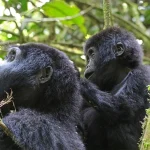
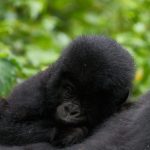
A silverback may sit nearby, watching the surroundings while other members of the group interact. You may also see females caring for infants and young gorillas playing among the trees.
The ranger will position the group at a suitable viewing point and explain how to behave. Maintain the required minimum distance, commonly seven metres under current guidance, and follow any stricter instructions given by your ranger.
You should not move towards a gorilla to obtain a better photograph. If an animal approaches, remain calm and follow the ranger’s directions. Do not reach out or attempt to touch it.
Keep your voice low and avoid sudden movements. Do not stare directly at a gorilla for prolonged periods, and never try to attract its attention by making noises.
The animals are wild, even though they are habituated to the presence of carefully managed visitor groups. Their behaviour can change, and the ranger may adjust the viewing position or end the encounter early if necessary.
Step 11: Spend one hour observing the gorilla family
A standard gorilla trekking permit allows you to spend a maximum of one hour with the habituated gorilla family after you locate it.
During this time, you can observe the animals and take photographs without flash. You may see the silverback resting, juveniles playing, females feeding and other members grooming one another.
The behaviour of each family is different. Some gorillas remain in one place for much of the observation period, while others move through the forest, requiring visitors to adjust their position under the ranger’s guidance.
The one-hour limit exists to reduce disturbance and protect the animals from excessive human exposure. It also helps manage the risk of transmitting diseases between people and gorillas.
Do not eat, drink or smoke during the encounter. If you need to cough or sneeze, cover your mouth and nose and turn away from the animals.
The ranger controls the timing of the visit. When the observation period ends, you leave the gorillas and begin the return journey.
The Gorilla Habituation Experience in Uganda is different from standard trekking. It can allow up to four hours with a gorilla family undergoing habituation, subject to the relevant permit and operational rules.
Step 12: Leave the forest and return to the starting point
After the observation period, your ranger guides the group away from the gorillas. You retrace the route or follow another suitable path depending on the location of the family and the terrain.
The return journey may be easier or more challenging than the walk into the forest. You may need to climb steep slopes, cross muddy sections or walk through dense vegetation.
Take your time and use your walking stick where necessary. If you hired a porter, they can help you with your backpack and provide support on difficult sections.
Once you reach the starting point, you return to the park headquarters or your waiting vehicle. Depending on the destination, you may receive a gorilla trekking certificate to recognise your participation.
Your driver-guide then takes you back to your lodge. Most visitors spend the rest of the day relaxing because the trek can be tiring.
Step 13: Follow the gorilla trekking rules
The rules are an essential part of the experience. They protect visitors, mountain gorillas and the wider conservation programme.
The main rules include:
- Do not trek if you have a cold, flu or another contagious illness.
- Keep the required distance from the gorillas and follow ranger instructions.
- Do not touch the gorillas, even if a young animal approaches.
- Keep your voice low and avoid sudden movements.
- Do not use flash photography.
- Do not eat, drink or smoke near the gorilla family.
- Do not leave rubbish in the forest.
- Stay with your ranger group throughout the activity.
- Cover your mouth and turn away if you cough or sneeze.
- Do not attempt to feed or attract the gorillas.
If a gorilla approaches your group, do not run or try to move towards it. Remain calm, avoid direct eye contact and follow the ranger’s instructions. Rangers are trained to manage encounters and understand the behaviour of the habituated families.
You should also avoid making loud noises or imitating gorilla calls. Respecting the animals’ space helps keep the encounter calm.
How difficult is gorilla trekking for first-timers?
Gorilla trekking is manageable for many visitors with reasonable fitness, but the difficulty varies from one trek to another.
The terrain in Bwindi can be particularly challenging because of its steep hills, thick vegetation and muddy trails. Some routes in Volcanoes National Park involve climbing volcanic slopes, while Mgahinga also has mountainous terrain.
You may walk for several hours before finding the gorillas. The forest can be humid, and rain can make the ground slippery.
You do not need to train like a professional athlete, but regular walking before your trip is useful. Practise climbing hills, walking on uneven surfaces and maintaining a steady pace over longer distances.
If you are concerned about your fitness, discuss it with your tour operator and ranger team. Hiring a porter is a practical option for visitors who want help carrying their equipment or maintaining balance.
There is no guarantee that a particular gorilla family will be found close to the starting point. Prepare for a full day outdoors and avoid judging the experience by the walking distance alone.
What should first-time gorilla trekkers wear?
Your clothing should be practical and suitable for wet, uneven forest terrain.
Wear long trousers and long-sleeved clothing to protect your arms and legs from vegetation and insects. Choose comfortable hiking boots with strong grip and ankle support.
Carry a waterproof jacket because rain can occur even during the drier months. Gardening gloves are useful when holding branches or vegetation for balance.
A small backpack should contain drinking water, snacks for the walking period, sunscreen, insect repellent and personal medication. A camera with good low-light performance is useful because the forest canopy can make photography difficult.
Avoid wearing expensive or delicate clothing that could be damaged by mud, water or vegetation. You should also avoid carrying unnecessary equipment that makes the trek harder.
Can children participate in gorilla trekking?
The minimum age for standard mountain gorilla trekking in Uganda and Rwanda is 15 years. Children below this age cannot participate in the activity.
The age restriction helps protect gorillas and ensures that visitors can understand and follow the trekking rules. The walk may involve long periods of physical activity, and young children may struggle with the terrain and instructions.
Families travelling with younger children can arrange alternative activities while eligible family members trek. These may include community visits, nature walks or cultural experiences, depending on the destination.
There is no general upper age limit for gorilla trekking. Older visitors can participate if they are physically able to manage the terrain, although it is important to discuss any mobility concerns before booking.
What happens if you do not find the gorillas?
Mountain gorillas are closely monitored by experienced trackers, and sightings are generally very reliable. However, they are wild animals that move freely through the forest, so no wildlife encounter can be guaranteed.
Trackers begin locating the families before visitors enter the forest and communicate their findings to the ranger guides. This makes it easier for the trekking team to follow the animals.
Occasionally, difficult weather, unexpected movements or other circumstances can make a family harder to locate. If a group fails to find the gorillas, the park authority will apply its own procedures and permit conditions.
Refunds or alternative tracking arrangements depend on the destination and the circumstances of the unsuccessful trek. Confirm the applicable policy before booking rather than assuming that every unsuccessful encounter qualifies for a refund.
How to make your first gorilla trekking experience easier
Preparation makes a significant difference, especially if you have never hiked in a tropical forest.
Arrive at the park at least one day before your trek. This gives you time to rest after travelling and reduces the risk of arriving late for the morning briefing.
Choose accommodation close to your assigned trekking sector. This saves time and reduces early-morning driving.
Wear your hiking boots before travelling so that they are comfortable and do not cause blisters. Carry a waterproof jacket, drinking water and a small backpack.
Hire a porter if you need assistance. Porters provide valuable support and earn income from tourism, making their services beneficial to both visitors and local communities.
Listen carefully to the rangers and do not rush through the forest. Take breaks when necessary, maintain a steady pace and communicate if you experience difficulty.
Finally, prepare yourself for a flexible day. The location of the gorillas determines the route, and the trekking team may need to spend several hours searching before finding the family.
Frequently asked questions about how gorilla trekking works
How long does a gorilla trek take?
The walking portion can take approximately two to seven hours, although some treks are shorter or longer. The duration depends on where the gorilla family is located and the terrain you must cross.
How long can I stay with the gorillas?
A standard gorilla trekking permit allows a maximum of one hour with a habituated gorilla family after you locate it. Uganda’s Gorilla Habituation Experience can allow up to four hours.
Do I need to carry food and water?
You should carry enough drinking water and snacks for the trek. Follow the ranger’s instructions about when and where you can eat or drink. Eating and drinking are not allowed when you are close to the gorillas.
Can I take photographs during gorilla trekking?
Yes. You can take photographs during the encounter, but flash photography is prohibited. A camera with good low-light performance is useful in the forest.
Do I need to be very fit?
You need reasonable fitness and should be comfortable walking over uneven terrain. Some treks are demanding because of steep slopes, mud and thick vegetation. Regular walking and hill training before your trip can help.
Can I touch a mountain gorilla?
No. You must never attempt to touch a gorilla. Even if a young gorilla approaches, remain calm and follow the ranger’s instructions.
What happens if a gorilla charges?
Stay calm, do not run and follow the ranger’s instructions immediately. The ranger understands gorilla behaviour and will guide the group on how to respond.
Can I trek gorillas throughout the year?
Yes. Gorilla trekking is available throughout the year in Uganda and Rwanda, subject to permit availability and park operations. The drier months generally provide easier walking conditions, but rain can occur at any time.
Is gorilla trekking safe for first-time visitors?
Gorilla trekking is a carefully managed activity led by trained rangers and guides. Following their instructions, respecting the animals and observing the safety rules help make the experience safe and responsible.
Your first gorilla trekking experience
Gorilla trekking follows an organised process that begins with choosing a destination and securing a permit. You then travel to the park, attend a morning briefing, join a ranger-led group and follow trackers into the forest. Once the gorillas are located, you spend up to one hour observing the family before returning to the starting point.
For first-time visitors, the experience can be physically demanding, but you do not need professional hiking skills. Proper preparation, suitable clothing, a reliable guide and a willingness to follow instructions will help you enjoy the trek.
The most memorable part is finally seeing the mountain gorillas in their natural habitat. Watching a silverback, a mother caring for her infant or young gorillas playing in the forest gives you a rare opportunity to understand these remarkable animals beyond photographs and documentaries.
With careful planning and responsible behaviour, your first gorilla trekking adventure can become one of the most rewarding wildlife experiences in East Africa.