What Wildlife Will You See in Tarangire National Park?
Tarangire National Park is one of Tanzania’s best destinations for watching elephants, giraffes, zebras, buffaloes and other African wildlife in their natural habitats. Located in northern Tanzania, the park is particularly famous for its large elephant herds and wildlife concentrations around the Tarangire River during the dry season. Visitors can also encounter lions, antelopes, numerous bird species and occasionally harder-to-find predators. This Tarangire National Park wildlife guide explains which animals you are most likely to see, where to look for them, how seasons influence sightings and what to expect during your safari.
Why Tarangire National Park Is Famous for Wildlife
Tarangire National Park covers approximately 2,850 square kilometres of protected land in northern Tanzania.
Its habitats include open grasslands, acacia woodlands, ancient baobab trees, river valleys and seasonal swamps.
These different environments support a wide variety of wildlife.
The Tarangire River is especially important because it provides water for many animals during the dry season.
As seasonal water sources disappear across the surrounding landscapes, elephants, zebras, wildebeest and other animals move towards the river.
This creates opportunities to observe several species during the same game drive.
However, wildlife distribution changes with rainfall, vegetation and water availability.
Animals You Can See in Tarangire National Park
Tarangire supports numerous mammal species, although some are easier to observe than others.
The following table provides a practical overview of the wildlife visitors may encounter.
| Animal | General Sighting Expectation | Where to Look |
|---|---|---|
| African elephants | Common, especially during the dry season | River valleys and woodlands |
| Giraffes | Common | Open woodland and grassland |
| Zebras | Common | Grasslands and water sources |
| African buffaloes | Common in suitable areas | Grassland and river habitats |
| Wildebeest | Seasonal concentrations | Open plains and river areas |
| Impalas | Common | Woodland edges |
| Lions | Possible, but unpredictable | Grasslands and shaded areas |
| Leopards | Difficult to find | Trees and woodland |
| Cheetahs | Occasional sightings | Open landscapes |
| Spotted hyenas | Possible | Grasslands and other suitable habitats |
| Greater kudus | Uncommon | Woodland |
| Fringe-eared oryx | Rarely encountered | Suitable dry grassland habitats |
These descriptions are general expectations, not guaranteed sighting probabilities.
1. African Elephants in Tarangire National Park
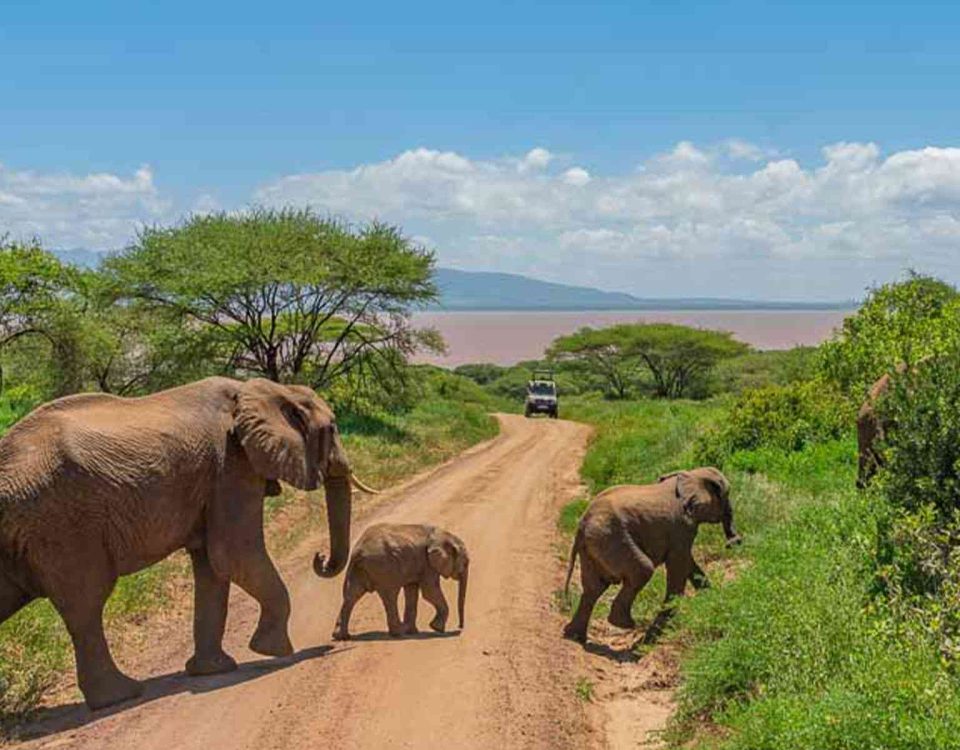
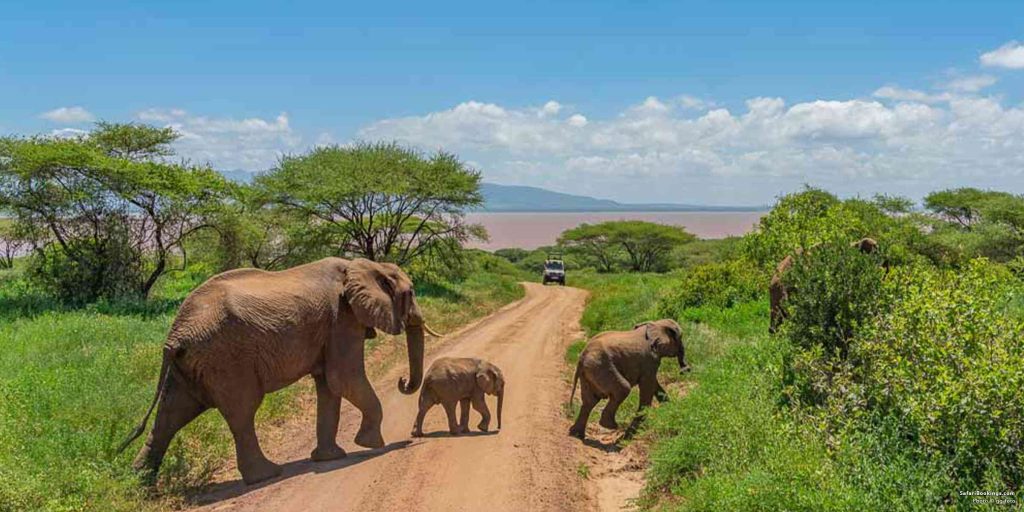
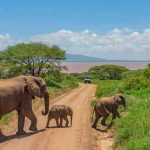
Elephants are the main wildlife attraction in Tarangire.
The park is recognised for supporting one of Tanzania’s most important elephant populations.
During the dry season, visitors may encounter large family groups travelling between feeding areas and water sources.
You might observe elephants drinking, bathing, feeding or resting beneath trees.
Young elephants often remain close to adults, particularly when family groups move through exposed areas.
Where to See Elephants
The Tarangire River and surrounding woodland are important elephant habitats.
Elephants also move through areas containing mature baobab trees.
During dry conditions, they may gather near remaining water sources.
A knowledgeable guide can help locate suitable viewing areas while maintaining safe distances.
Best Time to See Elephants
June to October is generally the strongest period for observing large elephant concentrations.
However, elephants remain present in Tarangire throughout the year.
Their distribution becomes more widespread when rainfall provides water across additional parts of the landscape.
Elephant Photography Tips
Use a camera lens that allows you to photograph animals without approaching them.
Wait for natural behaviour rather than encouraging movement.
Never position your vehicle between elephants and their calves or block access to water.
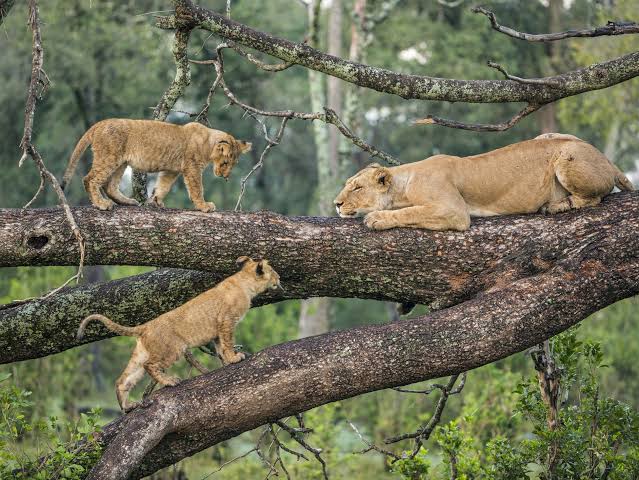
2. Lions in Tarangire National Park
Lions are among Tarangire’s important predators.
Visitors may see them resting beneath trees, moving through grasslands or watching grazing animals.
Like other large predators, lions often become less active during the hottest hours.
Early morning and late afternoon can therefore offer useful opportunities for observation.
Where Are Lions Usually Found?
Lions can occur in several habitats, including open grassland, woodland edges and areas where prey animals gather.
Their exact locations change regularly.
Your guide may look for signs such as alarm calls, animal tracks or unusual behaviour among grazing animals.
A lion sighting is always exciting, but it cannot be guaranteed.
3. Giraffes in Tarangire
The Maasai giraffe is another recognisable animal in Tarangire National Park.
Giraffes commonly browse on leaves from acacia trees and other suitable vegetation.
They can often be observed walking through open woodland or feeding near the edges of grasslands.
What Makes Giraffe Sightings Interesting?
Giraffes provide excellent opportunities to observe feeding behaviour.
Their long necks allow them to reach vegetation above the feeding height of many other herbivores.
You may encounter individuals, smaller groups or females accompanied by calves.
For photography, look for opportunities to include the surrounding baobab trees or woodland in your pictures.
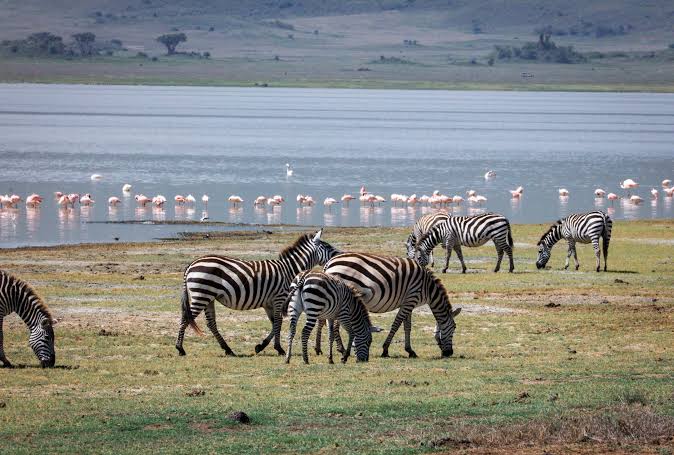
4. Zebras and Wildebeest
Zebras and wildebeest are important grazing animals in Tarangire.
They are especially associated with seasonal movements across the wider Tarangire landscape.
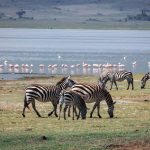
During the dry season, groups may gather around available water.
Plains Zebras
Plains zebras are frequently encountered in open grassland habitats.
They may graze alongside wildebeest or other herbivores.
Visitors can sometimes observe social interactions, including grooming and disputes between individuals.
Wildebeest
Wildebeest move according to rainfall and available grazing.
Large concentrations can occur during suitable dry-season conditions.
However, their movements in Tarangire should not be confused with the famous Serengeti-Mara migration.
These are different wildlife movement patterns.
5. African Buffaloes
African buffaloes are among the large herbivores found in Tarangire.
They may be observed grazing in groups or resting near water.
Buffalo herds can vary considerably in size.
Some groups include females and young animals, while older males may be encountered separately.
Buffalo Viewing Safety
Buffaloes are powerful wild animals and can become dangerous when disturbed.
Remain inside your safari vehicle during ordinary game drives.
Never approach buffaloes on foot without an authorised guide and appropriate safety arrangements.
6. Leopards in Tarangire National Park
Leopards occur in Tarangire but are generally difficult to locate.
Their spotted coats provide excellent camouflage in woodland habitats.
They are also solitary animals, which makes sightings unpredictable.
Where to Look for Leopards
Leopards may rest in trees or move through woodland and riverine vegetation.
Your guide may examine suitable branches and shaded areas while driving.
Early morning can provide useful opportunities, but there is no reliable location where sightings are guaranteed.
If you see a leopard, remain quiet and allow the animal to behave naturally.
7. Cheetahs in Tarangire
Cheetahs are present in Tarangire, although sightings are less common than encounters with elephants, zebras or giraffes.
They generally favour suitable open habitats where they can observe prey.
Their movements depend on hunting opportunities and disturbance.
How to Improve Your Chances
Spend sufficient time exploring open areas with an experienced guide.
A longer safari gives you more opportunities to encounter animals that are difficult to find.
However, visitors should never expect every game drive to produce a cheetah sighting.
8. Spotted Hyenas and Other Carnivores
Spotted hyenas are among the predators that can be encountered in Tarangire.
They may travel across grasslands, rest near denning areas or search for food.
Hyenas are active hunters as well as scavengers.
Smaller carnivores, including mongooses and jackals, may also be seen in suitable habitats.
These animals are easy to overlook when visitors focus entirely on lions and elephants.
Ask your guide to identify smaller mammals whenever you encounter them.
9. Antelopes in Tarangire National Park
Tarangire supports several antelope species.
Their appearance, preferred habitats and behaviour vary.
Impalas
Impalas are among the more frequently encountered antelopes.
They often occupy woodland edges and areas with suitable grazing or browsing vegetation.
Visitors may observe groups of females, young animals and territorial males.
Waterbucks
Waterbucks are commonly associated with habitats near water.
They have distinctive markings and relatively large bodies.
Look for them around suitable riverine and wetland areas.
Elands
Elands are among Africa’s largest antelopes.
Despite their size, they can be surprisingly difficult to approach.
They may be encountered in grasslands and woodland habitats.
Greater Kudus
Greater kudus are especially attractive because of their markings and the impressive spiral horns carried by mature males.
They prefer suitable wooded habitats and are less predictable to encounter.
Fringe-Eared Oryx
The fringe-eared oryx is another notable antelope associated with northern Tanzania’s dry landscapes.
Sightings are uncommon, making an encounter particularly rewarding for wildlife enthusiasts.
Birdlife in Tarangire National Park
Tarangire is also a rewarding destination for birdwatching.
Its woodlands, grasslands, swamps and river habitats attract many different birds.
Visitors interested in bird photography can find suitable opportunities throughout the year.
Birds Commonly Sought by Visitors
Notable species include:
- Masai ostriches
- Yellow-collared lovebirds
- Kori bustards
- Secretarybirds
- Lilac-breasted rollers
- Various hornbills
- Eagles
- Vultures
- Storks
- Weaverbirds
Not every species will appear during every game drive.
Best Time for Birdwatching
Birdwatching is possible throughout the year.
The wetter months can provide additional opportunities because vegetation becomes greener and some seasonal birds are present.
However, rainfall can make certain tracks difficult to access.
Carry binoculars if you want to identify birds at a distance.
Where to See Wildlife in Tarangire National Park
Different areas of Tarangire support different wildlife habitats.
Tarangire River
The river is one of the most important wildlife-viewing areas.
During the dry season, elephants and other animals may gather around remaining water.
Predators can also occur in the surrounding landscape.
Open Grasslands
Grassland habitats provide opportunities to observe zebras, wildebeest, giraffes and other grazing animals.
They are also suitable places to look for certain predators.
Baobab Woodlands
Woodland areas are particularly attractive for elephant viewing and landscape photography.
You may also encounter giraffes, antelopes and birds.
Seasonal Swamps
Swamp habitats support various birds and other wildlife.
Accessibility depends on seasonal water levels and park road conditions.
Your guide should select routes that are open and appropriate for the conditions.
Best Season for Tarangire Wildlife Viewing
Wildlife viewing changes throughout the year.
| Season | Months | General Wildlife Conditions |
|---|---|---|
| Main dry season | June–October | Animals often concentrate near permanent water |
| Short rains | November–December | Wildlife begins spreading into greener areas |
| Relatively dry period | January–February | Good viewing remains possible |
| Main rainy season | March–May | Wildlife becomes more dispersed |
Dry-Season Wildlife Viewing
June to October is generally the preferred period for seeing large numbers of animals.
Water availability becomes increasingly important, particularly towards the later dry-season months.
Elephants, buffaloes, zebras and wildebeest may gather near the river.
Green-Season Wildlife Viewing
During wetter months, vegetation becomes greener and water is more widely available.
Animals may spread into surrounding habitats.
Although large gatherings can be less predictable, birdwatching and landscape photography remain rewarding.
How Many Days Do You Need to See Wildlife?
A one-day visit can provide enjoyable wildlife encounters.
However, two or three days allow more time to explore different habitats.
| Safari Duration | What to Expect |
|---|---|
| 1 day | Opportunities to see common wildlife |
| 2 days | More game drives and varied habitats |
| 3 days | Better flexibility for photography and difficult-to-find species |
| 4 days or more | Slower wildlife observation and specialist interests |
Longer visits improve your opportunities to encounter different species, but they cannot guarantee particular sightings.
Practical Tips for Wildlife Viewing
Start Early
Morning game drives often take place during cooler conditions when animals may be more active.
Be Patient
Wildlife observation requires patience.
Sometimes the most interesting moments involve watching ordinary behaviour rather than searching constantly for rare predators.
Carry Binoculars
Binoculars are useful for identifying birds and observing animals at a distance.
Respect Wildlife
Never feed animals, make loud noises to attract attention or leave your vehicle in unauthorised locations.
Choose an Experienced Guide
A knowledgeable guide can explain animal behaviour and help you understand the different habitats.
Combining Tarangire With Other Wildlife Destinations
Tarangire fits naturally into a longer northern Tanzania safari.
You can combine it with Lake Manyara National Park for varied landscapes and additional birdwatching opportunities.
Ngorongoro Crater offers the chance to observe a different collection of wildlife in a distinctive volcanic setting.
Serengeti National Park is suitable for travellers interested in extensive grasslands and major wildlife populations.
A carefully planned itinerary allows enough time for travel and meaningful game drives at each destination.
Frequently Asked Questions
What Animals Are Most Common in Tarangire?
Elephants, giraffes, zebras, impalas and several other grazing animals are regularly encountered. Actual sightings depend on location and season.
Can You See Lions in Tarangire?
Yes. Lions live in Tarangire National Park, although sightings cannot be guaranteed.
Are There Leopards in Tarangire?
Yes. Leopards occur in the park but can be difficult to locate because they are solitary and well camouflaged.
Can You See the Big Five in Tarangire?
Tarangire is particularly well known for elephants, lions, buffaloes and occasional leopards. It is not a reliable destination for rhinoceros viewing, so visitors should not expect to complete the Big Five there.
What Is the Best Month for Wildlife?
The main dry season, particularly July to October, often provides strong wildlife-viewing opportunities around available water sources.
Is Tarangire Good for Birdwatching?
Yes. The park supports numerous bird species across its varied habitats.
Tarangire National Park offers some of northern Tanzania’s most rewarding wildlife experiences, particularly for travellers interested in elephants and large herbivores.
Its river valleys, open grasslands, baobab woodlands and seasonal swamps support a rich variety of mammals and birds.
Although predators and rare species can be difficult to find, patient game drives provide opportunities to observe natural wildlife behaviour.
For the best experience, allow at least two days, travel with a knowledgeable guide and plan your visit around the animals you most want to see.