Exploring Lake Manyara National Park: A Complete Visitor’s Guide
Lake Manyara National Park is one of Tanzania’s most attractive safari destinations, known for its tree-climbing lions, elephants, flamingos and beautiful Great Rift Valley scenery. Located in northern Tanzania, the park combines groundwater forests, open grasslands, wetlands and a shallow alkaline lake. Visitors can enjoy wildlife game drives, birdwatching, guided walks and scenic viewpoints. This Lake Manyara National Park guide explains what you can see, the best time to visit, available activities, accommodation options and practical information for planning your safari.
Where Is Lake Manyara National Park?
Lake Manyara National Park lies near Mto wa Mbu town, approximately 120 kilometres southwest of Arusha.
The park covers around 648.7 square kilometres, including the lake and surrounding protected landscapes.
Its location makes it convenient for travellers exploring Tanzania’s northern safari circuit.
You can combine Lake Manyara with Tarangire National Park, Ngorongoro Conservation Area and Serengeti National Park.
Distance and Travel Time
| Starting Point | Approximate Driving Time |
|---|---|
| Arusha | 2–2.5 hours |
| Mto wa Mbu | 10–20 minutes |
| Karatu | 30–60 minutes |
| Tarangire National Park | 1–2 hours |
| Ngorongoro Conservation Area entrance | 1–1.5 hours |
These times depend on traffic, road conditions and your departure point.
What Makes Lake Manyara Special?
Lake Manyara contains several habitats within a relatively compact area.
The northern entrance leads into a dense groundwater forest with tall trees and shaded tracks.
Beyond the forest, visitors encounter open woodland, grasslands, wetlands and lake scenery.
The Great Rift Valley escarpment rises above the park, providing an impressive natural background.
This variety supports different animals and birds, making Lake Manyara particularly suitable for travellers interested in nature photography.
Wildlife in Lake Manyara National Park
Lake Manyara supports elephants, giraffes, buffaloes, hippos, baboons, monkeys and several antelope species.
However, animal distribution changes with rainfall, vegetation and available water.
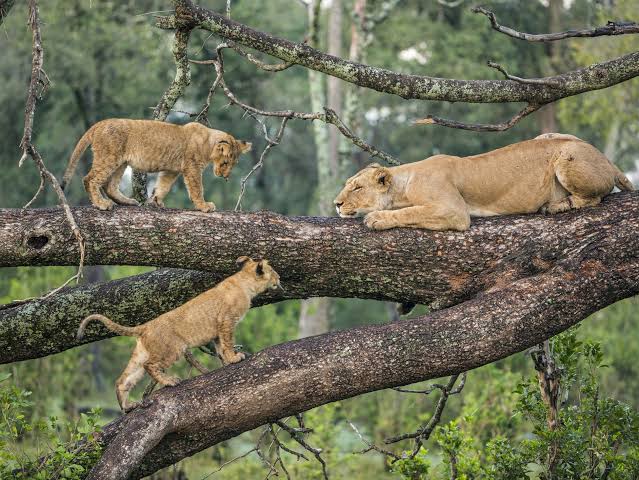
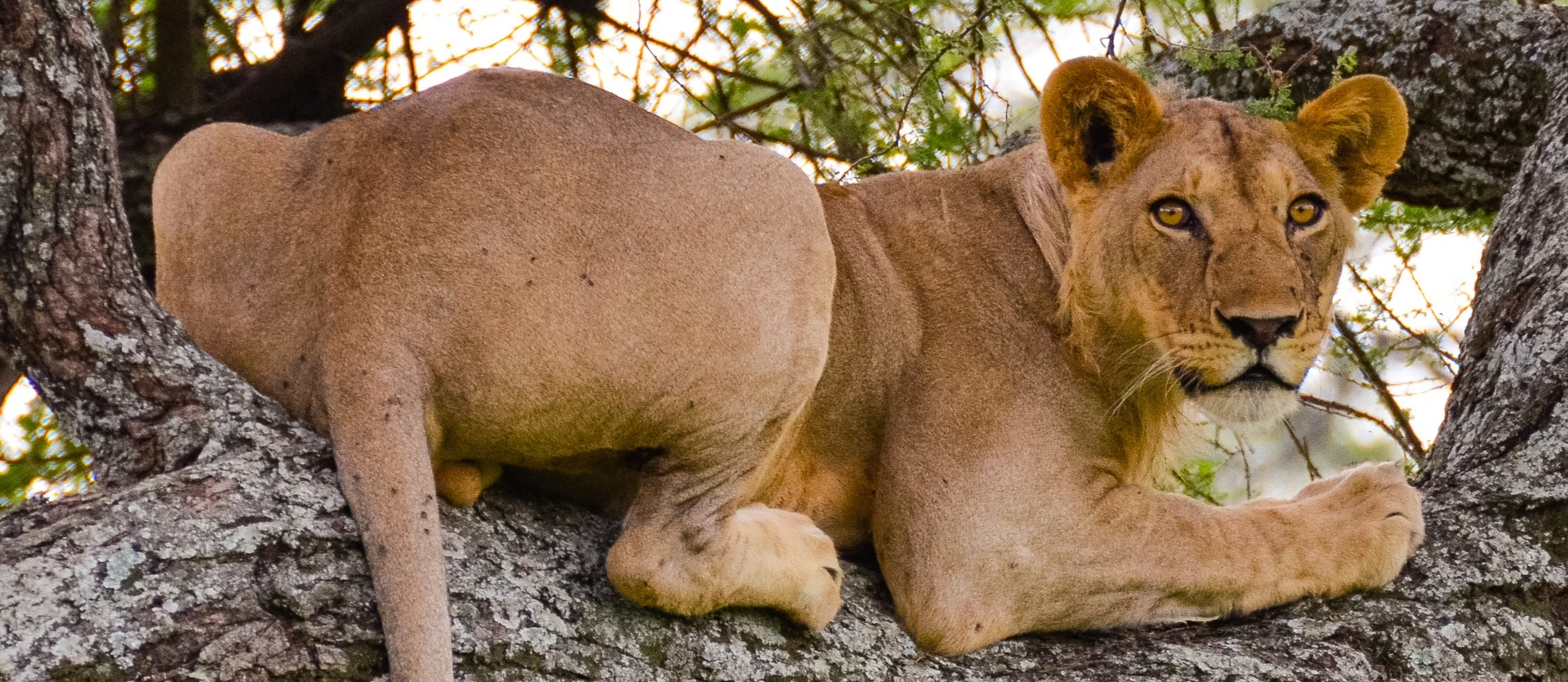
Tree-Climbing Lions
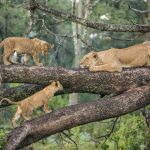
Lake Manyara is famous for lions that occasionally rest in trees.
These animals may climb onto large branches, particularly in suitable woodland habitats.
Although the behaviour is well documented, sightings are unpredictable.
Visitors should not expect to find tree-climbing lions during every game drive.
Your guide may examine suitable trees and surrounding areas, but patience is important.
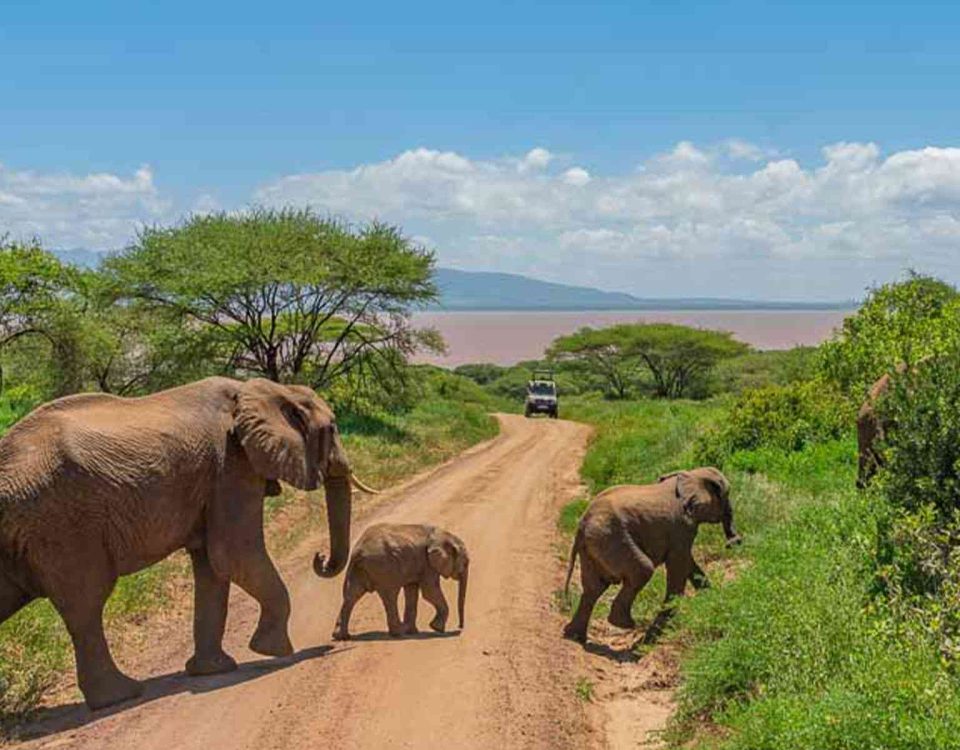
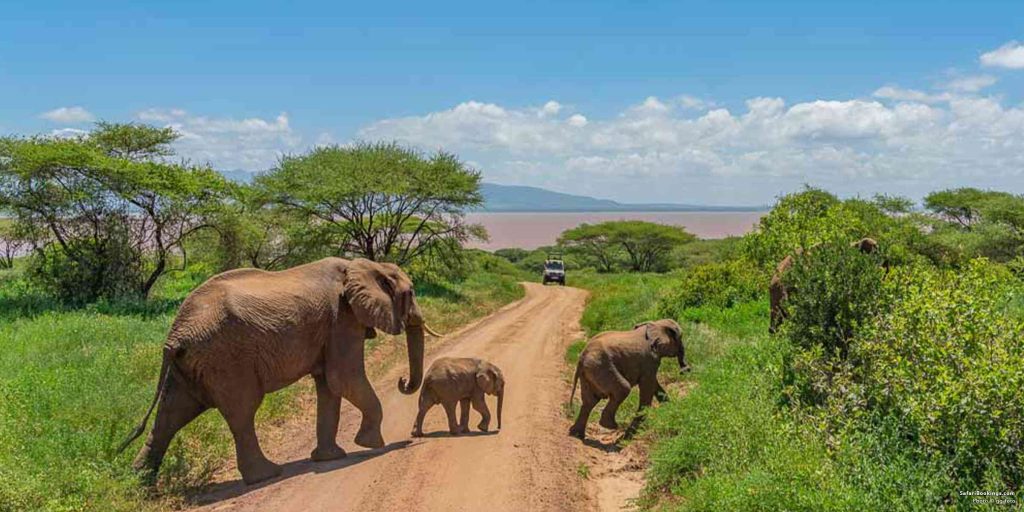
Elephants
Elephants are among the park’s main attractions.
They often move through woodland and forest habitats, feeding on vegetation or travelling between suitable areas.
Visitors may encounter individuals or family groups.
Because some sections contain dense vegetation, elephants can occasionally appear close to safari vehicles.
Always follow your guide’s instructions and maintain a safe distance.
Giraffes and Buffaloes
Giraffes browse on trees in woodland and open habitats.
Their height and distinctive markings make them easy to recognise.
African buffaloes may be seen grazing in groups near grasslands and wetlands.
Both species provide interesting photography opportunities.
Hippos
Hippos inhabit suitable pools and wetland environments.
They spend much of the day in water and may become active on land during cooler periods.
Observe hippos only from authorised viewing areas.
Baboons and Blue Monkeys
Large troops of olive baboons are commonly associated with Lake Manyara.
Visitors often encounter them near the forest and park roads.
Blue monkeys also inhabit the groundwater forest.
You may observe feeding, grooming and other social behaviour.
Never feed primates or leave food accessible.
Birdwatching at Lake Manyara
Lake Manyara is a rewarding destination for birdwatching.
Its forests, grasslands, wetlands and alkaline lake support many bird species.
Visitors may encounter flamingos, pelicans, herons, storks, kingfishers and various birds of prey.
Flamingos at Lake Manyara
Flamingos are among the lake’s best-known attractions.
Greater and lesser flamingos can occur along suitable sections of the shoreline.
However, their numbers change according to water levels, salinity and food availability.
Large concentrations are possible, but they cannot be guaranteed.
If flamingo photography is your main interest, ask your safari operator about recent sightings.
Best Time for Birdwatching
Early morning generally provides comfortable temperatures and favourable lighting.
The wetter months can be particularly interesting because vegetation becomes greener and seasonal birds may be present.
Carry binoculars to observe birds from a suitable distance.
Main Attractions in Lake Manyara National Park
Groundwater Forest
The groundwater forest is one of the park’s most distinctive habitats.
Freshwater springs support tall trees and dense vegetation.
Elephants, baboons, monkeys and forest birds may be encountered here.
Great Rift Valley Escarpment
The escarpment creates impressive views across the surrounding landscape.
Its cliffs and highlands provide an attractive background for photographs.
Maji Moto Hot Springs
Maji Moto is a geothermal attraction within the park.
The hot springs reflect the geological activity associated with the Great Rift Valley.
Visitors should remain on designated paths and avoid entering the hot water.
Lake Manyara Shoreline
The lake supports waterbirds and surrounding wetland habitats.
Its appearance changes with seasonal rainfall.
Access to particular viewing areas depends on water levels and park conditions.
Things to Do in Lake Manyara National Park
Wildlife Game Drives
Game drives are the main visitor activity.
You explore designated park roads in a safari vehicle with a professional guide.
Morning drives can be particularly rewarding because temperatures are generally cooler.
Canopy Walkway
Lake Manyara has an elevated forest canopy walkway near the main entrance.
It allows visitors to experience the forest from a different perspective.
You may observe vegetation, birds and smaller wildlife.
Check availability, safety requirements and current charges before booking.
Guided Walking Safaris
Authorised guided walks may be available through approved arrangements.
These activities focus on plants, animal tracks and smaller details of the natural environment.
Walking must follow park safety regulations.
Canoeing
Canoeing may be offered when water levels and environmental conditions permit.
It is not available under all circumstances.
Confirm availability before including it in your itinerary.
Birdwatching and Photography
Specialist birdwatching excursions can help visitors identify different species.
Photographers may particularly enjoy the combination of forest, wetlands and escarpment scenery.
Best Time to Visit Lake Manyara
Lake Manyara can be visited throughout the year, although weather conditions affect activities and wildlife viewing.
| Period | General Conditions | Visitor Experience |
|---|---|---|
| January–February | Often relatively dry | Suitable for game drives |
| March–May | Main rainy season | Green landscapes and possible access difficulties |
| June–October | Main dry season | Comfortable wildlife viewing |
| November–December | Short rains | Greener scenery and variable conditions |
Dry Season
June to October is generally popular for safari travel.
Road conditions may be more manageable, and wildlife viewing can be rewarding.
However, dense vegetation in some habitats can still make animals difficult to locate.
Green Season
Rainfall creates attractive landscapes and supports bird activity.
Some roads may become muddy or difficult to use.
Ask your operator about conditions before travelling during periods of heavy rainfall.
Where to Stay Near Lake Manyara
Accommodation is available inside the park and in nearby communities.
Your choice should depend on your budget and overall safari route.
| Accommodation Area | Suitable For | Main Advantage |
|---|---|---|
| Inside the park | Wildlife enthusiasts | Convenient game-drive access |
| Mto wa Mbu | Budget and mid-range travellers | Close to the entrance |
| Rift Valley escarpment | Couples and leisure travellers | Scenic views |
| Karatu | Multi-park safari travellers | Convenient Ngorongoro access |
Staying Inside the Park
Accommodation inside Lake Manyara provides convenient access to wildlife activities.
However, availability may be limited, particularly during busy periods.
Staying in Mto wa Mbu
Mto wa Mbu offers accommodation options close to the entrance.
It is convenient for visitors interested in local cultural activities.
Staying in Karatu
Karatu is a practical base for travellers continuing towards Ngorongoro.
It offers several accommodation categories, although reaching Lake Manyara requires additional driving.
Suggested 2-Day Lake Manyara Safari
Day 1: Arrival and Game Drive
Depart Arusha in the morning and travel towards Lake Manyara.
Enter the park and begin your wildlife game drive.
Explore the groundwater forest while looking for elephants, baboons and monkeys.
Continue towards suitable woodland and wetland habitats.
Enjoy a packed lunch at an authorised picnic area.
Spend the afternoon observing wildlife and birds before travelling to your accommodation.
Day 2: Morning Activities and Departure
After breakfast, enjoy another game drive or a pre-booked activity.
Depending on availability, you may choose the canopy walkway or an authorised guided walk.
Afterwards, continue towards Arusha, Tarangire or Ngorongoro.
Allow enough time for transfers, particularly if you have an onward flight.
Practical Planning Tips
What to Pack
Bring comfortable clothing suitable for warm days and cooler mornings.
Useful items include:
- Lightweight shirts and trousers
- Comfortable walking shoes
- Warm jacket
- Sun hat and sunglasses
- Sunscreen
- Insect repellent
- Binoculars
- Camera
- Drinking water
- Personal medication
Entrance Fees
Park entry charges depend on residency category, age and the applicable Tanzania National Parks tariff.
Vehicle charges and specialised activities may involve additional fees.
Confirm current rates before travelling.
Safari Safety
Remain inside your vehicle unless your guide confirms that exiting is permitted.
Do not feed animals or approach wildlife for photographs.
Follow all park instructions, especially around elephants, buffaloes and hippos.
Combining Lake Manyara With Other Destinations
Lake Manyara fits naturally into a northern Tanzania safari.
Tarangire National Park is particularly suitable for travellers interested in elephant herds and baobab landscapes.
Ngorongoro Conservation Area offers wildlife viewing within its famous volcanic crater.
Serengeti National Park provides extensive grasslands and opportunities to observe large wildlife populations.
A five- to seven-day itinerary can accommodate several of these destinations without excessively rushing the game drives.
Frequently Asked Questions
Is Lake Manyara National Park Worth Visiting?
Yes. The park offers varied habitats, wildlife, birdwatching and impressive Rift Valley scenery.
Can You See Tree-Climbing Lions?
Yes, but sightings are unpredictable. Visitors should not expect to see lions resting in trees during every safari.
Are There Flamingos at Lake Manyara?
Flamingos can occur around the lake, although numbers change with water and feeding conditions.
Can You Visit Lake Manyara in One Day?
Yes. A full-day excursion allows time for a game drive and selected scenic stops.
Is Lake Manyara Suitable for Families?
Yes. Families can enjoy game drives and suitable organised activities. Choose arrangements appropriate for the children’s ages.
Which Is Better, Lake Manyara or Tarangire?
Lake Manyara offers forest habitats, primates and wetland birdlife. Tarangire is especially attractive for elephants, baobab trees and dry-season wildlife concentrations.
Lake Manyara National Park is an excellent destination for travellers who want to experience Tanzania’s wildlife and varied Rift Valley landscapes.
Its groundwater forests, alkaline lake, wetlands and open habitats create opportunities to observe elephants, giraffes, buffaloes, baboons and numerous birds.
Although tree-climbing lions and large flamingo gatherings cannot be guaranteed, the park offers plenty to appreciate throughout the year.
For a balanced Tanzania safari, combine Lake Manyara with Tarangire and Ngorongoro while allowing sufficient time for game drives and travel.