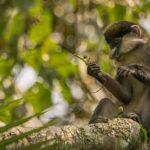
Bonobos in the Democratic Republic of Congo: Where to See Them
Bonobos are among Africa’s rarest and most interesting great apes. These intelligent primates live naturally only in the Democratic Republic of Congo (DRC), making the country the world’s only destination for observing wild bonobos.
If you are planning bonobo trekking in Congo, understanding where these animals live and how to organise a visit is essential.
Bonobos resemble chimpanzees but have several distinctive physical and social characteristics. They are known for their relatively slender bodies, dark faces, complex communication and social groups in which females often hold considerable influence.
Unlike mountain gorillas, which can be visited through established tourism programmes in Uganda and Rwanda, wild bonobo tourism remains limited.
Some bonobo habitats are extremely remote, and reaching them may require specialised arrangements.
However, visitors can observe rescued bonobos at Lola ya Bonobo Sanctuary near Kinshasa, while several protected forest areas support wild populations.
What Are Bonobos?
Bonobos are great apes scientifically known as Pan paniscus.
They belong to the same genus as common chimpanzees but are recognised as a separate species.
Bonobos and chimpanzees share several characteristics, including intelligence, social behaviour and the ability to communicate through sounds and gestures.
However, bonobos generally have slimmer bodies, relatively long legs and distinctive facial features.
They also have different social relationships.
Female bonobos often form strong alliances that influence interactions within their communities.
Bonobos live in tropical rainforests south of the Congo River.
Their natural distribution is restricted to the Democratic Republic of Congo.
Best Places to See Bonobos in Congo
Several destinations protect bonobos, but their accessibility varies considerably.
Some offer organised visitor experiences, while others primarily support wildlife conservation and scientific research.
| Destination | Location | Visitor experience |
|---|---|---|
| Lola ya Bonobo Sanctuary | Near Kinshasa | Guided viewing of rescued bonobos |
| Salonga National Park | Central DRC | Remote wild habitat with limited tourism access |
| Kokolopori Bonobo Reserve | Tshuapa Province | Community conservation and research area |
| Ekolo ya Bonobo Community Reserve | Équateur Province | Protected habitat and bonobo conservation |
| Lomako-Yokokala Faunal Reserve | Northwestern DRC | Important wild bonobo habitat |
| Lomami National Park | Central-eastern DRC | Remote conservation area supporting bonobos |
For most ordinary visitors, Lola ya Bonobo Sanctuary is the most practical option.
Wild bonobo viewing requires considerably more preparation.
1. Lola ya Bonobo Sanctuary Near Kinshasa
Lola ya Bonobo is one of the most accessible places to observe bonobos in the Democratic Republic of Congo.
The sanctuary is situated outside Kinshasa, within a forested environment.
Its name means something similar to “Paradise for Bonobos” in Lingala.
The sanctuary cares for bonobos rescued from illegal wildlife trafficking and other harmful circumstances.
Its work includes rehabilitation, education and conservation.
What Can You See at Lola ya Bonobo?
Visitors can observe bonobos living in spacious, forested surroundings.
During a guided visit, you may see them:
- Climbing trees
- Feeding on vegetation
- Playing with other bonobos
- Resting together
- Communicating through vocalisations
- Interacting with younger group members
The sanctuary provides opportunities to learn about bonobo behaviour and the threats facing wild populations.
However, the animals are rescued individuals rather than an entirely wild population.
How Long Does a Visit Take?
Guided visits generally last approximately one hour.
Allow additional time for travelling between central Kinshasa and the sanctuary.
Road conditions and traffic can affect your journey.
It is sensible to reserve at least half a day for the experience.
Contact the sanctuary in advance to confirm current visiting arrangements, availability and fees.
Can Visitors Touch Bonobos?
No.
Direct contact with visitors is restricted because bonobos can contract certain diseases from humans.
Responsible viewing protects both visitors and the animals.
2. Salonga National Park
Salonga National Park is one of the Democratic Republic of Congo’s most important rainforest conservation areas.
The park protects extensive tropical forest habitat and is recognised as a UNESCO World Heritage Site.
Bonobos occur naturally within this landscape.
Salonga also supports other wildlife, including forest elephants and numerous bird species.
Can Tourists See Wild Bonobos in Salonga?
Wild bonobos live in Salonga, but observing them is considerably more difficult than visiting habituated mountain gorillas.
The park covers a vast area, and access is challenging.
Bonobos move through dense forest, making encounters unpredictable.
Research and habituation projects are helping improve scientific understanding of these populations.
However, travellers should not assume that established, regularly bookable bonobo trekking is available.
Any proposed visit requires confirmation with authorised conservation or park management organisations.
Who Should Consider Salonga?
Salonga may interest experienced wildlife travellers, researchers and conservation-focused visitors.
You should be prepared for remote conditions, complex transport arrangements and limited tourism facilities.
A trip requires careful planning and appropriate local support.
3. Kokolopori Bonobo Reserve
Kokolopori Bonobo Reserve is located in Tshuapa Province.
It is an important community-based conservation area protecting rainforest habitat used by wild bonobos.
Local communities have played a central role in its establishment and management.
Conservation activities include forest protection, wildlife monitoring and support for community development.
Bonobo Research at Kokolopori
Scientific teams study bonobo behaviour and ecology within the reserve.
Researchers monitor several bonobo communities that have become accustomed to the presence of trained observers.
These projects provide valuable information about feeding, communication and social relationships.
Can Visitors Trek to Bonobos?
Kokolopori is primarily a conservation and research destination.
The presence of research-habituated bonobos does not automatically mean that public trekking tours are available.
Travellers interested in visiting should obtain permission and confirm arrangements directly with the responsible organisations.
Access may involve lengthy journeys and basic accommodation.
4. Ekolo ya Bonobo Community Reserve
Ekolo ya Bonobo is another important conservation area in the Democratic Republic of Congo.
The reserve supports the protection of forest habitat and the rehabilitation and release of suitable rescued bonobos.
It is connected with conservation work undertaken by Friends of Bonobos and local partners.
The reserve provides protected surroundings where bonobos can live more independently.
Visiting Ekolo ya Bonobo
Ekolo ya Bonobo should not be treated as a conventional wildlife tourism destination.
Its main purpose is conservation.
Visitor access may be restricted to authorised activities, research or special arrangements.
If you are interested in its conservation work, contact the responsible organisation before making travel plans.
5. Lomako-Yokokala Faunal Reserve
Lomako-Yokokala Faunal Reserve protects an important section of rainforest in northwestern Congo.
The area has a history of bonobo research and conservation.
Its forests provide habitat for bonobos and other wildlife.
However, reaching the reserve can be difficult because transport infrastructure is limited.
Public tourism services are not comparable to established gorilla trekking destinations.
Special permission, experienced local assistance and flexible arrangements may be necessary.
How Do Bonobos Differ From Chimpanzees?
Bonobos and chimpanzees are closely related, but there are differences in appearance and social organisation.
Bonobos generally have slimmer bodies and relatively longer legs.
They often maintain strong relationships between females.
Chimpanzees also form complex social communities, but males frequently occupy influential positions in their dominance relationships.
Both species use vocalisations, gestures and physical contact to communicate.
Neither species should be described as completely peaceful or naturally aggressive.
Their behaviour depends on social relationships, circumstances and individual characteristics.
What Is Bonobo Behaviour Like in the Wild?
Bonobos live in communities that regularly divide into smaller groups.
Individuals may separate while searching for food and reunite later.
Their diet includes fruit, leaves, vegetation and other available foods.
Bonobos spend time feeding, climbing, resting and interacting socially.
They communicate through facial expressions, body movements and vocalisations.
During observation, you may notice grooming, play and interactions between mothers and infants.
However, wild bonobos can move quickly through thick forest.
Sightings are never guaranteed.
Best Time to Visit Bonobos in Congo
Bonobos can be observed throughout the year where authorised visits are available.
However, weather affects road conditions, forest access and general travel comfort.
The Democratic Republic of Congo experiences tropical rainfall patterns that vary by region.
Remote forest journeys may become particularly difficult during periods of heavy rain.
For Lola ya Bonobo, accessibility depends mainly on local road conditions and confirmed visiting arrangements.
For remote reserves, ask local conservation teams about suitable travel periods before organising transport.
Practical Planning Tips for Bonobo Tourism
Planning a bonobo visit requires more preparation than an ordinary city excursion.
Consider the following:
- Decide whether you want sanctuary viewing or a remote wildlife expedition.
- Confirm that visitors are currently accepted.
- Use recognised local guides and authorised organisations.
- Check transport arrangements before departure.
- Allow extra days for unexpected delays.
- Arrange appropriate accommodation.
- Follow wildlife health and safety procedures.
- Avoid travelling into remote areas without reliable local support.
Entry requirements, security conditions and access restrictions can change.
Check current official travel advice before confirming your journey.
Why Are Bonobos Endangered?
Bonobos face several serious conservation threats.
These include habitat loss, illegal hunting, wildlife trafficking and pressure on forest resources.
Some young bonobos become orphaned when adults are killed.
Sanctuaries help care for rescued individuals, while protected reserves conserve wild habitats.
Community conservation programmes are particularly important because local residents depend on forest resources for their livelihoods.
Supporting legitimate conservation initiatives helps protect the future of bonobos.
Frequently Asked Questions
Where is the easiest place to see bonobos?
Lola ya Bonobo Sanctuary near Kinshasa offers one of the most accessible opportunities to observe rescued bonobos.
Can you see bonobos in Uganda or Rwanda?
No. Wild bonobos occur naturally only in the Democratic Republic of Congo.
Are bonobos the same as chimpanzees?
No. Bonobos and common chimpanzees are separate species, although they are closely related.
Can tourists trek wild bonobos?
Opportunities are limited and require special arrangements. Research sites and remote reserves should not be assumed to offer regular public trekking.
How much time should you allow for Lola ya Bonobo?
Allow approximately half a day, including transport. The guided sanctuary visit itself generally takes about one hour.
The Democratic Republic of Congo is the only country where bonobos live naturally in the wild.
For most visitors, Lola ya Bonobo Sanctuary near Kinshasa offers the most practical opportunity to observe these remarkable primates.
Remote destinations such as Salonga National Park and Kokolopori Bonobo Reserve protect important wild populations but require specialised arrangements.
Choosing responsible experiences and supporting legitimate conservation organisations helps protect bonobos and their rainforest habitats.