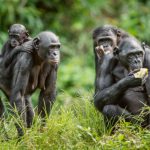
Gorilla vs Chimpanzee: Key Differences You Can See on a Trek
Gorillas and chimpanzees are among Africa’s most fascinating primates. Both belong to the great ape family, share important characteristics with humans and live in forest habitats across Central and East Africa.
However, understanding the differences between gorillas and chimpanzees helps you appreciate how these animals behave during wildlife trekking experiences.
Mountain gorillas are generally larger, heavier and more strongly built than chimpanzees. They usually travel in relatively stable family groups, often led by a dominant silverback.
Chimpanzees are smaller, more agile and frequently move between temporary subgroups within larger communities. They are also known for their loud vocalisations, climbing abilities and complex social interactions.
In Uganda, visitors can observe both species in their natural habitats. Rwanda is particularly famous for mountain gorilla trekking, while Tanzania offers chimpanzee tracking experiences in destinations such as Gombe and Mahale.
Gorilla vs Chimpanzee: Quick Comparison
Although gorillas and chimpanzees share several characteristics, they differ in appearance, diet, movement and social organisation.
| Feature | Mountain gorillas | Chimpanzees |
|---|---|---|
| Body size | Larger and heavier | Smaller and lighter |
| Adult male weight | Commonly around 140–200 kg | Commonly around 40–60 kg |
| Body appearance | Broad chest, powerful shoulders | Leaner body, longer-looking arms |
| Social organisation | Relatively stable family groups | Large communities with changing subgroups |
| Dominant male | Often called a silverback | High-ranking adult male |
| Main diet | Leaves, stems, shoots and other vegetation | Fruit, leaves, insects and occasional meat |
| Movement | Mainly ground-based knuckle-walking | Ground movement and frequent tree climbing |
| Vocal behaviour | Grunts, rumbles, hoots and other calls | Screams, pant-hoots, grunts and other calls |
| Tool use | Limited documented use in the wild | Well-documented tool use |
| Trekking experience | Often involves observing a settled group | Often involves following active animals |
These are general differences. Individual behaviour varies according to age, habitat, season and social circumstances.
1. Physical Differences Between Gorillas and Chimpanzees
The first difference you may notice is body size.
Mountain Gorillas Are Much Larger
Mountain gorillas are the largest living primates.
Adult males have broad shoulders, powerful arms and muscular bodies.
Mature males develop silver-grey hair across their backs, giving them the name silverbacks.
Females are considerably smaller than adult males.
A fully grown silverback can appear especially impressive when sitting upright or moving through vegetation.
However, physical size does not mean gorillas are naturally aggressive towards visitors.
Habituated gorilla families generally continue their daily activities when trekkers follow established viewing rules.
Chimpanzees Have Leaner Bodies
Chimpanzees are smaller and lighter than gorillas.
They have muscular arms, flexible shoulders and bodies suited to climbing and moving through forest vegetation.
Their faces are generally less heavily built than those of mature male gorillas.
Unlike silverbacks, mature male chimpanzees do not develop a distinctive silver band across their backs.
Chimpanzees may appear particularly athletic when climbing trees or moving quickly between feeding areas.
2. Differences in Social Structure
Social organisation is one of the most interesting differences between these primates.
Gorilla Families
Mountain gorillas usually live in relatively stable groups.
A family may contain:
- One dominant silverback
- Other adult males
- Several adult females
- Juveniles
- Infants
The dominant silverback often influences movements and provides protection.
Family members generally remain together while feeding, travelling and resting.
This organisation can make social relationships easier for visitors to observe during a trekking encounter.
Chimpanzee Communities
Chimpanzees live in larger social communities.
However, all members do not remain together throughout the day.
Instead, individuals form smaller temporary groups that regularly separate and reunite.
Researchers call this a fission-fusion social system.
For example, several chimpanzees may travel together to find fruit while others feed elsewhere.
Later, individuals may reunite with different community members.
This changing social arrangement makes chimpanzee tracking more unpredictable.
3. How Gorillas and Chimpanzees Communicate
Both species communicate using sounds, gestures, facial expressions and body movements.
However, their communication styles differ.
Gorilla Communication
Mountain gorillas use low grunts, grumbles and other vocalisations during social interactions.
Silverbacks may perform chest-beating displays to communicate information about themselves or respond to other gorillas.
Gorillas also communicate through touching, posture and facial expressions.
During trekking, you may hear quiet calls while a family feeds.
Chimpanzee Communication
Chimpanzees are famous for their loud calls.
One recognisable vocalisation is the pant-hoot, which may carry through the forest.
Chimpanzees also produce screams, grunts and other sounds during social interactions.
Their vocal behaviour can make tracking exciting because guides may hear chimpanzees before locating them.
A chimpanzee community can become particularly noisy during reunions or periods of excitement.
4. Differences in Feeding Behaviour
Diet provides another useful way to distinguish gorillas from chimpanzees.
What Mountain Gorillas Eat
Mountain gorillas mainly consume plant material.
Their diet includes:
- Leaves
- Stems
- Shoots
- Roots and other plant parts
- Some fruits when available
- Occasional insects
Mountain gorillas spend considerable time feeding on vegetation.
During trekking, you may watch a silverback pulling stems from plants or younger gorillas selecting leaves.
Their feeding behaviour often provides excellent opportunities for observation.
What Chimpanzees Eat
Chimpanzees have a more varied diet.
Fruit is particularly important in many chimpanzee habitats.
They also eat leaves, seeds, insects and other available foods.
Chimpanzees occasionally hunt smaller animals, including monkeys.
Some populations use tools to obtain insects or other food.
For example, researchers have documented chimpanzees using plant materials to extract termites.
However, tool use varies between communities, and you should not expect to observe it during every trek.
5. Movement and Climbing Differences
Gorillas and chimpanzees both use knuckle-walking when travelling on the ground.
However, they differ in how frequently they use trees.
Gorilla Movement
Adult mountain gorillas spend much of their time on the forest floor.
Their considerable body weight makes extensive climbing less practical for mature silverbacks.
Nevertheless, gorillas can climb, particularly younger and lighter individuals.
Juveniles sometimes climb small trees and play among branches.
Chimpanzee Movement
Chimpanzees spend considerable time in trees, especially when feeding on fruit.
They climb confidently and can move quickly through branches.
During tracking, you may find chimpanzees feeding high above the forest floor.
This can make photography more challenging because leaves and branches may obstruct your view.
Chimpanzees may also descend and travel rapidly along the ground.
6. Differences in Gorilla and Chimpanzee Trekking
The trekking experiences offer different opportunities for wildlife observation.
Gorilla Trekking Experience
Gorilla trekking commonly involves hiking through forest vegetation to locate a habituated family.
Once guides find the gorillas, visitors generally receive a limited viewing period.
In Uganda, mountain gorilla trekking takes place in Bwindi Impenetrable National Park and Mgahinga Gorilla National Park.
Rwanda offers trekking in Volcanoes National Park.
Gorilla families may spend considerable time resting or feeding within a relatively small area.
This can provide opportunities to observe individual relationships.
However, gorillas are wild animals, and their movements cannot be predicted.
Chimpanzee Trekking Experience
Chimpanzee tracking can involve listening for calls and following animals through the forest.
Chimpanzees sometimes move quickly or feed in trees.
In Uganda, Kibale National Park is a well-known chimpanzee tracking destination.
Other opportunities exist in selected forest areas.
Tanzania offers chimpanzee experiences in Gombe Stream National Park and Mahale Mountains National Park.
Viewing conditions depend on where the animals are feeding and travelling.
7. Which Trek Is More Physically Demanding?
Neither experience has a fixed difficulty level.
Gorilla trekking may involve steep slopes, muddy paths and dense vegetation.
The time needed to locate a family varies.
Chimpanzee tracking may involve faster movement as guides follow active animals.
Some encounters require walking through uneven forest terrain.
Your fitness, the weather and the animals’ location all influence the experience.
If you have mobility concerns, discuss suitable options with your tour operator before booking.
8. Behaviour Around Humans
Both gorillas and chimpanzees are powerful wild animals.
Habituation allows selected groups to tolerate carefully managed human observation.
It does not make them domesticated or completely predictable.
Visitors should:
- Follow ranger instructions.
- Maintain the required viewing distance.
- Avoid touching the animals.
- Never offer food.
- Avoid sudden movements.
- Follow photography restrictions.
- Stay away when suffering from infectious illness.
Chimpanzees may move rapidly or display intense social behaviour.
Silverbacks may also perform displays when disturbed.
Remaining calm and listening to guides helps protect visitors and wildlife.
9. Which Experience Is Better for Photography?
Gorilla trekking may suit photographers interested in portraits and family interactions.
A resting gorilla can provide opportunities to observe facial expressions and social behaviour.
Chimpanzee tracking can be rewarding for action photography.
You may photograph climbing, feeding and social encounters.
However, chimpanzees often move quickly, and their location in the forest can complicate photography.
Both experiences require patience, suitable equipment and respect for wildlife viewing regulations.
10. Can You See Gorillas and Chimpanzees on One Safari?
Yes. Uganda is particularly suitable for combining both experiences.
A common itinerary includes gorilla trekking in Bwindi Impenetrable National Park and chimpanzee tracking in Kibale National Park.
Travellers can also include wildlife viewing in Queen Elizabeth National Park.
This combination allows you to compare forest primates while enjoying other Uganda safari activities.
Allow enough travelling time between destinations and consider your fitness when planning consecutive trekking days.
Frequently Asked Questions
Are gorillas stronger than chimpanzees?
Adult gorillas are generally much larger and more powerful. However, strength is difficult to compare precisely because body size and individual characteristics vary.
Are chimpanzees more aggressive than gorillas?
Both species can display aggression. Chimpanzees have complex social conflicts, while gorillas may use warning displays. Neither species should be treated as harmless.
Can gorillas and chimpanzees live in the same forest?
Yes. Their habitats overlap in some Central African forests, although they generally occupy different social groups and use food resources differently.
Which animal is easier to photograph?
Gorillas may sometimes be easier to photograph when resting or feeding. Chimpanzees can be more difficult because they often move quickly or remain in trees.
Which trek should first-time visitors choose?
Choose gorilla trekking for close observation of family relationships, or chimpanzee tracking for vocalisations and active forest behaviour. Both offer rewarding experiences.
The differences between gorillas and chimpanzees become clear when you observe their appearance, movement, feeding and social behaviour.
Mountain gorillas are larger and usually live in stable family groups, while chimpanzees are smaller, more agile and belong to communities with changing subgroups.
Both species provide memorable wildlife encounters.
If your travel schedule allows, combining gorilla trekking and chimpanzee tracking in Uganda gives you the opportunity to appreciate these two remarkable primates in their natural habitats.