
Ostriches in East Africa: Behavior, Mating Season, and Where to Watch Them
Ostriches are among the most recognisable birds found across Africa’s open grasslands and dry savannahs. Their long necks, powerful legs and impressive size make them fascinating animals to observe during wildlife safaris.
Unlike most birds, ostriches cannot fly. Instead, they depend on speed, excellent eyesight and strong defensive abilities to survive in environments shared with lions, hyenas and other predators.
Understanding ostrich behaviour in East Africa helps you recognise their feeding habits, courtship displays, nesting activities and interactions with other wildlife.
Kenya and Tanzania provide particularly good opportunities to observe wild ostriches, including the common ostrich and the Somali ostrich.
Understanding Ostrich Behaviour in East Africa
Ostriches belong to the genus Struthio and are the world’s largest living birds.
Adult males can grow approximately 2.1 to 2.8 metres tall, although size varies between individuals.
They possess long legs, small heads, powerful bodies and relatively short wings.
Their eyes are particularly large, helping them detect movement across open landscapes.
Ostriches are primarily active during daylight.
They spend much of their time feeding, walking, resting and monitoring their surroundings.
Why Ostriches Cannot Fly
Ostriches have wings, but their bodies are too heavy for powered flight.
Their anatomy is adapted for running.
Strong leg muscles allow them to move quickly across open ground.
Their wings assist with balance, turning and courtship displays.
Although flightless, ostriches remain highly successful birds in suitable habitats.
Common Ostrich and Somali Ostrich Compared
East Africa supports two recognised ostrich species.
The common ostrich, Struthio camelus, occurs in parts of Kenya and Tanzania.
The Somali ostrich, Struthio molybdophanes, mainly inhabits the Horn of Africa and northern Kenya.
Main Differences
| Feature | Common ostrich | Somali ostrich |
|---|---|---|
| Scientific name | Struthio camelus | Struthio molybdophanes |
| Male neck colour | Usually pinkish | Blue-grey |
| Main habitat | Grasslands and savannah | Dry bushland and open woodland |
| East African range | Kenya and Tanzania | Northern Kenya and Horn of Africa |
| Typical viewing areas | Serengeti, Maasai Mara | Samburu, northern Kenya |
The common ostrich includes the East African form often called the Masai ostrich.
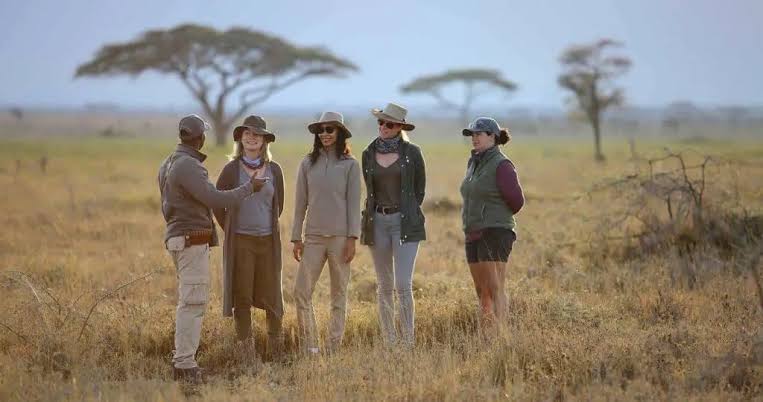
Your guide can help identify which species occurs in a particular reserve.
Ostrich Feeding Habits
Ostriches are omnivores, although vegetation forms an important part of their diet.
They eat seeds, leaves, shoots, flowers and other available plant materials.
They may also consume insects and small animals.
How Ostriches Find Food
Ostriches search for food while walking through grasslands.
Their long necks allow them to inspect vegetation and surrounding ground.
They use their beaks to collect suitable food items.
Unlike birds that fly between feeding areas, ostriches travel on foot.
Their movements depend partly on food availability and environmental conditions.
Do Ostriches Need Water?
Ostriches obtain some moisture from the vegetation they eat.
However, they also drink water when suitable sources are available.
Their ability to tolerate relatively dry environments helps them survive in open savannah landscapes.
How Fast Can Ostriches Run?
Ostriches are among the fastest running birds.
They can reach speeds approaching 70 kilometres per hour over short distances under favourable conditions.
Their long legs allow them to cover considerable ground with each stride.
Running as a Defence
When threatened, ostriches often attempt to escape by running.
Their speed helps them avoid many predators.
However, ostriches can also defend themselves using powerful kicks.
Their feet possess strong claws capable of causing serious injuries.
Visitors should therefore never approach wild ostriches on foot.
Ostrich Mating Behaviour
Ostrich courtship is one of the most interesting behaviours you may observe during a safari.
Breeding males become more territorial and perform displays to attract females.
These displays involve wing movements, body postures and vocal sounds.
Male Courtship Displays
A courting male may lower its body towards the ground.
It spreads and moves its wings while rocking its body.
The male may also move its head and neck during the display.
Its contrasting black and white feathers become particularly noticeable.
These movements communicate reproductive readiness to nearby females.
Ostrich Mating Calls
Male ostriches produce deep booming sounds during breeding periods.
These calls can travel considerable distances.
They may help advertise the male’s presence and reproductive condition.
Listening for these sounds can be an interesting part of watching ostriches during courtship.
When Is Ostrich Mating Season in East Africa?
Ostrich breeding does not follow one fixed calendar throughout East Africa.
The timing varies according to location, rainfall, food availability and environmental conditions.
In many populations, breeding activity is associated with seasonal conditions that support feeding and chick survival.
Influence of Rainfall
Rainfall encourages vegetation growth and can increase food availability.
These conditions may support breeding and chick development.
However, mating periods differ between populations.
Consequently, visitors should avoid expecting courtship displays during one particular month across every national park.
Best Time to Watch Courtship
Ask experienced local guides about recent breeding activity.
They may know areas where males are displaying or where breeding groups have been observed.
Courtship sightings remain unpredictable because wild animals respond to changing environmental conditions.
How Ostriches Build Their Nests
Ostriches construct relatively simple nests on the ground.
A breeding male usually prepares a shallow depression in a suitable location.
The nest does not resemble the elaborate branch structures built by many other birds.
Instead, eggs rest within the prepared ground hollow.
Communal Nesting Behaviour
Ostriches have an unusual breeding system.
Several females may lay eggs in the same nest.
A principal female and the resident male usually take responsibility for incubation.
This arrangement means one nest can contain eggs from several females.
Incubating Ostrich Eggs
Both sexes may participate in incubation.
Their different plumage colours can help them blend with surrounding conditions.
The dark feathers of males provide camouflage during night-time incubation, while the lighter colouring of females is useful during daylight.
Incubation generally lasts around six weeks.
Ostrich Chicks and Parental Care
Ostrich chicks hatch covered in patterned down feathers.
They are relatively well developed and can walk soon after hatching.
However, they remain vulnerable to predators and environmental conditions.
Protecting Young Ostriches
Adult ostriches monitor their surroundings while accompanying chicks.
Parents may respond defensively when young birds face danger.
Chicks often move together under adult supervision.
Their colouring helps them blend into grassland surroundings.
How Chicks Learn to Feed
Young ostriches begin investigating food shortly after hatching.
They learn through exploration and by following adult birds.
Suitable vegetation and small food items support their early development.
Best Places to Watch Ostriches in East Africa
Several national parks and reserves provide opportunities to observe ostriches.
1. Serengeti National Park, Tanzania
The Serengeti is among East Africa’s best-known wildlife destinations.
Its extensive grasslands provide suitable habitat for common ostriches.
Visitors may observe feeding, walking, courtship and occasional nesting behaviour.
2. Maasai Mara National Reserve, Kenya
The Maasai Mara supports ostriches across its open grassland habitats.
These large birds are often visible during ordinary game drives.
Their movements can be particularly interesting when other wildlife species occupy surrounding plains.
3. Samburu National Reserve, Kenya
Samburu is an important destination for observing Somali ostriches.
The species is recognised by the blue-grey colouring of adult males.
Its dry landscapes provide suitable habitat for this distinctive bird.
4. Nairobi National Park, Kenya
Nairobi National Park offers opportunities to observe common ostriches relatively close to Kenya’s capital.
Its open grasslands make large birds easier to locate.
5. Tsavo National Parks, Kenya
Tsavo East and Tsavo West support ostriches within their extensive savannah landscapes.
Sightings depend on habitat, season and animal movements.
Tips for Photographing Ostriches
Ostriches are excellent wildlife photography subjects because of their size and distinctive appearance.
For better results:
-
Photograph during early morning or late afternoon.
-
Use a zoom lens to maintain distance.
-
Include surrounding grasslands.
-
Watch for courtship displays.
-
Avoid approaching nesting birds.
-
Keep noise low when observing chicks.
-
Allow ostriches to move naturally.
Never encourage birds to run or display defensive behaviour for photographs.
Frequently Asked Questions
Can ostriches fly?
No. Ostriches are flightless birds adapted for running.
Are ostriches dangerous?
Wild ostriches can deliver powerful kicks when threatened. Always maintain an appropriate distance.
When do ostriches lay eggs?
Egg-laying periods vary according to location, rainfall and breeding conditions.
Do male ostriches care for chicks?
Yes. Males participate in incubation and may help protect chicks after hatching.
Where can you see Somali ostriches?
Northern Kenya, particularly suitable habitats around Samburu, provides opportunities to observe Somali ostriches.
Ostriches are fascinating members of East Africa’s savannah wildlife.
Their running abilities, unusual courtship displays, communal nesting behaviour and parental care make them rewarding animals to observe.
Kenya and Tanzania offer excellent opportunities to watch these birds in natural habitats.
With patience and a knowledgeable guide, you may encounter memorable ostrich behaviour during an ordinary wildlife safari.