
What Currency to Carry in Uganda: Dollars, Shillings, and Card Tips
Planning your money before travelling to Uganda makes your safari easier, especially when visiting national parks, remote lodges and local communities. Uganda uses the Ugandan shilling (UGX), although US dollars are commonly used for international tourism payments.
Understanding what currency to carry in Uganda helps you avoid poor exchange rates, rejected banknotes and payment difficulties during your trip.
You will need Ugandan shillings for everyday purchases, US dollars for certain safari expenses and a bank card for larger payments or cash withdrawals.
What Is the Official Currency of Uganda?
Uganda’s official currency is the Ugandan shilling, abbreviated as UGX. The Bank of Uganda issues the country’s banknotes and coins.
Ugandan shillings are accepted throughout the country, making them the most practical currency for daily spending.
Common banknotes include:
- UGX 1,000
- UGX 2,000
- UGX 5,000
- UGX 10,000
- UGX 20,000
- UGX 50,000
Coins are available for smaller transactions, although visitors generally use banknotes more frequently.
You will need shillings when buying snacks, paying local transport fares, shopping at markets or purchasing souvenirs.
For example, a roadside fruit seller may accept only Ugandan shillings, while an international safari lodge might quote its accommodation prices in US dollars.
Carrying both currencies gives you greater flexibility.
Should You Bring US Dollars or Ugandan Shillings?
The best approach is to travel with a combination of US dollars and Ugandan shillings.
US dollars are useful for prearranged safari payments, while shillings are better for smaller transactions.
Many safari companies advertise tour prices in dollars because international visitors commonly use that currency when booking accommodation, transport and activities.
However, you should confirm the accepted payment method before arriving.
Some businesses accept dollars directly, while others request payment in shillings.
When to Use US Dollars
US dollars are particularly useful for:
- Paying outstanding safari package balances.
- Settling accommodation bills quoted in dollars.
- Paying for certain tourism services.
- Exchanging money at authorised forex bureaux.
- Tipping guides when dollar payments are preferred.
Do not assume every lodge or tourism business accepts cash dollars. Ask whether payment must be made electronically or in local currency.
When to Use Ugandan Shillings
Ugandan shillings are suitable for:
- Restaurants and local cafés.
- Markets and souvenir shops.
- Taxi fares and local transport.
- Bottled water and snacks.
- Laundry and personal purchases.
- Small tips and community activities.
Even when your safari package covers most expenses, keeping some local currency is advisable.
Which US Dollar Notes Are Accepted in Uganda?
The condition and age of your dollar banknotes can affect whether you can exchange them.
Many Ugandan banks and foreign exchange bureaux reject old, damaged or marked US dollar notes.
For the easiest exchange, carry clean notes dated 2009 or later. Some establishments may apply stricter preferences.
Avoid bringing notes that are:
- Torn or heavily folded.
- Stained or damaged.
- Written on or stamped.
- Missing sections.
- Unusually old.
US$50 and US$100 notes generally receive better exchange rates than smaller denominations.
For example, exchanging one US$100 note may give you a better rate than exchanging ten US$10 notes.
However, smaller notes remain useful for tipping or paying specific expenses.
Ask your bank for recent, clean notes before leaving your home country.
Where Can You Exchange Money in Uganda?
You can exchange foreign currency at banks and licensed foreign exchange bureaux.
These services operate in Kampala, Entebbe and several major towns.
Currency Exchange at Entebbe Airport
Entebbe International Airport provides opportunities to obtain local currency after arrival.
Airport exchange services are convenient, particularly when you need immediate transport money.
However, exchange rates may differ from those available in town.
Consider exchanging a modest amount initially, then comparing rates elsewhere.
Forex Bureaux in Kampala
Kampala has numerous foreign exchange bureaux where travellers can exchange dollars, euros and British pounds.
Before exchanging money:
- Check the displayed buying rate.
- Ask whether additional charges apply.
- Confirm the total shillings you will receive.
- Count your money before leaving.
- Keep your transaction receipt.
Use established, licensed businesses rather than exchanging money with strangers.
Banks in Uganda
Commercial banks also provide currency exchange services, although requirements and opening hours vary.
Some banks may request identification.
If you are exchanging a large amount, ask your safari operator or accommodation provider to recommend a suitable licensed service.
Understanding Uganda’s Exchange Rates
The value of the Ugandan shilling changes against foreign currencies.
You should therefore check the current exchange rate shortly before travelling.
For illustration, suppose one US dollar exchanges for UGX 3,700.
| US Dollars | Ugandan Shillings |
|---|---|
| US$10 | UGX 37,000 |
| US$20 | UGX 74,000 |
| US$50 | UGX 185,000 |
| US$100 | UGX 370,000 |
| US$200 | UGX 740,000 |
These figures are examples, not guaranteed exchange rates.
The amount you receive depends on the prevailing rate and the exchange provider’s charges.
A currency converter can help you estimate prices before purchasing goods or services.
Always check whether the quoted rate applies to buying or selling foreign currency.
Can You Use Credit Cards in Uganda?
Credit and debit cards are accepted at selected hotels, restaurants, supermarkets and tourism businesses.
Visa and Mastercard are generally the most useful international card networks.
However, card acceptance is less reliable in remote destinations.
You might use your card at a Kampala hotel but struggle to pay electronically at a small restaurant near a national park.
Some establishments also add card-processing charges.
Before travelling, ask your bank about international transaction fees and withdrawal limits.
Important Card Payment Tips
- Carry at least one alternative payment method.
- Confirm card acceptance before ordering services.
- Keep your card within sight during transactions.
- Check payment amounts before entering your PIN.
- Avoid sharing card details through unsecured messages.
- Monitor your banking notifications.
When a payment terminal offers to charge you in your home currency or Ugandan shillings, choosing shillings often avoids an unfavourable conversion rate.
Your bank may still apply international charges.
Using ATMs During Your Uganda Safari
ATMs provide another convenient way to obtain Ugandan shillings.
You can find them in Kampala, Entebbe and many larger towns.
However, cash machines are less common near remote wildlife destinations.
Withdraw sufficient money before travelling to areas such as Bwindi Impenetrable National Park, Kidepo Valley National Park or isolated safari lodges.
Choose ATMs attached to established banks, preferably during daylight hours.
Check whether the machine supports your international card.
Your bank and the ATM operator may both charge withdrawal fees.
Avoid repeated small withdrawals when fixed transaction charges apply.
How Much Cash Should You Carry on Safari?
Your cash requirements depend on your itinerary, accommodation arrangements and included services.
If your safari package includes meals, accommodation, park entrance fees and transport, your personal spending may be relatively low.
For a seven-day safari, consider budgeting approximately US$15 to US$40 per person daily for optional expenses.
This might cover drinks, souvenirs, laundry and small purchases.
Guiding tips and optional activities may require additional money.
These amounts are planning examples rather than fixed costs.
You should also maintain an emergency reserve separate from your everyday cash.
Avoid carrying all your holiday money in one wallet.
Tipping Safari Guides and Lodge Staff
Tipping is appreciated in Uganda’s tourism industry, although it is generally voluntary.
Visitors sometimes tip safari guides, porters, hotel staff and local activity guides.
The amount depends on service quality, trip duration and your budget.
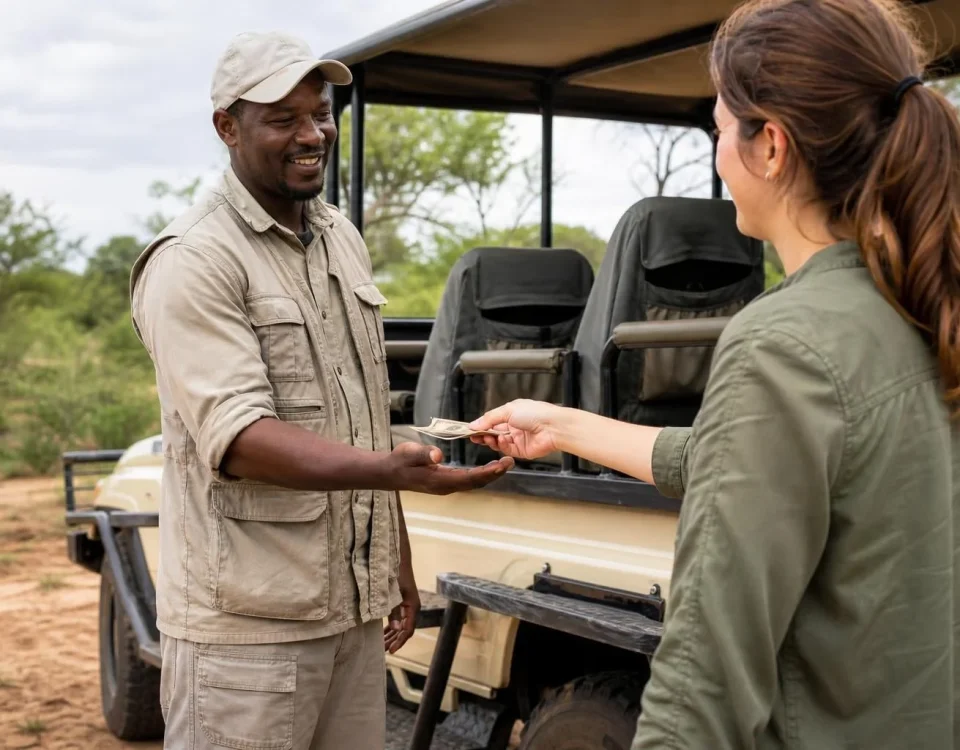
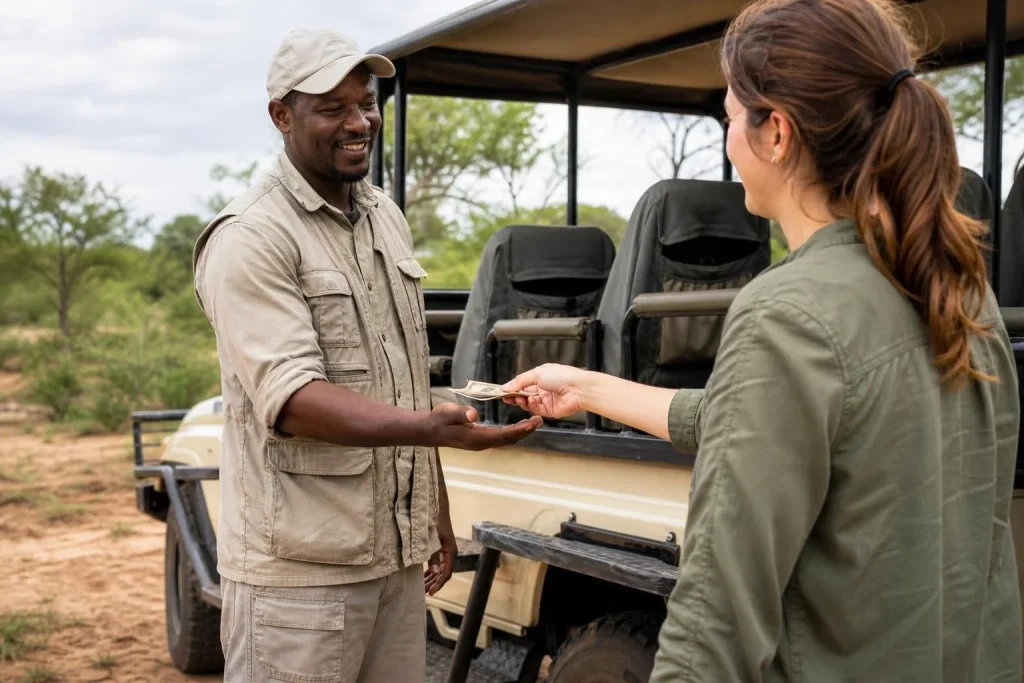
For example, travellers may choose to tip a safari driver-guide approximately US$10 to US$20 per day from a travelling couple or small group.
You may tip more or less depending on the arrangements.
For gorilla trekking, porter fees and optional tips should be budgeted separately.
Ugandan shillings are convenient for small tips, while clean dollar notes can work when accepted.
Always ask whether your tour already includes staff gratuities.
Mobile Money Payments in Uganda
Mobile money is widely used throughout Uganda.
Services such as MTN Mobile Money and Airtel Money allow registered customers to transfer funds and pay participating businesses.
Many local shops, drivers and accommodation providers accept mobile money.
International travellers may find registration requirements and account setup less convenient during short visits.
If you plan to stay longer, ask your mobile network provider about registration and identification requirements.
Never disclose your mobile money PIN or approve an unfamiliar payment request.
Common Money Mistakes to Avoid
Several simple mistakes can cause unnecessary problems during a Uganda holiday.
First, avoid relying entirely on credit cards. Remote businesses may experience network interruptions or lack card terminals.
Second, do not exchange all your money immediately. You could end up carrying more shillings than necessary.
Third, avoid damaged dollar notes because exchange providers may refuse them.
Fourth, confirm whether quoted prices include taxes, service charges and card fees.
Finally, keep some small shilling notes available. Paying for inexpensive items with large banknotes can create change difficulties.
Frequently Asked Questions
Can I Pay for Everything in Uganda Using US Dollars?
No. Although some tourism businesses accept dollars, everyday transactions normally require Ugandan shillings.
Are British Pounds and Euros Accepted?
You can exchange British pounds and euros at selected banks and forex bureaux. Direct payment acceptance is less common.
Is It Better to Carry Cash or Cards?
Carry both. Cash is essential for smaller purchases, while cards provide convenience for selected larger payments.
Can I Withdraw US Dollars From Ugandan ATMs?
Most standard ATMs dispense Ugandan shillings. Do not rely on finding an ATM that provides US dollars.
Should I Exchange All My Dollars Before Travelling?
Usually, no. Bringing some clean dollar notes and obtaining shillings after arrival offers flexibility.
Understanding what currency to carry in Uganda helps you manage your safari expenses confidently.
Bring clean, recent US dollar notes for suitable tourism payments, use Ugandan shillings for everyday purchases and keep an international bank card available.
Exchange money through licensed providers, check transaction charges and withdraw enough cash before visiting remote national parks.
With sensible preparation, you can enjoy gorilla trekking, wildlife drives and local experiences without unnecessary payment difficulties.