Safari in November and December: Short Rains, Birds, and Fewer Crowds
Choose November if you want greener landscapes, good birdwatching and a chance of quieter game drives. Choose early December if you want some of those same benefits but can travel before the Christmas rush. Late December is different. Even where the rains are easing, festive demand can make rooms and flights harder to secure.
A safari in November and December works best when you choose a park you’d enjoy in more than one kind of weather. In Kenya, that could mean pairing open-country game drives with birdwatching at Lake Naivasha. In Tanzania, it means choosing a Serengeti camp for the wildlife you can see nearby, even if the migrating herds are elsewhere. In Uganda and Rwanda, it means staying close to your trekking briefing point and leaving the rest of the day open.
Safari in November and December at a glance
| Travel window | What makes it appealing | What to check |
|---|---|---|
| November | Green landscapes, opportunities to see migrant birds and potentially fewer vehicles than in peak summer | Road access after rain, camp opening dates and any seasonal rates |
| Early December | A chance to travel before festive demand builds, with birding and game viewing still worth planning around | Recent rainfall, current sightings and when festive pricing begins |
| Late December | A holiday safari with time for family or a beach extension | Room and flight availability, festive charges and transfer buffers |
These are typical patterns, not a forecast. Rainfall can vary across the region in the same week. Fewer crowds are possible, especially outside the festive dates, but no month guarantees an empty park or an unobstructed sighting.
What the short rains mean for your safari
In much of Kenya and northern Tanzania, the short rains usually fall between October and December. Rwanda’s tourism guidance describes a rainy period that generally runs from mid-September to mid-December. Elsewhere, the pattern may differ. Parts of central and southern Tanzania, for example, have a longer rainy season that can begin around November. If you’re comparing two itineraries, ask about the exact parks rather than assuming they share the same season.
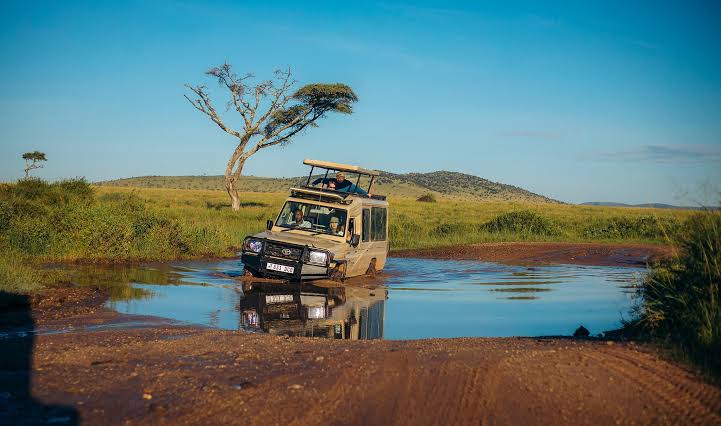
“Short rains” describes a season. It doesn’t mean every shower will be brief. Overnight rain may leave a track muddy even if the sky is clear by breakfast. Ask which routes your guide can use after rain and whether the lodge’s access road is more difficult than the main road to the park. Those are better questions than asking whether November is “too wet”.
Rain also changes where you find animals. Fresh grass and temporary pools can allow herds to spread out instead of gathering at the same permanent water sources. You may spend longer looking for wildlife, but you can also watch animals using areas that are less productive in the dry season. If photography matters to you, pack a simple camera cover and give yourself more than one drive. Good light after a shower is useful only if you still have time to go out.
Where to go for wildlife and birds
Kenya: Combine savannah viewing with a Rift Valley lake
The Maasai Mara is worth considering for resident wildlife in November and December. Book for the game drives rather than assuming the Great Migration will still be in Kenya. With three nights at one camp, you generally get two full viewing days and can try another route if a track is closed or a sighting draws too many vehicles.
Add Lake Naivasha if you’d like to spend time watching birds at a different pace. Look for African Fish Eagles and Pied Kingfishers, which are characteristic birds of the lake. Migrants such as Ospreys are another reason to bring binoculars, but check recent sightings if any one species is important to you. A guided boat outing gives you a view of the shoreline from the water. Keep a land-based alternative if wind or rain makes the boat impractical.
If you choose Lake Nakuru, don’t book it on the promise of large flamingo flocks. Kenya Wildlife Service has documented changes in the distribution of Lesser Flamingos across the Rift Valley as lake conditions shift. Nakuru is still worth visiting for its rhinos, other birds and varied habitats. If flamingos are your priority, ask about recent observations before deciding which lake to visit.
Tanzania: Choose a Serengeti camp that works without the migration
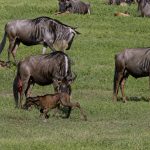
November and December are a period of movement in the Serengeti–Mara landscape. As rain brings fresh grazing, wildebeest generally move south, but different groups can be in different areas. A camp in central Serengeti can be a good base for general viewing. A camp farther south may suit you if recent reports put the herds within reach. Don’t choose either location based on the month alone.
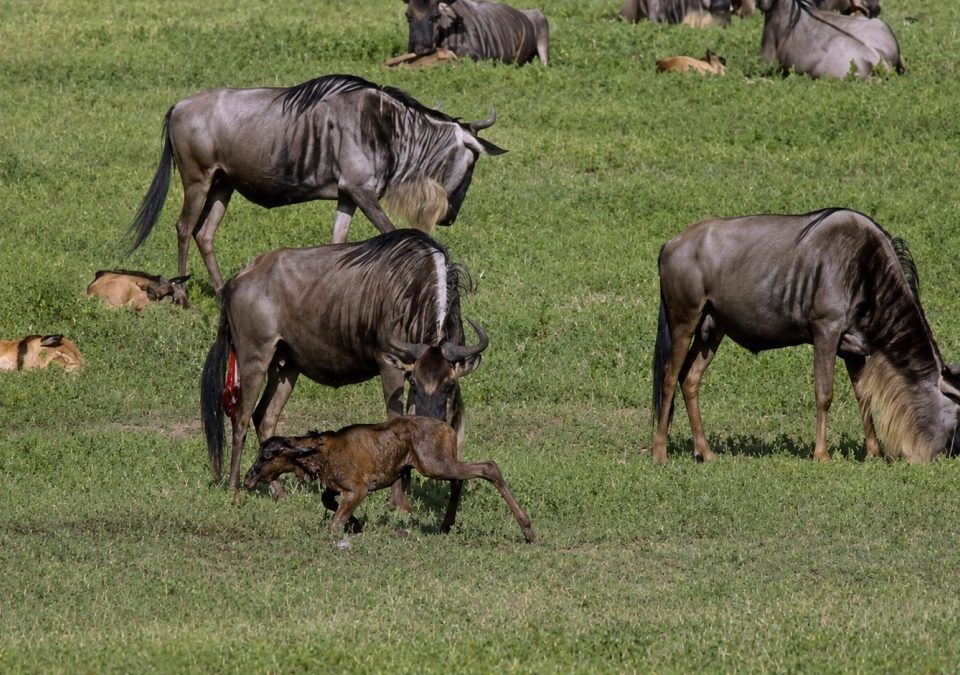
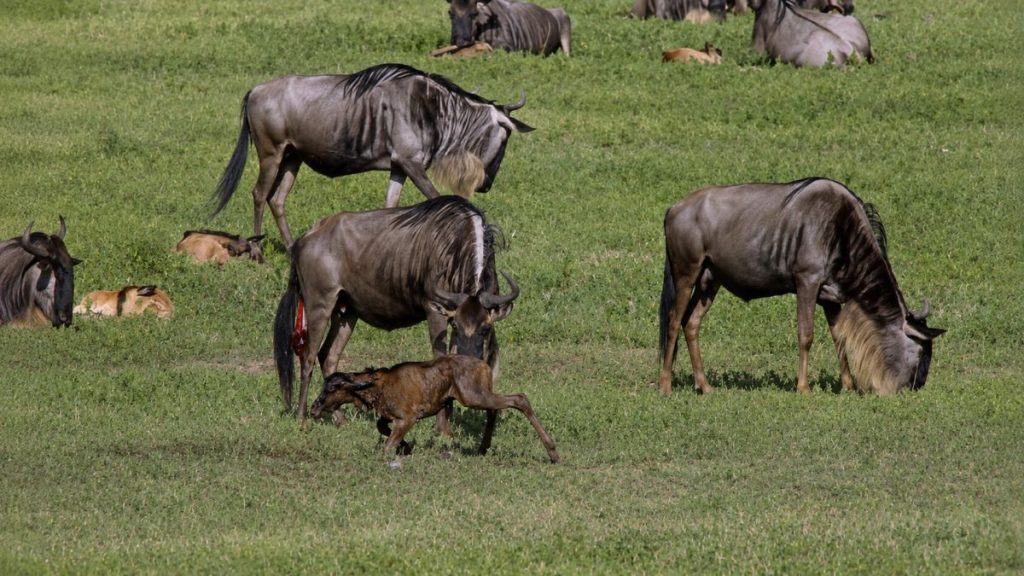
December is not a guaranteed calving month. Tanzania’s southern short-grass plains around Ndutu are more commonly associated with calving from January to March. If seeing newborn wildebeest is the main reason for your trip, compare dates later in that season. If December is when you can travel, book a route you’d still enjoy with resident wildlife and time to explore.
For a shorter trip, consider Tarangire and Ngorongoro instead of adding a long Serengeti transfer. Ask what wildlife and habitats your guide would focus on after rain. A dedicated day in each area is more useful than an itinerary that counts every road transfer as a full game drive.
Uganda: Pair a forest or wetland outing with your main safari
Mabamba Bay, near Entebbe, works well as a first birdwatching stop. A guided canoe outing gives you a chance to look for Shoebill and other wetland birds. A sighting isn’t guaranteed, so give the guide time to explore and spend part of the outing watching what else is active along the channels. If you’re going west, add Bigodi Wetland Sanctuary near Kibale for guided birding in a different habitat. The Great Blue Turaco is one bird to look for there.
Uganda Wildlife Authority identifies December and January as good months to consider for birdwatching, while noting that resident birds make birding worthwhile throughout the year. If you combine birding with gorilla trekking, choose your Bwindi lodge by the sector on your permit. Allow time for wet or muddy trails, and don’t schedule another paid activity immediately after the trek.
For a November 2027 trip, Uganda Wildlife Authority’s published January 2027 to June 2028 tariff lists a US$600 low-season gorilla tracking rate for foreign non-residents, compared with US$800 for the standard Bwindi permit. December isn’t among the listed low-season months. Confirm the rate, eligibility and change terms for your exact date before paying.
Rwanda: Keep your trek and your transfer separate
Rwanda suits a short trip built around Kigali and Volcanoes National Park. In November or early December, plan for wet trails even if the forecast for Kigali looks clear. Stay near your briefing point the night before and leave the afternoon after your trek open. That way, you can have lunch and rest instead of watching the time while you’re still on the trail.
If you’d rather spend time in open country, choose Akagera for savannah and wetland viewing. Give it a proper overnight stay if you can, rather than trying to combine it with an arrival or departure from Kigali. A route focused on one park gives you room to move a drive or spend longer with a sighting when conditions are good.
How to get the benefit of fewer crowds
If quieter viewing is your main goal, compare a November departure with one in the first part of December. Ask for the same number of nights, similar rooms and the same vehicle arrangement. Then check when each lodge begins charging festive rates. A date that’s outside one property’s festive period may already be inside another’s.
Where you stay matters just as much. A small camp near a popular sighting can still put you on the same track as dozens of other guests. A well-placed lodge with access to several viewing areas gives your guide more options. Ask how many passengers share the vehicle, whether you can change departure times and what the guide recommends if your first-choice area is busy.
If your dates are fixed over Christmas, spend longer at one base and book the important pieces together. A room confirmation doesn’t guarantee seats on the domestic flight or space on a private vehicle. Get the camp, transfers and any dated permits in writing before paying for extras. Keep the longest drive or domestic flight away from a tight international connection.
Frequently asked questions
Is November or December better for birdwatching?
Both can work. November is appealing if you want green landscapes and a chance to see migrants alongside resident birds. December is a useful option for Uganda birding, especially if you can travel before festive demand builds. Choose the habitat and target species first. A morning on a lake offers a different experience from a forest walk, regardless of the month.
Can rain cancel a game drive or a trek?
It can affect access or lead to a change of route, but rain doesn’t automatically stop an outing. Ask who decides whether it can go ahead and what alternative the operator offers. For a dated trek, check the permit terms before assuming you can move it to the next day.
Is late December a good choice if I want fewer crowds?
It wouldn’t be my first choice if quiet camps and easy availability are your priorities. Start by looking at November or early December. If late December is your only window, choose a camp with several accessible viewing areas, stay at least three nights and let your guide know you’re happy to leave a crowded sighting.