Gorilla Trekking in Uganda vs Rwanda: Which Is Right for You in 2027?
Choose Uganda if you want a lower gorilla permit price, a longer wildlife safari or the option to spend more than an hour with gorillas on a separate habituation experience. Choose Rwanda if you have a short holiday and want the simplest journey from an international airport to the trekking area. The drive from Kigali to Volcanoes National Park takes roughly three hours, while most Uganda itineraries involve a longer road transfer, a domestic flight or a border crossing.
The key difference in gorilla trekking in Uganda vs Rwanda is what you pay and how you get there. A standard permit gives you up to one hour with a habituated mountain gorilla group in either country. Rwanda’s higher permit price does not buy more time with the gorillas, and its shorter airport transfer does not guarantee an easier hike.
Gorilla Trekking in Uganda vs Rwanda at a Glance
| What you are comparing | Uganda | Rwanda |
|---|---|---|
| Where you trek | Bwindi Impenetrable National Park or Mgahinga Gorilla National Park | Volcanoes National Park |
| Standard foreign non-resident permit | US$800 under Uganda’s published 2027 tariff | US$1,500 under Rwanda’s published standard foreign visitor rate |
| Lower permit rates | Uganda lists US$600 for foreign non-residents in April, May and November | Conditional offers exist. Confirm eligibility and availability for your dates. |
| Time with gorillas on a standard trek | Up to one hour | Up to one hour |
| Minimum age | 15 years | 15 years |
| Getting to the park | Road or domestic flight from Entebbe, or a road transfer from Kigali with a border crossing | Roughly three hours by road from Kigali to the park area |
| Best fit | Gorillas alongside chimpanzees, game drives or a longer Uganda itinerary | A short gorilla-focused holiday with fewer transfers |
How Much Do Gorilla Permits Cost in 2027?
Uganda’s published 2027 rates
The Uganda Wildlife Authority (UWA) tariff for January 2027 to June 2028 lists the standard permit at US$800 for foreign non-residents, US$700 for foreign residents and US$500 for eligible citizens from the rest of Africa. The foreign non-resident rate drops to US$600 in April, May and November under the published low-season schedule. Eligible foreign residents have a separate US$500 low-season rate. These are permit prices, not the cost of an entire safari.
If you qualify as an East African citizen, get your price in writing for your chosen park. The UWA booklet’s general gorilla tracking table lists UGX 300,000, but the park-specific table lists UGX 350,000 for Bwindi and UGX 300,000 for Mgahinga. Ask UWA or your operator to confirm which amount applies before paying.
Rwanda’s standard rate and discounts
The Rwanda Development Board (RDB) currently lists US$1,500 for a standard foreign visitor permit. Its booking portal also displays separate rates for eligible categories, including US$200 for Rwandan and East African citizens and US$500 for foreign residents in Rwanda, subject to the applicable offer and proof of status. Treat those as currently published rates, not a guarantee that every offer will apply throughout 2027.
Rwanda also has a low-season application for qualifying trips that include Akagera or Nyungwe. Do not budget for a discount until RDB or your operator confirms the terms for your dates. If an offer requires extra park visits and accommodation you would not otherwise book, compare the total trip cost rather than the permit alone.
For two foreign non-resident travellers paying standard rates, Uganda’s permits total US$1,600 and Rwanda’s total US$3,000. That is a US$1,400 difference before flights, lodging and transfers. Uganda is usually the better price comparison if you have time to travel by road. If you add domestic flights and extra nights to make a short Uganda trip work, compare a full quote for each country before deciding.
Which Country Has the Easier Gorilla Trek?
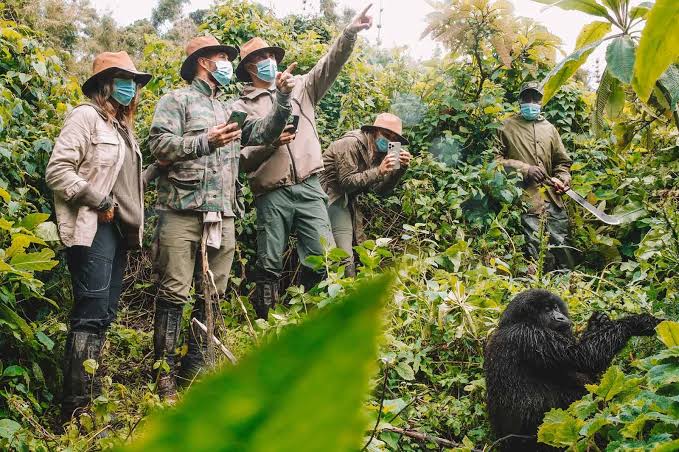
Rwanda is easier to reach from its main international airport, but neither country can promise an easy trek. Both treks start with a briefing. The walking time depends on where the gorillas move, the trail conditions and the terrain your group needs to cross.
In Bwindi, expect forest paths with steep sections, roots and mud, especially after rain. Mgahinga offers a volcanic landscape rather than Bwindi’s dense forest setting. In Rwanda’s Volcanoes National Park, you may cross farmland before entering bamboo or mountain forest. The hike can be short or take several hours, and the altitude can make climbs feel harder.
If you have knee problems, limited mobility or concerns about stamina, tell the operator before booking. Ask what support is available, whether you can request a less demanding group assignment and what the limits of that request are. A porter can carry your daypack and may help on awkward sections, but cannot make steep or slippery terrain disappear. Wear boots with good grip, take a waterproof layer and leave the rest of the day free rather than booking a fixed afternoon activity.
How to Build the Right Itinerary
Choose Uganda for gorillas and a longer safari
Uganda makes the most sense if you want to combine gorillas with chimpanzee trekking in Kibale and wildlife viewing in Queen Elizabeth National Park. A week or more gives you time to include those stops without treating every day as a transfer. If you only want gorillas and are flying into Entebbe, compare the drive with a domestic flight to the airstrip serving your lodge.
At Bwindi, book your permit sector before choosing your lodge. The four sectors are Buhoma, Ruhija, Rushaga and Nkuringo. A lodge advertised as “near Bwindi” may be nowhere near your assigned briefing point. Ask for the permit sector, lodge and trek-morning driving time on the same quote. If you are flying in, confirm the correct airstrip and its luggage allowance too.
Consider Mgahinga if you are already staying around Kisoro or want to include golden monkey tracking in the same area. It has fewer gorilla permits than Bwindi, so treat it as a choice to arrange in advance rather than as a fallback you can count on.
Choose Rwanda for a shorter, simpler trip
Rwanda fits well if you have three days available in the country. On day one, travel from Kigali to your lodge near Kinigi or Musanze. Trek on day two and keep the afternoon flexible. On day three, return to Kigali or continue your holiday. If your international flight lands late on day one, allow an extra night or move the trek date rather than building the plan around a tight sequence.
For a longer Rwanda trip, add Akagera for game drives or Nyungwe for a forest stay. If the whole point of the trip is one gorilla trek, though, you do not need to add another park to justify the visit. The main advantage is how straightforward it is to reach Volcanoes National Park and get back to Kigali.
Can you fly into Kigali and trek in Uganda?
Yes. This can be a good option for southern Bwindi or Mgahinga, particularly if your lodge is near Kisoro. Compare the time to your exact lodge, including immigration and the final road transfer. Check entry requirements for both countries, whether the same vehicle crosses with you, and which local time your driver is using. Uganda is one hour ahead of Rwanda. Plan to cross the border the day before your trek rather than relying on a same-morning transfer.
When to Book and What to Check
If you can travel in April, May or November, Uganda’s lower permit rate is worth considering. The trade-off is a greater chance of wet or muddy paths. If you prefer the generally drier periods of June to September or December to February, book early if your dates or lodge are fixed. Rain is still possible in either country, so pack for it regardless of the month.
Before buying non-refundable flights, get written confirmation of the permit date, visitor category, park and sector where applicable. Check the cancellation or rescheduling terms, including what happens if you become unwell. Gorillas are vulnerable to human infections. Tell the operator if you develop respiratory symptoms, follow the park’s current mask and distance rules, and let the rangers decide whether you can join. If you are travelling between countries, recheck border and health requirements closer to departure.
Frequently Asked Questions
Which country is cheaper for gorilla trekking in 2027?
For most foreign non-residents, Uganda is cheaper on the permit alone. Its published standard rate is US$800, compared with Rwanda’s US$1,500. Uganda’s published low-season rate is US$600 in April, May and November. Compare full itinerary quotes if you are flying within Uganda or adding a cross-border transfer.
Can you spend more than one hour with the gorillas?
Uganda offers a separate Gorilla Habituation Experience in Bwindi, with up to four hours under UWA rules. The 2027 tariff lists US$1,800 for foreign non-residents. It involves a gorilla group still getting used to human presence, so choose it for the chance to observe the habituation process rather than expecting a longer version of a standard trek.
Which country is better for a first gorilla trek?
Pick Rwanda if you want the simplest three-day trip. Pick Uganda if you are watching your budget, want more choice of trekking locations or plan to include other wildlife experiences. If your main concern is how difficult the hike will be, ask both operators about trek support before choosing. The airport transfer alone will not answer that question.