How Hard Is Gorilla Trekking? An Honest Fitness Guide
Gorilla trekking can be manageable for a regular walker, but you should prepare for several hours on steep, uneven ground. You do not need to be a fast hiker. It helps more to be able to walk uphill at a steady pace, come down a slippery slope without rushing and keep moving after a break. If you usually walk on flat pavement, practise hills before you go. That will tell you more about your readiness than counting steps.
The hardest part to plan for is the length of the trek. The gorillas move, so the park cannot promise where they will be on your date. You might reach them relatively quickly or spend much of the day in the forest. Prepare for the longer outing, ask for help early and leave the rest of the day free.
How Hard Is Gorilla Trekking in Uganda and Rwanda?
The Uganda Wildlife Authority gives two to seven hours as a guide for the full tracking activity in Bwindi and Mgahinga. Visit Rwanda says the hike to a gorilla group in Volcanoes National Park can take 30 minutes to four hours or more. Those figures measure different things. Rwanda’s range describes the approach, while Uganda’s covers the wider tracking activity. Do not use them to conclude that one country always offers a shorter walk.
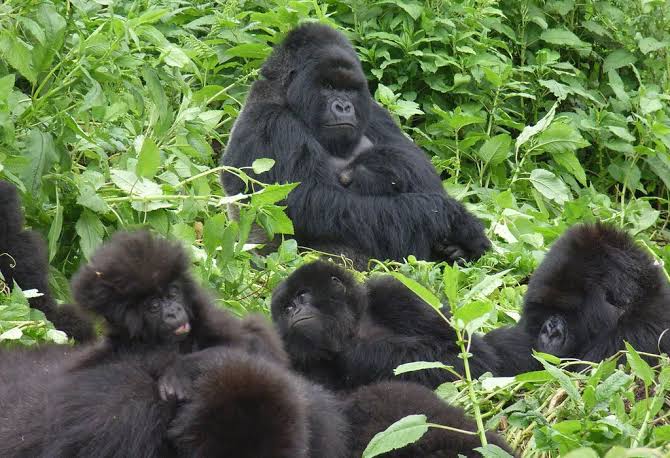
On a standard trek in either country, you can spend up to one hour with the gorillas once you reach them. That is separate from the effort of walking there and back. Allow for the briefing, the return walk and any road transfer between the briefing point and the trail.
| What makes it harder | What it can feel like | What helps |
|---|---|---|
| Steep climbs and descents | You may need short breaks going up or feel less steady coming down | Practise hills in both directions and take shorter steps on descents |
| Mud and exposed roots | Your footing can change from one step to the next | Wear footwear with good grip and ask whether walking poles are suitable |
| An unpredictable route | A short walk can turn into a much longer outing | Train for time on your feet and keep the afternoon free |
| Altitude | A familiar pace may leave you breathing harder | Start slowly and tell your guide promptly if you feel unwell |
| A heavy daypack | Water, lunch and camera gear can be tiring to carry for hours | Pack only what you need or arrange a porter before the start |
Bwindi, Mgahinga and Volcanoes National Park
In Bwindi, expect forest trails with roots, mud and steep sections. A route can descend towards the gorillas, leaving the harder climb for the return. That is one reason to practise coming down a hill as well as going up. It is also why the name of your Bwindi sector tells you where to report, not how hard your particular trek will be.
Mgahinga and Rwanda’s Volcanoes National Park lie in the Virunga Mountains. In Rwanda you may start across farmland before entering bamboo or mountain forest. Visit Rwanda indicates that routes can reach elevations of 2,500 to 4,000 metres. Rwanda’s shorter transfer from Kigali can make the overall trip easier to arrange, but it does not make the hike itself easier.
How Fit Do You Need to Be?
Use a practice walk to find your weak point
If you already take regular walks, try 60 to 90 minutes on a hilly route in the footwear you plan to wear. Carry a light pack with water and a waterproof layer. Include a steady climb and a descent on uneven ground if you can find a route you are comfortable walking. Notice what slows you down. It might be breathlessness uphill, sore knees on the descent or discomfort carrying the pack.
This is a practice benchmark, not a pass or fail test. Completing it does not guarantee you can finish a long trek. If the walk leaves you struggling to manage ordinary steps the next day, give yourself more preparation time and ask your operator about support. If the only problem was a heavy pack, a porter and a lighter packing list may make a meaningful difference.
Fitness and balance are separate skills
You can be fit enough for a long cycle ride and still find muddy descents difficult. Conversely, you may move slowly uphill but feel comfortable on broken ground. Train for the part you are less used to. If you live somewhere flat, use a short flight of stairs for controlled step-ups and step-downs, then practise on an uneven trail when you can. You are preparing to walk steadily, not to climb as fast as possible.
Fitness also does not prevent altitude illness. At higher elevations, give yourself permission to slow down even if you feel strong at home. Tell your guide about a new headache, nausea or dizziness after ascending. Do not keep climbing if you have symptoms of altitude illness. If they worsen, descend and seek medical help. If you have a heart or lung condition, recent surgery or mobility concerns, discuss the proposed route and altitude with a clinician before booking.
A Simple Four-Week Gorilla Trekking Fitness Plan
This example is for someone who already walks comfortably on level ground. Start with less if needed, and repeat a week rather than increasing the duration when the previous outing still feels too hard.
| When | What to practise |
|---|---|
| Week 1 | Take three comfortable walks of 25 to 40 minutes. Add a gentle hill to one and pay attention to the descent. |
| Week 2 | Keep two shorter walks and try a 45- to 60-minute hilly outing. Practise in the shoes you plan to take. |
| Week 3 | If you are recovering well, try a 60- to 90-minute walk on mixed ground with a light daypack. Practise using poles if you intend to bring them. |
| Week 4 | Repeat a walk you can manage comfortably, then ease off before travelling. Avoid making your longest or steepest walk the day before departure. |
If you have more time, extend the longer walk gradually rather than adding more speed, steeper hills and a heavier pack all at once. If you only have a few days, avoid trying to catch up with a hard workout. A familiar pair of shoes, a realistic pace and an honest conversation with your operator will help more than arriving tired or sore.
What Support Can You Arrange?
Hire a porter at the start if you think you might need one
A porter can carry your daypack, leaving you free to concentrate on your footing. Depending on the terrain and the help you want, they may also offer a hand on an awkward section. Ask the operator how porters are arranged and paid at your trailhead. Decide before you start. It is easier to carry less weight from the first hill than to change your plan halfway through the forest.
Walking poles may help with balance or descents if you already know how to use them. Ask whether the trailhead provides walking sticks or allows your own poles. Do not bring unfamiliar equipment and expect it to solve a mobility problem on the day.
Request a less demanding assignment without relying on it
Tell your operator about your needs before buying the permit, then repeat them at the briefing. Be specific. “I can walk for an hour, but steep downhill sections cause knee pain” is more useful than “I need an easy trek.” In Bwindi, UWA assigns specific gorilla groups on the day. Rangers may be able to take your needs into account, but weather, gorilla movements and group availability can change the options.
If you need more than a porter, ask whether an assisted carry or sedan chair can be arranged at your chosen park and trailhead. Do not assume this is available everywhere or that the trail is wheelchair accessible. Confirm the equipment, how transfers into and out of the seat work, the total cost and what happens if the planned route cannot accommodate it.
Frequently Asked Questions
Is gorilla trekking suitable for older travellers?
Age alone tells you less than your balance, stamina, joint comfort and ability to manage descents. Some older travellers are regular hill walkers. Others may need a porter or more substantial assistance. Ask about your specific needs rather than relying on a tour described as suitable for all ages.
Can you turn back if the trek becomes too hard?
Tell your ranger as soon as you are struggling and ask what options are available. Do not leave the group or try to walk back alone. Before booking, ask how the park or operator handles an early return and whether any permit conditions apply.
What should you carry on the trek?
Bring water, a snack or packed lunch, a waterproof layer and the essentials your operator lists. Wear long trousers and footwear with good grip. Keep your phone or camera in a waterproof bag and leave heavy equipment at the lodge unless you know you will use it.
Is the gorilla habituation experience harder?
It can mean a longer day. Uganda’s habituation experience allows up to four hours of viewing, compared with up to one hour on a standard trek. Walking conditions still depend on where the gorillas move. If your main concern is stamina, a standard trek is usually the better starting point.