Traveling With a Camera Drone: Rules for Uganda and Rwanda
Traveling with a camera drone to Uganda and Rwanda requires careful preparation because both countries regulate drone importation, registration and flight operations. Although drones provide excellent opportunities to capture aerial photographs of mountains, lakes, forests and countryside landscapes, visitors cannot assume that recreational drone use is automatically permitted.
Uganda and Rwanda maintain aviation regulations designed to protect public safety, national security, wildlife and sensitive infrastructure. Additional restrictions apply within national parks, particularly mountain gorilla habitats and other protected wildlife areas.
Travellers planning to bring drones for safari photography, filmmaking or personal travel videos should obtain the necessary approvals before departure. Arriving without appropriate documentation may result in delays at customs, temporary detention of equipment or other enforcement action.
Understanding camera drone rules for Uganda and Rwanda helps you protect your equipment, avoid legal difficulties and enjoy responsible photography during your East African safari.
Camera Drone Rules for Uganda and Rwanda at a Glance
Both countries require visitors to comply with aviation regulations before operating unmanned aircraft systems, commonly known as drones.
| Drone requirement | Uganda | Rwanda |
|---|---|---|
| Import authorisation | Required | Subject to import and registration requirements |
| Declaration at entry | Required | Required |
| Aviation authority approval | UCAA | RCAA |
| Drone registration | Required as applicable | Required as applicable |
| Recreational flights | Subject to authorisation | Restricted to approved recreational clubs |
| Commercial filming | Additional approvals may apply | Additional approvals may apply |
| National park filming | Wildlife authority permission required | Protected-area permission required |
| Gorilla trekking | No ordinary tourist drone flights | No ordinary tourist drone flights |
Owning a small recreational drone does not automatically exempt you from these regulations.
Traveling With a Camera Drone to Uganda
The Uganda Civil Aviation Authority (UCAA) regulates drone importation and operation within Uganda. Visitors intending to bring camera drones into the country must follow the applicable clearance procedures.
Obtain Drone Importation Clearance
Before travelling to Uganda, contact the aviation authority regarding your intention to import drone equipment temporarily.
The approval process may involve the Uganda Revenue Authority, aviation officials and relevant security authorities.
Prepare information about your drone, including its manufacturer, model, serial number, technical specifications and intended purpose.
Importation clearance does not necessarily give you permission to fly the drone. Operational requirements must also be satisfied.
Declare Your Drone at Entebbe International Airport
Travellers arriving through Entebbe International Airport should declare their drone equipment and present the necessary documentation.
Customs officials may inspect the equipment and request evidence of authorisation.
If you arrive without appropriate clearance, officials may retain your equipment pending further approval.
Keep printed and electronic copies of your permits, identification documents and equipment details.
Obtain Permission to Operate Your Drone
Drone operations in Uganda are subject to aviation safety and security requirements.
Depending on the nature of your intended flights, you may require aircraft registration, operator certification, pilot qualifications and operational authorisation.
Explain your intended photography locations and activities when applying.
Do not assume that permission to photograph one location allows you to operate anywhere in Uganda.
Traveling With a Camera Drone to Rwanda
Rwanda regulates drone activities through the Rwanda Civil Aviation Authority (RCAA). The country maintains specific procedures covering aircraft registration, pilot certification and authorised flight activities.
Declare Your Drone Upon Arrival
Visitors must declare their drones to Rwanda National Police at their point of entry.
Where the required registration and clearance have not been completed, police may retain the aircraft while the owner completes the necessary procedures.
This requirement applies when arriving through Kigali International Airport or crossing an international land border.
Register Your Camera Drone
Foreign visitors generally cannot register drones independently under Rwanda’s standard registration arrangements.
A qualifying Rwandan citizen, permanent resident or registered organisation may assist with registration on behalf of a foreign visitor. Ask the aviation authority whether alternative temporary authorisation arrangements apply to your circumstances.
Registered drones must display the identification assigned by the authority.
Apply for a Drone Activity Permit
Drone registration alone does not authorise flight operations.
Operators must obtain the appropriate activity permit and meet any applicable pilot and operator certification requirements.
Rwanda also requires recreational and sporting drone operations to take place through approved drone clubs. Ordinary holiday photography should therefore not be treated as unrestricted recreational flying.
Professional photographers may find it more practical to work with an appropriately authorised Rwandan drone operator.
Documents Required When Traveling With a Camera Drone
Preparing your documentation early can reduce unnecessary delays.
| Document | Purpose |
|---|---|
| Valid passport | Personal identification |
| Drone model and serial number | Equipment identification |
| Import clearance | Authorised entry of equipment |
| Registration certificate | Aircraft registration |
| Flight activity permit | Permission for proposed operations |
| Pilot certificate | Evidence of qualifications where required |
| Insurance documentation | Liability protection where applicable |
| Filming authorisation | Approval for professional filming |
| Wildlife authority permission | Protected-area filming approval |
The exact documentation depends on the country, aircraft category and intended activity.
Can You Fly a Drone During Gorilla Trekking?
Ordinary gorilla trekking permits do not include drone photography rights.
Visitors undertaking standard mountain gorilla trekking should leave drones behind. Specialised conservation research or professional filming projects may receive exceptional authorisation, subject to strict conditions.
Bwindi Impenetrable National Park
Drone filming within Bwindi requires separate wildlife authority approval in addition to applicable aviation permissions.
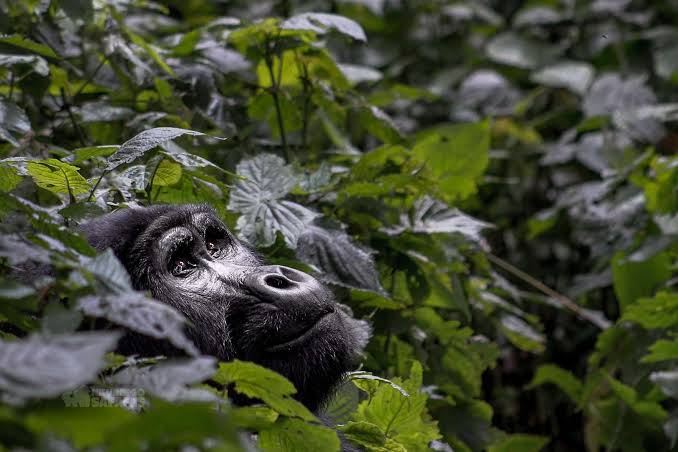
Mountain gorillas are sensitive wildlife, and unfamiliar aircraft noise or movement may disturb their natural behaviour.
Visitors should use conventional cameras during their gorilla encounter.
Mgahinga Gorilla National Park
Similar restrictions apply within Mgahinga, where mountain gorillas, golden monkeys and other wildlife inhabit protected volcanic landscapes.
A gorilla trekking permit does not authorise aerial photography within the park.
Volcanoes National Park
Visitors to Rwanda’s Volcanoes National Park must respect protected-area regulations established to safeguard mountain gorillas and their habitats.
Specialised aerial filming requires appropriate aviation and conservation approvals. Ordinary tourists should not attempt to fly drones during their trekking experience.
Drone Photography in Other National Parks
Drone restrictions extend beyond mountain gorilla habitats. Visitors must obtain relevant approvals before conducting aerial photography within Uganda’s or Rwanda’s protected wildlife areas.
| National park | Drone photography requirements |
|---|---|
| Queen Elizabeth National Park | UCAA and wildlife authority approval |
| Murchison Falls National Park | Aviation and protected-area authorisation |
| Kidepo Valley National Park | Special filming permission |
| Kibale National Park | Aviation and conservation approval |
| Akagera National Park | RCAA and park management permission |
| Nyungwe National Park | Aviation and protected-area authorisation |
Never launch a drone from a safari vehicle without appropriate permission.
Restricted Locations for Drone Photography
Uganda and Rwanda maintain restrictions around locations where drone operations could create security, privacy or aviation risks.
Avoid unauthorised flights near airports, military installations, government buildings, border facilities, crowded public areas and sensitive infrastructure.
Private accommodation and agricultural properties may also require the owner’s permission. Approval from a property owner does not replace national aviation requirements.
Always comply with the geographical boundaries, altitude restrictions and operating conditions stated in your authorisation.
Carrying Drone Batteries on International Flights
Most camera drones use rechargeable lithium-ion batteries, which are subject to airline safety requirements.
Spare drone batteries should generally travel in your cabin baggage, with their terminals protected against short circuits.
Batteries rated up to 100 watt-hours are generally permitted under standard passenger baggage rules. Batteries exceeding 100 watt-hours may require airline approval, while higher-capacity batteries face additional restrictions.
Check your airline’s requirements before departure, including baggage limits for domestic safari aircraft.
Drone Permit Costs and Processing Times
Drone permit expenses depend on the aircraft category, intended activities and required approvals.
Professional wildlife filming may involve additional charges for protected-area access, filming permissions, insurance and local assistance.
Begin preparing your applications at least four to eight weeks before departure as a practical precaution. Complex commercial projects may require additional preparation time.
Avoid paying unofficial agents who promise immediate clearance without proper documentation.
Alternatives to Bringing Your Own Camera Drone
Travellers who want aerial footage without managing complicated importation procedures can consider hiring an authorised local drone operator.
Local professionals may already possess suitable equipment, qualifications and operational experience. However, they must still obtain permission for the specific filming activity and location.
Conventional cameras, action cameras and smartphones also provide excellent opportunities to capture wildlife, forest scenery and cultural experiences without the additional complications associated with drones.
Frequently Asked Questions
Can tourists bring drones into Uganda?
Yes, provided they obtain the necessary importation clearance and comply with applicable customs and aviation requirements.
Can I bring a DJI Mini drone into Rwanda?
Small drones remain subject to applicable declaration, registration and operational requirements. Their lightweight construction does not automatically exempt them.
Can I use my Ugandan drone permit in Rwanda?
No. Each country maintains its own aviation regulations and approval procedures.
Can I fly a drone from my safari lodge?
Only when the proposed flight complies with aviation regulations, local restrictions and property management requirements.
Can airport officials confiscate my drone?
Authorities may retain equipment that lacks the necessary documentation. Failure to comply with regulations may also result in penalties or other enforcement action.
Can I record mountain gorillas using an ordinary camera?
Yes. Personal photography is generally permitted during standard gorilla trekking, provided visitors follow ranger instructions and avoid flash photography.
Traveling with a camera drone to Uganda and Rwanda requires advance preparation, appropriate authorisation and respect for wildlife protection regulations. Both countries maintain specific procedures governing drone importation, registration and flight operations.
For ordinary gorilla safari holidays, conventional photography equipment is generally the most convenient option. Travellers requiring aerial footage should arrange authorised drone services or complete all necessary approval procedures before departure.
Responsible photography protects wildlife, respects local communities and helps preserve East Africa’s remarkable natural environments.