What is Maasai culture like in Kenya?
Kenya is a land rich in cultural diversity, and one of its most iconic ethnic communities is the Maasai. Known for their vibrant attire, unique customs, and deep connection to nature, the Maasai culture has captivated the interest of travelers and scholars alike. When people ask, “What is Maasai culture like in Kenya?”, they are often seeking insight into a way of life that continues to preserve its traditions amidst a rapidly modernizing world. This article delves into the heart of Maasai culture, exploring their values, social structure, language, ceremonies, attire, beliefs, and how they interact with the modern world.
Origins and Historical Background
The Maasai people are part of the Nilotic ethnic group and are believed to have migrated south from the Nile Valley to Kenya and Tanzania around the 15th century. Traditionally semi-nomadic pastoralists, the Maasai have long depended on cattle as a source of wealth, food, and cultural identity. Cattle are not only economic assets but also hold spiritual significance within Maasai culture.
Language and Communication
The Maasai speak Maa, a language derived from the Nilo-Saharan family. While Maa is the dominant language in their community, most Maasai people are multilingual and often speak Swahili and English, especially those who live near towns or tourist regions. Language is an essential part of Maasai culture, used in oral storytelling, songs, proverbs, and ceremonial chants.
Social Structure and Roles
Maasai society is organized into age-sets and clans. Boys are initiated into age groups and go through various rites of passage as they grow into warriors and elders. The elders hold significant authority in decision-making and conflict resolution.
Women, while traditionally responsible for household duties and childcare, play a crucial role in preserving Maasai culture, especially through songs, folklore, and craft-making such as beadwork. Although historically patriarchal, modern influences are slowly shifting gender roles, and more Maasai girls are now attending school and seeking professional careers.
Clothing and Adornment
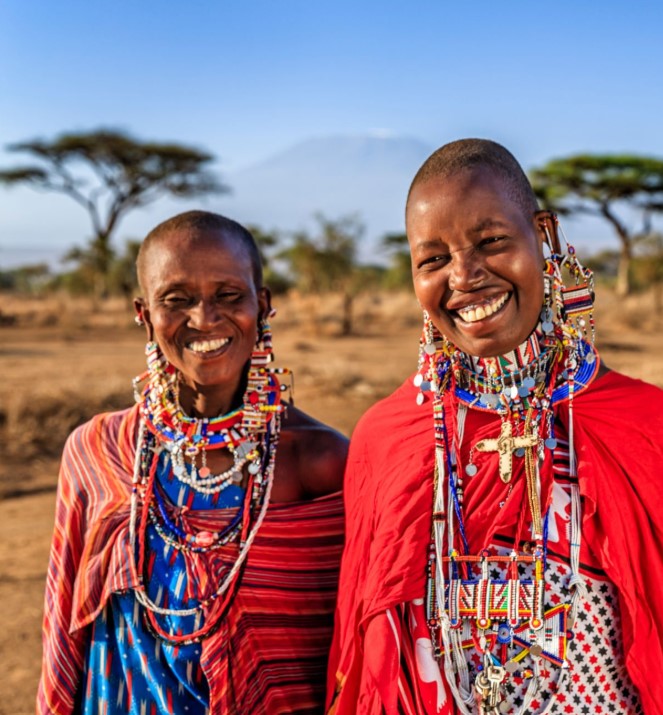
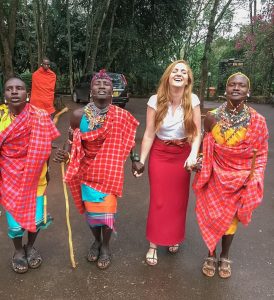
Maasai attire is among the most visually striking in Kenya. The traditional dress includes shukas-colorful cloths wrapped around the body, often in red, which symbolizes bravery and unity. Both men and women adorn themselves with elaborate beadwork jewelry that signifies social status, age, and marital status.
Beadwork is a key component of Maasai culture, with specific colors representing different concepts: red for bravery, blue for the sky, and green for the land. Women make the beads by hand, and the skill is passed down through generations.
Ceremonies and Rites of Passage
Maasai life is marked by various rites of passage that signify transitions in life stages. These include:
- Enkipaata: Pre-circumcision ceremony for boys.
- Emuratta: Circumcision rite marking the transition to manhood.
- Eunoto: Ceremony that promotes warriors to junior elders.
- Marriage rituals: Often arranged by families, with elaborate celebrations.
- Death rituals: Traditionally, the Maasai did not bury their dead but left bodies for scavengers, viewing burial as harmful to the soil. This practice is less common today.
These ceremonies are infused with music, dance, and community gatherings, demonstrating the communal nature of Maasai culture.
Beliefs and Spirituality
The Maasai believe in a monotheistic god called Enkai (or Engai), who is associated with both benevolent and wrathful aspects. Enkai is often linked to natural phenomena like rain, which is vital for the community’s pastoral livelihood.
Spiritual leaders, known as laibons, act as intermediaries between the people and Enkai. They are consulted for blessings, healing, and community guidance. Maasai culture places a high value on harmony with nature, and many of their spiritual beliefs are tied to the land and livestock.
Diet and Food Practices
The Maasai diet traditionally consists of meat, milk, and blood from cattle. Blood is consumed during ceremonies or for medicinal purposes. Over time, the Maasai have incorporated other foods such as maize meal (used to make ugali), rice, and vegetables, especially in communities closer to urban centers.
Though pastoralism remains central to Maasai culture, modern challenges like drought and land encroachment have forced some to adopt farming or diversify their income sources.
Housing and Settlements
The Maasai live in enkangs (homesteads), which consist of several houses (manyattas) made by women using mud, sticks, grass, and cow dung. These homesteads are often arranged in a circular pattern and surrounded by thorn fences to protect livestock from predators.
The simplicity and functionality of Maasai homes reflect their nomadic roots and deep relationship with the environment. Community and extended family play vital roles in daily life, and houses are typically shared among multiple generations.
Relationship with Wildlife and Environment
The Maasai traditionally coexisted peacefully with wildlife, herding cattle in areas that now form part of Kenya’s famous game reserves. However, this relationship is being tested by increasing human-wildlife conflict and the shrinking of grazing lands due to conservation and development projects.
Despite these challenges, many Maasai communities now actively participate in wildlife conservation. Some have set up community conservancies and eco-tourism projects, blending tradition with sustainability. This modern integration highlights the adaptability of Maasai culture in preserving its heritage while embracing change.
Education and Modernization
While historically skeptical of formal education, the Maasai have increasingly recognized its value. More children now attend school, and there are growing numbers of Maasai professionals in various fields, including medicine, education, and politics.
Non-governmental organizations and government initiatives have played a role in improving access to education. Cultural preservation programs have also been introduced to ensure that modernization does not erode Maasai culture.
Tourism and Cultural Showcases
The Maasai are often featured in Kenya’s tourism promotions, and cultural visits to Maasai villages are common safari activities. Tourists are invited to watch traditional dances, learn about the lifestyle, and purchase handmade crafts. These visits offer an opportunity to support the community economically while gaining deeper cultural understanding.
However, there is an ongoing debate about the commercialization of Maasai culture. Critics argue that some presentations are staged or oversimplified, which risks stereotyping. Community-driven tourism models aim to ensure authenticity and benefit sharing.
Challenges Facing the Maasai Community
Despite their iconic status, the Maasai face numerous challenges:
- Land rights issues: Historical land grabs and legal complexities threaten traditional grazing lands.
- Climate change: Droughts and erratic weather patterns affect livestock health and livelihoods.
- Cultural erosion: Globalization and urban migration are causing younger generations to drift from traditions.
- Gender inequality: While progress is being made, women still face limitations in education and leadership.
Organizations and community leaders continue to advocate for policies and programs that protect and promote Maasai culture while improving living standards.
So, what is Maasai culture like in Kenya? It is a rich tapestry of tradition, resilience, and evolving identity. Rooted in pastoralism and communal living, Maasai culture values nature, spirituality, and social harmony. While facing modern pressures, the Maasai people continue to celebrate and preserve their unique way of life, making them not just a cultural symbol of Kenya, but a testament to the power of heritage in a changing world.
Whether you’re a tourist, researcher, or curious traveler, engaging with Maasai culture offers a window into one of Africa’s most compelling indigenous communities. With respect, open-mindedness, and a willingness to learn, visitors can experience a culture that is both ancient and vibrantly alive. Book Now!
Recommended Tours: 6 Days Tanzania Wildlife Safari | 5 Days Ngorongoro & Serengeti Safari