Blue Wildebeest: Where and When to See Them in East Africa
Blue wildebeest stand as the undisputed star of the Great Migration, the single species whose genuinely massive seasonal movement across the Serengeti-Mara ecosystem draws more safari travelers to East Africa than perhaps any other wildlife spectacle on the continent. Understanding exactly where and when the herds move throughout their annual cycle transforms a hopeful migration trip into a precisely timed, genuinely well-planned safari. This guide covers the specifics, from the calving plains through the dramatic river crossings and back again.
The Serengeti-Mara Ecosystem
Blue wildebeest populations move continuously across the connected Serengeti and Maasai Mara ecosystems, following an annual cycle driven by rainfall and grazing conditions across this shared Tanzania-Kenya landscape.
Southern Serengeti: Calving Season
Roughly January through March, the massive herds concentrate in the southern Serengeti’s short-grass plains for calving season, when hundreds of thousands of calves are born within a remarkably compressed timeframe.
Central and Western Serengeti: The Move North
As the dry season progresses, roughly April through June, herds move through the central and western Serengeti, following rainfall patterns toward the northern grasslands.
The Mara River Crossings
Roughly July through October, herds reach the Mara River, executing the dramatic crossings that have become the migration’s most iconic, widely photographed spectacle, facing crocodile ambush predators during the crossing itself.
Return South
From November onward, herds begin moving back south toward the Serengeti’s plains, completing the annual cycle before calving season begins again.
Why Wildebeest Numbers Are So Staggering
The migration involves genuinely enormous numbers of wildebeest, moving in a continuous cycle driven by their need to follow fresh grazing and water, creating one of the largest single-species wildlife movements anywhere on earth.
Understanding the Unpredictability of Exact Timing
While the general migration pattern follows this seasonal cycle, exact timing shifts year to year based on rainfall, meaning even well-planned migration trips carry genuine uncertainty about the precise location of the herds on any given date.
Why Zebras and Other Species Join the Movement
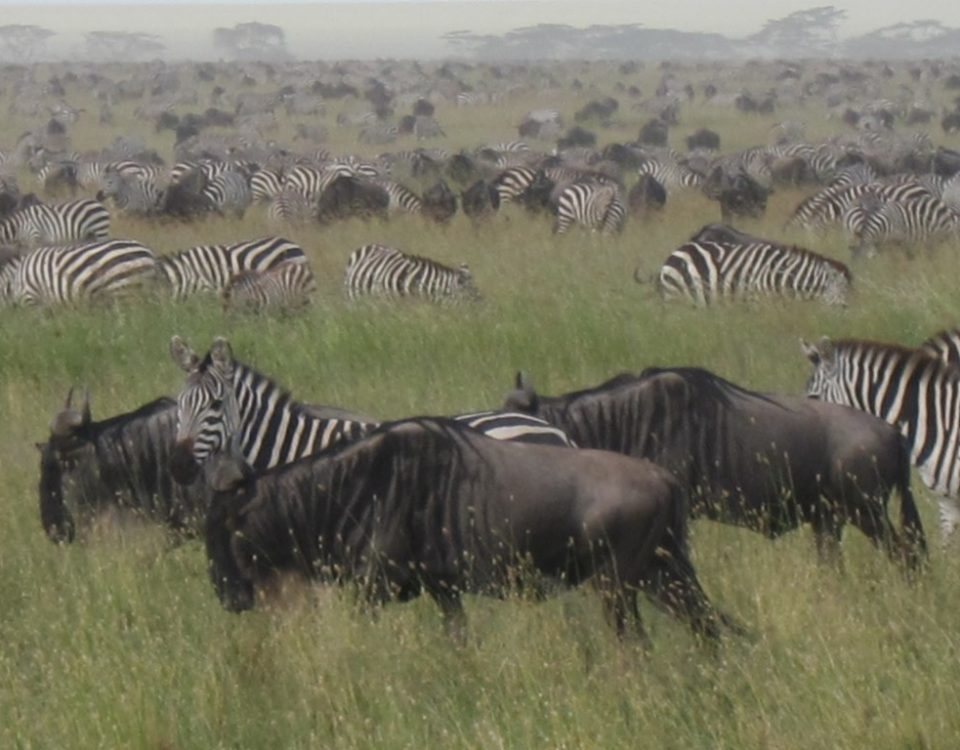
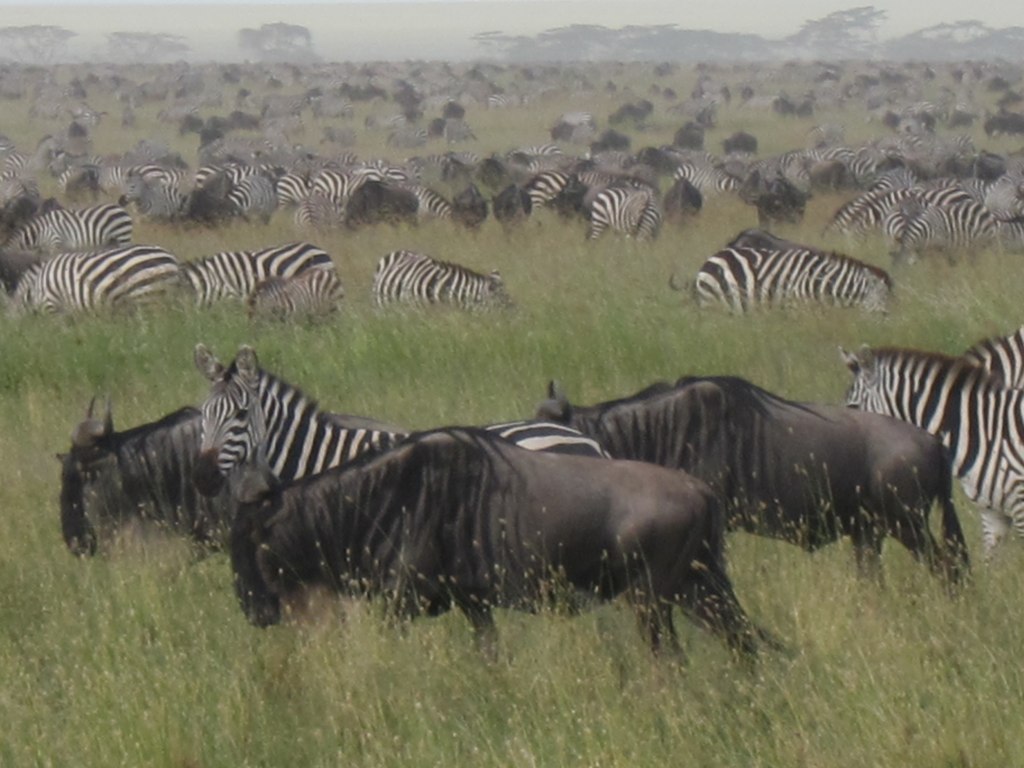
The wildebeest migration doesn’t travel alone, zebras, gazelles, and other grazers move alongside the massive herds, drawn by the same fresh grazing conditions and benefiting from the safety numbers this genuinely enormous combined movement provides against predators.
Wildebeest Behavior Beyond the Migration
Beyond the dramatic crossings, wildebeest display genuinely interesting grazing and social behavior throughout the year, moving in coordinated herds that offer rich viewing even outside the peak crossing season.
Why Working With Local Experts Matters
Given the migration’s inherent unpredictability, working with operators who maintain current, on-the-ground knowledge of herd locations genuinely improves your odds of witnessing peak movement during your specific travel dates.
What Triggers a River Crossing Attempt
Wildebeest herds often gather at the riverbank for extended periods, sometimes hours, building up numbers and apparent nervous energy before a single individual finally commits to the crossing, triggering the rest of the herd to follow in a genuinely chaotic, high-stakes rush that guides can never predict with complete certainty.
Why Calving Season Offers a Different Kind of Drama
Beyond the famous river crossings, the southern Serengeti’s calving season offers its own genuinely intense wildlife drama, with the sheer concentration of vulnerable newborn calves drawing significant predator activity from lions, hyenas, and cheetahs across the open plains.
How Wildebeest Calves Develop So Quickly
Wildebeest calves display genuinely remarkable precocial development, standing and walking within minutes of birth and capable of running alongside the herd within a day, an evolutionary adaptation essential for survival given the sheer concentration of predators drawn to the calving grounds during this vulnerable period.
Why the Migration Follows a Roughly Clockwise Pattern
The migration’s broadly clockwise annual route across the Serengeti-Mara ecosystem reflects genuine long-term rainfall patterns and grazing regeneration cycles, a route wildebeest herds have followed for countless generations even as exact timing shifts somewhat from year to year.
How Crocodiles Time Their Ambush Around the Crossings
Nile crocodiles within the Mara River genuinely adjust their own feeding patterns around the predictable seasonal arrival of migrating herds, making the crossing season a critical annual feeding opportunity for the river’s resident crocodile population as much as it is a photographic spectacle for visiting travelers.
Why Multiple Crossing Attempts Sometimes Occur in a Single Day
Herds sometimes cross the Mara River multiple times within days or even hours of each other, moving back and forth as grazing conditions on either bank shift, meaning a single well-positioned viewing day can genuinely offer several dramatic crossing opportunities rather than just one.
How Guides Read Herd Behavior to Predict a Crossing
Experienced guides watch for genuinely specific behavioral cues, herd density building along the riverbank, increased vocalization, and visible agitation, that often precede an actual crossing attempt, expertise that considerably improves the odds of being well-positioned when the herd finally commits.
Common Questions About Migration Timing
Travelers frequently ask whether the migration follows an exact, predictable calendar, and honestly, no, while the general pattern holds year to year, specific dates shift based on rainfall, meaning flexibility and current on-the-ground information matter more than rigid calendar planning. Visitors also ask whether crossings happen daily during peak season, and while crossing attempts do occur regularly during July through October, witnessing one on any specific day still requires genuine luck and good guiding.
Why This Migration Remains Unmatched
No other wildlife spectacle on earth matches the sheer scale and drama of the wildebeest migration, and understanding its genuine seasonal rhythm transforms a hopeful safari wish into a realistically well-planned, unforgettable trip centerpiece.
Why Flexible Trip Dates Genuinely Improve Your Odds
Given the migration’s inherent year-to-year variability, travelers with even a few days of scheduling flexibility around their target window genuinely improve their realistic odds of witnessing peak herd movement compared to those locked into a single rigid date.
How Wildebeest Herds Coordinate Such Massive Group Movement
Despite lacking any single visible leader, wildebeest herds display genuinely coordinated collective movement, likely guided by a combination of following behavior, environmental cues like rainfall and green vegetation, and simple herd instinct that keeps hundreds of thousands of individuals moving in roughly the same direction at once.
Why the Mara Triangle Offers a Genuinely Different Crossing Experience
Compared to the more heavily visited Kenyan side of the Mara ecosystem, the Mara Triangle’s crossing points sometimes offer a genuinely less crowded viewing experience, a detail experienced operators factor into positioning recommendations during peak crossing season.
How Vultures and Other Scavengers Follow the Migration
Beyond the predators actively hunting wildebeest, vultures and other scavenging species genuinely track the migration’s movement closely, following the herds to capitalize on the inevitable casualties from crossings, predation, and natural mortality along the route.
Why Wildebeest Grunts Create Such a Distinctive Soundscape
The migration’s genuinely distinctive low, guttural grunting calls, audible from considerable distance across the plains, create an atmospheric soundscape that many travelers describe as almost as memorable as the visual spectacle itself, especially during the concentrated calving season.
How Climate Variability Has Affected Recent Migration Patterns
Shifting rainfall patterns in recent years have introduced genuinely greater year-to-year variability into the migration’s exact timing, making current, on-the-ground intelligence from experienced local operators considerably more valuable than relying purely on historical averages when planning your specific travel dates.
Why Some Travelers Plan Multiple Migration Trips
Given how dramatically conditions and specific herd behavior can differ between visits, some genuinely dedicated safari travelers return multiple times across different years or seasons specifically to experience the migration’s varied phases, from calving season drama to the river crossings themselves.
Why This Spectacle Rewards Multiple Days at the Right Location
Given the genuine unpredictability of exactly when a crossing will occur, travelers who build in several consecutive days at a well-positioned camp near known crossing points considerably improve their realistic odds compared to a single rushed day trip hoping for perfect timing.
How This Sighting Anchors an Entire East Africa Trip
For many travelers, the wildebeest migration serves as the genuine centerpiece around which an entire East Africa itinerary gets built, with other activities and destinations scheduled deliberately around the migration’s current predicted location during their travel window.
Why This Migration Consistently Exceeds Expectations
Even travelers who arrive having seen countless migration photographs and documentaries consistently describe the actual scale and sensory intensity of witnessing the herds firsthand as genuinely surpassing anything a screen could adequately convey, from the sheer number of animals to the sound and dust of a crossing in progress.
Why This Species Deserves Recognition Beyond the Migration Alone
While the migration rightfully dominates blue wildebeest’s reputation, appreciating the species’ broader year-round behavior, social structure, and ecological role adds genuine depth to understanding exactly why this particular animal became the centerpiece of Africa’s most famous wildlife spectacle in the first place.
Planning Your Migration Safari
Working with an experienced operator to time your visit around the current migration cycle ensures the best realistic chance of witnessing this extraordinary spectacle during your East Africa safari, turning careful seasonal timing into the genuine centerpiece memory of your entire trip.
Recommended Tours: 12-Day Uganda Gorilla Tours and Kenya Great Migration Safaris | 10 Days Ultimate Uganda Gorilla & Big Five Safari