Budget Gorilla Safari: How to See Gorillas Without Overspending
Planning a budget gorilla safari is possible if you choose the right destination, travel during affordable periods and carefully manage accommodation and transport expenses. Although gorilla trekking is one of Africa’s more expensive wildlife experiences, you do not need luxury lodges or private flights to see mountain gorillas in their natural habitat.
Uganda is generally the most affordable established destination for international visitors seeking mountain gorilla trekking. Its standard foreign non-resident permit costs US$800, compared with Rwanda’s US$1,500 permit.
For 2027, Uganda also offers discounted standard gorilla permits at US$600 during April, May and November for eligible foreign non-residents.
These savings make Uganda attractive for solo travellers, couples, families and small groups.
However, the permit is only one part of your safari budget. Accommodation, transport, meals and personal expenses can significantly affect your total costs.
This guide explains how to organise an affordable gorilla trekking safari, including realistic budgets, economical accommodation, transport options and practical ways to save without compromising safety.
How Much Does a Budget Gorilla Safari Cost?
A three-day budget gorilla safari in Uganda may cost approximately US$1,200–1,700 per foreign non-resident sharing accommodation and transport.
In Rwanda, a similar basic safari commonly requires a larger budget because of the higher permit price.
Estimated Budget Gorilla Safari Prices
| Expense | Uganda | Rwanda |
|---|---|---|
| Standard gorilla permit | US$800 | US$1,500 |
| Two nights’ budget accommodation | US$80–160 | US$100–200 |
| Shared transport | US$200–400 | US$100–250 |
| Meals and drinking water | US$40–80 | US$40–80 |
| Porter and personal expenses | US$20–50 | US$20–50 |
| Estimated total | US$1,140–1,690 | US$1,760–2,630 |
These are illustrative planning estimates for travellers sharing transport. They are not guaranteed package quotations.
International flights, visas and travel insurance are excluded.
Actual expenses depend on your travel dates, accommodation choices and group size.
1. Choose Uganda for Affordable Gorilla Trekking
The first major decision is selecting your gorilla trekking destination.
Uganda offers trekking in Bwindi Impenetrable National Park and Mgahinga Gorilla National Park.
Rwanda offers trekking in Volcanoes National Park.
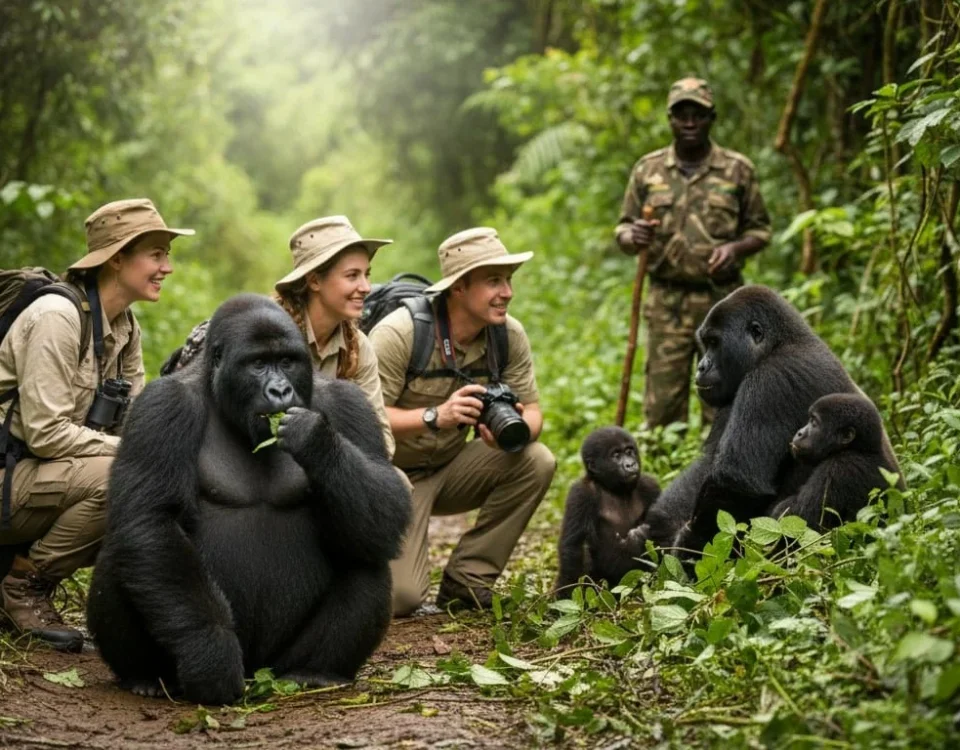
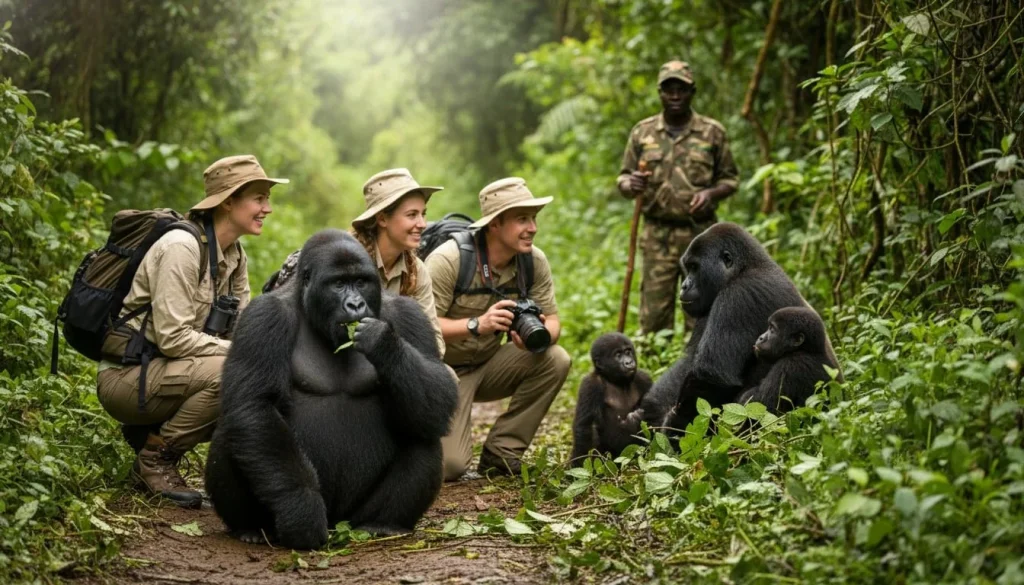
Both countries allow visitors up to one hour observing a habituated gorilla family.
The main difference for international travellers is the standard permit price.
Uganda vs Rwanda Gorilla Permit Prices
| Visitor category | Uganda | Rwanda |
|---|---|---|
| Standard international visitor | US$800 | US$1,500 |
| Two international visitors | US$1,600 | US$3,000 |
| Four international visitors | US$3,200 | US$6,000 |
Choosing Uganda can save a couple US$1,400 on standard permits.
However, Rwanda offers shorter road transfers from Kigali to Volcanoes National Park.
If you are already in Kigali, calculate the entire journey before deciding that travelling to Uganda will be cheaper.
2. Travel During Uganda’s Low Season
One effective way to reduce the cost of a budget gorilla safari is to travel during Uganda’s officially discounted months.
Under the published 2027 conservation tariff, eligible foreign non-residents pay US$600 instead of US$800 during April, May and November.
Foreign residents pay US$500 instead of US$700.
For two foreign non-residents, low-season permits cost US$1,200 rather than US$1,600.
That represents a saving of US$400.
Is Low-Season Trekking Worth It?
April and May are generally wet months in Uganda, while November often brings shorter seasonal rains.
Forest trails may become muddy and slippery, making trekking more demanding.
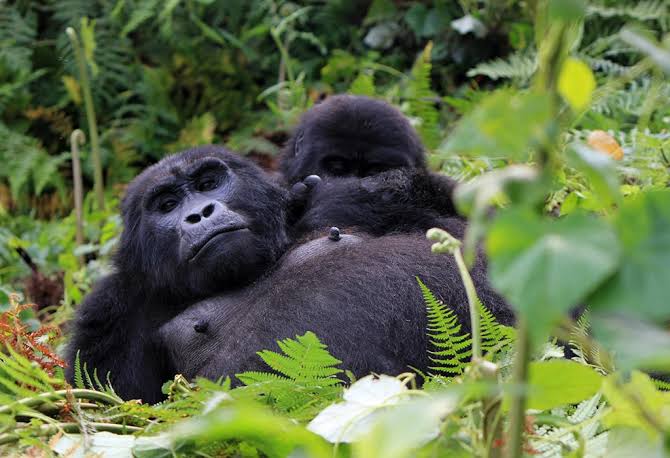
However, mountain gorillas remain in their natural habitat throughout the year.
The discounted permit provides the same standard maximum observation time.
If you are comfortable with wet-weather hiking, these months can offer good value.
Pack waterproof clothing, comfortable hiking boots and a suitable daypack.
3. Choose Budget Accommodation Near Bwindi
Accommodation is one of the easiest expenses to control.
Bwindi has guesthouses, community accommodation and modest safari lodges alongside expensive luxury properties.
Budget rooms may cost approximately US$40–100 per night, depending on location and included services.
However, choosing the cheapest accommodation without considering its location can increase transport expenses.
Understand Bwindi’s Trekking Sectors
Bwindi has four main trekking sectors:
-
Buhoma
-
Ruhija
-
Rushaga
-
Nkuringo
Each sector has different access routes and nearby accommodation.
For example, booking accommodation near Buhoma while holding a Rushaga permit may require a lengthy road transfer.
Before reserving accommodation, confirm your trekking sector.
Choose a lodge close enough to reach the morning briefing comfortably.
Save Without Sacrificing Comfort
Look for accommodation offering clean rooms, reliable meals and early breakfast arrangements.
Ask whether packed lunch is included.
Check whether drinking water and transport to the briefing point are available.
You do not need luxury facilities to enjoy gorilla trekking.
A simple lodge in the correct location can provide better practical value than an expensive property far from your starting point.
4. Share Transport With Other Travellers
Transport is another major expense, especially when travelling from Entebbe to Bwindi.
The road journey commonly takes approximately eight to eleven hours, depending on your destination and road conditions.
Hiring a private safari vehicle alone can be expensive.
However, sharing a vehicle with other travellers reduces the individual cost.
Example of Shared Transport Savings
Suppose a vehicle costs US$600 for a three-day trip.
| Number of travellers | Transport cost per person |
|---|---|
| 1 traveller | US$600 |
| 2 travellers | US$300 |
| 4 travellers | US$150 |
| 6 travellers | US$100 |
This example assumes the same total vehicle cost and sufficient seating. Actual rates depend on the vehicle, route and services provided.
Small-group safaris are particularly useful for solo travellers who want to avoid paying for an entire vehicle.
Before booking, confirm whether the quoted transport price includes fuel, driver expenses and return transfers.
5. Consider Travelling by Road Instead of Flying
Domestic flights can reduce travel time but increase costs.
Visitors travelling from Entebbe can fly towards south-western Uganda using airstrips such as Kihihi and Kisoro.
However, scheduled flight fares and onward transfers can add several hundred dollars to your safari budget.
For budget travellers, travelling by road is often more economical, especially when sharing transport.
The road journey also allows stops for meals, photographs and sightseeing.
However, allow sufficient travel time and avoid planning a long drive immediately before your morning trek.
Arriving the previous day is strongly recommended.
6. Avoid Unnecessary Luxury Safari Extras
Luxury gorilla safari packages may include premium accommodation, private flights, expensive vehicles and additional personalised services.
These facilities can improve comfort, but they do not increase your standard gorilla viewing time.
Whether you stay in a budget guesthouse or luxury lodge, the standard gorilla encounter allows up to one hour with the assigned family.
For a budget gorilla safari, concentrate your spending on essentials.
These include a valid permit, reliable transport, suitable accommodation and appropriate trekking equipment.
Avoid paying for extras that do not match your interests or available budget.
7. Book Your Gorilla Permit Early
Gorilla permits are limited, particularly during popular travel periods.
Booking early helps you secure your preferred trekking date and choose affordable accommodation before cheaper rooms become unavailable.
For popular months such as June, July, August and September, consider checking permit availability six to twelve months in advance.
For quieter periods, you may find permits closer to departure, but availability is never guaranteed.
Foreign non-resident visitors booking Uganda gorilla permits must use tour operators licensed by the Uganda Tourism Board under the published Uganda Wildlife Authority procedures.
Request written confirmation of your permit, trekking date and sector.
8. Save Money on Meals and Personal Expenses
Food expenses can increase when meals are not included in your accommodation package.
Before booking, ask whether your lodge provides breakfast, dinner and a packed lunch for trekking day.
Full-board accommodation may provide better value than paying separately for every meal.
Carry suitable drinking water and a few snacks for the journey.
Avoid unnecessary purchases at expensive tourist stops when similar essentials are available locally.
However, do not compromise food safety simply to save money.
Budget for a porter if you need assistance during the trek.
Porters support local livelihoods and can make difficult forest sections more manageable.
9. Budget Gorilla Safari for Solo Travellers
Solo travellers often face higher individual transport and accommodation expenses.
The gorilla permit costs the same regardless of whether you travel alone or with others.
However, private vehicle expenses cannot be shared when you book alone.
Joining a small-group safari can reduce this cost.
You may also consider shared accommodation where suitable.
When requesting quotations, ask whether the operator has an existing departure you can join.
Confirm the group size, accommodation arrangements and activities included before making payment.
10. Example Three-Day Budget Gorilla Safari
A short Uganda gorilla safari can be organised without expensive luxury services.
Day 1: Entebbe to Bwindi
Depart Entebbe early and travel towards south-western Uganda.
Stop for lunch along the route before continuing to your accommodation near the correct Bwindi trekking sector.
Enjoy dinner and prepare for the following morning.
Day 2: Gorilla Trekking
After an early breakfast, travel to the park briefing point.
Join your ranger-guided trekking group and enter the forest.
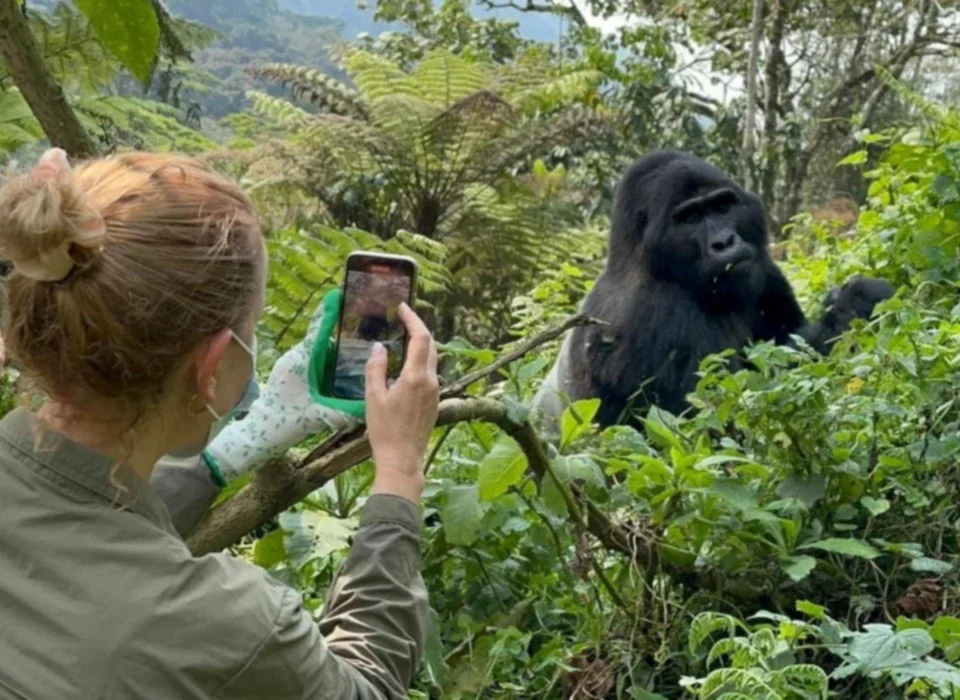
Once the gorillas are located, enjoy up to one hour observing them.
Return to your lodge for relaxation and dinner.
Day 3: Return to Entebbe
Enjoy breakfast before beginning the return road journey.
Make suitable stops along the way.
If you have an international flight, allow enough time for possible delays. Staying overnight in Entebbe may be safer than relying on a tight same-day connection.
Frequently Asked Questions
What is the cheapest way to see mountain gorillas?
For many foreign non-residents, Uganda’s low-season standard permit offers one of the most affordable established options. Combining it with shared transport and budget accommodation can reduce the total cost.
Can you see gorillas for less than US$1,000?
For a foreign non-resident, the low-season Uganda permit costs US$600. However, accommodation, transport and other expenses usually increase the complete safari cost beyond US$1,000.
Is budget gorilla trekking safe?
A properly organised budget safari can be safe when you use authorised permits, experienced guides and reliable transport. Lower accommodation prices do not automatically mean lower safety standards.
Are gorilla sightings better on luxury safaris?
No. Gorilla families move naturally, and the permit price or accommodation category does not determine their behaviour or visibility.
How many days are enough for a budget gorilla safari?
Three days is a common minimum for a road-based trip starting and ending in Entebbe. Travellers arriving through Kigali or using domestic flights may consider different arrangements.
A budget gorilla safari is achievable when you make careful decisions about permits, accommodation and transport.
Uganda provides particularly good value for international visitors because its standard permit costs US$800, with eligible low-season permits available for US$600 during April, May and November.
Sharing a safari vehicle, choosing affordable accommodation near your trekking sector and travelling by road can further reduce expenses.
Most importantly, avoid spending money on unnecessary luxury services if your main goal is seeing mountain gorillas.
With proper planning, you can enjoy a memorable gorilla trekking experience while keeping your safari costs manageable.