Buganda Kingdom: Uganda’s Living Culture and the Kabaka’s Palace
A Buganda Kingdom culture tour offers visitors a window into one of Africa’s most enduring traditional monarchies, a kingdom that predates Uganda’s colonial and post-independence borders and continues to hold genuine cultural, and in some respects political, significance today. Centered on Kampala and its surrounding region, Buganda remains Uganda’s largest and most prominent traditional kingdom, and understanding even the basics of its history and living institutions adds real depth to time spent in and around the capital.
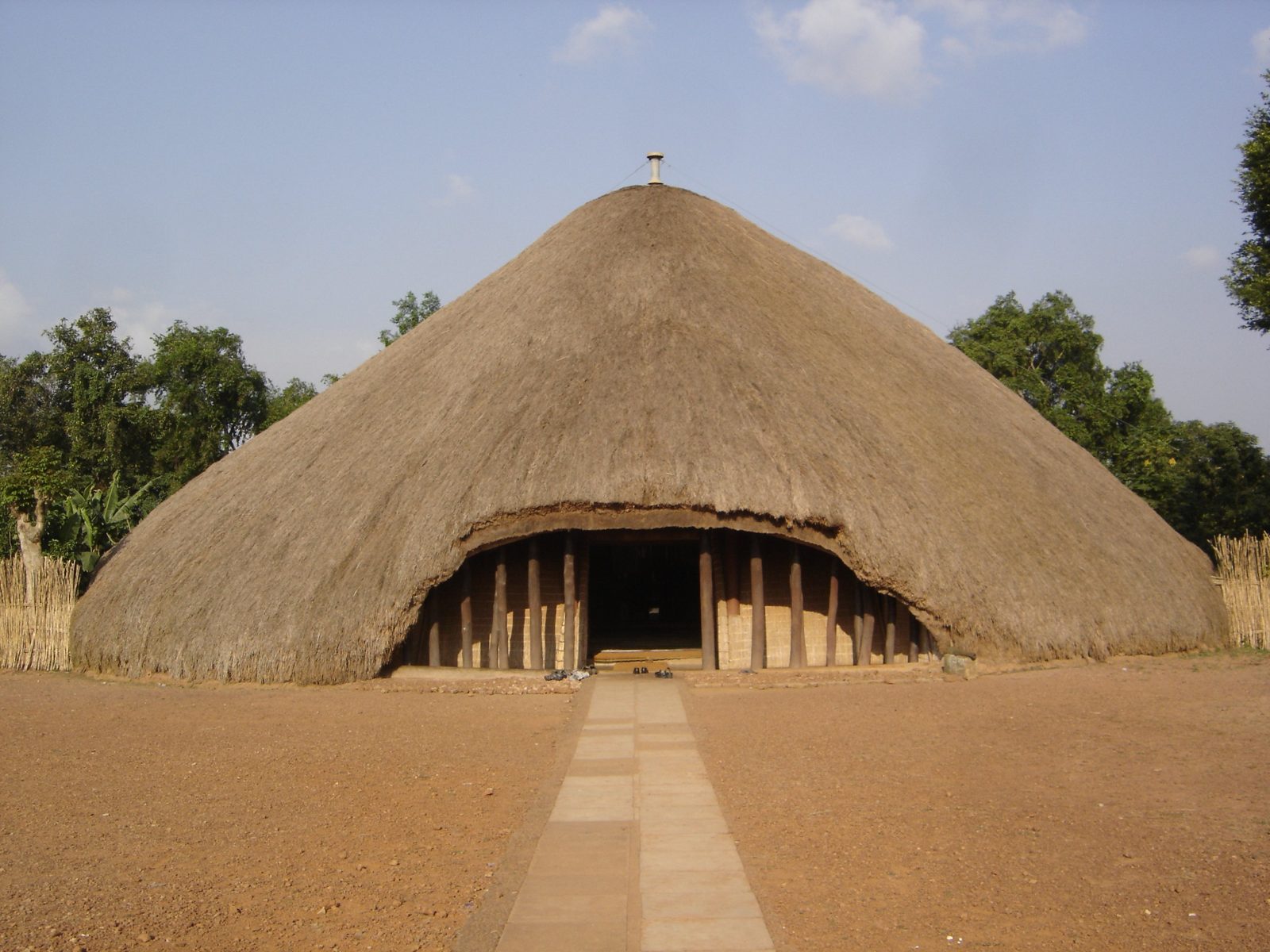
The traditional thatched Muzibu-Azaala-Mpanga structure at the Kasubi Tombs, Kampala (photographed before the 2010 fire; the site has since been fully restored). Photo: Flickr user “not not phil”, CC BY-SA 2.0, via Wikimedia Commons.
What Is the Buganda Kingdom?
Buganda is a traditional, culturally defined kingdom within modern Uganda, led by a Kabaka, or king, whose institution has persisted, with a notable interruption during the 1966 to 1993 abolition of Uganda’s traditional kingdoms, since long before European contact. Unlike a fully sovereign state, Buganda operates as a cultural and traditional institution within Uganda’s modern republic, with the Kabaka holding largely ceremonial and cultural authority rather than direct governmental power, though the kingdom’s institutions still command genuine loyalty and influence among the Baganda people, Uganda’s largest ethnic group.
The Kasubi Tombs
The Kasubi Tombs, a UNESCO World Heritage Site on the outskirts of Kampala, serve as the burial ground for four Buganda kings and remain an active site of spiritual and cultural significance rather than a purely historical monument. The main tomb structure, Muzibu-Azaala-Mpanga, a large domed building built using traditional materials and construction techniques, burned down in a 2010 fire under circumstances that remain officially undetermined, and reconstruction, supported by international funding including from the Japanese government, restored the site fully by 2023, leading to its removal from UNESCO’s endangered list.
The Kabaka’s Palace at Mengo
The Kabaka’s official palace at Mengo, within Kampala, continues to serve as the seat of the modern Buganda monarchy, and while much of the palace complex remains private, visitors can access certain areas, particularly the nearby Idi Amin torture chambers, a somber historical site from Uganda’s more troubled political history that sits within the broader palace grounds. Visiting requires arranging access through a knowledgeable guide familiar with what’s currently open to visitors, since palace access policies can shift and casual visitors shouldn’t expect the same open access as a standard tourist attraction.
The Buganda Parliament and Cultural Institutions
Buganda maintains its own parliament, known as the Lukiiko, alongside various cultural and administrative institutions that operate within Uganda’s modern legal framework rather than as a separate governing authority. These institutions handle matters of cultural preservation, traditional land arrangements, and ceremonial functions, and their continued operation reflects the genuine, ongoing relevance of Buganda’s traditional governance structures within contemporary Ugandan life, not merely a symbolic historical remnant.
Traditional Ceremonies and Cultural Practices
Buganda’s cultural calendar includes various ceremonies and traditions, from coronation-related rituals to cultural celebrations that draw significant participation from the Baganda community, and travelers fortunate enough to visit during a relevant cultural event gain a genuinely rare window into living tradition rather than a staged tourist performance. Traditional Buganda dress, music, and dance also feature at cultural centers and some tourism-oriented demonstrations around Kampala, offering a more accessible, if less spontaneous, introduction to these traditions for visitors unable to time their trip around an actual ceremonial calendar.
Buganda’s Role in Uganda’s Broader History
Understanding Buganda’s history helps make sense of considerable parts of Uganda’s colonial and post-independence political story, since the kingdom’s relationship with British colonial administrators, and later with Uganda’s various post-independence governments, has shaped the country’s political development in ways that continue to influence contemporary Ugandan politics and regional identity. The 1966 abolition of Uganda’s traditional kingdoms by Milton Obote’s government, and their restoration under Yoweri Museveni in 1993, reflects genuine political tension around the role traditional authority should play within a modern nation-state, a tension that hasn’t fully resolved even today.
Visiting Respectfully
As with any visit to a living cultural and religious institution, approaching Buganda’s sites, particularly the Kasubi Tombs, with appropriate respect, modest dress, and attentiveness to guide instructions around behavior and photography matters considerably more here than at a purely historical monument with no ongoing religious or ceremonial function. Working with a guide who genuinely understands Buganda culture and current visiting protocols, rather than treating these sites as generic tourist stops, produces a considerably more meaningful and appropriate visit.
Other Traditional Kingdoms in Uganda
While Buganda is the largest and most prominent, Uganda recognizes several other traditional kingdoms, including Toro, Bunyoro, and Busoga, each with its own monarch, cultural institutions, and historical relationship to the modern Ugandan state. Travelers exploring western Uganda near Fort Portal, for instance, can visit sites connected to the Toro Kingdom, offering a comparative view of how Uganda’s various traditional monarchies have each navigated their own path through colonial history and modern nationhood.
The Buganda Language and Everyday Culture
Luganda, the language of the Baganda people, remains one of Uganda’s most widely spoken indigenous languages, and its influence extends well beyond Buganda’s traditional territory given the kingdom’s historical prominence and Kampala’s role as national capital. Everyday greetings, food customs, and social etiquette across much of central Uganda reflect Buganda cultural norms even among Ugandans from other ethnic backgrounds, making a basic understanding of Buganda culture broadly useful for navigating social interactions throughout the Kampala region.
Craft Markets and Cultural Souvenirs
Kampala’s markets and craft centers offer traditional Buganda textiles, including the distinctive bark cloth once reserved for royal and ceremonial use and now produced more widely as both a cultural product and tourist souvenir. Buying directly from artisans or cooperatives with transparent, fair pricing practices, rather than exclusively from tourist-focused shops, offers a more meaningful way to support the continuation of these traditional craft skills while bringing home a genuinely representative piece of Buganda material culture.
Hiring a Knowledgeable Cultural Guide
Because Buganda’s history and current institutions carry real political and cultural nuance, a knowledgeable local guide adds considerably more value here than at a more straightforward wildlife or scenic attraction. Guides with genuine expertise in Buganda history can explain the layered relationship between the kingdom’s traditional authority and Uganda’s modern government, context that transforms a visit to sites like Kasubi from a simple architectural tour into a genuinely informative introduction to Ugandan political and cultural history.
Combining Buganda Culture With Your Uganda Itinerary
Kampala’s position as both Uganda’s capital and the heart of the Buganda Kingdom makes a cultural stop here a natural addition either at the start or end of a broader gorilla trekking and safari itinerary, since most international flights route through Entebbe near Kampala regardless of where the rest of your trip takes you. Building in a half-day or full day for Kasubi Tombs and other Buganda cultural sites adds a genuinely different dimension to a trip otherwise focused on wildlife and trekking, rounding out a Uganda visit with the country’s rich human history alongside its natural attractions, and giving the trip a dimension that gorillas and game drives alone can’t fully provide.
Recommended Tours: 7 Days Uganda Gorilla Trekking and Cultural Experience | 9 Days Uganda Gorilla Safaris & Jinja Nile Cultural Experience