Dietary Needs on Safari: Vegetarian, Vegan and Allergy-Friendly Tips
When planning your dietary needs on safari, ask about the meal you will eat farthest from the kitchen. A lodge may offer a good vegan dinner or be able to prepare a separate meal for an allergy. That tells you little about the breakfast packed for an early gorilla trek or the lunch served halfway through a game drive. Find out who prepares those meals and check the contents before you leave.
For vegetarian and vegan travellers, the goal is a satisfying meal rather than a plate of side dishes. For travellers with a food allergy or coeliac disease, the question is whether each kitchen can confirm the ingredients and manage cross-contact. Get that answer before paying a deposit, particularly if your itinerary includes remote camps where changing the meal or going elsewhere may be difficult.
How to Communicate Dietary Needs on Safari
Send your requirements when you ask for a quote. Ask the operator to check with every lodge, camp and outside caterer that will prepare your meals. If one property cannot meet your needs, it is easier to change the itinerary before you book than after you have arrived.
Be specific enough that the kitchen does not have to guess. “Vegetarian, including eggs and dairy, but no meat, fish or animal stock” is more useful than “I don’t eat meat.” If avoiding an ingredient is medically necessary, say so clearly. Ask for written confirmation and repeat the request to the kitchen when you check in, especially if you have a serious allergy.
| Dietary need | What to explain | What to check before eating |
|---|---|---|
| Vegetarian | No meat or fish. Say whether you eat eggs and dairy. | Meat or fish stock in soups, sauces, rice and stews |
| Vegan | No meat, fish, eggs, dairy or honey. | Butter, ghee, milk, dressings and ingredients in bread or pastries |
| Food allergy | Name each allergen and explain that even small amounts are a concern if this applies to you. | Ingredient labels, shared equipment, oil and serving utensils |
| Coeliac disease | Explain that you need to avoid gluten for medical reasons. | How the kitchen handles shared fryers, toasters, boards and sauces |
What Can Vegetarians and Vegans Eat on Safari?
Ask for one example of a full day’s meals
Instead of asking whether a camp caters for vegans, ask what it could serve you for breakfast, packed lunch and dinner. This quickly shows whether your request has reached the kitchen. A useful answer might include porridge made with water and fruit at breakfast, a rice and bean dish for lunch, and a lentil or vegetable stew at dinner. These are examples, not a standard safari menu.
Ask specifically for a filling main dish if you will spend several hours walking or driving. Beans, lentils or chickpeas, if suitable for you, can make a meal more substantial than vegetables and rice alone. If you are changing camps every night, ask your operator to check for variety as well as availability.
Check how local dishes are made
In Uganda, matoke with beans can be a good option, depending on the recipe. Ask whether the beans contain meat stock and whether groundnut sauce comes with the dish. Groundnut is another name for peanut, which matters if you have a peanut allergy. In Kenya or Tanzania, ugali with cooked greens may suit your diet, but ask what the cook adds to the greens.
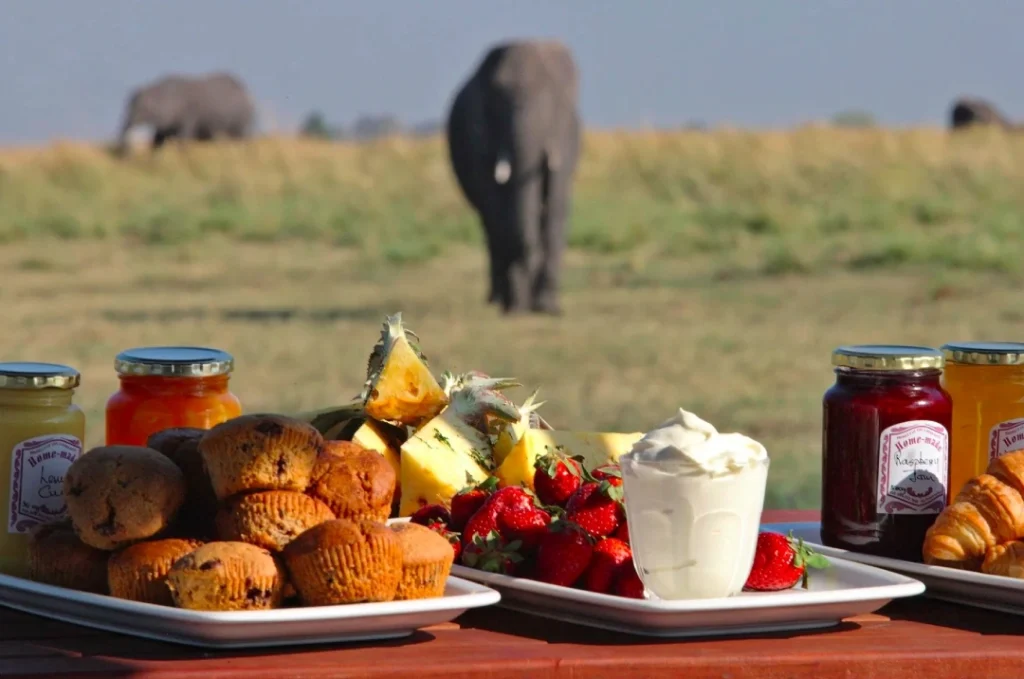
Breakfast is another place where assumptions can cause problems. Porridge may contain milk, toast may arrive buttered and a pastry may contain eggs. If you want plant milk for coffee, ask whether the camp can supply it. If you have a milk or egg allergy, continue to state it even when choosing from a vegan menu. A vegan recipe does not tell you what shared equipment or ingredients it may have come into contact with.
How to Manage Food Allergies and Coeliac Disease at Camp
Ask the chef to describe how your meal will be prepared
The best test is to ask what happens between checking the ingredients and bringing the plate to your table. For example, a dish may contain no peanuts by recipe, but the same pan, chopping board or serving spoon might have been used for another meal. Frying oil can also be shared. Taking a garnish off a finished plate does not undo contact with the food underneath.
Ask whether the kitchen can check ingredient labels, use clean equipment and keep your meal separate through preparation and serving. If your camp serves a buffet, ask whether the chef can plate your meal in the kitchen before guests use shared spoons. If an ingredient changes because a delivery did not arrive, ask staff to check with you before serving the substitute.
Be willing to change properties if the answer is unclear
A chef who says the kitchen cannot manage your requirements is giving you useful information. If you have a serious allergy and a camp cannot explain its procedures, choose another property or a meal arrangement you can verify. A promise to “be careful” does not tell you what will happen in the kitchen.
If you have coeliac disease, ask about shared fryers and toasters as well as flour, bread and pasta. Check soups, stock cubes, sauces and spice mixes. Plain rice may work, but only after you know what it was cooked with and how it was handled. Explain the need to avoid cross-contact even if the menu already lists gluten-free dishes.
How to Check Packed Lunches and Bush Breakfasts
Ask about the next day’s food the evening before, when the kitchen still has time to make changes. Check which property is providing the meal, especially on transfer days. Your breakfast may come from the lodge you are leaving, while your new camp only takes over at dinner. If a different kitchen handles the picnic, make sure it has received the same instructions.
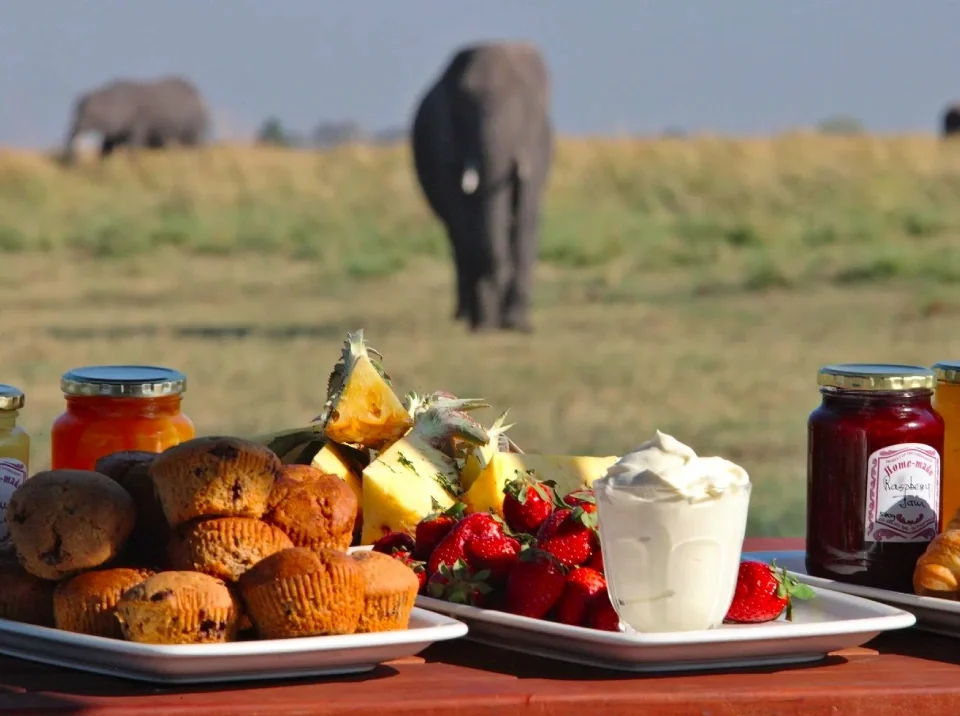
Ask the kitchen to label the meal with your name and pack it separately if needed. Check every item, including biscuits, dressings, sandwich fillings and spreads. The wrong side dish can be as important as the wrong main. Ask how perishable food will be kept cool if it will sit in the vehicle for several hours.
Carry a few labelled snacks you already know you can eat, subject to airline and border rules. Keep them with you rather than in luggage you cannot reach during the drive. If the wrong meal arrives and you cannot verify it, do not eat it. Use your backup and let the guide know while there is still time to prevent the same mix-up at the next meal.
Make an Allergy Emergency Plan Before You Travel
If you are at risk of anaphylaxis, review your travel plans with your allergy clinician. Ask how much medication to carry and how to store it in hot conditions. Keep your prescribed adrenaline auto-injectors and emergency plan immediately accessible during flights, transfers and game drives. Show your travel companion where the medication is and explain the plan before you set out.
Ask your operator how the guide would contact emergency services from the area you will be visiting. Find out where the nearest appropriate medical facility is and what transport is available if mobile coverage is poor. A small card listing your allergens can help at meals. If language is likely to be a barrier, have the wording checked by a fluent speaker before the trip.
If you suspect anaphylaxis, use adrenaline immediately as directed in your emergency plan and get emergency medical help. Do not wait to see whether an antihistamine helps.
Sample Message to Send Your Safari Operator
I follow a vegan diet and do not eat meat, fish, eggs, dairy or honey. Could you confirm what each camp can prepare for breakfast, dinner and game-drive lunches? Please check that soups, stews and sauces do not contain animal stock, butter or ghee.
For a medical allergy, give the preparation team more specific information:
I have a severe peanut allergy, including groundnuts. Small amounts can cause a reaction. Can each kitchen check ingredients and prepare my meals without peanut contact from shared oil, equipment or serving utensils? Please confirm who will prepare my packed lunches and let me know if any stop cannot meet these requirements.
Frequently Asked Questions
Can you be vegan on a safari with several remote camps?
Often, yes. The important thing is to get a response from each camp, including what it can pack for outings. Do not assume the same arrangements apply across all properties in a booking.
Are buffet meals suitable if you have a food allergy?
They can be harder to verify because utensils may be shared. Ask the chef whether they can prepare and plate your meal separately. If you cannot confirm the ingredients or how the meal was handled, choose your planned alternative.
What if someone in your group has several dietary needs?
List them together and make clear which are medical requirements. For example, say “vegan with a severe sesame allergy” rather than putting the two needs in separate messages. Ask the kitchen to confirm the meal meets both.