Ethiopia Travel Guide: Everything First-Time Visitors Need to Know
Ethiopia rarely gets the attention it deserves in conversations about East African travel, overshadowed by the gorilla trekking of Uganda and Rwanda or the classic savannah safaris of Kenya and Tanzania. Yet this Ethiopia travel guide exists precisely because the country offers something genuinely different from the rest of the region: rock-hewn churches carved directly into mountainsides, one of the oldest written histories in Africa, dramatic highland trekking, and landscapes as otherworldly as anywhere on the continent. For first-time visitors, Ethiopia rewards a bit of extra planning, and this guide walks through everything you need to know before you go.
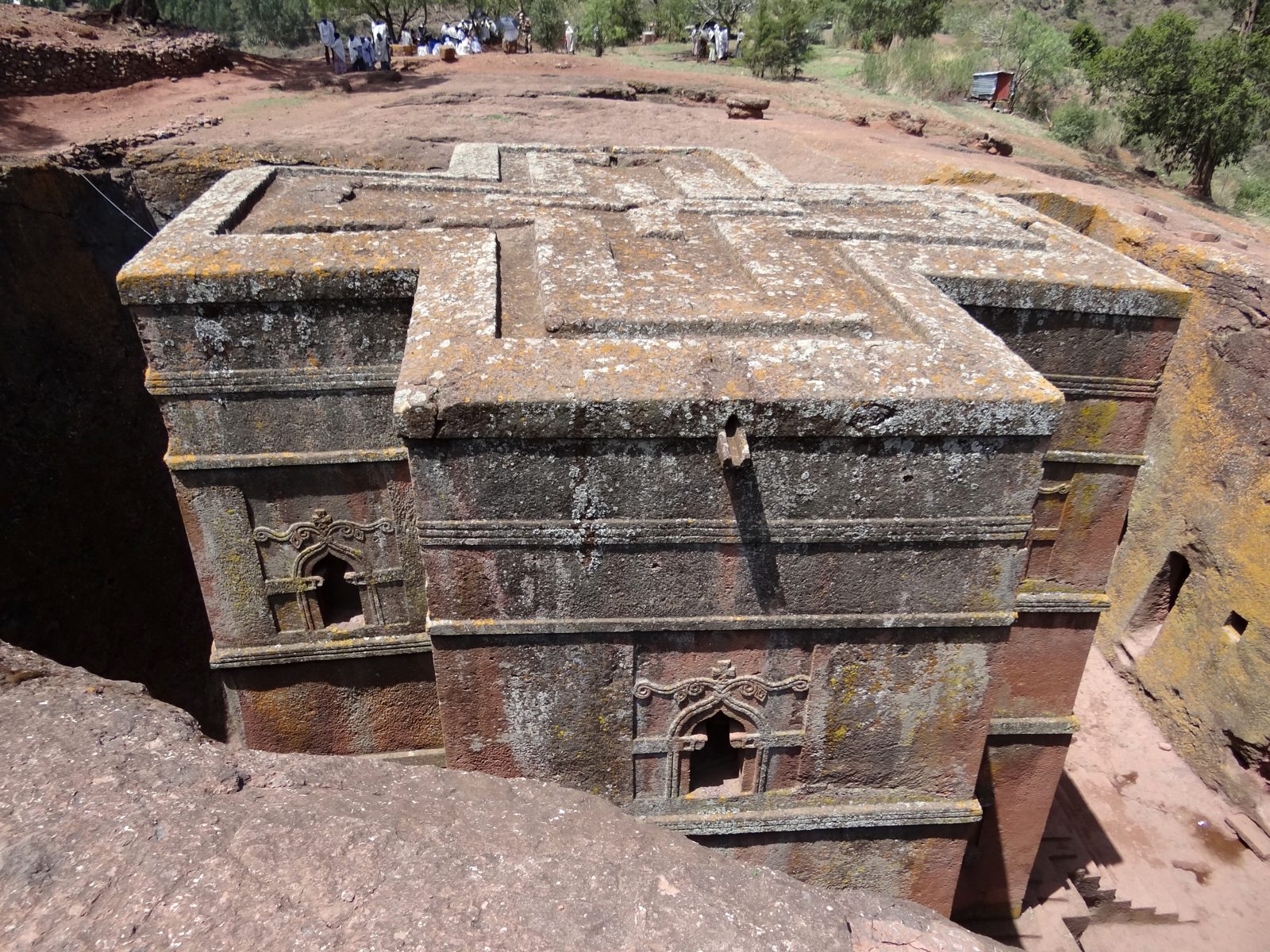
Bet Giyorgis (Church of St. George), the iconic cross-shaped rock-hewn church at Lalibela, Ethiopia. Photo: Adam Jones, CC BY-SA 2.0, via Wikimedia Commons.
Why Ethiopia Is Different From the Rest of East Africa
Unlike its neighbors, Ethiopia was never colonized, and that unbroken history shows up everywhere, in its own calendar (Ethiopia runs roughly seven to eight years behind the Gregorian calendar), its own script and language, Amharic, and a culture that feels distinct rather than a variation on a regional theme. The food, the coffee ceremony, the ancient Orthodox Christian churches, and the deep well of history stretching back to the Aksumite Empire all give Ethiopia a personality unlike anywhere else on a typical East Africa itinerary. Travelers who come expecting a classic wildlife safari should recalibrate; Ethiopia’s draw is cultural and geological as much as it is about wildlife, though it has genuine wildlife highlights of its own, including endemic species found nowhere else on earth.
Lalibela: Ethiopia’s Most Famous Landmark
Lalibela’s eleven medieval rock-hewn churches, carved downward directly out of solid volcanic rock rather than built up from a foundation, rank among the most extraordinary religious monuments anywhere in the world. Constructed roughly eight centuries ago and still an active pilgrimage site today, the churches are connected by a network of tunnels and trenches that visitors can explore alongside the buildings themselves. Early morning visits, when local worshippers gather for prayer, add a layer of living culture to what is already an overwhelming feat of architecture and faith. Most itineraries allow a full day or two in Lalibela, and a knowledgeable local guide adds enormous value here, since the symbolism and history behind each church isn’t always obvious without context.
Trekking the Simien Mountains
The Simien Mountains, a UNESCO World Heritage Site in Ethiopia’s north, offer some of the most dramatic high-altitude trekking in Africa, with jagged escarpments, deep valleys, and peaks exceeding four thousand meters. The range is home to the gelada, a striking primate found only in Ethiopia’s highlands, often seen in large troops grazing on the mountain grasslands, along with the rare Walia ibex and, for the fortunate, the elusive Ethiopian wolf. Treks range from single-day hikes near the park entrance to multi-day routes covering the full escarpment, with basic camps or community lodges along the way. The altitude and terrain make reasonable fitness a genuine requirement here, and acclimatizing over a day or two before a longer trek is worth building into your itinerary.
The Omo Valley: Meeting Ethiopia’s Southern Tribes
Southern Ethiopia’s Omo Valley is home to a remarkable diversity of ethnic groups, the Mursi, Hamar, Karo, and others, whose traditions, dress, and ways of life have remained distinct despite growing outside contact. Responsible visits here matter more than almost anywhere else in the country; working with an operator who has established, respectful relationships with local communities, and who compensates people fairly for photography and visits, makes a real difference to how tourism affects these communities. The Omo Valley is remote, and reaching it requires a longer overland journey or a domestic flight followed by a rough road, which keeps visitor numbers lower than at Ethiopia’s more accessible sites.
The Danakil Depression: One of Earth’s Most Extreme Landscapes
For travelers drawn to genuinely otherworldly scenery, the Danakil Depression delivers landscapes that look more like another planet than anywhere in East Africa. Sitting well below sea level, it holds sulfur springs in blazing yellow and green, active lava lakes at Erta Ale, and vast salt flats worked by camel caravans much as they have been for generations. It’s also one of the hottest inhabited places on Earth, and a visit requires a properly organized, well-equipped tour, since the region’s remoteness and extreme heat make independent travel genuinely risky. Most visitors join a multi-day organized trip from Mekele, and this is one part of an Ethiopia itinerary where cutting corners on operator quality is not worth the savings.
Getting Around Ethiopia
Ethiopia’s size and often rough overland road conditions make domestic flights the practical backbone of most itineraries, with Ethiopian Airlines running an extensive internal network connecting Addis Ababa to Lalibela, the Simien Mountains gateway of Gondar, and other key destinations. Road travel remains necessary for reaching more remote areas like the Omo Valley and Danakil Depression, and hiring a driver or joining an organized tour is the standard, sensible approach rather than self-driving, given road conditions and the value of local knowledge on longer routes.
Visa Requirements and Entry
Most visitors can obtain an Ethiopian e-visa online before departure, a straightforward process that avoids relying on visa-on-arrival counters, though the on-arrival option does still exist for many nationalities. As with any East African destination, checking the current requirements for your specific nationality before booking flights is worth doing early, since rules and eligible countries can shift. Addis Ababa’s Bole International Airport serves as the main entry point and hub for onward domestic flights to Lalibela, Gondar, and other regional airports.
Ethiopian Food and the Coffee Ceremony
Ethiopian cuisine centers on injera, a spongy fermented flatbread that doubles as both plate and utensil, served with a range of stews called wat, from spiced meat dishes to rich vegetarian lentil and vegetable preparations, particularly abundant given the country’s many Orthodox Christian fasting days. Coffee holds genuine cultural weight here too; Ethiopia is widely credited as coffee’s birthplace, and the traditional coffee ceremony, involving roasting green beans over hot coals, grinding them by hand, and brewing in a clay pot called a jebena, is a ritual worth experiencing rather than rushing through. Sharing a coffee ceremony with a local family or in a traditional restaurant offers one of the most genuine cultural encounters available to travelers anywhere in the country.
Best Time to Visit Ethiopia
Ethiopia’s dry season, roughly October through May, offers the most reliable conditions for trekking in the Simien Mountains and traveling the country’s rougher roads, with October and November particularly appealing as the landscape is still green from the preceding rains. The wet season, June through September, brings heavy rain to the highlands and can complicate travel to remote regions like the Omo Valley, though Lalibela and the northern historical circuit remain visitable year-round with proper rain gear. Travelers planning a Simien Mountains trek specifically should aim for the dry months, since trails become significantly more difficult during the rains.
Combining Ethiopia With a Wider East Africa Trip
Ethiopia pairs naturally with a broader East African itinerary for travelers with two weeks or more, particularly given Addis Ababa’s role as a major regional flight hub that connects easily to Nairobi, Kigali, and Entebbe. Travelers who’ve already built out a Uganda gorilla trekking itinerary or a classic Kenya and Tanzania safari circuit increasingly add a few days in Ethiopia’s historical north as a genuinely different final chapter to their trip, trading wildlife and rainforest for ancient churches and highland scenery. Because Ethiopia operates on its own logistics, its own calendar, its own visa system, treating it as a distinct, separately planned leg of a longer trip, rather than an afterthought tacked onto an existing safari, tends to produce the smoothest experience.
Safety, Money, and Practical Tips
Ethiopia is generally a safe destination for tourists sticking to the established historical circuit and organized tours of the Omo Valley and Danakil Depression, though it’s worth checking current travel advisories for specific border regions, which can shift with little notice. The Ethiopian birr is the local currency, and while cards are increasingly accepted in Addis Ababa’s hotels and better restaurants, cash remains essential once you’re traveling in Lalibela, Gondar, or the more remote regions, so budgeting enough birr before leaving the capital saves complications later. Altitude is a genuine consideration too; Addis Ababa itself sits at roughly 2,300 meters, and the Simien Mountains climb considerably higher, so giving yourself a day to adjust before strenuous trekking is a sensible precaution, particularly for travelers arriving directly from sea-level destinations elsewhere in East Africa.
Planning Your First Trip
Ethiopia rewards travelers willing to slow down and engage with a culture that operates on genuinely different rhythms and history from the rest of East Africa. Whether your priority is standing inside Lalibela’s rock-hewn churches, trekking among gelada troops in the Simien Mountains, or witnessing the surreal geology of the Danakil Depression, building in enough time for each region, and working with operators experienced specifically in Ethiopia rather than East Africa generally, makes the difference between a rushed sampler and a trip that does the country justice.
Recommended Tours: 9 Days Uganda Gorilla Safaris & Jinja Nile Cultural Experience | 7 Days Classic Rwanda Safari